Note: This article is based on verified public reporting from U.S. entertainment, news, and awards-industry outlets. The “boycott” discussed here refers to online backlash and viewer threats to skip the broadcast, not a confirmed formal nationwide boycott campaign.
Introduction: When an Oscars Presenter List Becomes a Cultural Weather Report
The Oscars are supposed to be Hollywood’s biggest night: glittering gowns, emotional speeches, million-dollar jewelry, and at least one celebrity trying very hard not to trip on the stairs. But in 2025, part of the conversation shifted before anyone even reached the red carpet. When the Academy announced that Whoopi Goldberg would be among the presenters at the 97th Academy Awards, some viewers online reacted with immediate frustration. A number of commenters said they would boycott the 2025 Oscars, arguing that Goldberg’s past controversies made her an unwelcome choice for the ceremony.
The reaction was loud, fast, and very internet. Some praised Goldberg as an entertainment legend, an Oscar winner, an EGOT recipient, and a four-time Oscars host. Others rolled their digital eyes so hard you could almost hear the Wi-Fi groan. The backlash reflected a larger debate about celebrity accountability, awards-show relevance, political fatigue, and the complicated question of whether audiences can separate an artist’s achievements from public statements that upset them.
In other words, the Whoopi Goldberg Oscars presenter controversy was not just about one famous person walking onto a stage. It became a mini case study in how modern audiences respond when a legacy celebrity, a prestigious institution, and social media outrage all meet in the same very shiny ballroom.
What Actually Happened Before the 2025 Oscars?
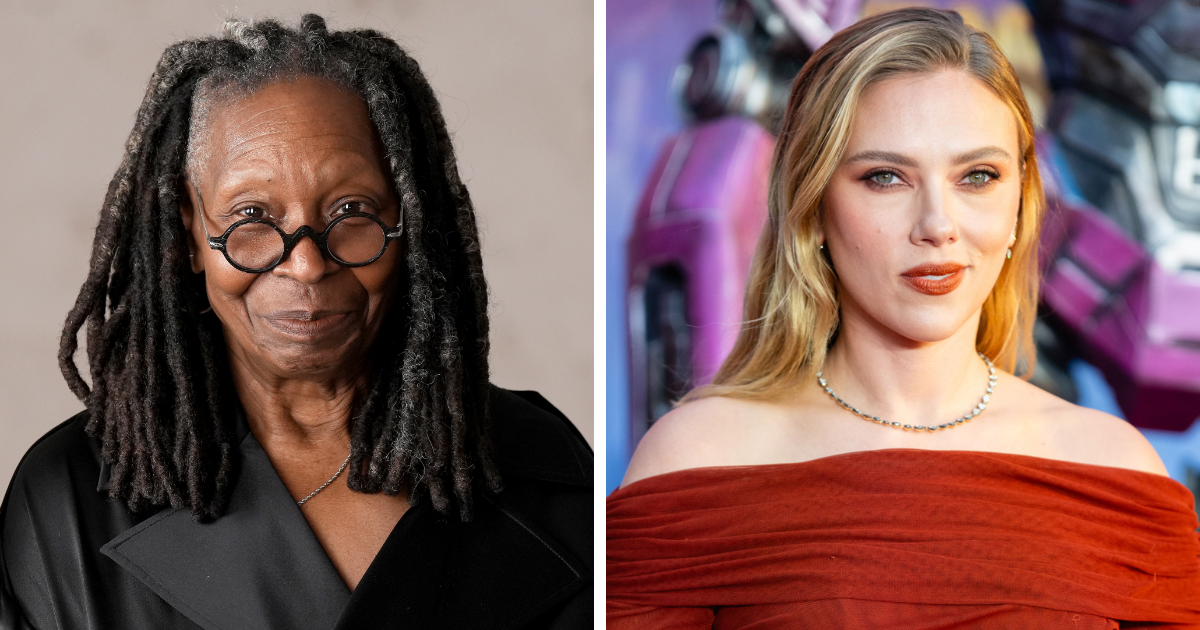
On February 11, 2025, the Academy announced another group of presenters for the 97th Oscars, including Halle Berry, Penélope Cruz, Elle Fanning, Whoopi Goldberg, Scarlett Johansson, John Lithgow, Amy Poehler, June Squibb, and Bowen Yang. The ceremony was scheduled for March 2, 2025, airing live on ABC and streaming on Hulu, with Conan O’Brien hosting for the first time.
For many awards watchers, Goldberg’s inclusion made perfect sense. She is not a random guest plucked from the celebrity vending machine. She won the Academy Award for Best Supporting Actress for Ghost, earned an Oscar nomination for The Color Purple, hosted the Academy Awards in 1994, 1996, 1999, and 2002, and has long been connected to Hollywood history. She is also one of the rare entertainers to achieve EGOT status, winning competitive Emmy, Grammy, Oscar, and Tony honors.
Still, the announcement drew criticism from people who objected to Goldberg’s presence because of past controversies, especially remarks she made about the Holocaust on The View in 2022. ABC suspended her for two weeks after she said the Holocaust was “not about race,” a comment she later apologized for and clarified. The controversy did not disappear from public memory, especially among viewers who already saw Goldberg as politically outspoken or polarizing.
Why Did Some People Say They Would Boycott the Oscars?
The calls to boycott the 2025 Oscars were mostly informal and social-media driven. People posted comments such as “won’t be watching” or criticized the Academy for giving Goldberg a place on the broadcast. In the online world, this is how a boycott often begins: not with a press conference, but with a keyboard, a strong opinion, and possibly a half-finished cup of coffee.
1. Goldberg’s 2022 Holocaust Comments Remained a Flashpoint
The biggest reason critics objected to Goldberg’s Oscar appearance was her 2022 controversy on The View. During a discussion about a school district banning the graphic novel Maus, Goldberg made comments suggesting the Holocaust was not about race. Jewish organizations, historians, viewers, and public figures criticized the remarks, explaining that Nazi ideology absolutely framed Jewish people as a racial enemy. Goldberg apologized, but for some critics, the apology did not erase the offense.
That history made her Oscars presenter role feel inappropriate to some viewers. They argued that the Academy should avoid elevating figures whose public comments had caused deep hurt. Supporters countered that Goldberg had apologized, served her suspension, and should not be permanently excluded from public events for a mistake she addressed.
2. Her Political Persona Divides Audiences
Goldberg is not just an actor; she is also a longtime co-host of The View, a daytime talk show built around political and cultural debate. That means many viewers associate her with opinions, arguments, viral clips, and hot-topic segments rather than only with Sister Act, Ghost, or The Color Purple. For fans, that makes her bold and authentic. For critics, it makes her exhausting. Awards shows already face complaints about being too political, so Goldberg’s inclusion became another spark in that familiar bonfire.
3. Some Viewers Are Tired of Celebrity Culture
The backlash also fits into a broader pattern: many Americans have grown skeptical of celebrity awards shows. Some viewers see events like the Oscars as glamorous, artistic celebrations. Others see them as out-of-touch pageants where wealthy people applaud one another under chandeliers while everyone at home debates grocery prices. When a polarizing presenter is announced, it can become a convenient reason for people who were already drifting away to say, “That’s it, I’m out.”
The Other Side: Why Many Defended Whoopi Goldberg
Not everyone saw Goldberg’s presenter role as controversial. Many fans viewed the backlash as overblown and argued that Goldberg’s career achievements made her an obvious Oscars choice. After all, the Academy Awards frequently invite past winners, former hosts, and major Hollywood figures to present. Goldberg checks all three boxes.
Her Oscars Legacy Is Real
Goldberg’s Academy history is not decorative trivia. She became the first Black woman to host the Oscars solo when she led the 1994 ceremony. She hosted three more times after that, building a reputation for sharp humor, theatrical confidence, and the rare ability to command a room filled with people pretending not to care whether they win.
Her Oscar win for Ghost also remains culturally important. As Oda Mae Brown, Goldberg delivered a performance that was funny, warm, strange, and emotionally grounded. It was the kind of role that could have become a gimmick in weaker hands. Instead, she made it unforgettable.
Her 2025 Role Had Emotional Context
At the 2025 Oscars, Goldberg appeared with Oprah Winfrey to introduce Queen Latifah’s tribute to Quincy Jones. That pairing carried real meaning. Goldberg and Winfrey both starred in Steven Spielberg’s 1985 adaptation of The Color Purple, a film produced by Jones. The tribute honored Jones’s enormous influence on music, film, and Black excellence in American entertainment.
In that context, Goldberg was not simply being inserted into the show for controversy clicks. She was part of a tribute connected to her own career history, Winfrey’s breakthrough role, and Jones’s legacy. For many viewers, that made her presence appropriate, even moving.
Did the Boycott Actually Hurt the 2025 Oscars?
There is no strong evidence that the online boycott talk significantly damaged the 2025 Oscars. In fact, final viewership reports showed that the ceremony reached about 19.7 million viewers across ABC and streaming platforms, a slight increase from 2024 and the strongest Oscars audience in several years. That does not mean everyone loved the show, but it does suggest that online outrage did not translate into a mass ratings collapse.
This is one of the internet’s great mysteries: sometimes everyone says they are boycotting something, and then the numbers show that plenty of people watched anyway. Human beings are complicated. Also, people enjoy complaining while watching live television. It is practically a national hobby.
The 2025 Oscars had several major storylines beyond Goldberg. Anora won Best Picture and dominated the night with five Oscars. Mikey Madison won Best Actress, Adrien Brody won Best Actor for The Brutalist, Zoe Saldaña won Best Supporting Actress for Emilia Pérez, and Kieran Culkin won Best Supporting Actor for A Real Pain. Conan O’Brien’s hosting debut also drew attention, especially from viewers curious to see whether his late-night absurdity could survive the formal Oscar tuxedo ecosystem.
Why Celebrity Boycotts Keep Happening
Celebrity boycotts are not new, but social media has made them faster, louder, and easier to organize. In earlier decades, a viewer upset about an Oscars presenter might complain to a spouse, write a letter to the editor, or simply change the channel. Today, one annoyed post can become part of a trending backlash within minutes.
Boycotts Are Now Identity Signals
For many people, saying “I’m boycotting” is not only about refusing to watch. It is also a public statement of values. It tells friends, followers, and strangers: “This is where I stand.” That can be sincere, performative, or a little of both. The internet has turned consumer choices into personality badges. Your streaming subscription, coffee order, favorite superhero movie, and awards-show viewing habits can all become evidence in the endless trial of public opinion.
Accountability Has No Expiration Date Online
One reason the Whoopi Goldberg Oscars backlash resurfaced so quickly is that the internet never forgets. Apologies, suspensions, clarifications, and career achievements all remain searchable alongside the original controversy. Supporters may see accountability as a process: make a mistake, apologize, learn, continue. Critics may see certain comments as disqualifying long after the news cycle moves on.
This tension creates a difficult question for entertainment institutions: When should a public figure be welcomed back? There is no single answer. The decision often depends on the nature of the controversy, the quality of the apology, the person’s pattern of behavior, the affected communities, and whether the event’s audience is willing to move forward.
The Academy’s Risky Balancing Act
The Oscars need star power. That is not a cynical insult; it is the basic machinery of the show. The Academy wants presenters who bring history, glamour, humor, and recognition. A presenter list full of anonymous executives would make viewers run to the remote faster than a three-hour tax webinar.
At the same time, the Academy must navigate a cultural environment where nearly every celebrity arrives with a searchable archive of old comments, awkward interviews, political opinions, questionable jokes, and social media storms. Booking famous people now requires more than checking availability. It requires reputational risk management.
Goldberg represents both sides of that equation. She is a legitimate Oscars icon, but she is also a public figure with controversies that some viewers still find unacceptable. The Academy’s decision to include her suggests it valued her Hollywood history and her connection to the Quincy Jones tribute more than the risk of online backlash.
What This Says About the Modern Oscars Audience
The 2025 Whoopi Goldberg boycott debate revealed that the Oscars audience is no longer one unified crowd. It is a patchwork of film lovers, casual viewers, political critics, fashion watchers, celebrity fans, culture-war spectators, and people who mostly tune in to see whether someone cries before the orchestra gets aggressive.
Some viewers want the Oscars to celebrate art and avoid politics. Others believe art and politics have always been intertwined. Some want accountability for celebrities. Others worry that permanent punishment leaves no room for growth. Some watch because they love movies. Others watch because they love drama, and the Oscars usually provide both kinds.
Specific Examples of How the Debate Played Out
The online criticism around Goldberg’s presenter role generally fell into a few recognizable categories. Some comments focused directly on her Holocaust remarks and argued that the Academy should have chosen someone else. Others complained more broadly about The View and accused Goldberg of being too political. A third group mocked the Oscars as irrelevant and used Goldberg’s inclusion as another reason to skip the broadcast.
Defenders responded by pointing to Goldberg’s long entertainment career, her Oscar win, her historic hosting record, and the fact that she was appearing in a tribute connected to Quincy Jones, not delivering a political keynote. Some also argued that if every presenter with a past controversy were removed, Hollywood would need a much smaller stage and possibly several cardboard cutouts.
The result was a familiar online standoff: one side said “accountability,” the other said “legacy,” and both sides typed with the confidence of people who had absolutely no intention of changing each other’s minds.
Experience-Based Reflections: Watching Awards Shows in the Age of Outrage
Anyone who has followed awards shows for years knows that the Oscars are never just about movies. They are about taste, politics, memory, nostalgia, fashion, industry power, and the strange human desire to rank art as if films were Olympic pole-vaulters. The Whoopi Goldberg controversy fits into that long tradition, but it also feels distinctly modern because the reaction formed so quickly online.
From a viewer’s perspective, boycotting an awards show can feel satisfying. It gives people a sense of control over a media machine that often feels distant and self-congratulatory. If someone genuinely feels hurt by a celebrity’s comments, choosing not to watch is a reasonable personal decision. Entertainment is optional. Nobody is legally required to sit through acceptance speeches, even if some of them feel long enough to qualify as community service.
At the same time, experience shows that many boycott threats are more emotional than practical. People may say they are done with the Oscars, then check highlights the next morning. They may refuse to watch live but still click clips of the monologue, the red carpet, the winners, or the most awkward audience reaction. In the streaming era, attention is slippery. A boycott is not always a clean “yes” or “no.” Sometimes it is “I refuse to watch, except for the clips my friends send me, and maybe the fashion gallery, purely for research.”
The Goldberg debate also shows how public memory works. Some viewers remember her as the hilarious nun from Sister Act, the psychic from Ghost, the barrier-breaking Oscar host, or the voice of a generation of sharp-tongued comedy. Others immediately remember controversial remarks, political arguments, and daytime television clashes. Both memories are real. The conflict comes from which memory people believe should matter most when a prestigious institution invites someone back to the stage.
For publishers, bloggers, and entertainment writers, this kind of story requires careful framing. It is tempting to write “everyone is boycotting” because it sounds dramatic and clickable. But responsible coverage should distinguish between widespread online complaints and a verified organized boycott. A handful of angry comments can reveal a mood, but they do not automatically represent the entire public. The internet is loud, not always large. A small room with a megaphone can sound like a stadium.
For the Academy, the lesson is equally clear: every presenter choice now carries symbolic weight. Booking a celebrity is no longer just about glamour. It is about what that person represents to different audiences. In Goldberg’s case, she represented Hollywood history, Black excellence, comic brilliance, controversy, apology, resilience, and political division all at once. That is a lot for one presenter slot to carry, even at an event famous for emotional baggage wrapped in satin.
For viewers, the healthiest approach may be simple: watch with awareness, criticize with accuracy, and boycott if it genuinely reflects your values. But it is also worth asking whether outrage is being directed at the right target. If the concern is Hollywood accountability, then the conversation should go beyond one presenter. It should include hiring practices, studio power, representation, labor conditions, historical memory, and how institutions decide when apologies are enough.
The 2025 Oscars moved forward, Goldberg appeared, the Quincy Jones tribute happened, and the ceremony still attracted millions of viewers. That does not erase the backlash, but it places it in context. The boycott talk mattered as a cultural signal. It showed that audiences are paying attention, keeping receipts, and expecting institutions to think carefully. But it also showed that the Oscars, for all their flaws, remain a powerful magnet for curiosity. People may complain about Hollywood’s biggest night, but many still peek through the curtains.
Conclusion: A Presenter, a Protest, and the Oscars’ Complicated Future
The backlash over Whoopi Goldberg’s inclusion as a 2025 Oscars presenter was about more than one celebrity. It reflected a larger struggle over forgiveness, accountability, political fatigue, and the role of awards shows in American culture. Goldberg’s critics saw her appearance as proof that Hollywood overlooks offensive remarks when the celebrity is famous enough. Her defenders saw the criticism as unfairly dismissing decades of achievement, including her Oscar-winning career and historic role as an Oscars host.
In the end, the 2025 Oscars did what the Oscars usually do: they absorbed the controversy, staged the show, handed out trophies, created new talking points, and left the internet with enough material to argue for another week. The boycott calls may not have stopped the broadcast, but they did reveal something important about modern entertainment. Audiences are no longer passive viewers. They are critics, activists, meme-makers, amateur historians, and sometimes professional grudge-holders with excellent Wi-Fi.
Whether one agrees with the boycott or not, the conversation around Whoopi Goldberg and the 2025 Oscars shows how celebrity culture has changed. Legacy still matters, but so does accountability. Star power still attracts attention, but controversy now travels faster than a red-carpet photographer spotting Zendaya. For the Academy, the challenge is not simply choosing famous presenters. It is understanding what those presenters mean to an audience that watches with one eye on the screen and the other on the comment section.