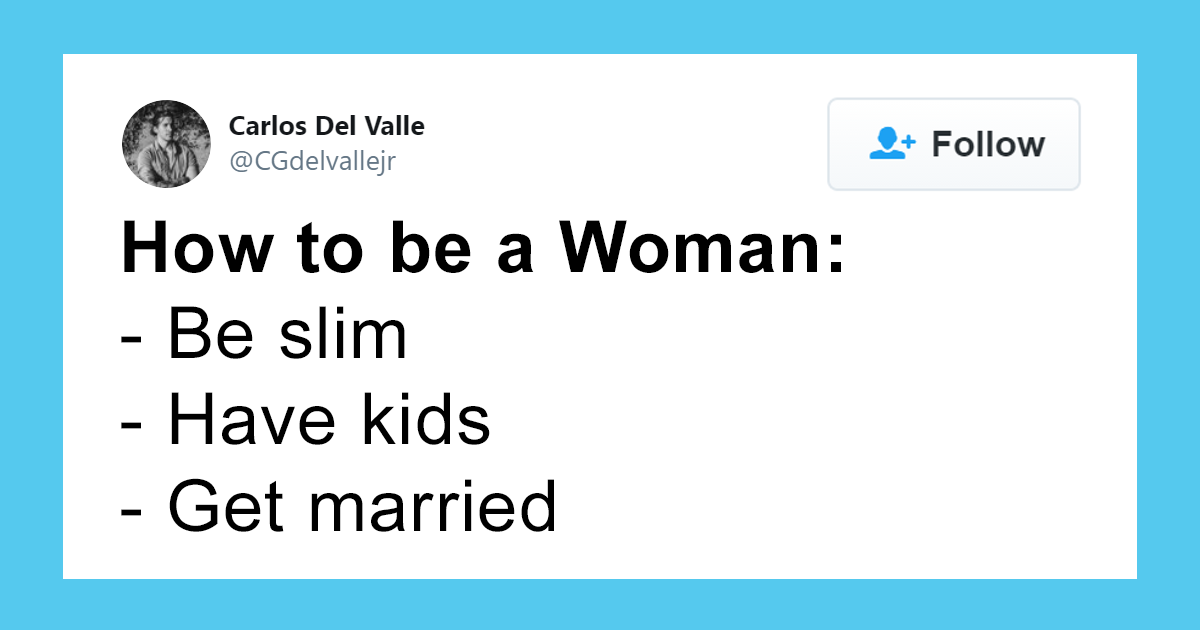
Every so often, the internet receives a gift it never asked for: a stranger’s handwritten rulebook for how an entire gender should behave. This time, the viral main character was a man who appeared to believe womanhood could be reduced to a tidy checklist, as if women are IKEA furniture with better eyeliner. His “how to be a woman” style advice landed online, and the response was immediate, sharp, funny, and deeply satisfying.
The reason people reacted so strongly was not simply that the list was awkward. It was that it represented something many women have dealt with forever: unsolicited instructions about how to look, speak, dress, behave, date, laugh, work, age, eat, exist, and somehow still smile politely while being evaluated like a used sedan. The internet, thankfully, did not smile politely. It brought jokes, sarcasm, feminist analysis, memes, and enough side-eye to power a small city.
This article breaks down why the sexist list went viral, why people were so quick to roast it, and what the reaction says about gender stereotypes, online culture, and the modern refusal to let tired “be a lady” lectures pass without a proper public grilling.
What Happened: A Sexist List Met the Wrong Internet
The controversy centered on a man’s list-style advice about what makes a woman “beautiful,” “classy,” or supposedly acceptable. The exact phrasing varied as screenshots and commentary spread, but the general idea was painfully familiar: women should meet a narrow standard of appearance, behavior, modesty, attitude, and domestic charm. In other words, the list tried to turn womanhood into a customer-service policy with lipstick.
People online quickly noticed the biggest problem: the advice was not really about helping women. It was about controlling them. It framed women as objects to be judged, improved, and approved by someone else’s preferences. Instead of celebrating individuality, it suggested that there is one correct way to be feminine, attractive, respectable, or “wife material.” That is not guidance. That is a clipboard with opinions.
Commenters pushed back with humor because humor is often the cleanest way to expose nonsense. Some joked that the list read like it had been written by someone whose relationship experience came entirely from outdated sitcoms. Others pointed out that women do not need a stranger’s checklist to validate their worth. Many simply laughed at the confidence required to publish rules for women while missing the first rule of adulthood: do not be weirdly bossy about people you do not know.
Why “How To Be A Woman” Lists Feel So Outdated
The phrase “how to be a woman” sounds harmless until you ask who is doing the defining. If the answer is “a random guy on the internet,” the red flags begin waving like inflatable tube men outside a car dealership. Womanhood is not a performance manual. It is not a beauty contest. It is not a checklist of soft voices, neat outfits, endless patience, and emotional availability on demand.
Modern audiences are increasingly aware that gender roles are often socially enforced rather than naturally chosen. People grow up hearing that boys should be tough, girls should be sweet, men should lead, women should nurture, and everyone should pretend this script came from the clouds rather than from centuries of cultural repetition. When a viral sexist list repeats those assumptions, people recognize the pattern instantly.
The irritation comes from repetition. Women have heard these rules in school dress codes, workplace feedback, dating advice, family gatherings, movies, advertising, and social media comment sections. Be confident, but not intimidating. Be attractive, but not attention-seeking. Be smart, but not “too much.” Be independent, but not so independent that someone feels unnecessary. At a certain point, the rulebook contradicts itself so badly it deserves to be recycled into confetti.
The Internet’s Roast Was Funny Because It Was Accurate
The best online takedowns work because they identify the truth hiding inside the absurdity. People did not merely insult the list. They diagnosed it. The jokes pointed out that the list confused personal preference with universal truth. They mocked the idea that one man’s taste should become a social standard. They highlighted how ridiculous it is to treat adult women like unfinished projects awaiting male approval.
Some commenters responded by flipping the format back on men, creating satirical “how to be a man” lists filled with equally silly commands. That reversal worked because it exposed the double standard. When men are reduced to shallow rules, the unfairness becomes obvious. When women are reduced to shallow rules, society has often treated it as normal. The humor forced readers to see the imbalance.
Others used blunt commentary: women are not auditioning for strangers. That idea became the emotional center of the backlash. The internet was not just defending fashion choices, makeup preferences, body types, or personality styles. It was defending autonomy. The message was simple: women get to define themselves. No permission slip required.
Why Sexist Lists Go Viral in the First Place
Sexist lists go viral because they are built for reaction. They are short, provocative, easy to screenshot, and almost always written with the confidence of someone who has mistaken a personal opinion for a public service announcement. Social platforms reward content that sparks emotion, and few things spark emotion like a stranger announcing that half the population is doing existence incorrectly.
These lists also go viral because they represent a larger cultural argument. People are not only reacting to one post. They are reacting to every version of the same message they have seen before. One viral checklist becomes a symbol for the dress code teacher, the condescending coworker, the controlling boyfriend, the judgmental relative, the podcast bro, the “traditional values” influencer, and the comment-section philosopher who thinks “females” is a personality.
The internet loves a villain, but it loves a self-appointed life coach villain even more. A sexist list gives people something concrete to dismantle. Instead of debating vague ideas about misogyny or gender bias, commenters can point to individual lines and say, “There. That is the problem.” The format is simple, shareable, and perfectly designed for collective roasting.
The Problem With Turning Women Into Checklists
A checklist can be useful for groceries, travel packing, or making sure you did not leave your phone charger in a hotel room. It is less useful for describing human worth. When someone writes a list of traits that supposedly define a “good woman,” they flatten real people into a set of approved behaviors. That is the heart of the issue.
Women are not a single audience with one dream, one style, one personality, or one purpose. Some women love makeup; some hate it. Some want marriage; some do not. Some enjoy cooking; some consider the microwave a trusted business partner. Some are soft-spoken; some can command a meeting, a classroom, a stage, or a group chat with frightening precision. None of these choices makes someone more or less of a woman.
Sexist lists usually pretend to celebrate femininity while actually narrowing it. They say women are valuable, but only when they are pleasing. They praise beauty, but only a specific kind. They praise confidence, but only if it does not challenge anyone. They praise intelligence, but only if it arrives wrapped in humility and emotional labor. The result is not appreciation. It is restriction wearing perfume.
How Gender Stereotypes Sneak Into Everyday Life
The viral list is funny to mock, but the ideas behind it are not limited to social media. Gender stereotypes show up in everyday life in ways that are quieter and harder to screenshot. A woman at work may be called “aggressive” for the same behavior that earns a man the label “leader.” A girl may be praised for being nice before she is praised for being curious. A mother may be judged for ambition, while a father is praised for basic childcare participation like he discovered fire.
These double standards matter because they shape opportunities. They influence who gets encouraged, who gets interrupted, who gets promoted, who gets believed, and who gets told to soften their tone. A silly viral list may seem small, but it echoes a much bigger pattern: society often asks women to manage other people’s comfort before pursuing their own freedom.
That is why people respond so strongly. The list is not just a list. It is a tiny museum of old assumptions. The internet’s reaction was basically a group tour where everyone pointed at the exhibit and said, “Absolutely not.”
Why Humor Is Such a Powerful Response to Sexism
Humor works because it lowers the shield. A long lecture may make defensive people retreat into their corners, but a sharp joke can slip through before the walls go up. When people made fun of the sexist list, they were not avoiding serious analysis. They were making the analysis more shareable.
A funny takedown can reveal the absurdity of a rule faster than a formal essay. For example, telling women they must always be graceful sounds old-fashioned until someone asks whether sneezing counts as a moral failure. Telling women to be naturally beautiful but also perfectly groomed sounds romantic until someone points out that “natural” often means a full skincare routine, strategic makeup, hair maintenance, and the emotional strength of a Navy SEAL in a Sephora aisle.
Humor also creates community. When people laugh at the same sexist assumption, they are saying, “You saw it too, right?” That shared recognition is powerful, especially for people who have been told they are overreacting. Sometimes a joke is not just a joke. Sometimes it is a tiny flag planted in the ground that says, “We are done pretending this is normal.”
What Makes the Backlash Feel Delicious
The word “deliciously” fits because the takedown had flavor. It was not dry outrage. It was seasoned. People responded with wit, precision, and the kind of collective comedic timing that makes the internet, on its better days, feel like a giant writers’ room with no HR department.
The backlash was satisfying because the list tried to position one person as the judge, and the crowd immediately fired him from the job. It was satisfying because the comments did not beg for approval; they rejected the premise. It was satisfying because people did not simply say, “This is offensive.” They said, “This is offensive, historically stale, logically weak, and also your formatting could use work.”
That combination of moral clarity and comedy is why these moments spread. People enjoy seeing arrogance deflated, especially when the arrogance is dressed as advice. The internet may argue about nearly everything, but occasionally it unites around a shared civic duty: dunking on a bad take so thoroughly that future bad takes feel nervous.
The Bigger Lesson: Preference Is Not Policy
One useful takeaway from this viral moment is the difference between preference and policy. Everyone is allowed to have personal preferences. Someone may prefer a partner who dresses a certain way, shares certain values, or enjoys certain habits. That is normal. The problem begins when a person presents those preferences as universal rules for an entire gender.
“I like this” is a preference. “Women should be this” is a control statement. The difference matters. Healthy attraction leaves room for individuality. Sexist advice demands conformity. One says, “This works for me.” The other says, “You exist incorrectly unless you fit my taste.” No wonder the internet pulled out the roasting pan.
The healthiest response is not to create an opposite checklist that traps men in a different box. The better answer is to throw away the box. People of any gender should be allowed to be gentle, ambitious, stylish, messy, loud, quiet, nurturing, logical, emotional, funny, serious, domestic, adventurous, or gloriously confusing. Humans are not brand guidelines.
How To Respond When You See Sexist Advice Online
1. Question the authority
Ask why this person believes they get to define womanhood. Expertise matters. Lived experience matters. Random confidence in a social media post does not automatically matter.
2. Separate taste from truth
If the advice is really just personal preference, name it as such. A preference becomes harmful when it is disguised as a moral standard.
3. Use humor when it helps
A clever joke can make a point without turning the conversation into a 40-page courtroom filing. Humor can be especially effective when the original claim is already ridiculous.
4. Do not reward rage bait forever
Some posts are designed to harvest attention. After a certain point, the best response is to laugh, learn, and stop feeding the algorithmic raccoon.
5. Center real people
The goal is not only to win an argument. It is to protect the idea that women are full human beings, not customizable accessories in someone else’s fantasy life.
Experience-Based Reflections: What This Topic Feels Like in Real Life
To understand why people enjoyed destroying the “how to be a woman” list so much, imagine the everyday experience behind the reaction. Picture a young woman getting ready for a regular day. Before she even leaves the house, she may already be navigating invisible rules: Is this outfit too much? Is it too plain? Will makeup make her look professional, or will too much makeup make people judge her? If she wears none, will someone say she looks tired? Congratulations, she has not had breakfast yet, and society has already assigned homework.
Now move that experience into a workplace. A woman speaks directly in a meeting and gets told her tone is sharp. Later, a male colleague repeats the same idea with more volume and receives nods. She is expected to be prepared, polished, warm, efficient, and supportive, while also making sure nobody feels threatened by her competence. If she helps too much, she becomes the office caretaker. If she refuses, she is not a team player. This is the kind of double bind that makes a viral sexist checklist feel less like a joke and more like a tiny paper cut on top of a thousand older paper cuts.
In dating, the experience can be just as exhausting. Many women have met someone who describes his “ideal woman” in a way that sounds less like a partner and more like a subscription package: beautiful but low-maintenance, independent but always available, ambitious but not too busy, funny but not funnier than him, confident but never challenging. When people saw the list online, they recognized that tone. It was the tone of someone ordering a personality from a menu.
Family settings can add another layer. A woman may hear that she should settle down, smile more, be less picky, be more feminine, be less dramatic, be more forgiving, or avoid being “difficult.” These comments are often delivered as loving advice, which makes them harder to reject. But affection does not automatically make a stereotype harmless. A velvet-covered cage is still a cage; it just has better upholstery.
Social media intensifies everything because it turns private bias into public performance. A person can post a sexist list and instantly find both supporters and critics. The supporters may call it “traditional,” while critics call it controlling. The comment section becomes a cultural courtroom, and the evidence is usually right there in the wording. The experience of watching people push back can be oddly refreshing. It reminds readers that they are not alone in noticing the absurdity.
The most powerful experience connected to this topic is the relief of refusal. Refusing to fit the list. Refusing to be polite about disrespect. Refusing to treat someone’s narrow preference as a universal law. That refusal is why the takedown felt so satisfying. It was not only about one guy or one post. It was about millions of people collectively saying that women do not need to shrink, soften, decorate, or rearrange themselves to pass someone else’s imaginary inspection.
And maybe that is the real lesson. The best way to “be a woman” is not to follow a stranger’s list. It is to be a person, fully and inconveniently, with your own voice, choices, contradictions, and style. No checklist can contain that. No viral post can define it. And no self-appointed expert with a keyboard can make it less true.
Conclusion
The viral “how to be a woman” sexist list became popular for all the wrong reasons, but the backlash became popular for all the right ones. People recognized the tired stereotypes, rejected the controlling tone, and turned the whole thing into a comedy roast with a serious message underneath. Women are not projects. They are not lists. They are not public property waiting for feedback from strangers with too much confidence and not enough self-awareness.
The internet can be messy, chaotic, and occasionally allergic to nuance, but in this case, it did what it does best: it took a bad idea, held it up to the light, and laughed it out of the room. Deliciously.