Social media has transformed book recommendations into a high-speed emotional marketplace. One minute, you are peacefully scrolling through videos of sourdough bread and sleepy golden retrievers. The next, a stranger with perfect lighting is sobbing into a special-edition hardcover and promising that a novel will “destroy you in the best possible way.” Naturally, you buy it.
BookTok and other online reading communities have done wonderful things for publishing. They have revived older novels, helped independent authors find enormous audiences, and persuaded countless people to start reading again. Viral attention can also turn a book into a bestseller almost overnight, sometimes producing sales results that traditional advertising could only dream about. However, enormous hype creates enormous expectationsand that is where the trap snaps shut.
The following titles are not universally bad books. Many have passionate fans, impressive sales, successful adaptations, or strong professional reviews. They appear here because they frequently inspire a second, less glamorous wave of online discussion: readers admitting that the story felt overhyped, poorly matched to its marketing, emotionally manipulative, repetitive, implausible, or simply not worth sacrificing eight hours of sleep.
In other words, this is not a literary execution. It is a tour of the Internet’s most crowded “Am I the only one who didn’t like this?” waiting room.
Why Viral Books So Often Produce Reader Regret
A short video is excellent at selling a feeling but terrible at communicating the full experience of reading a novel. A creator can promise enemies-to-lovers tension, a shocking twist, devastating heartbreak, dragons, dark academia, or “the best fictional man ever written.” What the video may not mention is that the enemies become lovers after 400 pages of repetitive arguing, the twist requires three characters to behave like malfunctioning appliances, and the dragon appears less often than the hero’s abdominal muscles.
Online recommendations also tend to emphasize highly marketable tropes. Publishers and authors can see which themes generate attention, while bookstores now prominently display titles associated with BookTok. This helps readers find stories they enjoy, but it can also create a feedback loop in which a small group of books dominates everyone’s feed, regardless of whether those books match individual tastes.
Viral Romance Books That Left Some Readers Cold
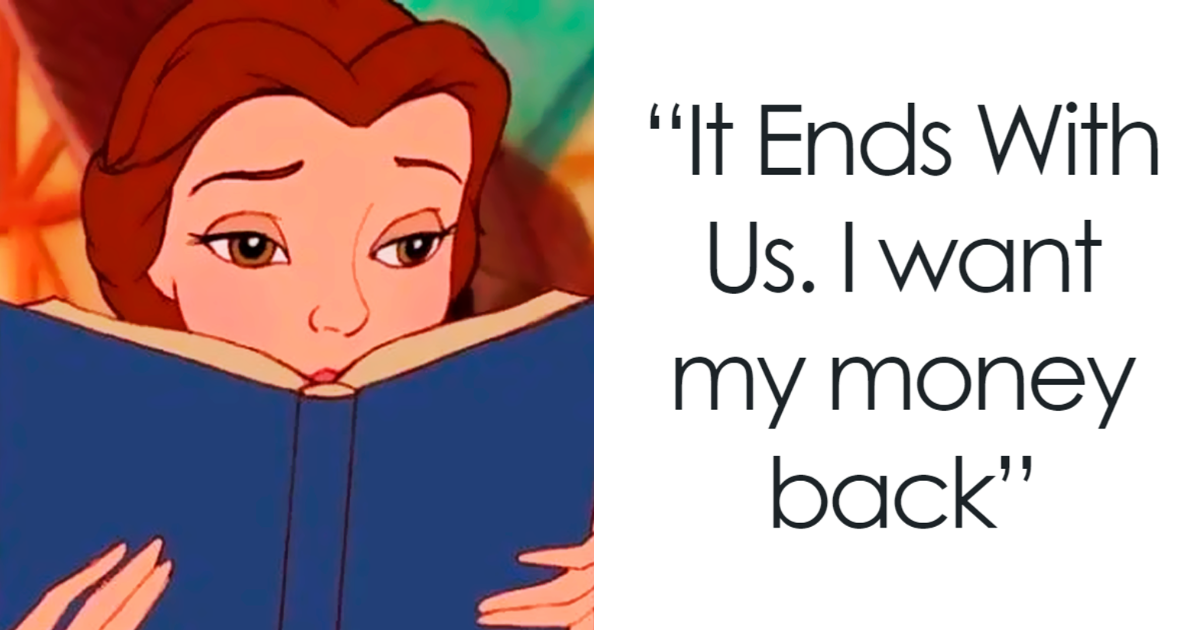
1. It Ends with Us by Colleen Hoover
Millions of readers found this story emotionally powerful, particularly its attempt to show why leaving an abusive relationship can be painfully complicated. Others regretted approaching it as a conventional romance, arguing that the marketing, melodrama, simplified prose, and treatment of domestic violence created an uncomfortable mismatch. It is less “dreamy love triangle” and more “please bring emotional protective equipment.”
2. Verity by Colleen Hoover
This thriller is designed to be inhaled quickly, and its manuscript-within-a-manuscript structure certainly keeps pages turning. The regret often arrives after the final twist, when readers begin examining the characters’ decisions and realize that plausibility may have quietly escaped through an upstairs window. Fans call it addictive; critics call it a collection of terrible people competing in the Bad Judgment Olympics.
3. Ugly Love by Colleen Hoover
The novel’s intense emotional and sexual relationship attracted a huge following, but detractors found the male lead’s cruelty exhausting and believed trauma was repeatedly used to excuse harmful behavior. Readers expecting a healing romance sometimes discovered several hundred pages of emotional turbulence with the seatbelt sign permanently illuminated.
4. The Love Hypothesis by Ali Hazelwood
This academic romance delivers recognizable tropes, an approachable style, and plenty of chemistry. Yet some readers felt the misunderstanding-driven plot was stretched too far, the workplace power imbalance was handled too lightly, and the characters occasionally behaved more like fan-fiction archetypes than professional scientists. The laboratory may be fictional, but the secondhand embarrassment is fully peer-reviewed.
5. The Spanish Love Deception by Elena Armas
Readers were promised workplace enemies, a fake date, a destination wedding, and a slow burn. Some discovered that “slow burn” meant repeatedly being reminded that Aaron is extremely large while the plot advances at the speed of airport security during a holiday weekend. Those who love extended tension had fun; impatient readers began mentally editing entire chapters.
6. The Hating Game by Sally Thorne
The office rivalry is playful and highly readable for many romance fans. For others, the protagonists’ childish workplace behavior, constant physical observations, and predictable transition from hatred to attraction became tiring. Human resources would not merely schedule a meeting with these two; it would construct a bunker.
7. Red, White & Royal Blue by Casey McQuiston
The novel’s optimistic queer romance and cheerful political fantasy earned devoted fans. Skeptical readers found the dialogue overly polished, the politics idealized, and the story closer to charming alternate-universe fan fiction than believable international drama. Enjoyment often depends on whether you can accept a White House operating with the logistical realism of a holiday rom-com.
8. Twisted Love by Ana Huang
The possessive billionaire hero helped turn the broader series into a BookTok sensation. However, readers who do not enjoy controlling “alpha” behavior often found the romance uncomfortable, the plot melodramatic, and the emotional transformation insufficiently convincing. His wealth is vast, his boundaries are flexible, and his communication skills appear to have been lost in a hostile takeover.
9. Icebreaker by Hannah Grace
This college hockey romance became famous for banter, spice, and cozy found-family energy. Some buyers regretted discovering a crowded supporting cast, repetitive intimate scenes, limited narrative urgency, and less meaningful hockey than expected. The rink is present, but occasionally it feels like the sport is merely renting space from the romance.
10. Haunting Adeline by H.D. Carlton
Dark-romance readers generally understand that this book intentionally explores extreme fantasies and disturbing behavior. Regret occurs when casual buyers encounter it through vague “spicy romance” recommendations without realizing how heavily it involves stalking, violence, coercion, and questionable consent. This is one title for which checking content warnings is not being dramatic; it is basic travel preparation.
Fantasy and Romantasy Books That Could Not Match the Hype
11. A Court of Thorns and Roses by Sarah J. Maas
The series became one of BookTok’s defining fantasy phenomena, but the opening volume is frequently described as slower and less compelling than its sequels. Readers expecting immediate political complexity and unforgettable romance may instead find a familiar fairy-tale framework, uneven pacing, and a heroine whose decisions occasionally require supernatural levels of patience.
12. Fourth Wing by Rebecca Yarros
Dragons, military training, danger, romance, and rapid pacing made this an enormous hit. Critics and disappointed readers have pointed to thin worldbuilding, contemporary-sounding dialogue, uneven character development, and a protagonist who repeatedly survives situations that should turn her into a brief cautionary footnote. It is thrilling popcorn fantasy, but some buyers were expecting a seven-course medieval banquet.
13. Iron Flame by Rebecca Yarros
The sequel offers more action, revelations, dragons, and romantic conflict. It also asks readers to endure repeated arguments, complicated information dumps, and plot mechanics that do not always connect smoothly. Even professional reviews have noted logical gaps, leaving frustrated fans wondering whether the characters could defeat the real villain: avoidable miscommunication.
14. Lightlark by Alex Aster
The novel arrived with an irresistible viral pitch involving cursed rulers, deadly competition, romance, and betrayal. A vocal group of readers felt the finished story did not deliver the specific scenes, atmosphere, or logical worldbuilding suggested by its promotional content. The premise wore a crown; the execution sometimes arrived wearing a plastic party hat.
15. The Atlas Six by Olivie Blake
This dark-academia fantasy offers ambitious characters, magical scholarship, philosophical conversations, and a secret society. Its critics argue that the characters spend more time analyzing their own brilliance than moving the story forward. Readers expecting magical combat sometimes receive a beautifully furnished conference room full of attractive people giving intellectual presentations about themselves.
16. The Cruel Prince by Holly Black
Many disappointed readers were victims of inaccurate expectations rather than weak storytelling. Social media often presents the book primarily as an enemies-to-lovers romance, while much of the actual novel focuses on court politics, ambition, manipulation, and bullying. Anyone arriving exclusively for romantic fireworks may spend a long time standing beside the launch button.
17. The Invisible Life of Addie LaRue by V.E. Schwab
The central ideaa woman who lives for centuries but is forgotten by everyone she meetsis haunting and memorable. Some readers nevertheless found the timeline repetitive, the historical settings insufficiently distinct, and the lengthy buildup less rewarding than the premise promised. Addie may be forgotten by everyone, but frustrated readers remember every repeated emotional beat.
Thrillers and Mysteries Whose Twists Divided Readers
18. The Silent Patient by Alex Michaelides
This psychological thriller became a BookTok mainstay because of its fast pace and famous final reveal. Readers who predicted the twist early often found the therapist’s behavior unbelievable and the supporting characters suspiciously convenient. A shocking ending is powerful, but only when the reader is not already waiting at the finish line with snacks.
19. The Maidens by Alex Michaelides
The novel combines murder, Greek tragedy, academia, and psychological suspense. Its detractors found the red herrings heavy-handed and the eventual explanation less convincing than the dark Cambridge atmosphere surrounding it. The scenery receives top marks; the suspect logic may need to repeat the semester.
20. One of Us Is Lying by Karen M. McManus
The Breakfast Club–style setup makes this YA mystery easy to pitch and easy to binge. Some readers felt the characters leaned too heavily on stereotypes and that the resolution weakened the novel’s central mystery. The suspects enter detention carrying secrets, emotional baggage, and labels large enough to be read from the parking lot.
21. The Inheritance Games by Jennifer Lynn Barnes
A mysterious fortune, an enormous mansion, coded clues, and several handsome heirs created viral gold. Readers seeking difficult puzzles or realistic inheritance law sometimes found the riddles too accessible, the romantic complications distracting, and the premise increasingly implausible. It is excellent wish fulfillment, provided you do not invite an attorney to the book club.
22. Where the Crawdads Sing by Delia Owens
The atmospheric marsh setting and survival narrative attracted millions of readers. Others struggled with idealized isolation, improbable educational development, courtroom logic, and a final revelation that altered how they interpreted the protagonist. The landscape is convincing enough to smell; the legal proceedings occasionally feel imported from another ecosystem.
Emotional Novels That Some Readers Found Manipulative
23. A Little Life by Hanya Yanagihara
Supporters consider this sweeping novel a profound portrait of friendship, trauma, devotion, and suffering. Critics argue that its accumulation of abuse becomes excessive, emotionally coercive, and almost punishing in its refusal to offer relief. Reading it can feel less like witnessing tragedy and more like watching tragedy arrive with a loyalty card.
24. They Both Die at the End by Adam Silvera
The title makes the destination clear, so the story depends entirely on whether readers connect with the journey. Many did; others found the pacing slow, the relationship rushed, and the emotional impact more calculated than organic. When a book announces the funeral before page one, every chapter must work overtime.
25. The Song of Achilles by Madeline Miller
The lyrical retelling inspired countless viral videos of readers crying over its ending. Some, however, found Patroclus too passive, the middle slow, or the emotional devastation less surprising for anyone familiar with Greek mythology. Achilles’ fate is not exactly a spoiler; it has been circulating for roughly three thousand years.
26. The Seven Husbands of Evelyn Hugo by Taylor Jenkins Reid
Evelyn’s glamorous, ruthless life story made the novel an enduring viral favorite. Dissenting readers often enjoyed Evelyn but found the framing journalist bland, the prose overly direct, or the final connection between the two women too conveniently engineered. The fictional celebrity shines so brightly that parts of the surrounding structure disappear into the lighting equipment.
27. Normal People by Sally Rooney
The novel’s restrained examination of intimacy, class, insecurity, and power has received serious literary praise. Yet readers who dislike extended miscommunication found the central relationship frustratingly repetitive. Marianne and Connell can discuss politics, literature, and personal pain, but apparently cannot complete a straightforward conversation at the moment it would save 70 pages.
Inspirational and Historical Fiction That Did Not Inspire Everyone
28. The Midnight Library by Matt Haig
The concept of exploring unlived lives is accessible, comforting, and naturally suited to online quotations. Some readers felt its treatment of depression was too tidy, its philosophy resembled familiar self-help advice, and its message arrived long before the protagonist did. The library contains infinite possibilities, but the lesson is checked out rather early.
29. The Alchemist by Paulo Coelho
For generations, readers have treasured this short fable about purpose, courage, and following one’s dreams. Others see its mystical wisdom as a sequence of polished platitudes that sound meaningful until examined too closely. Your reaction may depend on whether “the universe will help you” feels profound or like something printed beneath a picture of a sunset.
30. Lessons in Chemistry by Bonnie Garmus
The story’s feminist heroine, scientific career, television success, and unconventional family won a huge audience. Critics found some villains cartoonish, the dialogue conspicuously modern for its historical setting, and the dog’s perspective charming but tonally strange. It is an empowering crowd-pleaser, though subtlety occasionally gets placed in a beaker and accidentally boiled away.
The Viral-Book Regret Cycle: A Familiar Reader Experience
The experience usually begins innocently. You see the same cover three times in one afternoon. One creator calls it heartbreaking. Another calls it life-changing. A third stares silently into the camera while dramatic music plays, as though speaking about the book would reopen an international criminal investigation. By the fifth recommendation, resistance feels unreasonable. Surely millions of enthusiastic readers cannot be wrong.
You order the book, preferably in a special edition with sprayed edges. Those edges are important because they allow the disappointment to look beautiful on your shelf.
The first few chapters are promising. You recognize the trope from the videos: the mysterious academy, fake relationship, damaged billionaire, secret inheritance, forbidden attraction, or emotionally unavailable man who could benefit from both therapy and a regular sleep schedule. You keep reading because everyone promised that chapter 20 would change your molecular structure.
Chapter 20 arrives. Your molecules remain stubbornly unchanged.
At this stage, social pressure enters the reading experience. You wonder whether you missed something. Thousands of five-star reviews cannot all be responding to attractive cover art and one quotable sentence, can they? You continue. The plot becomes repetitive, the characters make avoidable mistakes, and the legendary romantic tension begins to resemble two coworkers refusing to answer an email.
Then comes bargaining. Perhaps the ending saves it. Perhaps the sequel explains everything. Perhaps you are simply tired. You drink coffee and push forward, transforming a leisure activity into an unpaid internship.
When the final page arrives, the regret is rarely about the book alone. It is about the gap between what was promised and what was delivered. A reasonably entertaining romance can feel disappointing after being marketed as the greatest love story of the decade. A fun dragon adventure can feel shallow after being compared with complex epic fantasy. A twist that might have worked quietly becomes underwhelming after 40 videos insist that no human brain could possibly predict it.
This mismatch explains why the same novel can receive both ecstatic praise and furious one-star reviews. Readers are not entering the story under equal conditions. One person borrows a book without expectations and enjoys a fast weekend read. Another buys three collector’s editions after hearing that the novel will permanently alter the course of Western literature. The first reader gets entertainment. The second expects spiritual renovation.
There is also a surprisingly useful side to viral-book regret. It teaches readers to identify their actual preferences. Maybe you do not hate romance; you hate controlling heroes. Maybe you enjoy fantasy but need detailed worldbuilding. Perhaps slow burns are enjoyable until the characters spend 600 pages refusing to communicate. Disappointment becomes data.
A healthier approach is to treat social media recommendations as invitations rather than commandments. Read a sample. Check several thoughtful reviews, including negative ones. Look at content warnings. Ask whether the recommended qualities match what you enjoy instead of assuming that popularity guarantees compatibility. Borrow uncertain titles from a library before purchasing an expensive edition that glows in the dark and judges you from the bookshelf.
Most importantly, give yourself permission to stop reading. Finishing every viral book will not earn you a medal, improve your credit score, or summon a handsome dragon rider. Life is short, your reading list is long, and abandoning an overhyped novel may be the happiest ending available.
Conclusion
Viral popularity is evidence that a book has captured attention, not proof that it will satisfy every reader. BookTok thrives on emotion, recognizable tropes, dramatic reactions, attractive editions, and recommendations that can be communicated in seconds. Those qualities can lead people to wonderful stories, but they can also flatten complex books into exaggerated promises.
The 30 titles above became prominent because they offered something readers wanted: romance, danger, catharsis, mystery, fantasy, inspiration, or a reason to cry attractively beside a ring light. The regret began when marketing and collective enthusiasm created expectations no ordinary book could meet.
Note: The criticisms in this article summarize recurring reader reactions and debates. They are not objective judgments of literary quality, and every title listed also has readers who genuinely love it.