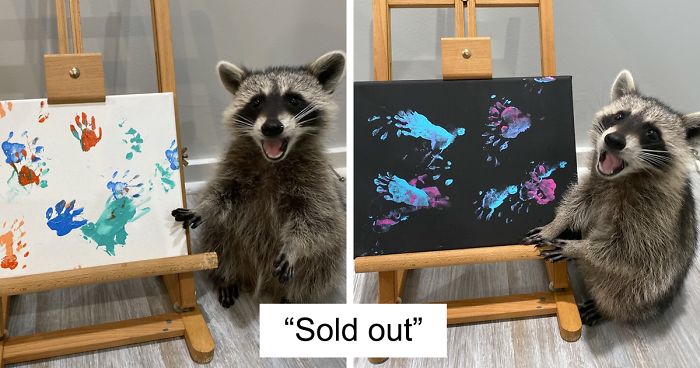
Some artists suffer for their work. Some stare dramatically out of windows, sip tiny coffees, and wait for inspiration to arrive wearing a scarf. And then there are raccoons: tiny masked geniuses who step into washable paint, march across a canvas, and pose afterward like they just reinvented abstract expressionism with snack-covered paws.
The internet has a soft spot for animals doing unexpectedly human things, but proud raccoon artists posing next to their paintings hit a very specific joy button. It is adorable, funny, and just strange enough to make you stop scrolling. Their colorful paw-print paintings look like something between modern art, toddler enthusiasm, and a secret forest gallery opening where the dress code is “fur, tail rings, and suspiciously sticky fingers.”
Behind the cuteness, though, there is a real story. Raccoons such as Tito, Piper, and Cheeto became online favorites because their painting sessions were not just random chaos. In responsible settings, painting can be a form of animal enrichment: a safe, supervised activity that gives intelligent animals something new to explore. The result is a happy raccoon, a delighted audience, and a canvas that somehow looks ready for a downtown loft.
Why Raccoon Artists Became Internet Royalty
The appeal of raccoon paintings is easy to understand. Raccoons already look like they are planning a tiny heist. Give one a canvas and suddenly the “trash panda” becomes a misunderstood creative visionary. The contrast is perfect: the same animal famous for opening garbage cans is now producing colorful abstract art and standing beside it with the confidence of someone expecting a museum wing.
Photos of raccoons posing beside their finished paintings work because they tell a tiny story in one image. You can almost imagine the artist statement: “This piece explores the emotional tension between blueberries, wet paws, and the sound of a refrigerator opening.” Their faces appear proud, curious, and faintly surprised, as if even they cannot believe they made something so charming.
Online audiences love this because it feels wholesome without being boring. It is not just “look at this cute animal.” It is “look at this cute animal who has apparently entered a productive creative phase.” In a world full of serious headlines, a raccoon beside a painting feels like a miniature vacation for the brain.
The Real Raccoons Behind the Paw-Print Masterpieces
The viral raccoon art trend is strongly associated with rescue raccoons like Tito, Piper, and Cheeto. Tito became known as an original raccoon artist, while Piper continued the tradition by creating paw-print paintings for fans. Their work often featured bright splashes, tracks, smears, and paw patterns that gave each canvas a one-of-a-kind personality.
What makes these raccoon paintings especially fun is that they are not trying to imitate human art in a serious way. The charm comes from the honest animal process. A raccoon is not worrying about composition, gallery politics, or whether blue is “over.” A raccoon is exploring texture, movement, color, and probably wondering whether the canvas is edible.
That authenticity is exactly why people connect with it. The paintings feel spontaneous. They remind us that creativity does not always need to be polished, intellectualized, or trapped in a twelve-page PDF. Sometimes creativity looks like a raccoon stepping into paint and walking across a canvas with the confidence of a furry Jackson Pollock.
Raccoons Are Surprisingly Built for This Kind of Mischief
Raccoons are not random participants in the animal art world. They are famously dexterous, curious, and adaptable. Their front paws are sensitive and flexible, helping them explore objects, manipulate food, open containers, and investigate the environment with impressive precision. Anyone who has watched a raccoon test a latch knows this animal has the energy of a locksmith who accepts payment in grapes.
This paw sensitivity makes painting a natural kind of enrichment activity. The raccoon gets to touch new textures, move through color, interact with a surface, and experience a change from the normal routine. The result may be a canvas for humans, but for the animal, the value is in the activity itself.
Modern studies of raccoon cognition also show why people are fascinated by them. Raccoons are flexible problem solvers, especially in urban environments where they must navigate trash cans, fences, buildings, cars, and human schedules. Their reputation as clever little bandits is not just internet drama. It is part of what makes them so successful in cities and suburbs.
Animal Painting Is Usually About Enrichment, Not Ego
When people see animal paintings for sale, it is easy to imagine the animal as a tiny professional artist clocking in for a shift. In responsible animal care, however, painting is not supposed to be a performance forced on the animal. It is an enrichment option. The animal should be free to participate, stop, explore, or decide that today is not a blue-paint day.
Zoos, sanctuaries, and educational centers often use enrichment to encourage natural behaviors, reduce boredom, and add variety to daily care. Enrichment may include puzzles, scents, food searches, climbing structures, training sessions, or safe sensory activities like painting. The goal is not to turn animals into entertainers. The goal is to support physical and mental well-being.
That distinction matters. A happy raccoon artist is charming because the activity appears voluntary, safe, and playful. A raccoon should never be treated like a prop. The best animal art moments are the ones where the animal’s comfort comes first and the final product is simply a delightful bonus.
What Makes Raccoon Paintings So Delightfully Funny?
Part of the humor comes from the seriousness we project onto the scene. A raccoon standing beside a canvas looks accidentally official. It has the posture of an artist waiting for critics to recognize the depth of the work. The face says, “Yes, I understand the risks I took with yellow.”
The paintings themselves are often bright, abstract, and full of motion. There are no neat flowers, landscapes, or polite little barns. Instead, the canvases are bursts of paw-powered energy. One piece might look like fireworks in a snack drawer. Another might resemble a weather map created during a sugar rush. And yet, somehow, they work.
Humans are trained to look for meaning in art. With raccoon art, that instinct becomes hilarious. Is the green smear a commentary on urban expansion? Is the orange paw print a study in seasonal longing? Did Cheeto intend that diagonal line, or did someone shake the treat bag? The answer is probably “treat bag,” but the mystery is half the fun.
Why These Happy Raccoon Artists Feel So Good to Watch
There is a reason animal art content spreads quickly online. It combines cuteness, surprise, and emotional relief. Seeing a raccoon proudly pose beside a painting gives viewers a small burst of uncomplicated happiness. Nobody needs a manual to understand it. The image says: tiny creature made colorful thing, tiny creature seems pleased, world slightly improved.
This kind of content also gives people a softer view of wildlife. Raccoons are often described as pests, especially when they raid trash cans, nest in chimneys, or stroll across a deck at 2 a.m. like landlords inspecting the property. But raccoon art reminds viewers that these animals are intelligent, curious, and full of personality.
That does not mean wild raccoons should be approached, handled, fed, or invited into the kitchen for a collaborative mural. They are still wild animals, and safety matters. But appreciating their intelligence and charm can encourage more respectful coexistence. A raccoon can be both adorable and not suitable for cuddling. This is also true of many celebrities.
Safety First: Do Not Turn a Backyard Raccoon Into Picasso
Before anyone gets inspired to leave a canvas next to the trash bins, let us be very clear: wild raccoons should not be handled or encouraged to interact closely with people. Raccoons can bite when frightened, and they may carry diseases. Responsible wildlife organizations advise people to avoid direct contact and to call professionals when raccoons are injured, trapped, or causing problems around homes.
Animal painting should only happen under appropriate supervision with animals already in human care, such as non-releasable rescues, sanctuary residents, or animals in licensed facilities. The paint should be non-toxic and washable. The setup should prevent ingestion, stress, slipping, overheating, or forced participation. The animal’s comfort is more important than the canvas.
In other words, admire raccoon artists online, but do not recruit the local roof raccoon into your Etsy business. That raccoon has other priorities, including chimney inspections, grape acquisition, and judging your garbage management system.
What Raccoon Art Teaches Us About Creativity
The funniest thing about raccoon paintings is also the most refreshing: they have no artistic anxiety. A raccoon does not worry whether its work is original enough. It does not compare itself to other raccoons on social media. It does not abandon a canvas because the first paw print was “too commercial.”
That freedom is a reminder that creativity can begin with play. Humans often make art complicated before we even start. We wonder if we are talented, if the result will be useful, if someone will judge it, or if the colors match the couch. Raccoons simply step in and make a mark.
There is a small lesson there. Not every creative act needs to become a masterpiece. Sometimes the value is in the process: touching the paint, trying the idea, making a mess, learning what happens, and standing proudly beside the result. Preferably without tracking paint across the refrigerator, but the principle stands.
Why Animal Art Can Support Conservation and Care
Animal-created artwork can also serve a practical purpose when managed ethically. Many facilities use animal art sales to raise money for food, veterinary care, rescue work, habitat improvements, or conservation education. Supporters enjoy owning a unique piece, while the animal receives enrichment and the organization receives funds for care.
This is one reason raccoon paintings became more than a novelty. They offer a personal connection. A buyer is not just purchasing a random abstract canvas; they are supporting a story, an animal, and often a rescue or care mission. The paw prints become a cheerful symbol of the animal’s personality.
Of course, transparency matters. Ethical animal art should be clear about how the art is made, what materials are used, whether the animal participates voluntarily, and how proceeds are used. Cute should never be an excuse for careless handling. The happiest raccoon artist is one whose needs are respected before, during, and after the paint dries.
The Joy of Seeing a Raccoon Look Proud
Do raccoons understand pride the way humans do? Probably not in the exact same way. But they can show curiosity, interest, comfort, and engagement. When a raccoon appears relaxed beside a colorful canvas, humans naturally read that pose as pride. And honestly, who can blame us? The little face, the paws, the painting, the postureit is emotionally illegal to resist.
That interpretation is part of the fun. We know the raccoon is not preparing a gallery speech, yet the image invites us to imagine one. We see personality in the pose. We see satisfaction in the stance. We see a tiny artist who may or may not have stepped in purple paint five minutes earlier and looked delighted about it.
In a strange way, these raccoon artists make art feel accessible again. They remove the intimidation. If a raccoon can make a joyful mess and charm the internet, maybe the rest of us can pick up a brush, start a hobby, or at least stop pretending we need perfect conditions before trying something creative.
Personal Experiences and Reflections: What These Raccoon Artists Remind Us About Happiness
The first time you see a raccoon posing beside a painting, the reaction is usually not quiet appreciation. It is more like an involuntary laugh followed by sending the image to three friends with a message such as, “This is important.” There is something deeply satisfying about seeing a creature known for dumpster diplomacy suddenly appear as a confident artist.
It reminds many people of childhood art class, when creativity was less about results and more about discovery. Back then, a good painting did not need a theme. It needed color, motion, and maybe glitter if the teacher made the mistake of leaving glitter within reach. Raccoon paintings carry that same spirit. They are not stiff or self-conscious. They are alive with movement, curiosity, and joyful disorder.
Watching animal enrichment videos can also change the way people think about care. A raccoon painting session is cute, but it also shows that intelligent animals need stimulation. They need choices, novelty, and chances to use their natural abilities. For raccoons, that often means touching, exploring, manipulating, climbing, searching, and solving. Painting is just one playful example of a larger idea: animals thrive when their minds are considered as carefully as their food bowls.
There is also a gentle emotional lesson in the finished canvas. Humans tend to measure creativity by polish. We want clean lines, smart concepts, and proof that we knew what we were doing. A raccoon canvas does not care about any of that. It is bold because it exists. It is charming because it happened. It turns random movement into something worth smiling at.
That is probably why proud raccoon artists feel so healing to watch. They make happiness look simple. A safe space, bright colors, gentle supervision, a curious animal, and a moment of play can become something memorable. The painting does not need to be perfect. The raccoon does not need to understand modern art criticism. The viewer does not need to analyze every paw mark. Everyone gets to enjoy the moment exactly as it is.
In a busy online world where so much content feels loud, polished, or designed to sell urgency, a raccoon beside a painting feels wonderfully unnecessary. It is joy for joy’s sake. It says that the internet can still surprise us with something soft and silly. It says that even a masked night creature with tiny hands can brighten a stranger’s day by making a colorful mess and looking pleased about it.
And maybe that is the real masterpiece. Not the canvas itself, though many of them are genuinely delightful. The masterpiece is the reaction: people laughing, sharing, relaxing, and remembering that happiness sometimes arrives in the form of a raccoon with paint on its paws. If that is not art, the museums may need to update their policies.
Conclusion
Proud raccoon artists posing next to their paintings are more than a cute internet trend. They are a perfect blend of animal intelligence, responsible enrichment, playful creativity, and pure visual comedy. The best raccoon art moments show animals exploring safely, caregivers thinking creatively, and audiences finding joy in something delightfully unexpected.
Whether the canvas looks like abstract genius or a fruit smoothie survived an earthquake, the emotional effect is the same. These raccoons make people smile. They remind us that creativity can be messy, funny, and free. They also remind us to respect wildlife, support ethical animal care, and never underestimate a creature with tiny hands and big artistic energy.