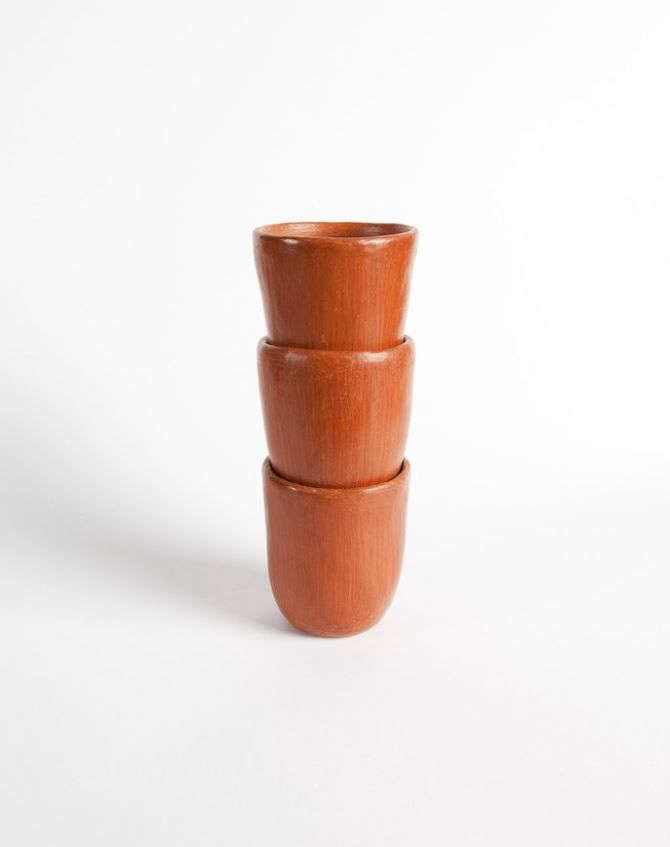
A red clay water glass is proof that an everyday drinking vessel does not need shiny technology, a charging cable, or an app that reminds you to hydrate. Made from fired red earthenware, this humble cup combines natural beauty, traditional craftsmanship, and a surprisingly clever cooling effect.
Despite the word “glass” in its name, a red clay water glass is not made from glass at all. It is generally a small terracotta or earthenware tumbler designed for serving drinking water. Depending on where it is made, it may also be described as a clay cup, terracotta tumbler, earthenware drinking cup, matka cup, or kulhad-style water cup.
Its earthy color and handmade texture can make an ordinary sip of water feel like a tiny ceremony. Before replacing every cup in the kitchen, however, buyers should understand how red clay vessels work, how to choose food-safe pottery, and how to care for them correctly.
What Is a Red Clay Water Glass?
A red clay water glass is a drinking cup formed from iron-rich earthenware clay and hardened through kiln firing. Iron compounds in the clay contribute to colors ranging from pale orange and brick red to deep reddish brown. Variations in mineral content, firing temperature, kiln atmosphere, and surface treatment explain why two handmade cups may look like close relatives rather than identical twins.
Most traditional versions are either completely unglazed or glazed only on selected surfaces. An unglazed exterior preserves the natural texture and porosity of the clay. A glazed interior can reduce absorption and simplify cleaning, although the glaze must be formulated and tested for food contact.
Earthenware, Stoneware, and Porcelain Are Different
Red clay drinking cups are usually classified as earthenware. Earthenware is commonly fired at lower temperatures than stoneware or porcelain, so it remains more porous. Stoneware is fired more intensely and generally absorbs less water, while porcelain becomes dense, hard, and often translucent.
That porosity is not automatically a defect. In a traditional water cup, it is part of the design. The same characteristic that makes unglazed terracotta unsuitable for some applications allows it to participate in natural evaporative cooling.
How a Red Clay Cup Can Cool Water Naturally
Unglazed red clay contains microscopic pores. When the cup is filled, a very small amount of moisture may move into or through those pores. At the exterior surface, some of that moisture evaporates. Evaporation requires energy, and part of that energy is drawn from heat in the cup and water.
The result can be water that feels gently cooler than the surrounding air, especially in a warm, dry, well-ventilated environment. It is the same broad physical principle behind perspiration cooling the skin.
Do not expect refrigerator-level performance. A clay cup will not transform room-temperature water into an arctic beverage capable of giving your teeth an identity crisis. Its effect is subtler: naturally refreshed water without electricity or ice.
Humidity Changes the Results
Evaporative cooling works best when the air can accept additional moisture. In dry climates, evaporation happens more readily. In humid weather, the air already contains considerable moisture, so the cooling effect may be weaker.
Air movement also matters. Placing the cup in a shaded, ventilated location can improve evaporation. Direct sunlight is generally less useful because it can heat the cup faster than evaporation can cool it.
Why Some Cups “Sweat”
A small damp patch beneath a fully unglazed cup may be normal, particularly during its first uses. This does not necessarily mean the cup is cracked. It may simply be absorbing and transmitting a little moisture through its porous body.
Heavy dripping, visible fractures, or a rapidly falling water level are different matters. Those signs suggest damage, incomplete firing, unusually high absorption, or a product that was never intended to hold beverages.
How Red Clay Water Glasses Are Made
The process begins with clay selection and preparation. Stones, roots, and other unwanted material are removed, and the clay is blended with enough water to become workable. A potter may form the cup on a wheel, press it in a mold, or build it by hand.
After shaping, the cup must dry slowly and evenly. Drying too quickly can create cracks because the outer surface contracts before the interior has finished losing moisture. Once dry, the piece is fired in a kiln, where heat permanently changes the clay into ceramic material.
Surface Finishing
A potter may smooth or burnish the surface before firing, apply a thin clay slip, decorate the exterior, or coat the interior with glaze. Each treatment affects appearance, absorption, and maintenance.
Handmade cups often display finger marks, minor color shifts, slight rim variations, or faint firing patterns. These are usually signs of the production method rather than faults. A wobbling base, sharp rim, deep crack, or flaking surface, on the other hand, deserves less artistic appreciation and more immediate retirement.
Benefits of Using a Red Clay Water Glass
Natural Cooling Without Electricity
The cup can provide mild evaporative cooling without refrigeration. That makes it appealing for patios, summer meals, outdoor kitchens, and households interested in low-energy traditions.
A Distinctive Drinking Experience
Clay feels different from glass, plastic, or stainless steel. Its matte texture, substantial walls, and handcrafted shape make drinking water feel slower and more intentional. It turns hydration from an administrative obligation into something closer to a small sensory experience.
Warm, Natural Appearance
Terracotta coordinates easily with wood, linen, stone, neutral ceramics, rustic table settings, and Southwestern or Mediterranean-inspired interiors. It can look equally comfortable beside a farmhouse pitcher or a modern concrete countertop.
Support for Craftsmanship
Purchasing directly from a responsible studio potter or established ceramic producer can support skilled craft. Functional pottery requires knowledge of clay chemistry, forming, drying, kiln behavior, glaze compatibility, and food-safety testing. It is not merely dirt that attended finishing school.
Potential Reduction of Disposable Cup Use
A durable reusable clay cup can replace disposable plastic or paper cups in suitable settings. Its environmental value still depends on production methods, transportation, lifespan, and how frequently it is used, so it should not be marketed as magically impact-free.
Does Water Taste Different in Red Clay?
Some users describe water from an unglazed clay cup as softer, fresher, or slightly earthy. This perception may come from the cup’s temperature, aroma, surface texture, and the ritual of drinking from natural material. New earthenware can have a noticeable clay scent, particularly when wet.
Manufacturers sometimes claim that clay adds beneficial minerals, changes water chemistry, removes toxins, or makes water strongly alkaline. Such claims should not be accepted without reliable product-specific testing. Clay composition varies, and a pleasant taste does not prove that the cup purifies water.
A red clay water glass is a serving vessel, not a substitute for a certified water filter. Begin with water that is already safe to drink.
Food Safety: The Most Important Buying Consideration
Not every attractive clay object is safe for beverages. Some ceramics are made only for decoration, gardening, incense, or artistic display. Others may use glazes or pigments that have not been evaluated for repeated food contact.
Look for Clear Food-Use Information
Choose a cup that the manufacturer explicitly identifies as food safe or suitable for drinking water. Ideally, the seller should be able to explain the clay body, firing process, glaze type, and whether the finished product has been tested for lead and cadmium release.
“Lead-free glaze” is useful information, but it is not always the same as laboratory confirmation that the finished cup does not leach unsafe amounts of lead. Safety depends on the entire fired product, including glaze formulation, kiln temperature, firing consistency, clay body, surface decoration, and glaze fit.
Avoid Unverified Decorative and Antique Pottery
Do not assume that an antique, imported souvenir, flea-market find, or decorative handmade cup is safe simply because it can physically hold water. Some older or traditionally produced glazed ceramics may contain lead or cadmium that can migrate into food and beverages.
Pieces labeled “not for food use,” “decorative only,” or with similar warnings should never be used as drinking cups. That label is not the pottery being modest. It is giving instructions.
Be Careful With Acidic Beverages
Acidic liquids can increase the migration of certain metals from unsuitable ceramic surfaces. Unless the maker specifically approves the cup for broader beverage use, reserve it for plain drinking water rather than lemonade, fruit juice, kombucha, wine, vinegar-based drinks, or long-term beverage storage.
Retire Damaged Cups
Stop using a cup if the glaze becomes crazed, chipped, powdery, or flaky, or if the clay develops a significant crack. Damaged areas can become difficult to clean and may expose underlying materials.
Extra caution is sensible in homes with young children or pregnant people because preventing lead exposure is especially important for these groups.
Raku Is Usually Decorative
Raku pottery can be visually spectacular, with metallic colors and dramatic crackling. However, the rapid firing and cooling process commonly produces porous, fragile surfaces that are not recommended for functional food use unless a qualified maker provides specific evidence to the contrary.
How to Choose a High-Quality Red Clay Water Glass
Start by confirming that the cup was designed for drinking. Then inspect its practical details.
- Food-contact status: Look for a clear statement that the finished product is intended for beverages.
- Testing information: Prefer makers who discuss lead and cadmium testing rather than relying on vague “natural” language.
- Comfortable rim: The lip should feel smooth, even, and comfortable against the mouth.
- Stable base: The cup should sit securely without rocking.
- Appropriate capacity: A 10- to 14-ounce cup works well for daily water service, though smaller traditional cups can be charming.
- Manageable absorption: Mild dampness can be normal; obvious leaking is not.
- Clear care instructions: The seller should explain washing, drying, dishwasher use, and temperature limits.
Glazed Interior or Fully Unglazed?
A fully unglazed cup may offer a stronger clay aroma and greater evaporative effect, but it can absorb more moisture and require careful drying. A food-safe glazed interior usually resists staining and is easier to clean. Some designs leave the exterior unglazed while glazing the inside, creating a practical compromise.
How to Prepare a New Clay Cup
Always follow the manufacturer’s instructions because clay bodies and finishes differ. For many unglazed cups, a sensible first-use routine is to rinse the vessel thoroughly with clean water, soak it briefly if recommended, rinse it again, and allow it to dry.
A few early water changes may reduce loose surface dust and the stronger “new clay” aroma. Do not use the cup when the water develops an unpleasant chemical smell, oily film, unusual color, or gritty residue that continues after repeated rinsing.
Cleaning and Care
Wash Soon After Use
Empty and rinse the cup after drinking. Plain water does not usually leave difficult residue, but allowing moisture to sit for days can encourage musty odors.
Use Gentle Cleaning Methods
A soft brush or nonabrasive sponge is normally appropriate. Follow the maker’s recommendation regarding soap. Strongly fragranced detergent can sometimes enter porous, unglazed clay and make the next serving of water taste like a flower shop lost an argument.
Dry Completely
Place the cup upside down or on its side where air can circulate. Do not stack damp cups in a closed cabinet. Complete drying helps prevent stale odors and surface growth.
Avoid Sudden Temperature Changes
Unless specifically rated for them, do not move a clay cup directly from a hot environment to ice water or from cold storage to boiling liquid. Rapid temperature changes can create thermal stress and cracking.
Do Not Assume It Is Dishwasher or Microwave Safe
Some modern ceramic drinkware is dishwasher and microwave safe, but traditional porous earthenware may not be. Check the producer’s instructions rather than conducting an expensive experiment with your appliance.
Red Clay Cups in History and Culture
Clay vessels have served human communities for thousands of years. Archaeological and museum collections contain terracotta cups, bowls, jars, cooking pots, and water-storage vessels from many regions and periods. They were practical tools for carrying, preparing, storing, and serving food and drink long before industrial glassware entered the kitchen cabinet.
In India, porous clay pots known as matkas have traditionally stored and cooled water. Small unglazed cups are also associated with tea and other drinks. In parts of the Middle East, Africa, and the Mediterranean, earthenware jars have been used for water storage and evaporative cooling. Indigenous communities in the American Southwest made pottery for cooking, serving, carrying, and storing water and food.
These traditions are not identical, and one generic “rustic clay cup” should not be presented as belonging to every culture at once. Responsible sellers identify the origin, maker, and local terminology of a product whenever possible.
When a Red Clay Water Glass Makes Sense
This type of cup is well suited to people who appreciate handcrafted tableware, moderate natural cooling, tactile materials, and slower daily rituals. It can be especially enjoyable for serving plain water during warm weather or creating a relaxed table setting.
It may be less suitable for someone who needs highly durable drinkware, frequently uses dishwashers, serves acidic beverages, dislikes minor moisture marks, or wants every cup to be perfectly identical. Clay has personality. Occasionally, that personality leaves a ring on the coaster.
Experience Guide: A Week With a Red Clay Water Glass
The following is an illustrative experience based on the practical characteristics commonly associated with food-safe, unglazed earthenware cups.
Day One: The First Rinse
The cup initially feels heavier and rougher than ordinary glassware. Its brick-red exterior shows tiny variations from the firing process, and the rim is smooth but not mechanically perfect. After rinsing, the clay darkens as it absorbs moisture. That color change is oddly satisfying, rather like watching dry soil after the first summer rain.
The first serving has a faint earthy aroma. It is not unpleasant, but it is noticeable. After two rinses and a short soak performed according to the maker’s instructions, the aroma becomes much milder.
Day Two: Testing the Cooling Effect
The cup is filled with room-temperature water and placed in a shaded area near an open window. After a while, the exterior feels slightly cool and damp. The water is not icy, but it tastes more refreshing than water served from a plastic tumbler at the same starting temperature.
A coaster quickly becomes essential. The cup does not pour water through its walls, but a faint moisture ring appears underneath it. The coaster accepts its new career without complaint.
Day Three: Texture Changes the Ritual
The most noticeable difference is not temperature. It is pace. The rounded body encourages both hands to hold the cup, while the matte surface provides a secure grip. Instead of carrying an enormous insulated bottle around all afternoon, the user refills a smaller cup several times.
The water itself remains ordinary safe drinking water, yet the experience feels less ordinary. The cup’s texture and aroma make each refill noticeable. That can be useful for someone trying to drink more water without turning hydration into a competition measured by a glowing smart lid.
Day Four: Learning What Not to Pour
A glass of lemon water sounds tempting, but the manufacturer approves the unglazed cup only for plain water. The lemon goes into regular glassware instead. This is an important part of owning handmade pottery: the material sets boundaries.
The cup is also kept away from boiling water and the freezer. A red clay water glass is not automatically a coffee mug, cookware, storage jar, and laboratory beaker simply because all four objects can be round.
Day Five: Cleaning Becomes a Habit
After use, the cup is rinsed with clean water and gently brushed. It is then placed on a drying rack with plenty of air around it. By evening, the exterior has returned to its lighter dry color.
Leaving the cup damp in a cabinet produced a slightly musty smell during an earlier trial, so complete air-drying becomes nonnegotiable. This is not difficult, but it requires more attention than tossing a standard tumbler into the dishwasher.
Day Six: Guests Notice It
A visitor immediately asks about the cup. The conversation moves from pottery to natural cooling, traditional water vessels, and the difference between earthenware and stoneware. Few people have ever gathered around a plastic cup to admire its emotional depth.
The handcrafted appearance also makes minor differences between cups attractive. One is slightly darker, another has a softer rim curve, and a third shows a small firing mark. The set feels coordinated without looking factory-cloned.
Day Seven: The Practical Verdict
After a week, the red clay water glass is not a replacement for every drinking vessel. Glass remains better for juice, the insulated bottle wins during long drives, and durable stoneware is more convenient for the dishwasher.
For plain water at home, however, the clay cup earns a regular place on the shelf. Its cooling is gentle, its care routine is manageable, and its tactile character makes a simple drink more enjoyable. The key is buying from a transparent maker, confirming food safety, following the care instructions, and accepting that handmade earthenware behaves differently from mass-produced glass.
Conclusion
A red clay water glass combines an ancient material with a purpose that remains completely relevant: serving water in a simple, attractive vessel. Its porous earthenware body may provide mild evaporative cooling, while its color, texture, and handmade form add warmth to the table.
The best cup is not merely the prettiest one. It should be explicitly made for beverages, appropriately fired, comfortable to use, easy to clean, and supported by credible food-safety information. Buyers should avoid unverified decorative pottery, damaged glaze, and unsupported health claims.
Choose carefully, dry it thoroughly, and give it a coaster. In return, this modest piece of fired earth can make plain water feel surprisingly special.
Note: This article provides general educational information. Product construction and care requirements vary, so follow the manufacturer’s food-safety and cleaning instructions for the specific cup you purchase.