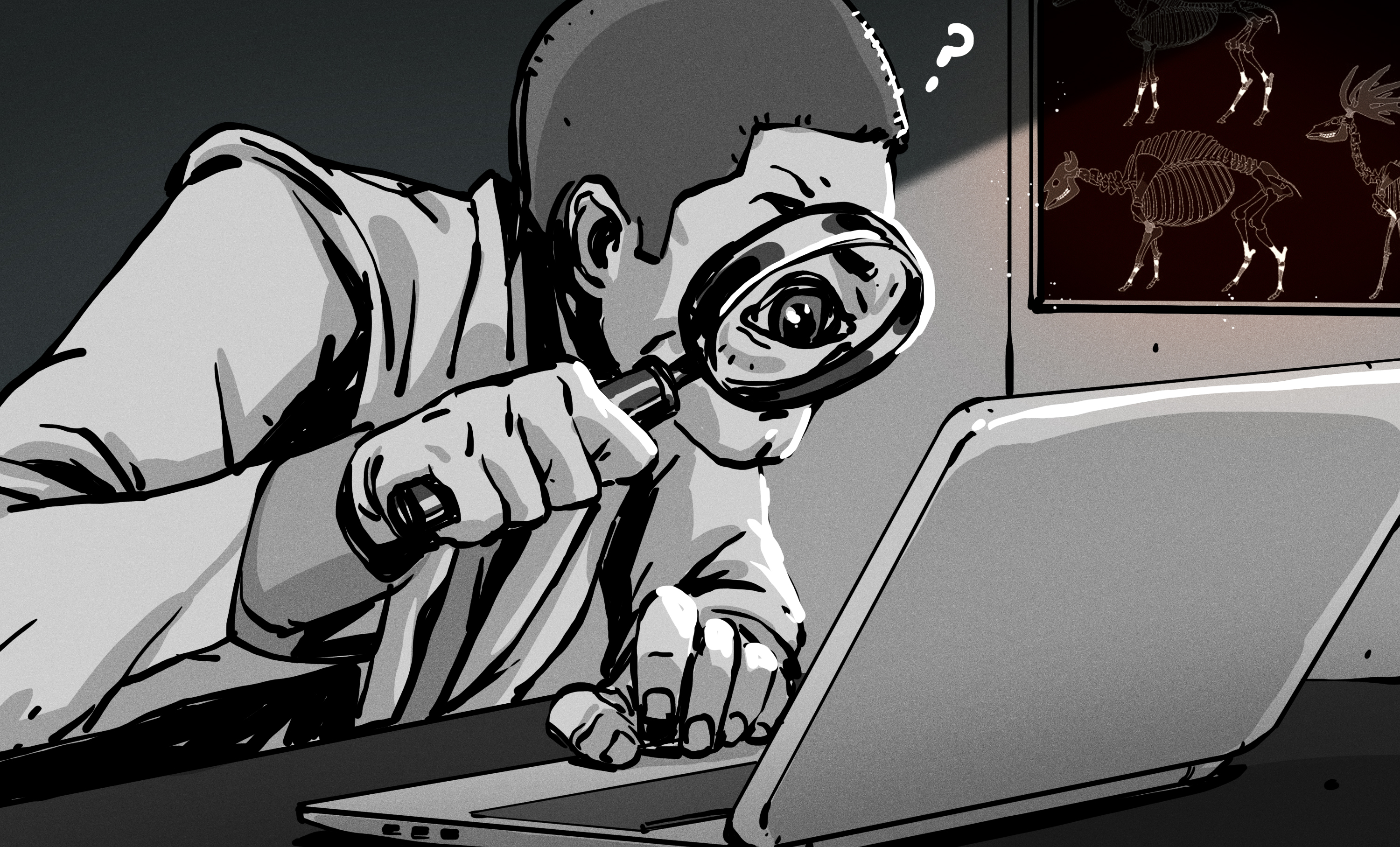
For a long time, taxonomy had a simple rule of thumb: if you wanted to name a new species, you needed the goods. And by “goods,” scientists usually meant a preserved specimen sitting in a museum drawer, a jar, or a herbarium cabinet, ready for future researchers to inspect. That old-school approach is still very much alive. But here comes the plot twist: in some cases, scientists are now formally declaring new species from photographs and video alone.
Yes, really. No net. No jar. No heroic Victorian naturalist squinting over a monocle. Just images, measurements, and a lot of nervous debate.
The idea sounds almost too modern to be true, but it is rooted in a real shift in how biodiversity is documented. High-definition underwater cameras, smartphone photography, remote exploration, digital databases, community science platforms, and better image analysis tools have made it possible to capture extraordinary detail without always capturing the organism itself. As a result, the scientific world is being pushed to answer a once-unthinkable question: when is an image enough to give a living thing an official scientific name?
The answer is not a clean yes or no. It is more like: sometimes, under strict conditions, and only if everyone involved is ready for an argument. That tension is exactly what makes this topic so fascinating. Scientists are not simply replacing specimens with selfies. They are renegotiating the rules of discovery in an age where some species are too fragile, too rare, too deep, too fast, or too ethically sensitive to collect the traditional way.
Why This Is Happening Now
The biggest reason is technology. Modern cameras can record anatomical detail that would have been impossible to preserve clearly a generation ago. Deep-sea robots can film animals thousands of meters below the surface. Macro photography can reveal incredibly fine features. Citizen scientists now upload millions of wildlife photos every year. In short, the world has become far more visible.
That visibility matters because new species are not always discovered in pristine labs or dramatic rainforest expeditions. Sometimes they first appear in a social media post, a camera-trap image, a remotely operated vehicle feed, or a photo uploaded to a platform like iNaturalist. In several recent examples, images did not just support discovery; they started it.
But the real pressure comes from biology itself. Some organisms do not preserve well. Others live in places where collecting them is expensive, dangerous, or destructive. Soft-bodied marine creatures can turn into scientific mush before they ever reach a museum. Extremely rare species may exist in such small numbers that removing one individual raises serious ethical questions. That is where image-based taxonomy enters the chat and politely starts a fight.
The Deep-Sea Comb Jelly That Changed the Conversation
One of the clearest modern examples came from the deep ocean near Puerto Rico, where NOAA researchers documented an unusual comb jelly during an expedition. The creature, later named Duobrachium sparksae, was described from high-definition video rather than a preserved body. Scientists had multiple visual observations, detailed footage, and enough morphological information to argue that the organism was genuinely new.
This was not a lazy shortcut. It was a case driven by practical reality. The animal was observed nearly 4,000 meters down. The team did not have collection capability at the time, and even if they had, ctenophores are notoriously delicate. Preserving one well enough for traditional study is like trying to save a soap bubble in a filing cabinet. In this situation, the video was not second-best evidence. It was the best evidence available.
The case became important because it showed that image-based naming was no longer just a theoretical loophole. It could work in a real, high-profile, scientifically cautious setting. It also revealed something equally important: scientists were willing to accept image-only naming when the documentation was rich, the reasoning was clear, and the absence of a specimen was justified rather than convenient.
What The Rules Actually Say
Here is where the story gets less flashy and more legalistic, because biology, like every serious profession, loves a good codebook. Under the International Code of Zoological Nomenclature, naming a new animal species without a preserved type specimen is permissible. That has been true for longer than many people realize. In 2017, the ICZN added guidance that made its position clearer: whenever feasible, new species should still be established on the basis of at least one preserved type specimen.
That guidance also says that if a scientist names a species without preserved material, they should explain why that was unavoidable, document the species extensively with high-resolution imagery and other evidence, and show that they made a serious effort to obtain or locate physical material. In other words, the rules do not say, “Snap a blurry picture and call it science.” They say, “Proceed only if you have a very good reason, excellent evidence, and a strong stomach for peer review.”
So the change is not that scientists suddenly abandoned specimens. The real shift is that taxonomy now has an officially acknowledged exception pathway for unusual cases.
Why Some Scientists Support Photo- And Video-Based Naming
1. Some organisms are almost impossible to collect well
Soft-bodied marine animals are the poster children here. They can collapse, tear, or lose their diagnostic features during collection and preservation. In those cases, video may actually preserve key traits better than a damaged specimen.
2. Conservation ethics matter
If a species appears to be extremely rare or critically endangered, killing one individual to satisfy tradition can feel scientifically useful but morally awkward. Some researchers argue that naming such organisms can help conservation happen faster by getting them recognized, studied, and protected.
3. Images can capture life as it is actually lived
Photographs and video can show posture, color, behavior, habitat, and movement in ways that preserved material often cannot. A pressed plant, pickled jelly, or faded skin may be scientifically valuable, but it is not exactly giving “alive and thriving.”
4. Discovery is increasingly decentralized
Professional scientists are no longer the only people spotting biological surprises. Photographers, park staff, divers, tourists, and citizen scientists now contribute huge amounts of observational data. The discovery pipeline has widened, and taxonomy is being forced to adapt.
Why Other Scientists Are Still Skeptical
This is where the skepticism becomes very reasonable. A photograph can be impressive without being complete. Many species can only be separated by microscopic structures, internal anatomy, genetic material, parasites, developmental stages, or subtle traits not visible in an image. Two animals may look alike and still be different species. One animal may look unusual and still be the same species, just older, younger, injured, dyed, dirty, or photographed from a confusing angle.
That concern is not hypothetical. Earlier photo-based species claims sparked fierce criticism because some were later challenged as misidentifications or weakly supported. A controversial insect description from photographs helped ignite a broader fight within taxonomy about whether the code was being interpreted too loosely. Critics argued that once image-only naming becomes too easy, the literature could fill with shaky names that future scientists have to clean up like intellectual litter.
There is also the reproducibility problem. A preserved specimen can be reexamined decades later with tools that do not even exist yet. A photograph freezes one view. A body, tissue sample, shell, skeleton, or herbarium sheet can keep giving answers to future science. That is why many biologists continue to insist that whole-organism vouchers remain the gold standard, especially for difficult groups and cryptic species.
Photos Often Start the Discovery, Not Finish It
One of the most interesting realities is that many “photo discoveries” are not truly photo-only species descriptions. Instead, the images act like a tip-off. They alert experts that something strange is out there, which then triggers fieldwork, specimen collection, genetic analysis, and a formal description the traditional way.
A famous example is Drosera magnifica, a spectacular carnivorous plant first recognized from a Facebook photo. The image caught a botanist’s attention, but the species was not formally described from the post alone. Researchers went back, studied the plant, collected material, and then published the description. The photo opened the door; it did not sign the paperwork by itself.
The same pattern appeared in Big Bend National Park, where park staff noticed a tiny fuzzy plant, took photographs, consulted records and experts, and eventually helped document a species so distinctive it was placed in a new genus, Ovicula biradiata. Again, the images were crucial. But they were the beginning of the process, not the whole process.
That distinction matters for SEO buzzwords and for reality. When people say scientists are “declaring new species via photos and video,” the truthful version is more nuanced: sometimes the images directly support the formal declaration, but much more often they are the spark that leads to a fuller investigation.
How Citizen Science And AI Are Changing Taxonomy
The rise of iNaturalist and similar platforms has made wildlife photography part of the scientific infrastructure. Users upload observations, experts help identify them, and the resulting records can reveal unusual distributions, rediscover lost species, or spotlight organisms that do not match known descriptions. Even museum and university science communicators now openly describe photo-sharing platforms as tools that can help discover new species.
Artificial intelligence adds another twist. Computer vision tools can now sort huge numbers of wildlife images, suggest IDs, and help researchers process camera-trap data faster. That does not mean AI is naming species on its lunch break, but it does mean the front end of discovery is accelerating. Strange-looking records can be surfaced more quickly, and photographic archives are becoming more searchable and scientifically useful.
Still, the smarter the tools get, the more careful scientists must be. Digital manipulation, misleading angles, and AI-generated fake wildlife images have introduced new risks. The future of image-based taxonomy will depend not just on better cameras, but on better verification.
Will This Become Normal?
Probably not in the way the headline makes it sound. Scientists are not likely to replace museum collections with ring lights and good vibes. Preserved specimens remain central to biology, and many researchers strongly defend them for good reason. But image-first taxonomy is likely to become more visible in certain corners of science: deep-sea biology, delicate soft-bodied organisms, rare or endangered animals, and fast-moving discoveries emerging from digital observation networks.
What seems most likely is a hybrid future. Photographs, video, audio, DNA, environmental data, and preserved material will increasingly work together. In some cases, the specimen will remain king. In others, the image record will do more of the heavy lifting. And in a few exceptional cases, the image may be the type of evidence that gets a species over the naming finish line.
That may sound radical, but it is really a familiar scientific story. Technology changes what can be observed. New evidence changes what can be justified. Then the rules catch up, everyone argues, and eventually the field settles into a new normal that seems obvious in hindsight.
Conclusion
So, are scientists now declaring new species via photos and video? Yes, but with a giant museum-sized asterisk. In zoology, the rules allow it in special cases, and modern examples prove that it can be done responsibly. But the practice remains controversial because photographs and videos, no matter how sharp, do not always capture everything a future scientist might need.
The bigger truth is that discovery itself has changed. Biodiversity science is no longer confined to specimen drawers and expedition notebooks. It now lives in ROV footage from the deep sea, smartphone uploads from mountain trails, camera traps in remote forests, and social posts that accidentally make a botanist spit out their coffee. Images are not replacing taxonomy. They are reshaping how taxonomy begins, how evidence is gathered, and when the scientific community decides a living thing is truly new to the world.
That makes this moment exciting, messy, and very online. Which, honestly, is a pretty accurate summary of the modern age.
What This Shift Feels Like In The Real World
The experience of modern species discovery often begins not with a dramatic expedition flag planted in the mud, but with a pause. A diver freezes a video frame. A park ranger zooms in on a strange flower. A naturalist uploads a photo and writes the digital equivalent of, “Uh, does anyone know what this is?” Then the waiting starts.
That waiting is part of the new emotional rhythm of taxonomy. In the old imagination of science, discovery felt immediate: find organism, collect organism, describe organism. Today it can feel more like detective work spread across screens, time zones, and expert networks. Someone in the field notices something odd. Someone else in a museum sees the image days later. A third person compares it with published descriptions. A fourth checks databases. A fifth says, very calmly, “I do not think this matches anything known.” And suddenly one photograph becomes a scientific event.
For the people involved, that can be thrilling in a very specific way. It is not just excitement. It is a mixture of disbelief, restraint, and obsession. Nobody serious wants to shout “new species!” too early, because biology has a long history of humbling the overconfident. So researchers start circling the evidence. They enlarge the image. They compare body shapes, hairs, scales, petals, fins, and color patterns. They check whether lighting could be deceptive. They ask whether the animal might be a juvenile, a female, a seasonal form, a hybrid, or simply a known species having a weird day.
There is also a strange intimacy to image-led discovery. A photo captures an organism alive, in context, doing whatever it was doing before humans interrupted the moment with scientific excitement. That gives researchers something a preserved specimen cannot always offer: posture, behavior, habitat, and the feel of a living encounter. A deep-sea jelly drifting like a tiny balloon or a rare plant clinging to a rocky slope arrives not as an object, but as a scene. The organism looks less like evidence and more like a character entering the story.
At the same time, the experience can be frustrating. Images create possibility, but they also create longing. The scientist may know they are looking at something extraordinary while also knowing the photo cannot answer every question. What is the internal anatomy like? What does the DNA say? Is the visible trait really diagnostic? Is there a population, or was this a one-off oddball? A single image can feel both generous and infuriating, like getting the trailer instead of the full movie.
For citizen scientists, the experience is different but equally powerful. Uploading a photo of an unfamiliar insect or plant can feel casual at first, almost playful. Then experts start commenting. Identifications shift. Messages arrive. Suddenly the observer is not just sharing a pretty picture; they are contributing to real biodiversity knowledge. That sense of participation is one of the most important cultural changes in science today. Discovery no longer belongs only to people with grant funding and field permits. Sometimes it begins with curiosity, decent lighting, and someone who bothered to look closely.
And maybe that is the deepest experience tied to this trend: a reminder that the planet is still gloriously under-read. Even in an age of satellites, smartphones, and machine learning, life keeps slipping past our categories. Sometimes all it takes to notice is a camera. Then comes the hard part: proving that wonder is real.