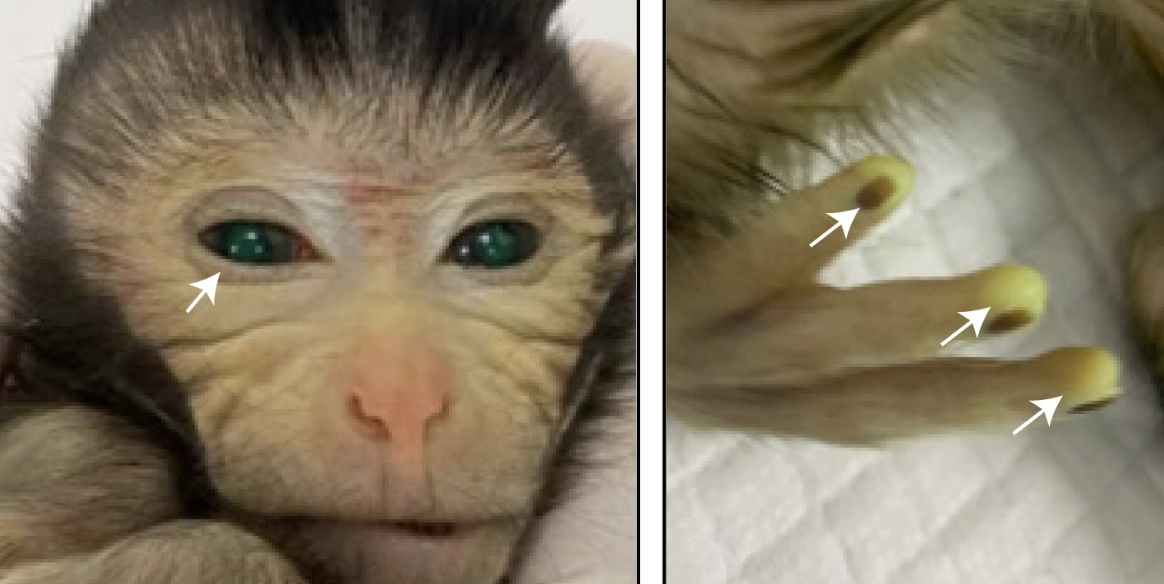
It sounds like the opening scene of a superhero movie: scientists created a glowing green monkey. Cue the dramatic music, the flashing laboratory lights, and one very confused monkey wondering why everyone keeps staring. But the real story is not about building a radioactive sidekick or a jungle rave mascot. It is about genetics, green fluorescent protein, medical research, and one of the most eye-catching scientific milestones of the early 21st century.
The phrase “glowing green monkey” usually points to research involving green fluorescent protein, often called GFP. This remarkable protein was first found in jellyfish and became one of biology’s most useful tools. When scientists insert the gene for GFP into an organism, certain cells can glow green under special light. That glow helps researchers track whether a gene has been successfully added, where it is active, and how biological processes unfold inside living tissue.
The first famous case was ANDi, a genetically modified rhesus monkey born from research at Oregon Health Sciences University. ANDi carried the gene for GFP, making him the first genetically modified nonhuman primate. Later, Japanese researchers created transgenic marmosets that showed clearer green fluorescence and, importantly, could pass the inserted gene to offspring. Together, these experiments changed the conversation about what primate genetics could doand what ethical boundaries science must respect.
The Real Story Behind the Glowing Green Monkey
Before anyone imagines a monkey lighting up like a traffic signal, let’s clear the vines: these animals did not stroll around glowing in the dark like tiny green lanterns. GFP fluorescence usually requires specific lighting conditions, such as blue or ultraviolet light, and detection tools. In many cases, the glow is strongest in tissues or cells examined in a laboratory setting.
ANDi, whose name cleverly comes from “inserted DNA” spelled backward, was created using a gene associated with green fluorescent protein. Scientists introduced the gene into monkey eggs using a modified viral vector, then fertilized the eggs and implanted embryos into surrogate mothers. The scientific achievement was not that ANDi looked like a lime-flavored cartoon character. The breakthrough was that researchers had successfully added foreign genetic material into a primate.
That mattered because primates are biologically closer to humans than mice, fish, or fruit flies. For decades, researchers relied heavily on rodents to study genetics and disease. Mice are incredibly useful, but they are not tiny humans with whiskers. Some diseases, especially those involving the brain, immune system, reproduction, and complex behavior, may behave differently in primates. Scientists hoped that genetically modified monkeys could help create more accurate models for conditions such as Parkinson’s disease, Huntington’s disease, Alzheimer’s disease, diabetes, HIV, and other disorders.
What Is Green Fluorescent Protein?
Green fluorescent protein is one of the great glow-ups in modern biologyliterally. GFP comes from the crystal jellyfish, Aequorea victoria, and it has the extraordinary ability to emit green light when exposed to certain wavelengths. Scientists realized that if the GFP gene could be attached to other genes, it could act like a biological highlighter.
Imagine trying to find one specific person in a packed football stadium. Now imagine that person is wearing a neon-green jacket and waving. That is the basic appeal of GFP. It allows researchers to see where a gene is active, where a protein travels, or which cells carry a particular modification.
GFP became so important that the 2008 Nobel Prize in Chemistry was awarded to Osamu Shimomura, Martin Chalfie, and Roger Y. Tsien for the discovery and development of green fluorescent protein. Their work helped transform cell biology. Today, fluorescent proteins are used in research on cancer, embryonic development, neuroscience, infection, organ growth, and countless other fields. In short, GFP gave scientists a flashlight small enough to shine inside life itself.
How Scientists Created a Genetically Modified Monkey
The basic process behind ANDi involved several difficult steps. First, researchers introduced the GFP gene into monkey eggs using a modified retroviral vector. A viral vector is like a delivery truck for genetic cargo. The virus is altered so it cannot cause disease in the usual way, but it can still help carry DNA into a cell.
Next, the eggs were fertilized using intracytoplasmic sperm injection, a technique in which a single sperm is injected directly into an egg. Some embryos developed and were transferred into surrogate rhesus monkeys. After a long and delicate process, ANDi was born carrying the inserted genetic material.
The success rate was not exactly what you would call “plug and play.” Creating a transgenic primate required many eggs, many embryos, and careful reproductive technology. Only a small number of pregnancies resulted, and ANDi became the famous survivor carrying the desired genetic marker. Science, as usual, did not arrive wearing a cape. It arrived with spreadsheets, microscopes, and a lot of coffee.
Why the 2009 Glowing Marmosets Were a Big Deal
ANDi proved that scientists could insert foreign DNA into a primate, but later research pushed the field further. In 2009, a team led by Erika Sasaki in Japan reported the creation of transgenic common marmosets carrying the GFP gene. These marmosets showed green fluorescence in various tissues under special light.
The real milestone was germline transmission. That means the genetic modification was present in reproductive cells and could be passed to offspring. In practical terms, researchers could potentially establish lines of genetically modified primates without starting from scratch every time. That was a major technical breakthrough for biomedical research.
Marmosets are small New World monkeys with several features that make them attractive for laboratory research. They mature relatively quickly, reproduce more efficiently than larger primates, and have social behaviors that interest neuroscientists. Because of these traits, transgenic marmosets became an important focus for studying human disease models, especially neurological and developmental disorders.
Why Scientists Wanted a Glowing Monkey in the First Place
The green glow was not the final goal. It was proof of concept. GFP acted as a visible sign that the genetic engineering technique worked. Once scientists could reliably insert and track a harmless marker gene, they could imagine inserting genes related to disease, development, immunity, or brain function.
Better Models for Human Disease
Some human diseases are difficult to model in mice. Brain disorders are especially challenging because primate brains are more similar to human brains in structure, development, and behavior. A genetically modified monkey might help researchers observe how a disease begins, how it progresses, and how treatments affect living systems over time.
For example, a primate model could help scientists study movement disorders, memory loss, viral infections, immune responses, or inherited neurological conditions. The hope is not to create glowing animals for spectacle. The hope is to build better tools for understanding suffering and, eventually, reducing it.
Tracking Cells Like a Biological GPS
Fluorescent proteins allow scientists to follow cells as they move, divide, specialize, or respond to disease. In developmental biology, this is priceless. In neuroscience, it helps researchers see how certain cells connect. In cancer research, fluorescent markers can help track tumor behavior. In regenerative medicine, they may help show whether transplanted cells survive and integrate into tissue.
GFP is basically the lab version of putting a tiny reflective vest on a molecule. It says, “Here I am. Please stop losing me in the cellular crowd.”
What This Research Did Not Mean
Whenever genetic engineering and primates appear in the same sentence, people understandably start asking big questions. Are scientists making designer monkeys? Are glowing humans next? Did someone accidentally open the door to a real-life science fiction franchise?
The answer is more grounded. The glowing green monkey research was not about creating novelty pets, enhanced animals, or human upgrades. It was about testing whether precise genetic tools could work in primates. The GFP gene was used because it is easy to detect and widely studied. It was a marker, not a superpower.
Also, making a transgenic primate is far more complex than editing a single cell in a dish. It involves reproductive biology, embryo development, animal care, genetics, and long-term monitoring. The scientific and ethical barriers are high, as they should be.
The Ethical Questions Are Impossible to Ignore
The moment scientists created a genetically modified monkey, the ethical debate became unavoidable. Nonhuman primates are intelligent, social animals with complex emotional lives. Their similarity to humans is exactly what makes them scientifically valuableand morally difficult to use in research.
Supporters argue that primate research may be necessary for studying diseases that cannot be adequately modeled in other animals or in cell cultures. They point to potential benefits for patients with devastating conditions, especially neurological and infectious diseases. Critics argue that the suffering, confinement, and manipulation of primates require much stronger justification, stricter oversight, and serious investment in alternatives.
In the United States, research involving nonhuman primates is regulated by federal rules and institutional review systems. Facilities must follow animal welfare requirements, including standards for housing, veterinary care, transportation, and psychological enrichment. Research protocols are typically reviewed by Institutional Animal Care and Use Committees, which evaluate whether animal use is justified and whether pain and distress are minimized.
Still, regulation does not erase the ethical tension. It only provides a framework for asking hard questions: Is this research necessary? Are there alternatives? Are fewer animals being used? Is suffering minimized? Are the potential benefits strong enough to justify the work? A glowing monkey may grab headlines, but the deeper issue is how society decides which scientific goals are worth pursuing and at what cost.
Why the Green Glow Captured Public Attention
Part of the fascination comes from the visual power of the idea. “Scientists created a genetically modified primate carrying a fluorescent reporter gene” is accurate, but let’s be honestit is not winning any headline beauty contest. “Scientists created a glowing green monkey” instantly wakes people up.
The phrase blends three things humans cannot resist: animals, color, and the possibility that science has once again wandered into a room marked “Are you sure about this?” It sounds strange enough to be funny, real enough to be impressive, and serious enough to make readers pause.
That mix is why the story still circulates years later. It is not only about one monkey or one gene. It is about how biotechnology makes the invisible visible. It shows that genes are not abstract textbook squiggles. They can change what cells do, how tissues behave, and what researchers can observe.
From GFP to Modern Gene Editing
The glowing green monkey story belongs to a larger history of genetic engineering. Since the early GFP experiments, biotechnology has moved fast. Tools such as CRISPR have made gene editing more precise and accessible. Scientists can now edit DNA in cells, animals, plants, and experimental models with a level of control that once seemed futuristic.
At the same time, alternatives to animal research are improving. Organoids, computer modeling, advanced imaging, stem-cell systems, and organ-on-a-chip technologies are giving scientists new ways to study disease without relying as heavily on animals. These tools are not perfect replacements for every question, but they are increasingly important.
The future of this field will likely depend on balance. Researchers will continue to ask whether primate models are necessary for certain problems, while ethicists, regulators, and the public will demand stronger justification. The green glow may have opened a scientific door, but walking through it responsibly is the real challenge.
Experience Section: Thinking About a Glowing Green Monkey Without Losing the Plot
The first experience most people have with this topic is not in a lab. It is in their imagination. You read the phrase “glowing green monkey,” and your brain immediately starts decorating the scene. Maybe you picture a monkey sitting in a dark room like a fuzzy nightlight. Maybe you imagine scientists in white coats high-fiving while someone yells, “It works!” Maybe you wonder whether the monkey gets better visibility at parties. That reaction is natural. The headline is weird, and weird is sticky.
But the more meaningful experience begins when the joke settles down and the real science walks in. The glow is not a magic trick. It is a signal. It tells researchers that a gene has entered the biological system and can be detected. In that sense, the glowing monkey becomes a lesson in how modern biology works: scientists often need markers, labels, and visual clues to understand processes too small for the naked eye.
A good way to approach this story is to imagine standing in a science museum exhibit. On one side, you see the wonder: jellyfish proteins helping researchers watch life unfold cell by cell. On another side, you see the medical promise: better models for studying diseases that devastate families. On a third side, you see the ethical discomfort: a living primate used in an experiment because its biology is close to ours. The experience is not one emotion. It is curiosity, amazement, concern, and responsibility all standing in the same room, pretending not to make eye contact.
For students, the glowing green monkey story can make genetics feel less abstract. DNA is not just a code printed in a textbook. It can be moved, expressed, tracked, and studied. For general readers, it is a reminder that scientific progress is rarely simple. One discovery can be brilliant and troubling at the same time. For patients and families affected by difficult diseases, the story may represent hope that better models could lead to better treatments. For animal advocates, it raises urgent questions about consent, suffering, and the moral status of intelligent animals.
The most useful experience, then, is not to laugh at the glow and move on. It is to ask better questions. What did scientists learn? Why did they choose primates? What safeguards existed? What alternatives are being developed? Who benefits if the research succeeds? Who pays the ethical cost? Those questions turn a strange headline into a serious conversation.
And yes, the monkey part still makes the story unforgettable. Science often needs memorable moments to reach the public. The trick is making sure the memory comes with understanding. A glowing green monkey is not just a bizarre fact for trivia night. It is a bright little doorway into genetics, medicine, ethics, and the complicated human desire to solve problems by first learning how life works.
Conclusion
Scientists creating a glowing green monkey may sound like a joke written by someone who had too much coffee near a genetics textbook, but the real story is one of the most fascinating chapters in biotechnology. ANDi showed that foreign genetic material could be inserted into a primate. Later glowing marmosets showed that such modifications could be inherited. GFP, the jellyfish-derived protein behind the green glow, became one of biology’s most powerful tools for tracking genes and cells.
Yet the story is not only about innovation. It is also about responsibility. Genetically modified primates raise serious ethical questions because monkeys are intelligent, social, and biologically close to humans. The research may help scientists understand disease, but it must be guided by strong oversight, humane standards, and a constant search for alternatives.
The glowing green monkey is not a monster, mascot, or miracle cure. It is a symbol of modern science at its brightest and most complicated: dazzling, useful, uncomfortable, and impossible to ignore.