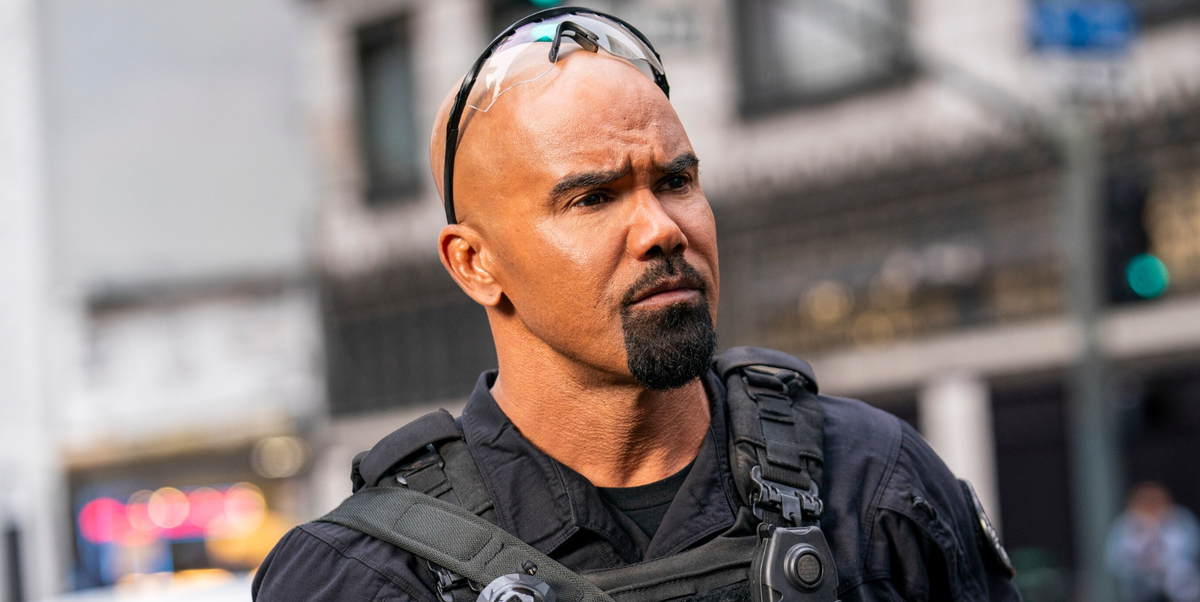
For most television shows, cancellation is the end of the road. The cast packs up, the sets come down, and fans begin the emotionally complicated process of pretending they are fine. For S.W.A.T., however, cancellation has often felt less like a funeral and more like a particularly dramatic commercial break.
When CBS announced in March 2025 that S.W.A.T. would end after its eighth season, Shemar Moore did not respond with a polished farewell written by a publicist. The actor, executive producer, and longtime face of the action drama spoke directly to viewers through social media. He admitted that the news was painful, praised the cast and crew, challenged the network’s decision, and immediately began looking for another door to kick open.
Moore’s message was emotional, grateful, frustrated, and unmistakably hopeful. In other words, it sounded a lot like Hondo addressing 20-Squad after somebody had just explained that the building was surrounded.
What Happened to S.W.A.T.?
CBS decided not to renew S.W.A.T. for Season 9, bringing the original series to a close after eight seasons and 163 episodes. The final two episodes, “Ride or Die” and “Return to Base,” aired together on May 16, 2025.
The cancellation was especially surprising because the series had already survived more announced endings than most fictional action heroes survive explosions. CBS first canceled the show in May 2023 after Season 6. The decision triggered an immediate reaction from Moore, viewers, and members of the television industry.
Only days later, CBS and Sony Pictures Television reached an agreement for a 13-episode seventh season, which was promoted as the show’s final chapter. Moore also became an executive producer, giving him an even greater role in guiding the series.
Then came another plot twist. In April 2024, while Season 7 was still airing, CBS renewed S.W.A.T. for a full 22-episode eighth season. The supposedly final season was no longer final. Fans celebrated, Moore celebrated, and somewhere a television listings editor probably stared quietly into the distance.
That history made the March 2025 cancellation announcement difficult to process. Viewers had already watched the show escape the television graveyard twice. A third escape no longer seemed impossible; it almost seemed like part of the brand.
Shemar Moore’s Reaction to the Cancellation
Moore addressed the news in a candid Instagram video shortly after CBS made its decision. He did not hide his disappointment, describing the situation as sad and openly acknowledging how difficult it was to tell the crew that the production was ending.
At the same time, he emphasized what the team had accomplished. S.W.A.T. had survived shifting schedules, difficult negotiations, pandemic-era production challenges, changing cast arrangements, and multiple declarations that the finish line had arrived. Moore encouraged the crew to feel proud because they had built a successful series with an international audience.
His response was not a scorched-earth attack on CBS. Moore credited the network for helping shape his career through both Criminal Minds and S.W.A.T.. He thanked executives for the years the show had been allowed to operate while still making it clear that he disagreed with the cancellation.
His central message was simple: “I ain’t done yet.”
That sentence captured why Moore’s reaction resonated with fans. It was not merely an actor asking to keep a job. It was the leader of a long-running production arguing that the show still had an audience, a functioning creative team, and stories left to tell.
Moore Publicly Invited Other Platforms to Step In
Moore did more than express disappointment. He turned his video into an unofficial sales presentation.
He mentioned Netflix, where earlier seasons of S.W.A.T. had found a strong streaming audience, and suggested that the series could continue on another platform. He also floated broadcast networks such as NBC, Fox, and ABC as possible destinations.
The pitch was straightforward. Unlike a brand-new television concept, S.W.A.T. already had recognizable characters, an experienced production operation, a substantial episode library, and fans around the world. In Moore’s view, a potential buyer would not be starting from zero. The tactical gear was already fitted.
Fans quickly joined the campaign, calling for Netflix or another distributor to rescue the show. Moore encouraged their efforts, thanking loyal viewers for supporting the series through its repeated brushes with cancellation.
Why Did CBS Cancel S.W.A.T.?
There was no single publicly confirmed reason that explained every part of CBS’s decision. Television renewals involve more than whether a show has devoted fans. Networks evaluate advertising revenue, delayed viewing, streaming performance, production expenses, ownership, licensing fees, scheduling needs, and the cost of keeping an established cast under contract.
S.W.A.T. was produced by Sony Pictures Television in association with CBS Studios. Because the network did not fully own the series, CBS and Sony had to reach financial agreements for the show to continue. Similar licensing questions had played an important role in the 2023 cancellation and subsequent reversal.
By Season 8, the series was also an expensive veteran drama competing for space against newer programs. Long-running shows generally cost more because salaries and production expenses increase over time. Even respectable viewership may not guarantee survival when a network believes a new series can occupy the same time slot at a lower cost or create more long-term value.
Reports surrounding the 2025 decision indicated that CBS did not move into the same kind of preliminary negotiations with Sony that had previously helped save the series. That suggested the network was ready to reshape its schedule rather than attempt another complicated renewal.
For viewers, this can feel deeply unsatisfying. Fans see millions of people watching a show and reasonably ask how that can be considered insufficient. Television executives, meanwhile, see spreadsheets filled with fees, rights, international sales, demographic targets, and numbers that can apparently cancel a beloved program without experiencing a single human emotion.
Why Moore’s Comments Mattered
Shemar Moore had unusual credibility when he challenged the decision. He had led the series from its 2017 premiere, playing Sergeant Daniel “Hondo” Harrelson, an LAPD officer balancing loyalty to his community with the demands of leading an elite tactical unit.
Hondo was designed as more than a conventional action hero. The character had to navigate race, policing, leadership, family, friendship, and public trust. Moore’s performance helped the series combine weekly missions with discussions about social issues and the responsibilities of law enforcement.
Moore also understood the practical side of production. As an executive producer, he was not speaking only from an actor’s trailer. He knew how many writers, stunt performers, camera operators, set builders, costume workers, transportation employees, technicians, and support staff depended on the series.
Showrunner Andrew Dettmann and executive producer Shawn Ryan similarly emphasized the dedication of the crew when responding to the cancellation. Their comments reinforced an important reality: ending a television show affects far more people than the names appearing at the beginning of each episode.
How S.W.A.T. Ended on CBS
The original series concluded with a two-hour finale that mixed personal conflict with the large-scale action viewers expected. Hondo and 20-Squad faced a dangerous group of mercenaries threatening Los Angeles with hidden explosives and an attack on S.W.A.T. headquarters.
The finale also addressed ongoing character stories. Devin Gamble faced a painful conflict involving her brother, while Deacon dealt with a threat that reached into his personal life. The episode gave the team moments of reflection without pretending that their work was permanently finished.
One of the final emotional gestures involved Deacon giving watches to members of the squad, symbolizing their time together. The series then closed with the team preparing for another call.
That ending was appropriate for a show that had repeatedly refused to stay finished. It offered closure while leaving the characters in motion. The message was not that Hondo’s work was over. It was that the cameras had stopped following himfor the moment.
The Cancellation Led to S.W.A.T. Exiles
Moore’s declaration that he was not finished turned out to be more than motivational language. Shortly after the original series finale aired, Sony Pictures Television announced a 10-episode spinoff titled S.W.A.T. Exiles, with Moore returning as Hondo and serving as an executive producer.
The new series follows Hondo after a major mission goes wrong and he is pulled out of forced retirement. He is assigned to lead an experimental S.W.A.T. unit made up of young, unpredictable recruits who may represent the program’s last chance for survival.
The premise creates a generational conflict between Hondo’s experience and a new team’s different attitudes, personalities, and methods. It also gives Moore a way to continue the character without simply recreating Season 9 under a different name.
New cast members include Ronen Rubinstein, Freddy Miyares, Lucy Barrett, Zyra Gorecki, and Adain Bradley. Original-series actors Jay Harrington and Patrick St. Esprit were also connected to guest appearances, providing a bridge between the old team and the new production.
Filming began in Los Angeles in 2025 and wrapped in February 2026. Sony released promotional images and presented the show to potential buyers, but as of June 28, 2026, a U.S. network or streaming premiere had not been officially announced.
That makes S.W.A.T. Exiles an unusual project. Sony committed to producing the episodes before securing a domestic broadcaster or streaming platform. It was a confident bet on Moore, the established franchise, and the international value of a recognizable action series.
Could the Original S.W.A.T. Ever Return?
A direct ninth season of the original CBS series appears unlikely. The finale resolved several storylines, the regular cast moved toward other opportunities, and S.W.A.T. Exiles was developed as a new chapter centered on Hondo and a different team.
However, the franchise has already demonstrated that the word “final” should be handled carefully. Original characters could appear in guest roles, reunions, crossover stories, or future spinoffs. A successful release for S.W.A.T. Exiles could create opportunities for more familiar faces to return.
The more realistic question is therefore not whether CBS will reverse the cancellation again. It is whether the audience that supported S.W.A.T. for eight seasons will follow Hondo into a new format.
Moore is clearly betting that they will.
The Fan Experience: What the Cancellation Felt Like
Following S.W.A.T. during its final three seasons was a peculiar emotional experience. Fans were repeatedly asked to say goodbye, only to be told that the goodbye had been canceled. It was like attending a farewell party where the guest of honor keeps returning because someone ordered more pizza.
The first cancellation in 2023 created frustration because viewers believed the series remained popular and culturally relevant. When CBS reversed its decision, fans received tangible evidence that public support could influence a network. That victory changed expectations. Viewers no longer saw cancellation as irreversible; they saw it as the beginning of negotiations.
The Season 8 renewal strengthened that belief. A series once scheduled to end after Season 6 had suddenly gained two additional seasons. Moore’s energetic online presence made fans feel involved in the survival effort. He did not communicate like a distant celebrity issuing formal statements. He spoke with the enthusiasm of someone rallying a team before a mission.
That connection explains why the 2025 cancellation hurt even though the series had enjoyed a long run. Eight seasons is an impressive achievement, but audiences rarely measure attachment in industry milestones. They measure it in Friday-night routines, favorite characters, shared jokes, and the number of times Hondo has entered a dangerous building despite everyone clearly warning him not to enter the dangerous building.
The experience also illustrated how modern viewers interact with television. Watching an episode is only one part of fandom. Audiences now stream previous seasons, share clips, organize campaigns, comment on cast posts, track renewal news, and communicate directly with performers. A network may cancel a time slot, but it cannot instantly dissolve the community built around a show.
For cast and crew members, cancellation produces a different experience. A television set can become a workplace and extended family for hundreds of people. After eight seasons, routines are deeply established. Crew members know one another’s strengths, actors understand their characters instinctively, and departments have solved countless production problems together.
Ending that environment means losing daily relationships as well as employment. Moore’s comments to the crew reflected this reality. His insistence that they should feel proud was not empty optimism. The team had created 163 episodes under demanding conditions, including location work, complex action scenes, stunt coordination, and disruptions caused by the pandemic and industry strikes.
The cancellation experience also offers a lesson for creators: persistence works best when paired with preparation. Moore did not simply complain that the series deserved more episodes. He explained its value, pointed to its streaming audience, thanked existing partners, and invited new ones to participate. That combination kept the conversation focused on possibility rather than resentment.
For fans, the practical lesson is that support matters, but it does not control every outcome. Social campaigns can raise visibility and occasionally change decisions, as the 2023 reversal proved. They cannot erase licensing costs, scheduling strategies, or corporate priorities. A campaign may not restore a show exactly as it was, but it can demonstrate that a recognizable audience remains available for a sequel, movie, or spinoff.
That appears to be what happened here. The original series ended, yet the loyalty surrounding it helped make S.W.A.T. Exiles commercially plausible. Moore did not win a conventional Season 9, but he helped secure another mission for Hondo.
Conclusion
Shemar Moore’s response to the S.W.A.T. cancellation was powerful because it balanced disappointment with gratitude and determination. He recognized that CBS had supported important chapters of his career, honored the people who spent eight seasons making the show, and still argued that ending the series was the wrong decision.
The original S.W.A.T. concluded on May 16, 2025, after 163 episodes. Yet Moore’s central promisethat he was not finishedquickly gained meaning through the development of S.W.A.T. Exiles.
The spinoff does not erase the disappointment felt by fans or by original cast members whose characters are no longer at the center of the story. It does, however, demonstrate that cancellation is not always the same as extinction. Sometimes the network closes the case, the star refuses to stop investigating, and a new squad eventually receives the assignment.
Editorial note: This article reflects publicly available information through June 28, 2026. At that time, production on the 10-episode first season of S.W.A.T. Exiles had been completed, but Sony Pictures Television had not announced a confirmed U.S. network, streaming platform, or premiere date.