Rhubarb has a brief but glorious season. One day, the market is overflowing with crisp ruby-red stalks; the next, they have vanished like the last slice of strawberry-rhubarb pie at a family picnic. Fortunately, learning how to store rhubarb lets you enjoy its bright, pleasantly sour flavor long after spring has packed its bags.
Fresh rhubarb can be refrigerated for short-term use, frozen for future pies and sauces, dried for compact storage, or preserved with a tested canning recipe. The best method depends on how much rhubarb you have, how soon you plan to cook it, and whether your freezer currently contains actual food or twelve mysterious containers labeled “soup.”
This guide explains how to store rhubarb in 14 practical steps, including preparation, refrigeration, flash freezing, packaging, thawing, and longer-term preservation.
How Long Does Rhubarb Last?
Properly stored whole rhubarb stalks generally maintain good quality in the refrigerator for about one to two weeks. Some exceptionally fresh stalks may remain usable longer, but their texture and flavor gradually decline. Keep the refrigerator at 40°F or below and inspect the stalks regularly rather than trusting the calendar alone.
Research basis: FDA refrigerator guidance and U.S. university extension recommendations for fresh rhubarb storage.
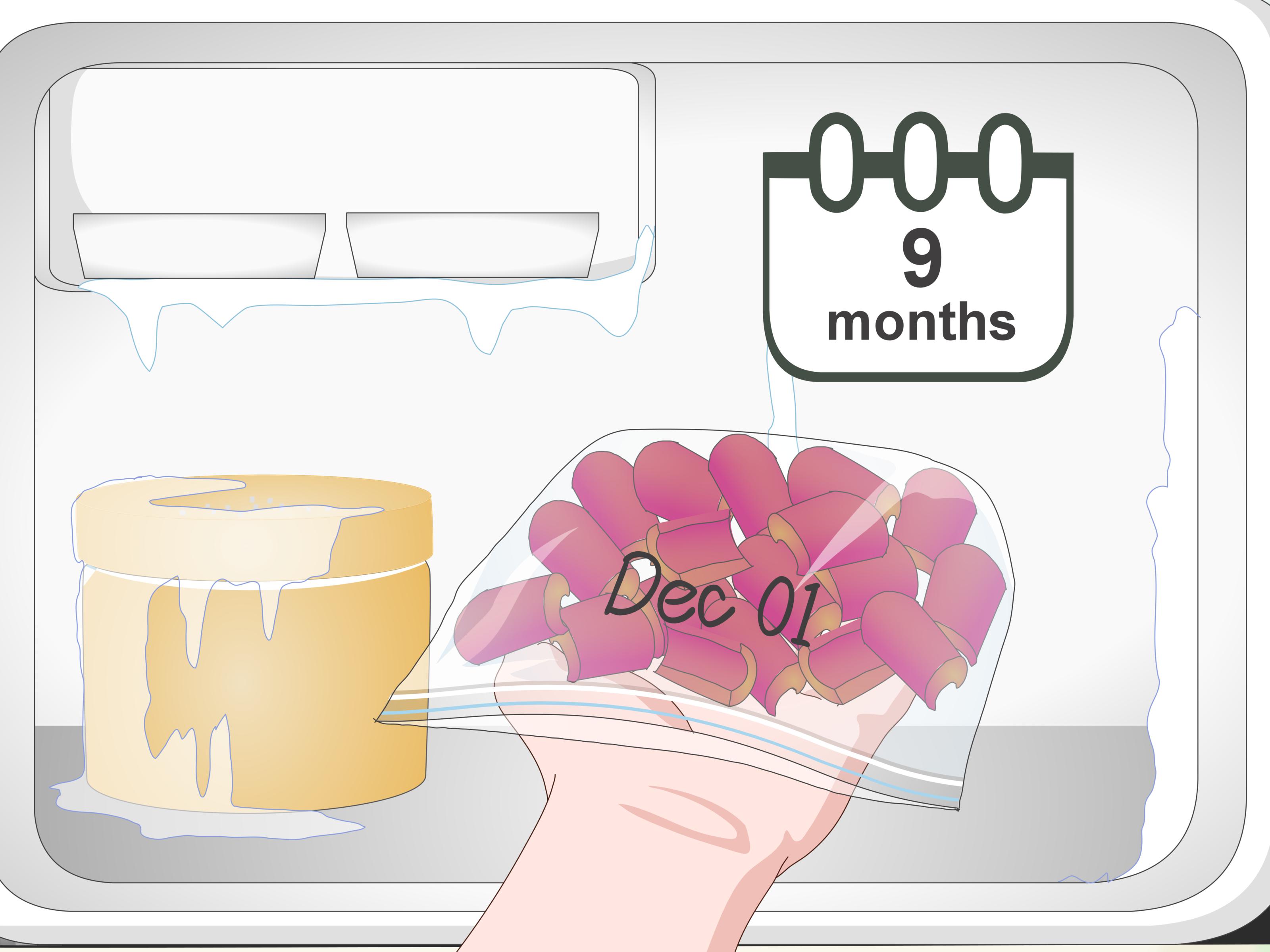
Frozen rhubarb keeps its best flavor and color for approximately eight months when packaged well and maintained at 0°F. It may remain safe beyond that point if continuously frozen, but freezer burn, ice crystals, and flavor loss can make it less exciting. Technically edible and genuinely delicious are not always the same thing.
Research basis: Oregon State University Extension and Iowa State University Extension freezing guidance.
What You Need
- Fresh rhubarb stalks
- A sharp knife and clean cutting board
- Clean kitchen towels or paper towels
- Plastic wrap, a reusable produce bag, or a storage container
- A rimmed baking sheet for flash freezing
- Parchment paper or a silicone baking mat
- Freezer-safe bags or airtight containers
- A permanent marker or freezer label
How to Store Rhubarb in 14 Simple Steps
Step 1: Choose Firm, Fresh Stalks
Successful storage begins before the rhubarb reaches your refrigerator. Choose stalks that feel firm, crisp, and relatively smooth. They may be red, pink, green, or a combination of those colors. Color is primarily related to variety and does not reliably indicate sweetness.
Avoid stalks that are extremely limp, deeply bruised, split, moldy, or covered with wet, soft patches. Slightly curved stalks are perfectly acceptable. Rhubarb is a vegetable, not a beauty-pageant contestant.
Step 2: Remove Every Leaf
If leaves are still attached, cut them off immediately and discard them. Rhubarb stalks are edible, but the leaves contain compounds that can be toxic when consumed. Do not cook them, add them to smoothies, serve them as salad greens, or assume that extra sugar will somehow negotiate with the chemistry.
Trim away the leafy portion without removing an unnecessary amount of the stalk. Keep discarded leaves away from children and pets.
Research basis: University extension and horticultural guidance concerning the toxicity of rhubarb leaves.
Step 3: Decide When You Will Use the Rhubarb
Your expected cooking date determines the best storage method:
- Within a few days: Refrigerate the whole stalks.
- Within one or two weeks: Keep them unwashed and properly wrapped in the crisper drawer.
- Several months from now: Cut and freeze the rhubarb.
- For shelf-stable storage: Use an approved canning, jam, or drying method.
Do not leave freshly harvested rhubarb sitting in a warm kitchen for hours while deciding whether you feel emotionally prepared to make pie. Refrigerate it promptly.
Step 4: Leave Whole Stalks Unwashed
If you are refrigerating rhubarb, do not wash it before storage. Extra surface moisture encourages deterioration and can turn crisp stalks into a slippery science experiment.
Brush off loose soil and remove visibly damaged sections, but wait to rinse the rhubarb until shortly before cooking. If the stalks are already wet, dry them thoroughly with a clean towel before refrigerating them.
Step 5: Wrap the Stalks Without Crushing Them
Loosely wrap whole stalks in plastic wrap, place them in a perforated produce bag, or store them in a container that prevents excessive moisture loss. Rhubarb wilts when left uncovered because the refrigerator’s circulating air gradually pulls moisture from the stalks.
The wrapping should protect the rhubarb without trapping puddles of condensation. If water collects inside the package, open it, dry the stalks, and replace the damp wrapping.
Step 6: Place Rhubarb in the Crisper Drawer
Store the wrapped stalks in the refrigerator’s vegetable crisper. Keep them away from raw meat, poultry, and seafood to reduce the risk of cross-contamination.
Maintain a refrigerator temperature of 40°F or below. A small appliance thermometer is helpful because the built-in refrigerator dial does not always show the actual temperature. In other words, “Setting 4” is not a scientific unit.
Research basis: FDA recommendations for refrigerator temperature, covered food storage, and produce safety.
Step 7: Inspect the Stalks Regularly
Check refrigerated rhubarb every few days. Fresh stalks should feel firm and have a clean, tart aroma. Minor drying at the ends can be trimmed away, and slightly flexible stalks are often still suitable for cooked dishes.
Discard rhubarb that develops visible mold, extensive sliminess, leaking tissue, severe discoloration, or an unpleasant fermented smell. Do not attempt to rescue moldy stalks by trimming only the obvious spot. Rhubarb is inexpensive; an evening spent questioning your digestive decisions is not.
Step 8: Wash Rhubarb Before Cutting
When you are ready to cook or freeze the stalks, rinse them thoroughly under cool running water. Rub away soil with clean fingers and trim bruised or damaged areas. The FDA does not recommend washing fresh produce with soap, detergent, bleach, or commercial produce washes.
Wash your hands before handling the rhubarb, and use a clean cutting board that has not just hosted raw chicken. Pat the stalks dry after rinsing, especially if they are headed for the freezer.
Research basis: FDA and FoodSafety.gov produce-cleaning recommendations.
Step 9: Trim and Cut the Stalks Evenly
Remove both ends and any remaining leaf tissue. Cut the stalks into approximately 1-inch pieces for pies, crisps, muffins, jams, compotes, and sauces. Even pieces freeze more consistently and are easier to measure later.
Before cutting the entire harvest, consider your favorite recipes. If your usual rhubarb crisp calls for four cups, freeze some of the pieces in four-cup portions. Your future self will appreciate not having to chisel a serving from a five-pound pink iceberg.
Step 10: Choose Raw or Blanched Freezing
Rhubarb can be successfully frozen raw. Place the cleaned, dried pieces directly into freezer-safe packaging or flash-freeze them first. Raw freezing is fast, simple, and suitable for most baked desserts and cooked sauces.
Blanching is optional but may help preserve color and flavor. To blanch rhubarb, place the cut pieces in boiling water for one minute, then transfer them immediately to ice water. Drain and dry them thoroughly before freezing. Do not overblanch, or the stalks may become excessively soft.
Research basis: National Center for Home Food Preservation and university extension freezing recommendations.
Step 11: Flash-Freeze the Pieces
For loose pieces that can be measured individually, arrange the cut rhubarb in a single layer on a parchment-lined baking sheet. Leave a little room between the pieces and place the tray in the freezer for one to two hours, or until the rhubarb is firm.
This method, sometimes called tray freezing, prevents the pieces from becoming one solid block. It is especially useful when you may need one cup for muffins today and three cups for pie next weekend.
Research basis: Oregon State University, Penn State, and Iowa State University Extension tray-freezing guidance.
Step 12: Package Rhubarb for the Freezer
Transfer the frozen pieces to freezer-grade bags or airtight freezer containers. Remove as much air as reasonably possible without crushing the rhubarb. If using bags, flatten them into thin layers so they stack neatly and thaw more evenly.
Use packaging designed for freezing rather than thin sandwich bags or reused cartons. Proper freezer materials reduce moisture loss and protect the rhubarb from absorbing odors. Unless you specifically want your pie to contain mysterious notes of frozen onion and last month’s garlic bread, airtight packaging matters.
Research basis: Utah State University and National Center for Home Food Preservation packaging recommendations.
Step 13: Label, Date, and Freeze at 0°F
Label each package with the name, date, amount, and whether the rhubarb was frozen raw, blanched, sweetened, or cooked. Store it at 0°F or below and use it within about eight months for the best quality.
Place newly packaged rhubarb where cold air can circulate around it so it freezes quickly. Once frozen solid, the bags can be stacked or filed upright. Organizing flat bags vertically makes the freezer look less like an archaeological dig and more like a functional appliance.
Step 14: Consider Cooked, Dried, or Canned Rhubarb
Freezing raw pieces is not the only long-term option. Rhubarb sauce, compote, and tested fruit spreads can be cooled, divided into freezer containers, and frozen. Leave suitable headspace because food expands as it freezes.
Rhubarb can also be dried. Cut it into roughly 1-inch pieces, optionally steam-blanch until slightly tender, and dry according to the instructions for your dehydrator. Properly dried rhubarb should be tough to crisp rather than moist or sticky. Cool it completely and store it in an airtight container in a cool, dark, dry location.
For shelf-stable canned rhubarb, use a current recipe from the National Center for Home Food Preservation or a U.S. university extension service. Follow the specified jar size, preparation method, processing time, and altitude adjustment exactly. Do not invent a reduced-sugar water-bath formula or process an old family recipe simply because nobody remembers getting sick from it.
Research basis: National Center for Home Food Preservation, Oregon State University Extension, and Utah State University Extension.
Should You Thaw Frozen Rhubarb Before Cooking?
Frozen rhubarb can usually go directly into pies, crisps, muffins, and cooked sauces. Keeping it frozen until the last moment helps prevent the pieces from becoming too soft before cooking.
Frozen rhubarb releases liquid as it thaws. That juice contains flavor and should not automatically be discarded. For baked desserts, you may need a little additional thickener or a slightly longer baking time, depending on the recipe. When following a tested recipe, use the quantities and instructions provided rather than making major adjustments on the fly.
Research basis: Iowa State University Extension advice on using the juices released by thawed rhubarb.
Can You Freeze Rhubarb With Sugar?
Yes. Rhubarb may be frozen without sugar, mixed with dry sugar, or covered with a suitable syrup. Unsweetened freezing is the most flexible option because you can later control the sweetness according to the recipe.
A sugar pack can help draw out juice and may improve flavor and texture in some preparations. However, sugar is not required to make rhubarb safe in the freezer. It is there for quality and taste, not as a tiny crystalline security guard.
Common Rhubarb Storage Mistakes
Storing the Leaves
Remove and discard the leaves immediately. Only the stalks belong in your recipes and storage containers.
Washing Before Refrigeration
Moisture speeds deterioration. Keep whole stalks unwashed until you are ready to use or process them.
Using Thin, Non-Freezer Bags
Ordinary lightweight bags allow moisture and odors to move through more easily. Use containers specifically designed for frozen food.
Forgetting to Label Packages
Rhubarb and chopped red peppers can look surprisingly similar through an icy freezer bag. Labeling prevents a pie with an unexpected personality.
Expecting Thawed Rhubarb to Stay Crisp
Freezing changes the structure of produce, so thawed rhubarb becomes softer. Use it in cooked recipes where texture changes are not a problem.
Improvising a Canning Recipe
Safe home canning depends on tested acidity, jar size, density, processing time, and altitude adjustments. Use a scientifically tested recipe and follow it exactly.
Practical Experience: What Storing Rhubarb Teaches You
The first lesson from storing rhubarb is that timing matters more than culinary ambition. It is easy to bring home a beautiful armful of stalks while imagining pies, jam, chutney, muffins, syrup, and perhaps a small rhubarb-themed restaurant. Two days later, work gets busy, dinner comes from a takeout container, and the stalks begin bending sadly in the refrigerator.
The most reliable habit is to make a storage decision as soon as the rhubarb enters the kitchen. Keep only the amount you expect to cook during the next week in the refrigerator. Freeze the rest immediately. This simple division prevents waste without forcing you to spend an entire Saturday operating a one-person preservation factory.
Flash freezing is particularly useful in everyday cooking. Rhubarb frozen directly in a large bag tends to clump together because moisture on the cut surfaces freezes the pieces into a single mass. A tray of individually frozen pieces takes slightly more effort at the beginning, but it allows you to pour out exactly what you need later. One cup can brighten an apple crisp, add tartness to a berry compote, or become a quick sauce for yogurt.
Portion size also makes a surprisingly large difference. Measure the rhubarb after cutting and package it according to recipes you prepare regularly. Two-cup portions work well for small batches of muffins or sauce, while four-cup packages suit many pies and crisps. Write the measurement on the label. A package marked only “rhubarb” gives your future self information, but not enough information to prevent unnecessary kitchen mathematics.
Another useful lesson is that frozen rhubarb should be judged as a cooking ingredient, not as a fresh snack. After thawing, the pieces will be softer and surrounded by juice. This is normal. Add both the rhubarb and its liquid to cooked recipes unless the recipe specifically instructs you to drain it. The juice carries flavor, color, and acidity, and throwing it away can weaken the final dish.
Good packaging often matters more than blanching. Raw rhubarb frozen quickly in a sturdy, nearly air-free freezer bag can maintain excellent quality. Poorly sealed blanched rhubarb may still develop freezer burn. Pressing excess air from the package, keeping the freezer consistently cold, and using the oldest packages first produce better results than complicated preparation followed by careless storage.
Labeling by year is especially helpful for gardeners. Rhubarb season returns quickly, and it is surprisingly easy to place a new harvest in front of last year’s forgotten packages. Keep older rhubarb near the front and use it in sauces, jams, or baked desserts before freezing the new crop.
Finally, stored rhubarb is most useful when it is connected to a plan. Keep a short list of easy uses near the freezer: crisp, compote, muffins, pie, barbecue sauce, chutney, or strawberry-rhubarb jam. Ingredients are less likely to be forgotten when you already know what they can become. With sensible preparation and a few clearly labeled bags, rhubarb season does not have to end when the final fresh stalk disappears from the market.
Conclusion
The simplest way to store fresh rhubarb is to remove the leaves, keep the stalks unwashed, wrap them, and refrigerate them in the crisper drawer. For longer storage, wash and cut the stalks, flash-freeze the pieces, transfer them to airtight freezer packaging, and label everything clearly.
Freezing rhubarb preserves its distinctive tart flavor for months and requires little equipment. Drying, freezing cooked sauce, and using tested canning recipes provide additional options when the harvest is particularly generous. Choose the method that matches your cooking habits, because the best-preserved rhubarb is the rhubarb you actually remember to eat.
Note: Storage periods are quality estimates rather than guarantees. Discard rhubarb that is moldy, slimy, leaking, or unpleasant-smelling. For shelf-stable preservation, always follow a current, scientifically tested home-canning recipe.