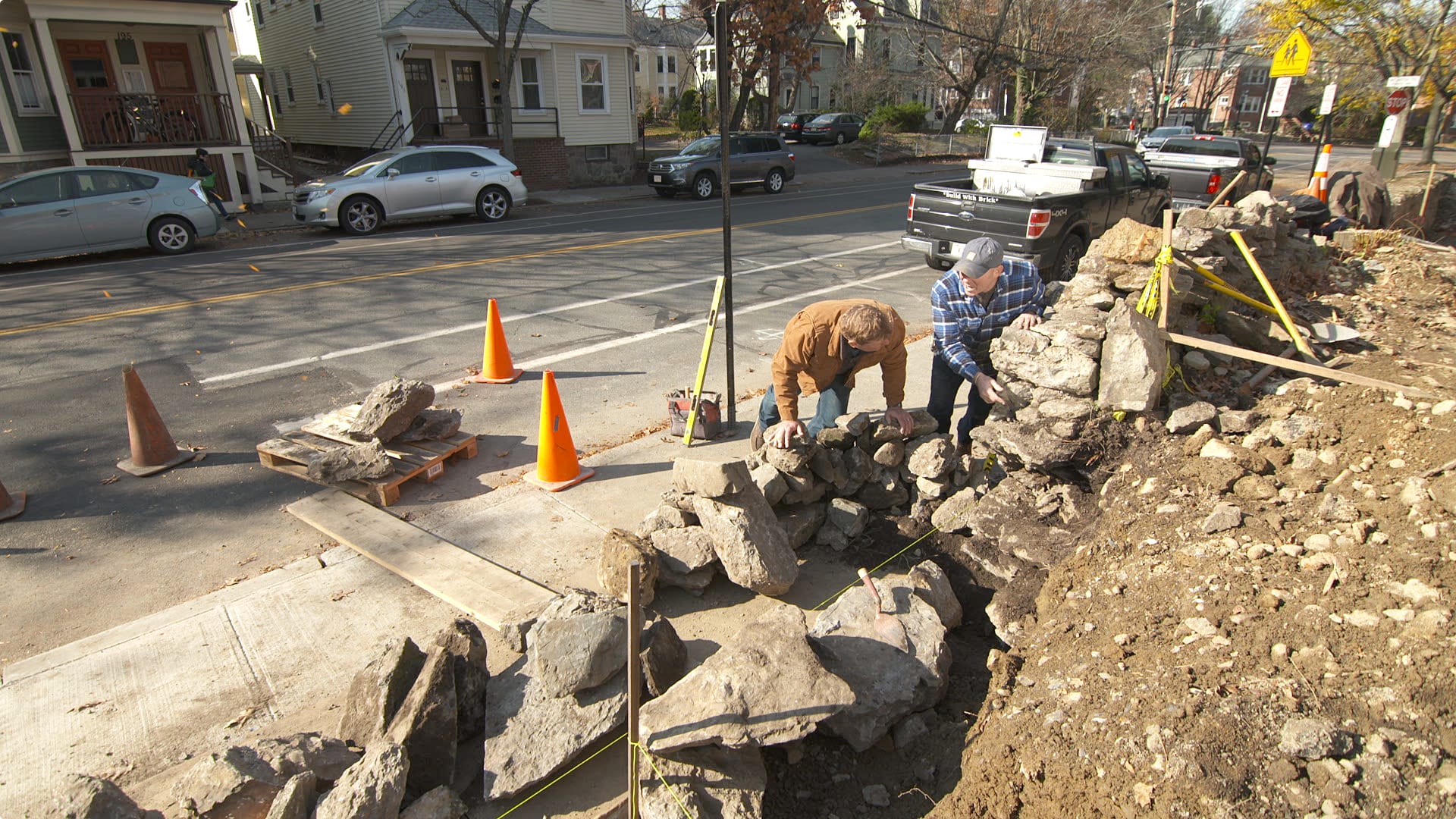
Every town has a few local celebrities. Some have famous parks. Some have grand old houses. Brookline has those too, of course, but it also has something a little more rugged, lumpy, and gloriously unpolished: puddingstone. Yes, that is a real thing, and yes, it sounds like dessert. No, you should not bite it.
If you have ever walked through Brookline and noticed a chunky rock face, a rough stone wall, or a brooding old building that looks like it was assembled by a Victorian giant with strong opinions, you may already have met Brookline puddingstone. This stone is one of the quiet co-stars of the town’s landscape. It helps shape Brookline’s topography, colors its architecture, and gives certain streets, cemeteries, and sanctuaries a look that feels less “suburban polish” and more “old New England with excellent bone structure.”
This sneak peek explores what Brookline puddingstone is, why it matters, where it shows up, and why locals, preservationists, architects, and geology lovers keep coming back to it. The short version is simple: Brookline puddingstone is not just a rock. It is part of the town’s visual identity. It is the kind of stone that makes a place feel grounded, literally and culturally.
What is Brookline puddingstone, exactly?
In everyday conversation, “Brookline puddingstone” usually refers to the local variety of Roxbury Puddingstone, a conglomerate rock famous in the Boston area. Conglomerate is a wonderfully blunt geological term for rock made of rounded pebbles and cobbles cemented together in a finer matrix. In Brookline’s case, that means a surface full of embedded stones that can look as if someone stirred gravel into wet concrete and then gave it a few hundred million years to calm down.
The nickname “puddingstone” comes from its resemblance to old-fashioned plum pudding studded with raisins and nuts. New Englanders saw that resemblance and apparently decided geology did not need to be boring. Good for them. The result is a rock with texture, personality, and a sort of cheerful refusal to look sleek. Brookline puddingstone is not marble trying to impress dinner guests. It is the friend who shows up in hiking boots, knows the neighborhood’s backstory, and has no interest in pretending to be fancy.
What makes it memorable is the contrast between the rounded pebbles and the stone around them. Seen up close, the rock looks busy, pebbly, and almost hand-crafted, even though nature did all the work. Seen from a distance, it reads as strong, dark, and irregular. That combination helps explain why it became so beloved in local architecture and landscape design. It has drama without being gaudy.
Why Brookline and puddingstone belong together
Brookline is one of the communities where this stone is woven into the land itself. It is not merely imported material slapped onto a façade for historical flavor. In many parts of town, puddingstone is part of the physical foundation of the landscape. Outcrops, ledges, boulders, and rugged rises help give Brookline a more varied terrain than the phrase “streetcar suburb” might suggest.
That matters because geology quietly shapes experience. A town with visible bedrock has a different rhythm from a town where everything feels graded, softened, and smoothed over. Brookline’s puddingstone contributes to the sense of slope, edge, lookout, and enclosure. It creates surprise. One minute you are on a leafy residential street, and the next you are staring at a rock face that looks like it belongs in a geology lecture delivered by someone wearing elbow patches.
In southern Brookline especially, puddingstone outcrops have long helped define open spaces and conservation land. They give sanctuaries and cemetery landscapes an older, more rugged character. The town’s own planning and conservation materials have repeatedly treated these formations as notable physical features rather than random obstacles. That is an important distinction. When a town recognizes a rock formation as part of its identity, it stops being just geology and becomes local heritage.
The visual power of puddingstone
Brookline puddingstone works on two levels at once. First, it is tactile. Even people who know nothing about geology tend to notice it because it is so visually textured. Second, it is atmospheric. It changes the mood of a place. A puddingstone retaining wall feels older and more rooted than a modern concrete one. A puddingstone church feels solemn without feeling sterile. A cemetery with puddingstone ledges feels contemplative in a way that trimmed lawns alone never could.
That visual power comes from irregularity. Smooth stone can be elegant, but puddingstone is expressive. It catches shadow in deep little pockets. It breaks up light. It suggests time. It hints at pressure, weather, and slow accumulation. In a town known for beautiful homes and carefully planned landscapes, puddingstone provides a welcome note of roughness. It keeps Brookline from looking too polished for its own good.
There is also something deeply regional about it. You could move a block of limestone anywhere and it might still look respectable. Puddingstone feels local. It belongs here. It helps a building or site announce, without any speechifying, that it is part of the Boston-area story.
Where puddingstone shows up in Brookline’s built environment
Churches and religious buildings
Some of Brookline’s most striking historic religious structures owe a lot of their character to puddingstone. In the Aspinwall area, St. Paul’s Episcopal Church became one of the classic examples. Built in the early 1850s in a Gothic style, it used Roxbury puddingstone to create a dramatic, weighty presence. Even descriptions of the church from historical records emphasize how picturesque and commanding it was.
Nearby, the rectory also used puddingstone, showing how the material was not reserved for one-off grand gestures. It could anchor an architectural ensemble. That is part of puddingstone’s charm in Brookline: it was practical enough to be used repeatedly, but distinctive enough to make each use feel deliberate.
Grand houses and stone blocks
Brookline’s domestic architecture gives puddingstone a surprisingly broad acting range. In some places, it appears in Gothic Revival houses with granite trim. In others, it shapes rows of stone residences whose walls and retaining features create a memorable streetscape. Local preservation records for the stone blocks on Walnut Street and Oakland Road describe them as unusual for Brookline and note how their puddingstone walls define the character of the properties.
That phrasing is telling. Puddingstone is not a mere surface treatment in these buildings. It is character-defining material. Remove it, and the place loses some of its soul. Keep it, and the building continues to speak in a distinctly local accent.
Walls, ledges, and landscape edges
Not all important uses of Brookline puddingstone are monumental. Sometimes the stone does its best work at the margins: retaining walls, property edges, rocky borders, ledges in cemeteries, and outcrops in public open space. These quieter uses are easy to miss if you are rushing, but once you start noticing them, Brookline becomes a kind of open-air stone archive.
The material is especially effective in landscapes designed to feel picturesque. It adds depth and ruggedness without requiring artificial theatricality. In other words, Brookline puddingstone was doing “naturalistic design” before that phrase started appearing in glossy brochures.
Puddingstone in Brookline’s public and natural spaces
One of the best ways to understand Brookline puddingstone is to stop thinking about it as a building material and start thinking about it as scenery. In places like the D. Blakeley Hoar Sanctuary, puddingstone outcrops help define the edge of habitat and give the sanctuary a distinctive physical structure. That stone is not decorative. It is part of the reason the place feels the way it does.
Walnut Hills Cemetery offers another memorable example. There, puddingstone appears not only as outcrop but also in headstones and ledges, adding a mood that is equal parts geological and reflective. It is hard to imagine a better pairing than a rural cemetery and a rock that already looks ancient, layered, and full of stories. If ever a material understood the assignment, this is it.
Even in development and planning debates, Brookline puddingstone shows up as something worth talking about and preserving. That alone says a lot. Communities do not usually argue passionately over random rocks. They argue over the features that help define what a place is and what it should remain.
Why preservationists care so much
Preservationists love materials that carry historical, visual, and local significance all at once. Brookline puddingstone checks every box. It is tied to the area’s geology, documented in historic architecture, visible in civic landscapes, and hard to replace convincingly once damaged or removed.
There is also the issue of authenticity. You can imitate a color. You can imitate a style. You can even imitate roughness if you try very hard and have a distressing amount of faux-stone enthusiasm. But real puddingstone has a complexity that copies rarely capture. Its pebbles are not placed for effect. They are the effect. That matters in preservation work, because the whole point is to keep places honest.
Preservation commissions in Brookline have repeatedly treated puddingstone walls, façades, and related features as character-defining. That reflects a broader truth: local identity often lives in materials. Not just in grand narratives or famous names, but in the actual substance of streets, walls, and buildings. Brookline puddingstone is one of those substances.
Why Brookline puddingstone still matters now
It is easy to assume an old regional stone matters only to geologists, preservationists, or the sort of people who voluntarily attend walking tours in sensible shoes. But Brookline puddingstone still matters because it helps answer a surprisingly modern question: what makes a place feel real?
In an era when so many developments can look interchangeable, local material identity becomes more valuable, not less. Brookline puddingstone gives the town a texture that cannot be mass-produced. It reminds residents that the landscape existed before the streetscape and that architecture is strongest when it responds to place rather than bulldozing it into generic sameness.
It also offers a useful lesson in attention. You do not need a wilderness expedition to have a meaningful encounter with geology. Sometimes all you need is a Brookline sidewalk, a little curiosity, and enough free time to stop saying “nice stone wall” and start asking why that wall feels different from every other wall you passed on the way there.
A sneak peek worth taking seriously
So what is the real sneak peek here? It is not simply that Brookline has puddingstone. It is that puddingstone helps explain Brookline. The stone gives form to sanctuaries, gravity to churches, distinction to historic homes, and atmosphere to cemeteries and streetscapes. It is both background and main character, depending on where you stand.
Once you know what to look for, Brookline becomes more interesting. The town’s surfaces stop being neutral. Walls become clues. Outcrops become evidence. Buildings become collaborations between human ambition and local geology. Suddenly, the place feels less like a pretty collection of addresses and more like a settlement with a physical memory.
And that may be the best reason to care about Brookline puddingstone. It makes the town readable. It gives Brookline a durable, pebbled vocabulary that says: this place was shaped slowly, built carefully, and never entirely smoothed into submission.
Experiences of seeing Brookline puddingstone up close
The most rewarding thing about Brookline puddingstone is that it changes from a fact into an experience the moment you encounter it in person. Reading about conglomerate is useful. Standing beside it is better. The stone has a way of making you slow down, partly because it is visually busy and partly because it looks like time itself got compacted into one stubborn surface.
Imagine walking through Walnut Hills Cemetery on a cool morning. The paths curve, the trees cast shifting shade, and then the puddingstone appears in ledges and grave markers with that unmistakable pebbled face. It does not look polished or eager to please. It looks settled. The effect is oddly calming. In a place devoted to memory, the stone feels appropriate because it seems to understand duration better than the rest of us do.
Now picture a different setting: a neighborhood street with historic houses where puddingstone shows up in walls, foundations, or façades. The experience there is less solemn and more architectural. You notice how the material absorbs light, how it pairs with sandstone or granite trim, how it gives a building a sense of mass without making it feel clumsy. A brick building may look composed. A puddingstone building looks composed and battle-tested.
Then there is the experience of finding puddingstone in a natural area like the Hoar Sanctuary. Here the stone feels less curated and more native, as if the town briefly steps aside and lets the terrain do the talking. The outcrops help organize the view. They create edges, pauses, and little moments of elevation. They make the sanctuary feel like a place with structure before any path or boardwalk was added. It is a reminder that Brookline’s prettiest spaces are not only landscaped; they are geologically staged.
What makes these experiences memorable is the stone’s emotional range. Brookline puddingstone can feel picturesque, solemn, rugged, neighborly, or grand depending on context. That is a neat trick for a rock. In one place it reads as a quiet cemetery companion. In another it becomes a dramatic church wall. Somewhere else it is simply a lumpy outcrop making a trail more interesting. The material is consistent, but the mood keeps changing.
There is also the pleasure of recognition. Once you learn to spot puddingstone, you start seeing it again and again, and each sighting feels like being let in on a local secret. The town becomes richer because you are no longer just moving through Brookline; you are noticing the ingredients that built it. That kind of awareness is small but satisfying. It turns a walk into a scavenger hunt and a street into a story.
In the end, Brookline puddingstone offers one of the nicest experiences a town can provide: the feeling that ordinary places contain extraordinary depth. A wall is not just a wall. A rocky edge is not just a leftover formation. A church is not just a church. They are all part of a longer conversation between land, design, weather, memory, and local taste. And once you hear that conversation, Brookline sounds much more interesting than before.