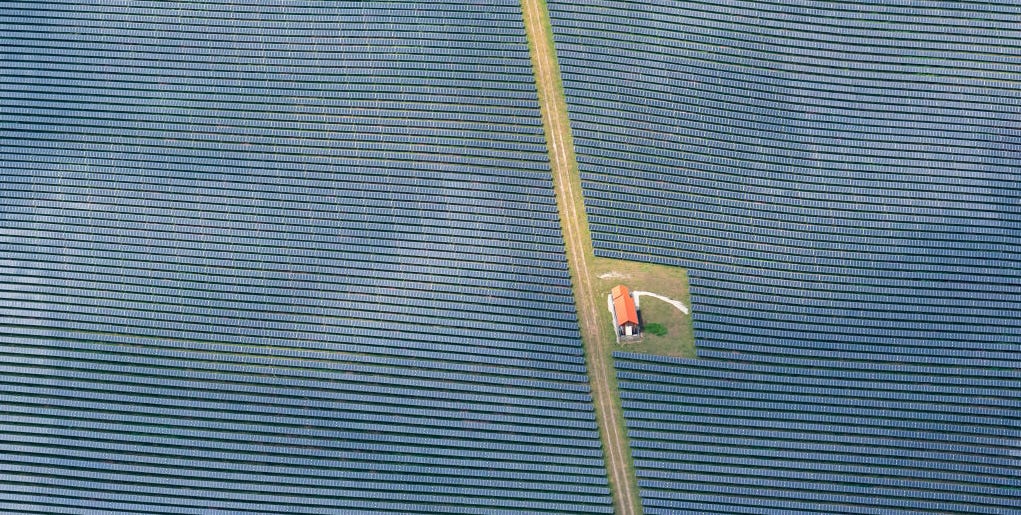
Saltwater is usually the villain in a farming story. It creeps into wells, builds up in soil, stresses crops, and can turn productive land into a crunchy white disappointment. But a new generation of solar-powered desalination systems may give saltwater a redemption arc. Instead of treating seawater and brackish groundwater as useless, researchers and engineers are asking a more interesting question: what if sunshine could help turn salty water into irrigation water?
The idea sounds almost too neat: put solar panels in sunny, water-stressed places, use their electricity or heat to remove salt from water, and send the cleaned-up supply to crops. In reality, the technology is not magic, and it is not ready to replace every river, aquifer, or irrigation district. But it is real, improving quickly, and especially promising for coastal farms, desert greenhouses, high-value crops, remote communities, and regions where brackish groundwater is abundant but fresh water is scarce.
For farmers staring down drought, salt intrusion, rising pumping costs, and climate swings, solar desalination is not just a shiny science headline. It is part of a bigger shift in agriculture: growing food while using less freshwater, less fossil fuel, and less land. That may sound ambitious, but farming has always been ambitious. Someone once looked at a cactus-studded desert and said, “Yes, lettuce would be nice here.”
Why Saltwater Is Such a Big Problem for Farming
Plants need water, but they are picky about what comes with it. When irrigation water contains too many dissolved salts, crops must work harder to pull moisture through their roots. The result can be slower growth, lower yields, leaf burn, poor germination, and long-term soil damage. In severe cases, salts accumulate until the field becomes unsuitable for ordinary crop production.
This matters because agriculture is one of the world’s thirstiest industries. In the United States, irrigation represents a major share of freshwater withdrawals, and irrigated farms produce a large portion of crop value. Globally, agriculture uses most freshwater withdrawals, which means even small improvements in irrigation water supply and efficiency can have enormous consequences.
Salt problems are also spreading. Coastal aquifers can become saltier when seawater intrudes inland. Inland groundwater may naturally contain dissolved minerals. Irrigation itself can concentrate salts if drainage is poor or evaporation is high. And as heat waves become more frequent, farms often need more water precisely when clean water is harder to find. It is the agricultural version of needing an umbrella during a meteor shower: inconvenient, expensive, and not solved by optimism alone.
How Solar Panels Can Help Turn Saltwater Into Farm Water
Solar panels can support desalination in several ways. The most familiar approach is photovoltaic reverse osmosis, often called PV-RO. Solar panels generate electricity, that electricity powers pumps, and the pumps push salty water through membranes that allow water molecules to pass while blocking much of the salt. Reverse osmosis is already widely used in desalination, but running it on solar energy can reduce fuel use, grid dependence, and operating costs in sunny regions.
Another approach uses solar heat. Instead of pushing water through a membrane under pressure, solar thermal systems use heat to evaporate water, leaving salts behind. The vapor then condenses as fresh water. Newer designs can capture heat more efficiently, reuse it across multiple stages, and even use the waste heat from photovoltaic panels. That last detail is clever: solar panels get hot, and excess heat usually hurts panel efficiency. Some integrated systems use that heat to help distill water while cooling the panel. In other words, the panel works, sweats, and turns that sweat into something useful. Very farm-core.
Electrodialysis is another promising option, especially for brackish water rather than full-strength seawater. It uses electricity to move salt ions through selective membranes, separating salty and less salty streams. Because it can be adjusted in response to available solar power, electrodialysis is attractive for off-grid or variable-sunlight applications. Recent research has demonstrated systems that follow the rhythm of the sun without needing large battery banks, which could make the technology more practical in rural areas.
Why Brackish Groundwater May Be the First Big Farming Opportunity
When people hear “saltwater,” they often picture the ocean. But for agriculture, brackish groundwater may be the more realistic starting point. Seawater is extremely salty, so it takes more energy and stronger treatment to make it useful. Brackish groundwater contains less salt than seawater, making it easier and cheaper to desalinate.
Many dry farming regions have access to brackish aquifers that are currently underused because the water is too salty for sensitive crops. Solar desalination could unlock part of that supply. The goal is not always to create perfect drinking water. For farming, the target is often irrigation-quality water that fits the crop, soil, and management plan. Some growers may blend desalinated water with brackish water to reach a safe salinity level while reducing treatment costs.
This is important because desalinating every gallon to drinking-water purity can be overkill for irrigation. A tomato plant does not need boutique bottled water with a mountain on the label. It needs water clean enough to avoid salt stress, clogging, toxicity, and long-term soil damage.
Solar Desalination and Agrivoltaics: A Powerful Pair
Solar panels do not have to sit off to the side like expensive metal spectators. In agrivoltaic systems, solar panels and agriculture share the same land. Crops, livestock, or pollinator habitat can be placed beneath or between solar arrays. This can help farmers generate energy while keeping land in production.
Agrivoltaics can also reduce water stress. Shade from panels can lower daytime temperatures, reduce evaporation from soil, and protect certain crops from harsh sun. Research in dryland systems has found that some crops perform well under partial panel shade, with improved moisture conditions and reduced plant stress. This does not mean every crop wants to live under a solar roof. Corn, wheat, lettuce, peppers, berries, herbs, and grazing systems all have different light needs. But the larger lesson is clear: in hot, dry regions, a little shade can be a feature, not a flaw.
Now imagine combining agrivoltaics with solar desalination. Panels generate power. Some panels shade crops. Desalination equipment converts brackish water into irrigation water. Drip irrigation delivers that water directly to roots. Sensors track soil moisture and salinity. The farm becomes a coordinated food-water-energy system instead of three separate problems fighting for the same budget.
Where This Technology Makes the Most Sense
Solar desalination for farming will not be equally useful everywhere. It makes the most sense where sunlight is strong, freshwater is limited, and salty or brackish water is nearby. Coastal farms facing saltwater intrusion are obvious candidates. Desert farms with brackish groundwater are another. Remote farms that rely on diesel-powered pumps may benefit because solar can reduce fuel deliveries and price volatility.
Greenhouses and controlled-environment farms are especially good fits. They often grow high-value crops, use precise irrigation systems, and can justify higher water-treatment costs. A greenhouse growing tomatoes, cucumbers, herbs, strawberries, or leafy greens may be a better early adopter than a large open-field operation growing low-margin commodity crops.
Solar desalination may also help small communities where drinking water and irrigation water overlap. In some rural areas, the same water challenge affects households, livestock, and crops. A modular system that produces clean water during the day could support both food production and community resilience.
The Catch: Brine, Cost, Maintenance, and Scale
Every promising technology has a “but,” and desalination has several. The first is brine. When salt is removed from water, it does not disappear. It becomes a concentrated waste stream that must be managed responsibly. Dumping brine into soil or waterways can damage ecosystems and worsen salinity problems. Good projects need a brine plan from day one, whether that means evaporation ponds, deep-well disposal where appropriate, mineral recovery, blending, or other regulated solutions.
Cost is another hurdle. Solar panels have become much cheaper over the past decade, but desalination equipment, membranes, pumps, pretreatment systems, storage tanks, sensors, and maintenance still require investment. For farmers, the question is not whether the technology works in a lab. The question is whether it works after dust storms, mineral scaling, pump failures, clogged filters, and one very determined mouse explores the control box.
Scale is the biggest challenge. Agriculture uses vast amounts of water. A small solar desalination unit can produce meaningful water for a greenhouse, orchard block, nursery, seedling operation, or livestock system. Supplying thousands of acres of thirsty field crops is a different challenge entirely. That does not make the technology unimportant. It means the first wave of adoption will likely focus on high-value, water-efficient farming systems rather than flood-irrigated megafields.
What Crops Could Benefit First?
Solar-desalinated water is most promising for crops that generate enough revenue to justify precision water management. Greenhouse tomatoes, peppers, cucumbers, strawberries, nursery plants, herbs, and leafy greens are strong candidates. Orchards and vineyards may also benefit in regions where water scarcity threatens long-term productivity.
Salt-tolerant crops could play a role too. Barley, cotton, date palms, quinoa, certain forage crops, and halophytes can tolerate more salinity than sensitive crops. Instead of desalinating water all the way down to very low salt levels, farmers may use partial desalination, blending, and crop selection together. The smartest system is not always the purest water; it is the most efficient match between water quality, crop tolerance, soil health, and economics.
Hydroponic and aquaponic systems may also benefit because they closely control nutrient and water chemistry. In these systems, desalinated water provides a clean baseline. Growers can then add nutrients with precision instead of fighting mystery minerals from the water source.
How Solar Desalination Could Change Farm Design
If solar desalination becomes more affordable, farm design may change. Instead of planning irrigation around one freshwater source, growers could combine several water streams: rainwater capture, recycled water, brackish groundwater, desalinated water, and carefully managed drainage. Solar energy could power pumps, filters, sensors, cold storage, and water treatment.
Fields may also become more data-driven. Soil salinity sensors, moisture probes, weather stations, and automated valves can help farmers apply only the water needed and flush salts before they build up. This matters because desalination alone does not solve poor irrigation management. Clean water can still be wasted. Salts can still accumulate if drainage is neglected. Technology helps, but the soil still gets a vote.
In the best-case scenario, solar desalination becomes one tool in a larger toolkit: drip irrigation, soil monitoring, crop rotation, salt-tolerant varieties, organic matter management, drainage planning, and agrivoltaic shade. The result is not a sci-fi farm where robots whisper encouragement to kale. It is a practical farm that uses sunlight more intelligently.
Environmental Benefits and Risks
The environmental upside is clear. Solar-powered systems can reduce dependence on diesel pumps and fossil-fuel-powered desalination. If they help farmers use brackish water instead of overpumping freshwater aquifers, they may reduce pressure on rivers, wells, and reservoirs. Agrivoltaics can also protect land from being forced into a food-versus-energy choice.
But the risks are real. Brine disposal must be regulated and monitored. Brackish groundwater withdrawal must be managed so aquifers are not depleted or damaged. Solar arrays must be designed to protect soil, wildlife, drainage, and farm access. Membranes and equipment eventually need replacement, and farms must plan for disposal or recycling.
The best projects will be site-specific. A design that works in coastal California may not work in West Texas, Florida, Arizona, or the Gulf Coast. Water chemistry, crop mix, land cost, energy price, permitting, soil type, and local climate all matter. Solar desalination is powerful, but it is not a universal adapter for Earth’s water problems.
Experiences and Practical Lessons From the Field
When growers and project planners explore solar-powered desalination, the first practical lesson is usually humbling: water quality is not one number. Salinity matters, but so do boron, sodium, chloride, calcium, magnesium, pH, alkalinity, suspended solids, and biological contaminants. A farmer might say, “My water is salty,” and an engineer might respond with a spreadsheet long enough to qualify as light cardio. Before buying equipment, the water must be tested thoroughly across seasons because wells and coastal sources can change.
The second lesson is that irrigation method matters as much as water treatment. Solar-desalinated water is too valuable to throw around casually. Drip irrigation, micro-sprinklers, moisture sensors, and scheduling software help stretch every gallon. In many real-world projects, the water-saving gains come from the whole system, not just the desalination unit. A farm that treats water and then wastes it through inefficient irrigation is like charging a phone and using it as a doorstop.
Maintenance is another experience-based reality. Filters need cleaning. Membranes can foul. Pumps wear out. Dust lowers solar output. Mineral scaling can sneak up on a system if pretreatment is weak. Farmers are already mechanics, meteorologists, accountants, and amateur philosophers during harvest season, so any desalination system must be rugged, simple to service, and supported by local technicians. A brilliant system that requires a specialist from 1,500 miles away every time it hiccups will not win many friends.
Storage also becomes a key design decision. Crops need water on biological schedules, while solar panels produce power on weather schedules. Some systems may use batteries, but batteries add cost. Others may store treated water in tanks, which can be cheaper and more farm-friendly. In sunny regions, producing water during peak daylight and storing it for evening or early-morning irrigation can be a practical compromise.
Growers also learn that blending is often smarter than perfection. If brackish water is moderately salty, treating only part of the flow and blending it back with untreated water may create irrigation water that is safe for the chosen crop at a lower cost. This strategy requires careful monitoring, but it can make solar desalination more economical.
Finally, the most successful projects tend to start small. A pilot system for a greenhouse bay, nursery block, orchard trial, or livestock watering station can reveal real costs and problems before a farm commits to a larger installation. The pilot phase teaches which filters clog, how much water is produced on cloudy days, how brine can be handled, and whether the crop response justifies expansion. In farming, as in cooking, it is wise to taste the sauce before serving it to 500 people.
Conclusion: A Sunny Path Toward Safer Water
Solar panels could make saltwater safer for farming, but the real promise is not a single invention. It is a new way of thinking about water, energy, and land together. Solar-powered desalination can turn brackish or seawater into usable irrigation water. Agrivoltaics can reduce heat stress and water demand. Precision irrigation can deliver that water exactly where crops need it. Together, these tools could help farms survive in places where freshwater is becoming more precious every year.
This technology will not make the ocean an unlimited farm faucet, and it will not erase the need for conservation, good soil management, or smart water policy. But for the right crops, in the right places, with responsible brine management and careful economics, solar desalination could become a practical tool for climate-resilient agriculture.
The future of farming may involve more panels, more sensors, more membranes, and fewer panicked conversations about empty wells. That is not a bad trade. After all, if the sun can help grow tomatoes and tame saltwater at the same time, it deserves a little applauseand maybe a basket of greenhouse-grown peppers.