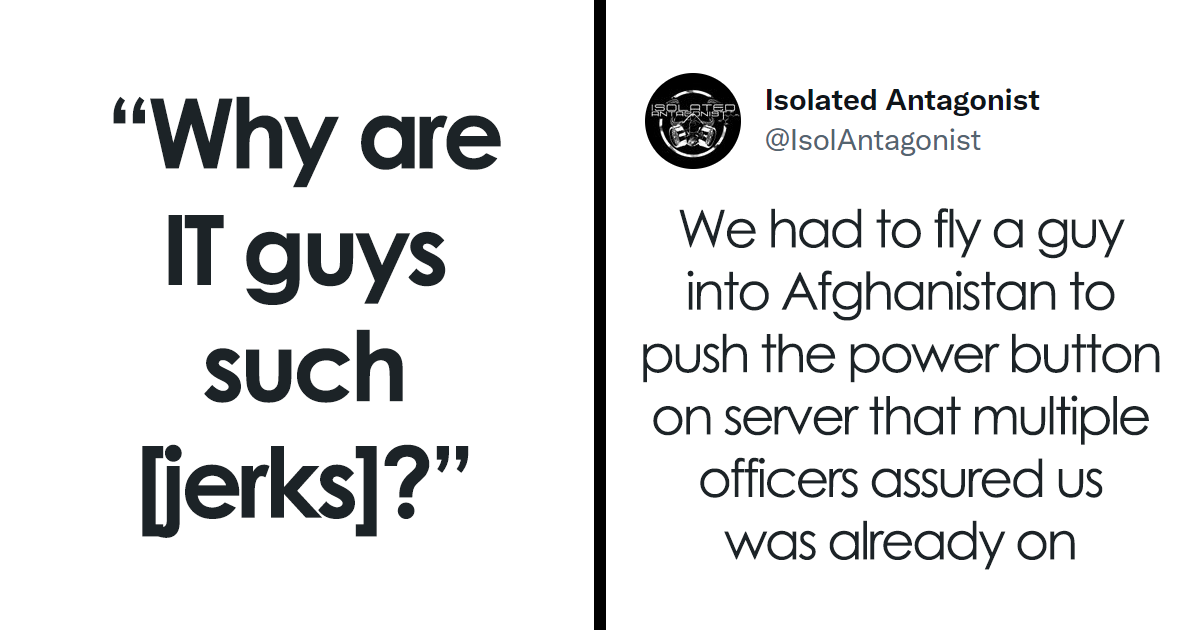
If you have ever submitted a “super quick” help desk ticket and been greeted with the emotional warmth of a frozen keyboard, you have probably wondered the same thing: why can some IT employees seem so rude, impatient, or downright cranky? The funny part is that most people in tech support, infrastructure, security, and operations do not start out that way. They usually begin as the eager problem-solvers. Then the ticket queue happens. Then the emergency patch. Then the executive who says, “Nothing changed,” right before admitting they downloaded something called DefinitelyNotAVirus_Final2.
The better question is not whether IT workers are jerks. It is why the job can make decent people sound like they are one password reset away from becoming folklore. Across workplace research, labor data, support-team reports, and years of stories from people who work in tech, the same pattern keeps showing up: pressure changes tone. Burnout shortens patience. Constant interruptions wreck focus. Unrealistic expectations make everyone snippy. And because IT is often only visible when something breaks, the department becomes the corporate version of a plumber, therapist, locksmith, emergency responder, and magician all rolled into one.
So no, the stereotype is not flattering. But it also is not random. Below are 30 reasons people keep giving when asked why IT employees can come off harsh, blunt, or exhausted. Some are funny. Some are painfully real. All of them point to the same truth: what many people read as attitude is often a symptom of how modern technical support work is designed.
The Short Version: IT Is Not Born Grumpy, It Is Usually Engineered That Way
Modern IT work sits at the intersection of technology, risk, speed, and human behavior. That is a rough neighborhood. The job demands technical accuracy, quick communication, emotional control, and endless adaptation. One minute an employee cannot print a PDF. The next minute a security alert suggests someone may have clicked a malicious link. Then a video meeting dies five minutes before a sales pitch. Then a system update breaks the one ancient application the finance team still treats like a royal heirloom.
In other words, IT support is not just about fixing computers. It is about absorbing chaos without making the company feel chaotic. That is a lot of invisible labor. And when that labor is done under budget pressure, staffing shortages, alert fatigue, on-call rotations, weak documentation, and a flood of interruptions, politeness can start to look like a luxury item.
30 Reasons IT Employees Can Seem Like Jerks
-
1. They are interrupted constantly
IT work requires concentration, but support culture often rewards instant replies. That means technicians get dragged out of deep work all day long for “quick questions” that are never actually quick. After the tenth interruption, even a nice person starts sounding like a smoke alarm with opinions.
-
2. They only get noticed when something is broken
No one sends a parade when email works, Wi-Fi behaves, and backups finish on time. IT often becomes visible only during failure, so the team is trained by experience to meet people at their most frustrated moment.
-
3. Ticket volume can be relentless
Support queues do not care that one issue is complex, another is urgent, and a third is nonsense wrapped in screenshots. Everything arrives at once, marked important, usually by people convinced their problem is the center of the known universe.
-
4. They deal with the same preventable problems over and over
Password resets. Phishing clicks. Reboots that were never attempted. Monitors that are “dead” because they are not plugged in. Repetition wears down patience, especially when the root cause is avoidable and documented somewhere no one reads.
-
5. Users often say, “Nothing changed,” when everything changed
This is practically a genre. A device “just stopped working,” and 12 minutes later it turns out someone installed software, moved equipment, changed settings, or spilled coffee with the confidence of a person who thought liquids were theoretical.
-
6. They are expected to be fast and flawless
Business users want instant service. Leadership wants low risk. Security wants strict controls. Finance wants lower costs. These demands can clash hard, and IT is the department expected to satisfy all of them without blinking.
-
7. They carry responsibility without always having authority
IT may be blamed for outdated tools, weak policies, bad vendors, and delayed approvals even when those choices were made somewhere else. Being responsible for outcomes without control over decisions is a great way to manufacture frustration.
-
8. Staffing shortages make every problem feel personal
When teams are thin, every vacation, resignation, sick day, and after-hours incident hits harder. Small shortages quickly become large mood problems.
-
9. The work includes a lot of emotional labor
Helping people who are embarrassed, angry, stressed, confused, or panicked is not just technical work. It is emotional regulation. IT workers are often expected to stay calm while other people are actively auditioning for a courtroom drama.
-
10. They are asked to fix urgency created by other people’s procrastination
The ticket submitted ten minutes before a major presentation is rarely just a technical issue. It is usually a technical issue plus someone else’s time-management choices, gift-wrapped as your emergency.
-
11. Security pressure makes the job heavier
Today’s IT teams are not only maintaining systems. They are defending them. That means updates, policies, access controls, suspicious alerts, patching, compliance, and the lovely knowledge that one bad click can ruin everyone’s week.
-
12. On-call duty can wreck normal life
When your phone can explode at 3:07 a.m. because a service fell over, your nervous system does not exactly become more charming. Sleep disruption has a remarkable way of turning “happy to help” into “state your issue clearly.”
-
13. Legacy systems are mood poison
Many organizations still depend on old, brittle, poorly documented tools that everyone hates but no one wants to replace. IT becomes the unlucky adult forced to keep the haunted copier of enterprise software alive.
-
14. Technical debt makes simple tasks feel stupidly hard
A clean system allows clean fixes. A messy system turns small changes into archaeological digs. When every repair requires digging through years of shortcuts, temp fixes, and mystery settings, patience does not age well.
-
15. They are constantly context-switching
One minute it is network access. Next it is printer drivers. Then an executive laptop. Then a permissions issue. Then a security concern. Then a Slack ping asking if the internet is “down for everyone or just me.” It is cognitive pinball.
-
16. They are measured on outcomes users barely understand
Service-level targets, response times, uptime, escalations, resolution rates, audit results, incident counts, patch windows, change control. A lot of pressure sits behind the polite phrase “just checking in.”
-
17. People think Google equals diagnosis
Some users open with, “I already tried everything,” which usually means they tried three unrelated fixes from a forum post written in 2016 by someone named PrinterWizard89. That often makes the real repair slower.
-
18. They are blamed for policies they did not invent
Multi-factor authentication, password rules, blocked downloads, access limits, VPN requirements, device restrictions. Users often direct their annoyance at the person enforcing the rule, not the company risk that created it.
-
19. The job requires more people skills than outsiders realize
Good technical support is communication, listening, translation, prioritization, and trust-building. That means IT workers are doing customer service while also troubleshooting systems that may be actively on fire in a metaphorical sense.
-
20. Their wins are invisible, but mistakes are public
If a hundred systems work today, nobody notices. If one patch goes wrong, everybody suddenly becomes an expert in infrastructure governance. That imbalance changes how people talk and work.
-
21. They often inherit other teams’ bad habits
Weak onboarding, vague ownership, undocumented processes, shadow IT, mystery vendors, shared passwords, random spreadsheets running mission-critical tasks. IT gets called in at the end and expected to perform damage-control ballet.
-
22. They live in a world of half-information
“My computer is broken” is not a problem description. It is a cry for help wearing a trench coat. Poor issue reports slow resolution and force support staff to play twenty questions before doing any real work.
-
23. They are asked to be both teacher and repair tech
Many problems are solvable only if users learn a better habit. But teaching takes time, and time is exactly what overloaded IT teams do not have. So the same issues repeat, and resentment quietly stacks up.
-
24. Every department thinks its request is the top priority
Sales needs it now. Finance needed it yesterday. Legal says it is sensitive. Leadership says it is strategic. Security says slow down. IT sits in the middle, translating all of that into one exhausted calendar.
-
25. The culture of heroics can turn people harsh
Some technical environments reward the person who saves the day at the last second instead of the team that prevented the disaster. Hero culture sounds dramatic, but it often leads to burnout, ego, and short tempers.
-
26. Fear of being blamed changes behavior
When people expect every outage to become a hunt for a culprit, they get defensive. Defensive teams communicate more sharply, document more rigidly, and sometimes sound colder than they really are.
-
27. Business language and technical reality do not always match
Users say “the system is down” when one tab froze. IT says “intermittent authentication issue affecting a subset of users,” which is accurate but sounds like a robot filing taxes. Translation gaps create friction fast.
-
28. Burnout can look like cynicism
One of the classic signs of chronic workplace stress is detachment. In plain English, that can sound like sarcasm, clipped replies, or zero enthusiasm for your fourth “tiny favor” of the day.
-
29. They are trying to prevent disasters you cannot see
Backups, permissions, patching, monitoring, vulnerability management, recovery plans, hardware lifecycles. Preventive work is invisible until it fails, which means IT gets little credit for the stress it saves everyone else.
-
30. Sometimes, yes, a few people are just bad communicators
Let us be fair. Not every rough interaction is caused by system pressure. Some people in IT, like some people in every field, simply have weak interpersonal skills. The difference is that technical stress gives those flaws a very loud microphone.
What These 30 Reasons Actually Reveal
The stereotype of the rude IT employee is usually a management story disguised as a personality story. When technical teams are overloaded, under-supported, and interrupted all day, communication quality drops. When companies underinvest in documentation, training, staffing, modernization, and incident prevention, support staff spend their energy on avoidable work. When users are rushed, embarrassed, or blocked from doing their jobs, they bring that stress into every interaction. Everyone arrives tense, and the conversation begins halfway up the hill.
That is why the healthiest IT cultures do not focus only on tools. They focus on workload, process, staffing, psychological safety, blameless reviews, better ticket intake, better documentation, clearer priorities, and humane on-call practices. In other words, fewer martyrs, fewer mystery systems, fewer “urgent” requests that should have been tickets yesterday.
Experience-Based Stories Behind the Stereotype
Across offices, schools, startups, hospitals, and remote teams, the experiences behind this stereotype are weirdly consistent. One common story goes like this: an employee calls IT in a panic because a laptop “suddenly” will not connect before a major presentation. The technician starts with the basics and gets a heavy sigh in return, because obviously the user has “already tried everything.” Ten minutes later, the real cause appears: airplane mode is on, the conference room dock was unplugged, or the password being entered is the old one from before last month’s reset. The user feels embarrassed. The tech feels like they were interrogating a suspect in a very low-budget crime show. Nobody leaves glowing.
Then there is the after-hours version. An on-call engineer gets paged at 2:13 a.m. because an alert fired for a service slowdown. They log in half-awake, investigate dependencies, restart a process, document the incident, and finally get back to bed. At 8:30 that morning, someone messages them, “Hey, just checking if you saw my ticket.” That person is not evil. They just do not know they are talking to someone who has already done a full workday before sunrise. But this is exactly how IT workers start sounding blunt without meaning to.
Another painfully familiar experience is the executive exception request. The rules say a device must be encrypted, patched, and enrolled. An important leader wants the rules bent because they are traveling, busy, special, or all three. IT knows that if they say yes and something goes wrong, the same people asking for flexibility today may be asking for accountability tomorrow. So the technician becomes “difficult,” when in reality they are just the only person in the room thinking about what happens after the shortcut.
And then there is the legacy-system trap. A company keeps one ancient application because replacing it would be expensive, risky, annoying, politically complicated, or some combination of the four horsemen of corporate delay. The only people who understand it are two longtime employees, one consultant, and perhaps a ghost. Every time it breaks, IT has to stop modern work to preserve old work. The user sees reluctance. The technician sees a machine held together by folklore and habit.
These experiences matter because they show the real pattern: most tension between users and IT is not born from contempt. It is born from repeated friction, bad systems, uneven information, and stress hitting both sides at once. When companies reduce that friction, IT often becomes what it was supposed to be in the first place: competent, calm, and even surprisingly friendly. Yes, friendly. It turns out that when people are allowed to sleep, focus, document, prioritize, and fix root causes, they stop sounding like villains from a software reboot.
Conclusion
So, why do IT employees sometimes seem like jerks? Because many of them are working inside a setup that rewards speed over clarity, reaction over prevention, and heroics over healthy systems. Add constant interruptions, unrealistic expectations, user frustration, cyber risk, technical debt, and too little recovery time, and you get a department that may look grumpy when it is really just overloaded.
That does not excuse genuinely rude behavior. But it does explain why the stereotype survives. The smart takeaway is not “IT people are mean.” It is “companies need better support cultures.” Give technical teams reasonable staffing, fewer interruptions, better documentation, realistic priorities, blameless incident reviews, modern systems, and room to do preventive work. Then watch how much nicer everybody sounds when the digital house is not always one click away from chaos.