If crypto had a favorite phrase for sounding smart at a dinner party, it might be yield. Say it with enough confidence and suddenly everyone at the table looks like they are managing a hedge fund from a beanbag chair. But when people say they are “staking for yield,” what they really mean is much less mysterious and a lot more important: they are locking up certain crypto assets to help run a proof-of-stake blockchain and getting paid for it in return.
That sounds elegant. Sometimes it is. Sometimes it is also a slow-motion lesson in lockups, taxes, smart contract risk, platform fees, and the emotional roller coaster of watching your rewards rise while your token price falls through the floorboards. Welcome to staking: part infrastructure, part investment strategy, part reality check.
This is the version without the marketing glitter. If you want to talk your book on staking your crypto for yield, you need to understand where the yield comes from, why different staking methods produce different trade-offs, and what can quietly eat away at those shiny returns. The good news is that staking can be a real way to earn additional crypto while supporting a network. The bad news is that not all “yield” is created equal, and some of it comes wrapped in enough fine print to make a cable bill look transparent.
What Crypto Staking Actually Is
At its core, staking is a feature of proof-of-stake blockchains. Instead of relying on miners burning electricity to validate transactions, these networks rely on validators who commit tokens as economic skin in the game. In exchange for helping verify transactions, propose blocks, or participate in consensus, validators can earn rewards.
That means staking is not the same as traditional bank interest, and it is definitely not free money. Your assets are being used to help secure a blockchain. In return, the network pays you. The yield comes from protocol-issued rewards, transaction fees, or both, depending on the chain.
Ethereum is the most familiar example for many investors. Solo staking on Ethereum requires a meaningful commitment and the technical setup to run validator software, which is why many people choose pooled, delegated, or exchange-based options instead. Other proof-of-stake networks may have lower minimums, faster onboarding, or different reward mechanics, but the basic idea is the same: commit assets, support the network, earn rewards.
What Staking Is Not
This is where many beginners get tripped up. Staking is not the same thing as crypto lending. It is not the same as yield farming. And it is not always the same as whatever an exchange happens to label as a “rewards” product.
With staking, your assets are generally committed to the consensus process of a proof-of-stake network. With lending, your assets are typically loaned to borrowers or routed through a platform that earns a spread. With yield farming, things get even more caffeinated: your assets might be deposited into liquidity pools, paired with other tokens, exposed to impermanent loss, or routed through DeFi protocols with layers of smart contract risk.
In plain English, staking is usually the cleaner and more straightforward version of crypto yield. That does not make it risk-free. It just means the machinery under the hood is easier to explain without needing a whiteboard and three energy drinks.
Where the Yield Comes From
If someone tells you they are earning yield on staked crypto, your first question should be simple: who is paying it?
On a proof-of-stake network, the answer is usually the protocol itself. Rewards may come from newly issued tokens, transaction fees, or both. Validators that perform their duties correctly can earn rewards. Validators that go offline, fail to participate, or behave dishonestly may earn less, be penalized, or in some systems get slashed.
This matters because protocol yield is different from promotional yield. A blockchain can pay staking rewards because it is using economic incentives to secure the network. A platform can advertise higher returns because it is subsidizing growth, taking extra risk, or layering its own business model on top of the protocol. Those two things may look similar in an app dashboard, but they are not the same species.
That is why seasoned investors look past the headline annual percentage yield. A big number is nice. A big number with shaky assumptions, hidden fees, weak custody practices, or questionable liquidity is just a fancy way to lose money with a progress bar.
The Main Ways to Stake Crypto
1. Solo Staking
This is the purest version. You run your own validator, keep direct control over the setup, and take full responsibility for uptime, maintenance, and security. The appeal is obvious: fewer intermediaries, greater network participation, and potentially better net economics if you do it well.
The downside is also obvious: it is not beginner-friendly. Solo staking can require a large minimum stake on some networks, technical competence, and the discipline to manage software updates, monitoring, and operational risk. It is the “own the restaurant” version of staking, not the “grab takeout” version.
2. Pooled or Delegated Staking
This route lets users combine funds or delegate tokens to validators without personally running infrastructure. It lowers the barrier to entry and is often the most practical option for investors who want exposure to staking rewards without turning their spare bedroom into a mini data center.
Pooled staking introduces validator quality risk and fee drag, but it is often the sweet spot between access and complexity. You are not fully hands-on, but you are still participating in the network’s staking economy more directly than you would be through a purely promotional rewards product.
3. Exchange Staking
This is the easy-button option. You hold assets on a centralized platform, click a few buttons, and the platform handles the operational details. For convenience, this is hard to beat. For purists, it is about as thrilling as calling frozen yogurt gourmet cuisine.
The trade-off is counterparty risk. You are relying on the platform’s custody, policies, fees, reward distribution, and sometimes its regulatory posture. If the exchange changes terms, pauses services, or runs into legal trouble, your staking experience can become much more exciting than you intended.
4. Liquid Staking
Liquid staking tries to solve the classic staking problem: your assets may be productive, but they can also become tied up. In a liquid staking setup, you stake an asset and receive a tokenized receipt that can sometimes be used elsewhere in DeFi. This creates flexibility and capital efficiency.
It also creates additional layers of risk. Now you are not just exposed to staking mechanics; you are also exposed to smart contract risk, peg risk, liquidity risk, and ecosystem risk around the liquid staking token itself. Liquid staking can be powerful, but it is not a beginner’s sandbox. It is more like juggling while riding a scooter downhill.
Why Investors Stake in the First Place
The appeal of staking is not complicated. Long-term holders want their assets to do something besides sit there looking philosophical. If you already plan to hold a proof-of-stake token, staking may offer a way to accumulate more of it over time.
That can matter for investors with conviction in a network. If you believe in Ethereum, Solana, or another proof-of-stake ecosystem over a multi-year period, staking can help increase your token count while contributing to network security. In a sideways or gradually rising market, that can feel efficient. In a strongly bullish market, it can feel brilliant. In a sharp downturn, it can feel like earning extra deck chairs on a sinking cruise ship.
That last point is not meant to be snarky for sport. It is the central truth of staking: you are usually being paid in the same asset whose price can swing wildly. Your nominal crypto balance may rise while your dollar value falls. That is not a bug. That is the game.
The Risks That Deserve More Attention
Price Volatility
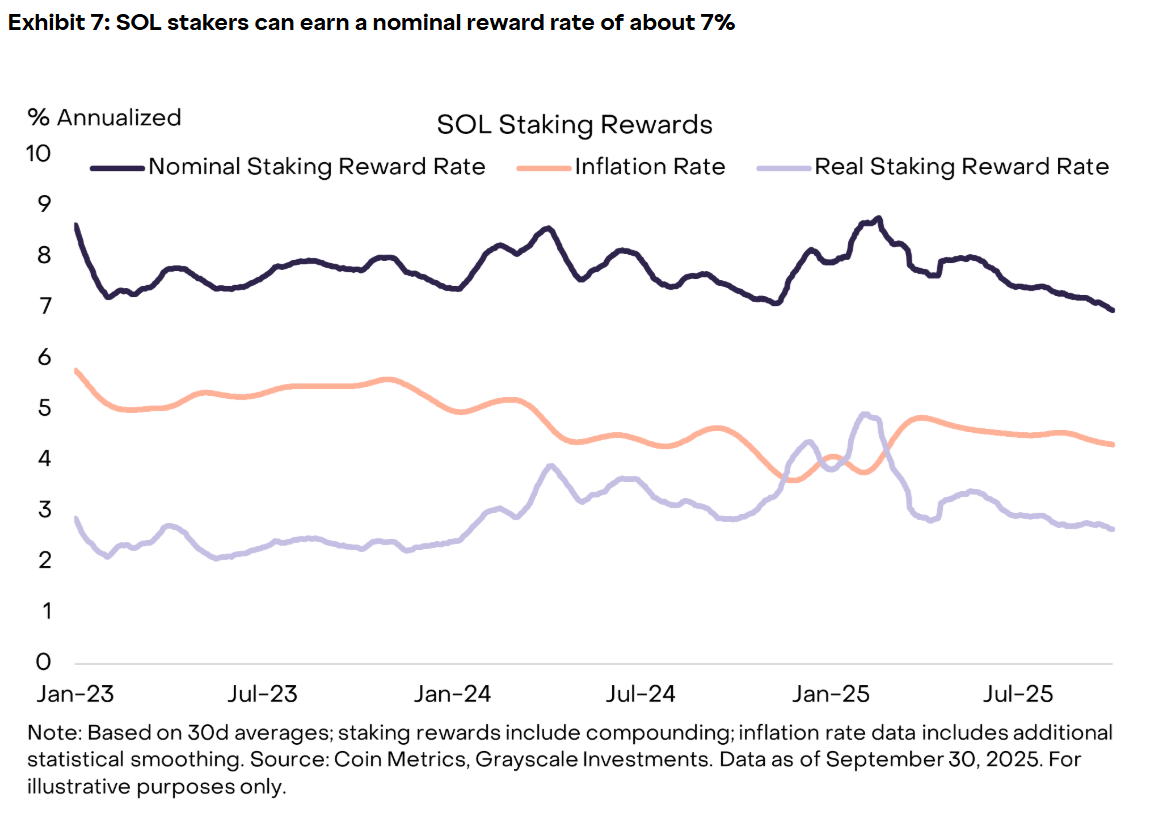
The largest risk in staking is often not the validator. It is the token itself. A 4% to 8% staking return can look nice until the asset drops 35%. Yield does not erase market risk. It just slightly cushions it.
Lockups and Unbonding Periods
Many staking arrangements involve waiting periods before your assets become fully liquid again. Some networks or services are flexible. Others require days or weeks to unbond. That can be inconvenient in calm markets and painful in panics.
Slashing and Validator Performance
On some networks, validators can be penalized for downtime or harmful behavior. In other words, not all yield arrives neatly gift-wrapped. Some of it can be clawed back if the validator fails operationally or acts dishonestly.
Platform and Custody Risk
If you stake through an exchange or third-party platform, you are trusting that service to safeguard assets, calculate rewards correctly, and let you access funds under the promised conditions. History has already given crypto investors enough reminders that “trusted third party” can be a phrase with a dark sense of humor.
Smart Contract Risk
This matters especially for liquid staking and DeFi-integrated strategies. A bug, exploit, governance failure, or cascading market event can damage the value or usability of staked positions even if the underlying blockchain continues to function.
Regulatory and Tax Complexity
Crypto staking exists inside legal and tax frameworks that are still evolving. In the United States, tax treatment for staking rewards has centered on recognizing income when the taxpayer gains dominion and control over those rewards. That means recordkeeping matters. A lot. You may owe tax on rewards received even if you never converted them to dollars, which is the sort of detail that can turn “passive income” into “active spreadsheet maintenance.”
How to Evaluate a Staking Opportunity Like an Adult
If you are considering staking, resist the temptation to chase the largest headline yield. Start with the basics.
- Understand the asset: Are you actually bullish on the token, or just hypnotized by the reward rate?
- Know the staking method: Solo, pooled, exchange, and liquid staking all have different risk profiles.
- Check the lockup terms: Liquidity matters more than people think right up until they need it.
- Review fees: Gross rewards can look wonderful until platform cuts and validator fees take their bite.
- Assess validator quality: Uptime, reputation, decentralization, and security practices matter.
- Plan for taxes: Keep accurate records of reward timing, fair market value, and later sales.
- Avoid category confusion: Make sure the “yield” you are seeing is actually staking and not some more complex product wearing a staking costume.
A Practical Example
Imagine two investors each own the same proof-of-stake token. The first stakes through a reputable exchange because convenience matters most. The second uses a non-custodial pooled or delegated setup because control matters more than simplicity.
The first investor gets an easier user experience, maybe faster onboarding, and fewer operational headaches. The second may get better transparency and reduce exchange custody risk, but takes on more responsibility for wallet security and validator selection.
Now imagine the token price drops sharply. Both investors still earn rewards, but neither one is immune to market losses. Add an unbonding period, and the investor who suddenly wants to exit may not be able to move instantly. Add taxes, and both may owe income tax on rewards received during the year. Same token, same broad strategy, very different lived experience depending on the setup.
That is why staking should be treated as part of a portfolio process, not as a magic trick. The yield is real, but so are the frictions.
Talk Your Book Without Fooling Yourself
The smartest way to talk your book on staking is to be honest about what you are actually buying. You are not buying a bond. You are not opening a savings account. You are taking exposure to a volatile digital asset and pairing it with a network reward mechanism that may or may not compensate you for the risks you are assuming.
That does not make staking bad. It makes it specific. For long-term believers in proof-of-stake networks, staking can be rational, productive, and aligned with how the technology works. For people who need liquidity, dislike operational complexity, or cannot tolerate tax paperwork and token volatility, staking may be more annoying than rewarding.
The mature view is that staking is a tool. Sometimes it is a very good tool. Sometimes it is a wrench being used as a hammer because the yield looked pretty. Know which one you are holding.
Real-World Experience: What Staking Feels Like After the Sales Pitch
The lived experience of staking crypto is a lot less glamorous than the phrase “earn passive yield” suggests. At first, it feels satisfying. You buy a proof-of-stake asset, commit it to staking, and watch tiny rewards appear over time. The dashboard looks productive. The asset is finally doing something. You feel clever, disciplined, maybe even a little superior to the people letting their tokens sit idle. Then reality starts filing its paperwork.
One of the first surprises is emotional, not technical. Staking can make investors feel more committed to a token than they intended. Once your coins are locked or waiting through an unbonding period, selling becomes harder. That can be good if it stops panic decisions, but it can also trap you in a story you no longer believe. It is amazing how quickly “I’m a long-term investor” can turn into “I’m just waiting for unstaking to finish.”
Then there is the reward psychology. People love seeing balances rise, even when the dollar value does not. If your token rewards compound while the underlying asset drifts lower, the experience can become strangely deceptive. You have more coins, but less money. That gap between token-denominated success and real-world portfolio performance catches more people than they care to admit.
Operationally, the experience depends heavily on how you stake. Through a major exchange, it can feel almost boring, and boring is underrated in finance. Through a wallet-based or liquid staking setup, the experience becomes more hands-on. You start reading validator details, checking unbonding rules, watching smart contract news, and learning that convenience and control are usually fighting over the same chair.
Taxes are where the fantasy really matures into adulthood. Rewards may arrive in small increments, each with a market value at the time received. Suddenly, what looked like effortless income begins to resemble a part-time bookkeeping internship. Investors who ignore this tend to discover later that “passive” was doing a lot of dishonest work in that sentence.
And yet, plenty of people still stake for good reason. For committed holders who understand the network, accept the volatility, and choose their setup carefully, staking can feel worthwhile. It creates participation, not just speculation. You are not merely betting on the asset; you are helping support the system that gives the asset value. That is a more grounded and useful mindset than chasing a flashy APY with no clue how it is generated.
The most realistic staking experience, then, is this: a little technical, a little administrative, occasionally frustrating, often educational, and potentially rewarding if you entered with open eyes. It is not magic internet interest. It is infrastructure income attached to a risky asset class. Treat it that way, and staking starts to make sense.
Conclusion
Staking your crypto for yield can be smart, but only when the story matches the structure. The yield is real because proof-of-stake networks pay participants to help secure and operate the chain. The opportunity is real because long-term holders may increase their token balance without buying more. The risks are just as real because volatility, lockups, taxes, fees, validator performance, and platform exposure can all reshape the outcome.
If you want to talk your book on staking, skip the lazy “free passive income” script. The sharper version is this: staking is a way to earn protocol-based rewards on select crypto assets, and whether it is worth it depends on your conviction in the token, your liquidity needs, your risk tolerance, and how well you understand the mechanism paying you. In crypto, yield is never just a number. It is a design choice, a risk package, and a test of whether you read the fine print before clicking “stake.”