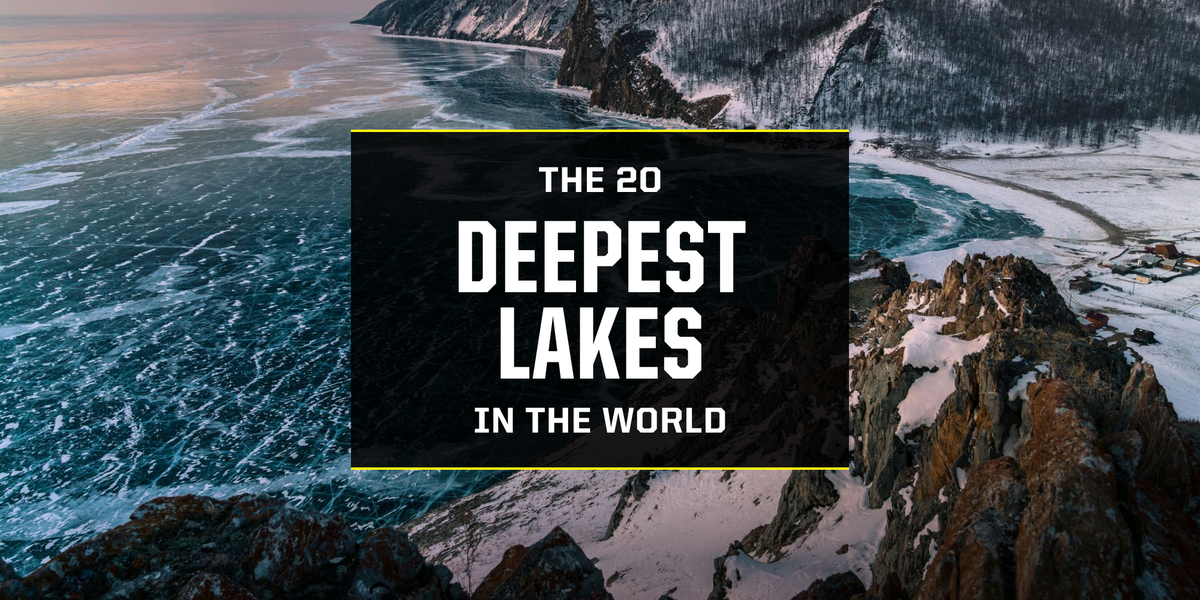
Note: Depth figures below are based on widely reported maximum-depth measurements from geographic, scientific, encyclopedia, conservation, and park references. Because lake bathymetry can be remeasured over time, some rankings may vary slightly between sources.
Oceans get most of the drama. They have sharks, shipwrecks, mysterious trenches, and enough blue space to make your GPS nervous. But lakes? Lakes are the quiet overachievers of the water world. Some look peaceful enough for a postcard, yet beneath the surface they plunge thousands of feet into volcanic craters, tectonic rifts, glacial valleys, and ancient basins that have been holding secrets longer than humans have been arguing over window seats.
The deepest lakes in the world are not just big puddles with impressive numbers. They are living archives. They store ancient water, protect rare species, shape local weather, feed communities, preserve geological history, and occasionally inspire legends about monsters, sunken cities, or “absolutely-not-fake” lake creatures. From Siberia’s legendary Lake Baikal to Antarctica’s hidden Lake Vostok, these lakes prove that depth is not just a measurementit is a personality trait.
So, how deep do the world’s deepest lakes go? Let’s dive into the top 20, no scuba certification required.
What Makes a Lake “Deep”?
Lake depth is usually measured in two ways: maximum depth and mean depth. Maximum depth is the deepest known point, while mean depth is the average depth across the lake. For this ranking, we are using maximum depth, because that is the number that makes people pause and say, “Wait, there is a whole underwater skyscraper down there?”
Many of the deepest lakes were formed by powerful geological processes. Rift lakes sit where Earth’s crust has pulled apart. Volcanic crater lakes fill collapsed calderas. Glacial lakes occupy valleys carved by ice. Subglacial lakes hide beneath ice sheets, which is nature’s way of saying, “Good luck finding the front door.”
The 20 Deepest Lakes in the World
1. Lake Baikal, Russia 5,387 feet / 1,642 meters
Lake Baikal is the heavyweight champion of deep lakes. Located in southern Siberia, it is the deepest lake in the world and the largest freshwater lake by volume. It holds roughly one-fifth of Earth’s unfrozen surface freshwater, which is a polite way of saying Baikal has been hoarding water like a dragon with excellent hydration habits.
Baikal is also ancientaround 25 million years oldand sits in an active rift zone where the crust is slowly pulling apart. That geological stretching helped create its enormous depth. The lake is famous for its remarkable clarity, dramatic winter ice, and unique wildlife, including the Baikal seal, the only seal species that lives exclusively in freshwater.
2. Lake Tanganyika, East Africa 4,823 feet / 1,470 meters
Lake Tanganyika stretches along the borders of Tanzania, the Democratic Republic of the Congo, Burundi, and Zambia. It is the second deepest lake in the world and one of the longest freshwater lakes on Earth. Like Baikal, it is a rift lake, which means tectonic forces did the heavy lifting.
The lake is famous for biodiversity, especially cichlid fish species found nowhere else. Tanganyika also supports millions of people through fishing, transportation, and local economies. Its depth helps create distinct layers of water, making it a fascinating natural laboratory for scientists studying evolution, oxygen levels, and aquatic ecosystems.
3. Caspian Sea, Eurasia 3,363 feet / 1,025 meters
Despite the name, the Caspian Sea is often classified as the world’s largest inland lake. It is bordered by Russia, Kazakhstan, Turkmenistan, Iran, and Azerbaijan. Because it is enormous and slightly salty, it behaves like a lake with a sea complexand honestly, with a surface area that huge, it has earned the attitude.
The Caspian is famous for sturgeon, oil and gas resources, and complex environmental challenges. Its southern basin is the deepest part, dropping more than 3,300 feet. The lake has no natural outlet to the ocean, so changes in river flow, evaporation, and climate can strongly affect its water level.
4. Lake Vostok, Antarctica About 3,300 feet / 1,000 meters
Lake Vostok is the mystery novel of the lake world. It lies hidden beneath thousands of meters of Antarctic ice near Russia’s Vostok Station. Scientists confirmed its presence using radar, and it remains one of the largest known subglacial lakes on Earth.
Its exact depth is still debated, but many estimates place its maximum depth near 3,300 feet. Because it has been sealed away from the surface for a very long time, Lake Vostok attracts interest from researchers studying extreme environments, ancient microbes, and conditions that might resemble icy worlds beyond Earth.
5. Viedma Lake, Argentina/Chile About 3,000 feet / 900 meters
Viedma Lake sits in Patagonia, a region that appears to have been designed by a dramatic landscape artist with a glacier budget. Fed by the Southern Patagonian Ice Field, the lake has a milky blue-green color caused by glacial rock flourfine mineral particles ground down by moving ice.
Recent measurements suggest Viedma may be around 3,000 feet deep, although it is not included in every traditional ranking because bathymetric data for some remote glacial lakes remains limited. Still, its extreme depth and icy setting make it one of the most impressive deep lakes on the planet.
6. O’Higgins/San Martín Lake, Chile and Argentina 2,742 feet / 836 meters
This Patagonian beauty has two names: O’Higgins in Chile and San Martín in Argentina. The lake is shaped like a many-armed creature reaching into the Andes, and its turquoise water comes from glacial sediment.
At more than 2,700 feet deep, it is one of the deepest lakes in the Americas. Its remote location, rugged mountains, and glacier-fed waters make it a dream for adventurers who like their scenery breathtaking and their travel logistics mildly complicated.
7. Lake Malawi / Lake Nyasa, Africa 2,316 feet / 706 meters
Lake Malawi, also called Lake Nyasa or Lake Niassa, is shared by Malawi, Mozambique, and Tanzania. It is one of Africa’s Great Lakes and is famous for having one of the richest freshwater fish diversities in the world.
The stars of the show are cichlids, many of which evolved in the lake and occur nowhere else. The lake’s depth, length, rocky shorelines, and varied habitats created ideal conditions for evolutionary fireworks. Basically, if fish had a family reunion here, the name tags would need a second table.
8. Issyk-Kul, Kyrgyzstan 2,192 feet / 668 meters
Issyk-Kul sits high in the Tian Shan mountains of Kyrgyzstan. Its name means “warm lake,” because it does not usually freeze despite cold winters and high elevation. Slight salinity, depth, and local conditions help keep it open when surrounding landscapes are locked in ice.
This lake was historically important along Silk Road routes, and legends of submerged settlements have added mystery to its already dramatic setting. With snowcapped mountains around it and serious depth below, Issyk-Kul is the kind of lake that looks peaceful while casually hiding an underwater canyon.
9. Great Slave Lake, Canada 2,015 feet / 614 meters
Great Slave Lake in Canada’s Northwest Territories is the deepest lake in North America. Its northern shore includes Yellowknife, and in winter, parts of the frozen lake have historically served as seasonal ice roads.
The lake’s depth comes from a combination of glacial and geological processes. It is also one of Canada’s largest lakes, with cold waters, boreal landscapes, and wide-open northern skies that make it feel less like a lake and more like a map decided to become a mood.
10. Crater Lake, United States 1,949 feet / 594 meters
Crater Lake in Oregon is the deepest lake in the United States. It formed about 7,700 years ago after Mount Mazama erupted and collapsed, creating a caldera that slowly filled with rain and snowmelt.
Because no major rivers flow into the lake, its water is exceptionally clear and intensely blue. It is also protected as Crater Lake National Park, where visitors can admire the lake from the rim and silently wonder how something so calm came from something so explosive.
11. Lake Matano, Indonesia 1,936 feet / 590 meters
Lake Matano is located on Sulawesi Island in Indonesia and is the deepest lake in the country. It is part of the Malili Lakes system and is known for unusual chemistry and endemic species.
Matano’s isolation helped create unique aquatic life, including fish and invertebrates adapted to local conditions. Scientists study the lake to better understand ancient freshwater ecosystems, evolution, and how deep tropical lakes function over long periods.
12. General Carrera / Buenos Aires Lake, Chile and Argentina 1,923 feet / 586 meters
This large Patagonian lake is called General Carrera in Chile and Buenos Aires in Argentina. It is famous for marble caves, bright blue waters, and strong winds that make the local indigenous name, Chelenko, often translated as “stormy waters,” feel very appropriate.
Its depth is the result of glacial carving in the Andes. The lake is popular for fishing, kayaking, photography, and travelers who enjoy landscapes that look like someone turned the saturation slider all the way up.
13. Hornindalsvatnet, Norway 1,686 feet / 514 meters
Hornindalsvatnet is Europe’s deepest lake. Located in western Norway, it is surrounded by steep mountains and fjord-like scenery. Its waters are known for clarity, and its depth makes it a standout among European lakes.
Like any respectable deep lake, Hornindalsvatnet has inspired local legends, including stories of a lake monster. Whether or not anything mysterious is lurking there, the lake’s natural drama needs very little help from folklore.
14. Quesnel Lake, Canada 1,677 feet / 511 meters
Quesnel Lake in British Columbia is often described as one of the deepest fjord lakes in the world. Its long, narrow arms reflect its glacial origins, and its depth makes it one of North America’s most impressive freshwater basins.
The lake supports fishing, recreation, and important freshwater habitat. It is also tied to environmental discussions because of past mining-related pollution concerns in the region, a reminder that even remote lakes are connected to human decisions.
15. Lake Toba, Indonesia 1,657 feet / 505 meters
Lake Toba occupies the caldera of a supervolcano in northern Sumatra. The eruption that formed the caldera was one of the most powerful volcanic events in Earth’s recent geological history.
Today, the lake is a major destination, with Samosir Island sitting inside it like a geographical bonus feature. Toba’s great depth and volcanic origin make it one of the most spectacular crater lakes on Earth.
16. Lake Sarez, Tajikistan 1,657 feet / 505 meters
Lake Sarez is young by deep-lake standards. It formed in 1911 after a massive earthquake triggered a landslide that blocked the Murghab River in the Pamir Mountains.
The natural dam, known as Usoi Dam, created a deep mountain lake that remains closely monitored because of potential flood risks. Sarez is beautiful, remote, and slightly nerve-rackinglike a scenic postcard with a geological warning label.
17. Lake Tahoe, United States 1,645 feet / 501 meters
Lake Tahoe sits along the California-Nevada border in the Sierra Nevada. It is the second deepest lake in the United States and one of the clearest large lakes in North America.
Tahoe is famous for skiing, hiking, boating, and vacation homes with views that make people briefly consider changing careers. Its depth helps influence local conditions, and its water clarity has made it a long-term focus of environmental protection.
18. Lake Argentino, Argentina 1,640 feet / 500 meters
Lake Argentino lies in Los Glaciares National Park in Patagonia. It receives icebergs from famous glaciers such as Perito Moreno, Upsala, and Spegazzini, creating a landscape where chunks of blue ice drift across cold water like frozen sculptures.
The lake’s depth and glacial setting make it one of South America’s most dramatic natural attractions. It is also a gateway for visitors exploring Patagonia’s glaciers, mountains, and winds that seem personally committed to rearranging your hairstyle.
19. Salvatnet / Salsvatnet, Norway About 1,523–1,581 feet / 464–482 meters
Salvatnet, also spelled Salsvatnet, is another extremely deep Norwegian lake. Some sources report slightly different depth figures, but it is consistently recognized among the deepest lakes in Europe.
The lake is notable for meromictic conditions, meaning its water layers do not fully mix. Deep layers can preserve chemical conditions from the past, offering scientists insight into how lakes change when freshwater and ancient saltwater layers interact.
20. Lake Kivu, Rwanda and Democratic Republic of the Congo 1,575 feet / 480 meters
Lake Kivu is one of Africa’s Great Lakes and one of the most unusual lakes in the world. It contains large amounts of dissolved carbon dioxide and methane in its deep waters, which makes it scientifically important and potentially hazardous.
Because millions of people live near the lake, monitoring and gas extraction projects are important for reducing risk while also creating energy opportunities. Kivu is beautiful, productive, and complexa lake that reminds us depth can mean danger, value, and wonder all at once.
Why Are the Deepest Lakes So Fascinating?
Deep lakes are more than impressive geography trivia. They act like time capsules. Their sediments can preserve clues about past climates, volcanic eruptions, earthquakes, and ecosystem changes. Their water layers may remain separated for long periods, creating unusual chemical environments. Their isolation can drive evolution, producing species found nowhere else on Earth.
Many of the deepest lakes also matter to people. Tanganyika, Malawi, Kivu, Tahoe, Baikal, and others support fishing, tourism, transportation, drinking water, cultural identity, and scientific research. Protecting these lakes is not just about saving pretty scenery. It is about preserving freshwater systems that communities and ecosystems depend on.
Travel and Experience: What It Feels Like to Visit the World’s Deepest Lakes
Visiting a deep lake feels different from visiting an ordinary lake. At a shallow lake, you might notice the reeds, the ducks, the picnic tables, and the person trying to paddleboard with the confidence of an Olympic athlete and the balance of a shopping cart. At a truly deep lake, your attention shifts. The water seems darker, heavier, quieter. Even when the surface is calm, the idea of all that space below you adds a strange kind of gravity to the experience.
Crater Lake is a perfect example. Standing on the rim, you do not simply see water; you see a collapsed volcano filled with blue so intense it looks edited. The lake sits far below the cliffs, and Wizard Island rises from the surface like nature added a decorative centerpiece. The experience is not just scenicit is humbling. You are looking at the aftermath of an eruption so powerful it reshaped the mountain itself.
Lake Tahoe offers a different feeling. It is deep, clear, social, and energetic. In summer, the beaches, boats, and hiking trails make it feel cheerful and accessible. But when you look across the water from a quiet viewpoint, the lake’s scale becomes obvious. Tahoe is not merely a vacation spot; it is a huge alpine basin holding cold, ancient water beneath the sparkle. That contrastplayful on the surface, serious underneathis part of its charm.
Patagonian lakes such as Viedma, Argentino, O’Higgins/San Martín, and General Carrera feel wild in a more elemental way. The colors are surreal: turquoise, blue-gray, milky green, sometimes shifting with the weather. Glaciers feed the water, mountains crowd the horizon, and the wind can arrive with the subtlety of a marching band. These lakes feel remote and alive. You may hear ice cracking, see floating bergs, or watch clouds move so quickly they seem late for an appointment.
In East Africa, lakes Tanganyika, Malawi, and Kivu combine depth with human life. Villages, boats, markets, fishing communities, beaches, and mountains all meet at the water’s edge. The lakes are not isolated museum pieces; they are part of daily life. Watching fishermen head out at sunset on Lake Tanganyika or seeing the clear shallows of Lake Malawi filled with colorful cichlids can make the science feel personal. These ecosystems are beautiful, but they are also working landscapes.
Then there is Lake Baikal, which belongs in a category of its own. In winter, its ice can become clear, cracked, and otherworldly, with bubbles trapped below the surface and ridges that look like glass sculptures. In summer, the shoreline offers forests, mountains, villages, and cold water that makes swimming feel like shaking hands with Siberia. Baikal’s depth is not just a number; it is part of the atmosphere. The lake feels old, immense, and slightly beyond human scale.
If you plan to visit any of the world’s deepest lakes, go with curiosity and respect. Weather can change quickly, especially in mountain and northern regions. Some lakes are remote, environmentally sensitive, or culturally important to local communities. Choose responsible tour operators, follow park rules, avoid disturbing wildlife, and remember that clear water is not an invitation to treat nature like a swimming pool with better branding.
The best deep-lake experiences are slow ones. Walk the rim. Sit on the shore. Take a boat ride if conditions are safe. Learn the local stories. Notice how the color changes with light. Think about the fact that beneath the surface may be volcanic walls, glacial valleys, ancient sediments, rare fish, trapped gases, or water that has not seen sunlight in ages. That is the magic of deep lakes: they make the visible world feel connected to hidden worlds below.
Conclusion
The 20 deepest lakes in the world reveal how creative Earth can be when geology, water, ice, and time collaborate. Some were carved by glaciers, others formed in volcanic craters, and the deepest of all sits in a rift where the planet itself is slowly pulling apart. They are beautiful travel destinations, priceless scientific archives, biodiversity hotspots, and reminders that freshwater can be every bit as mysterious as the ocean.
From Lake Baikal’s ancient depths to Lake Kivu’s gas-rich waters, each lake tells a different story. Some stories are about evolution. Some are about danger. Some are about climate, culture, or adventure. And some are simply about standing beside a body of water and realizing that the surface is only the beginning.