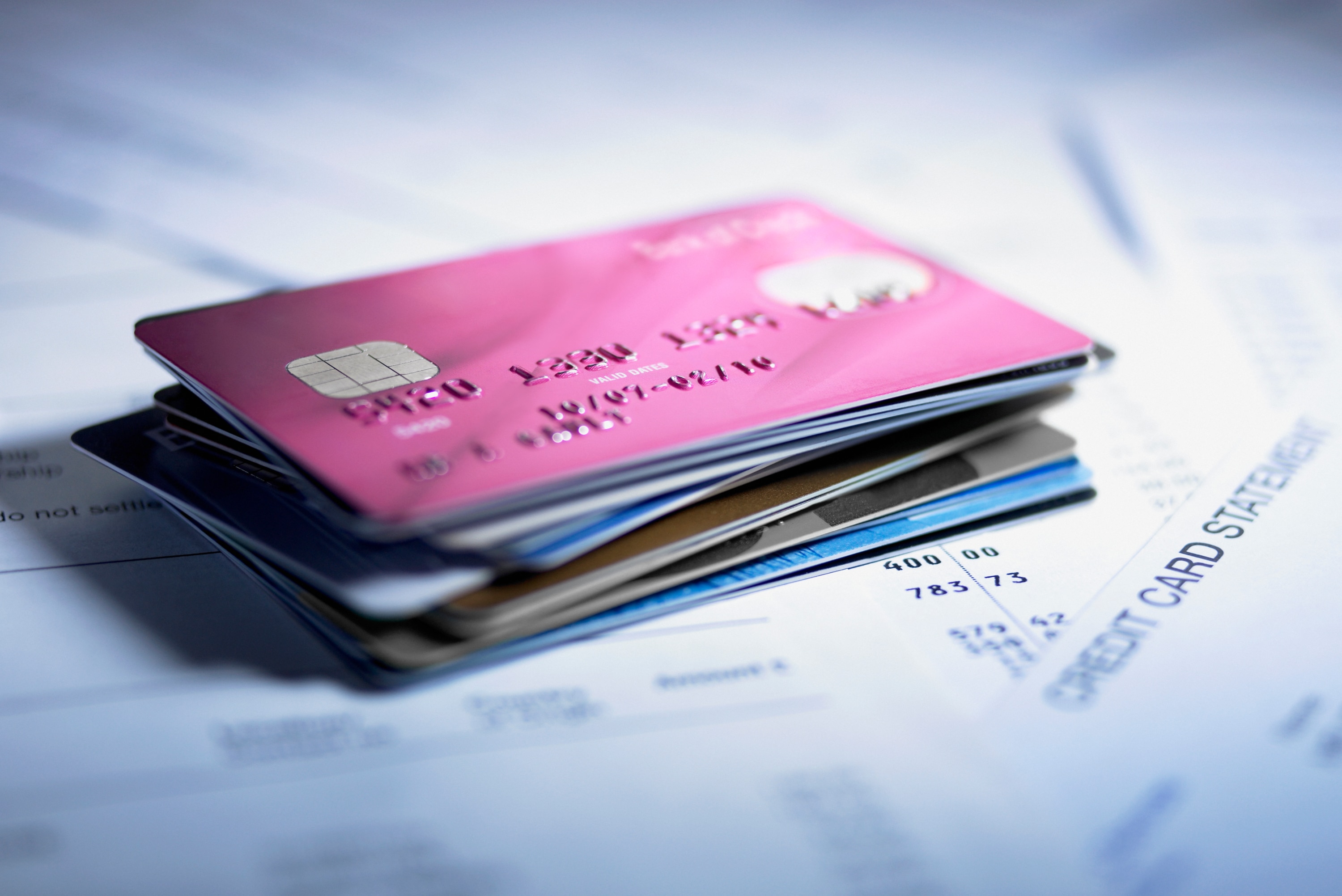
A bruised credit score can make borrowing money feel like trying to enter an exclusive nightclub while wearing gardening shoes. The door is not necessarily locked, but you may face stricter requirements, higher prices, and considerably less enthusiastic customer service.
Fortunately, the best personal loans for bad credit in 2025 included online lenders, lending platforms, branch-based finance companies, and credit unions willing to consider more than a pristine credit history. Some evaluated income and employment stability, while others accepted joint applications or offered secured loans. The trick was not simply getting approved. It was finding an affordable loan that would not turn one financial problem into a five-year subscription to regret.
What Is a Bad-Credit Personal Loan?
A bad-credit personal loan is an installment loan designed for borrowers with damaged, limited, or less-than-ideal credit. You receive a lump sum and repay it through fixed monthly payments over a predetermined term. These loans are commonly used for emergency expenses, medical bills, home repairs, major purchases, or debt consolidation.
FICO generally classifies a score below 580 as poor, while scores from 580 through 669 fall into the fair range. However, lenders do not rely on the score alone. Income, recent payment history, existing monthly obligations, employment, requested loan amount, and debt-to-income ratio can all influence approval and pricing.
Most bad-credit personal loans are unsecured, meaning you do not pledge an asset. Certain lenders also offer secured personal loans backed by a vehicle, savings account, or another eligible asset. Collateral may improve approval odds or produce a better rate, but it also gives the lender something valuable to repossess if the loan is not repaid. That is a rather serious footnote, not decorative legal confetti.
The Best Personal Loans for Bad Credit in 2025
No lender is best for every applicant. Our 2025 selections emphasize different borrower needs, including thin credit, quick funding, joint applications, debt consolidation, secured borrowing, and in-person assistance. Advertised terms are not guaranteed, and availability may vary by state.
| Lender | Best For | Primary Advantage | Potential Drawback |
|---|---|---|---|
| Upgrade | Best overall | Flexible uses and accessible prequalification | Origination fees can reduce loan proceeds |
| Upstart | Thin or limited credit history | Alternative underwriting factors | High APRs and origination fees are possible |
| Avant | Fast online borrowing | Accessible qualification standards | Administration fees may apply |
| OneMain Financial | In-person assistance | Branch service and secured loan options | Rates and fees may be relatively high |
| Best Egg | Secured borrowing | Secured and unsecured loan structures | Collateral introduces additional risk |
| Universal Credit | Debt consolidation | Direct creditor payments and possible discounts | Origination fees can be substantial |
| Prosper | Joint applications | A stronger co-borrower may improve the application | Both applicants are responsible for repayment |
| Federal Credit Unions | Lower-cost alternatives | Rate limits and payday alternative loans | Membership requirements apply |
1. Upgrade: Best Overall for Bad Credit
Upgrade was a strong all-around choice for borrowers who wanted to check potential offers online before completing a formal application. NerdWallet named Upgrade its best personal loan for bad credit in its 2025 awards, while other major reviewers also highlighted its accessibility and debt-consolidation features.
Borrowers could use funds for expenses such as refinancing credit cards, handling emergency repairs, or paying large bills. Upgrade also offered direct payment to creditors on qualifying debt-consolidation loans, which removed the temptation to let the payoff money take an unscheduled vacation in the checking account.
The main concern was cost. Upgrade loans included origination fees deducted from the approved amount. A borrower approved for $10,000 would therefore receive less than $10,000 in cash when a fee applied. Applicants needed to compare the amount deposited, monthly payment, APR, and total repaymentnot merely celebrate the approval notification.
2. Upstart: Best for Thin or Limited Credit
Upstart stood out because its lending model could consider factors beyond a traditional credit score, including income, employment information, and other application data. That made it relevant to applicants with a thin credit file, a short borrowing history, or previous credit trouble.
Prequalification generally allowed prospective borrowers to review possible terms using a soft credit inquiry. A full application could still trigger a hard inquiry, and prequalification did not guarantee final approval.
Upstart was not automatically inexpensive. Depending on the applicant, an offer could include a high APR and a sizable origination fee. Its own representative examples demonstrated how the interest rate and fee could combine to produce an APR materially higher than the stated interest rate. That difference is exactly why APR deserves the spotlight while the interest rate waits politely backstage.
3. Avant: Best for a Straightforward Online Process
Avant catered to borrowers with fair or imperfect credit and offered an online application, mobile account management, and potentially fast funding after final approval. It was often considered by applicants who could not qualify for the lowest-rate bank loans but still wanted a conventional fixed-payment installment loan.
Avant’s example disclosures showed that administration fees could be deducted before disbursement. As with any lender charging an upfront fee, borrowers needed to request enough to cover the expense after the deduction without borrowing so much that the monthly payment became unmanageable.
4. OneMain Financial: Best for Branch Support
OneMain Financial differed from online-only competitors by maintaining physical branches and offering both unsecured and secured personal loans. That made it useful for borrowers who preferred discussing documents, income, collateral, and repayment terms with an actual person rather than a chatbot that responds to every concern with, “Great question!”
The lender’s secured options could help some applicants qualify by pledging an eligible vehicle or other approved collateral. However, using a car as collateral can create a severe consequence: default may place the vehicle at risk. That danger is particularly important when the car is needed to commute to work and earn the income required to repay the loan.
OneMain also charged origination fees in many cases, with the structure depending partly on state law. Prospective borrowers should request a complete written breakdown before accepting an offer.
5. Best Egg: Best for Secured Loan Options
Best Egg offered unsecured personal loans as well as secured alternatives for eligible borrowers. A secured structure could potentially provide more affordable terms than an unsecured offer because collateral reduced the lender’s risk.
Some Best Egg secured loans used qualifying permanent home fixtures as collateral rather than placing a lien on the entire property. Even so, borrowers needed to understand exactly what secured the loan, how default would be handled, and whether the potential rate improvement justified involving an asset.
6. Universal Credit: Best for Debt Consolidation
Universal Credit was particularly relevant to borrowers consolidating credit card balances. The lender could send qualifying loan proceeds directly to creditors, and discounts could be available for features such as automatic payments or direct creditor payoff.
Its loans could also carry notable origination fees. A consolidation loan made sense only when the new APR, fees, monthly payment, and repayment period produced a meaningful improvement over the existing debts. Replacing a 27% credit card with a 20% installment loan may help. Replacing it with a 35% loan and a large fee is not consolidation magic; it is debt wearing a different hat.
7. Prosper: Best for Applying With a Co-Borrower
Prosper allowed joint personal loan applications. A co-borrower with stronger credit, steady income, or a lower debt load could improve approval odds or lead to better terms. However, both people became legally responsible for the debt. A joint loan is therefore a financial partnership, not a casual favor between friends who once split a pizza successfully.
Before applying jointly, both borrowers should agree on who will make payments, how payment records will be shared, and what happens if one person loses income. Late payments can damage both credit profiles.
8. Credit Unions: Best Lower-Cost Alternative
Federal credit unions were often worth checking before accepting a high-cost online loan. Membership-based underwriting could provide more personal consideration, and federal rules generally limited the interest rate charged by federal credit unions. Some institutions also offered payday alternative loans, known as PALs, for smaller short-term needs.
PALs were designed as safer alternatives to traditional payday loans. Under federal credit union rules, PAL interest rates could be capped at 28%, including applicable finance charges. Availability depended on membership, the credit union’s policies, and the borrower’s history with the institution.
How to Compare Bad-Credit Loan Offers
Compare APR, Not Just the Interest Rate
APR is generally the better comparison tool because it reflects the interest rate plus certain loan fees. Two lenders may advertise the same interest rate while offering noticeably different APRs because one charges a larger origination fee.
Calculate the Net Amount You Will Receive
Suppose you are approved for a $10,000 loan with an 8% origination fee. The lender may deduct $800 and deposit only $9,200, even though you repay a loan based on the full approved principal. If you need exactly $10,000 for an expense, that shortfall matters.
Examine the Total Repayment Cost
Consider a $10,000 loan repaid over 36 months. At 18% APR, the estimated monthly payment is approximately $361.52, and total interest is about $3,014.86. At 29.99% APR, the payment rises to roughly $424.46, with about $5,280.60 in interest. At 35.99% APR, the payment approaches $457.98, and total interest reaches approximately $6,487.32.
The highest-rate example costs more than twice as much in interest as the 18% loan. A monthly difference that initially looks manageable can become thousands of dollars over the entire term.
Choose the Shortest Affordable Term
A longer term can lower the monthly payment but usually increases the total interest paid. The best term is not automatically the shortest one available; it is the shortest term whose payment fits comfortably within the household budget.
Check for Prepayment Penalties and Late Fees
Many major personal lenders did not charge prepayment penalties, but borrowers should verify the promissory note rather than assume. Also review late fees, returned-payment charges, optional insurance products, and any fee for changing the due date.
How to Improve Your Approval Odds
- Review all three credit reports. Look for accounts that are not yours, incorrect late payments, duplicate collections, and outdated balances. The federally authorized AnnualCreditReport.com service provides access to free credit reports.
- Prequalify with several lenders. Soft-inquiry prequalification can help you compare potential offers without immediately generating multiple hard inquiries.
- Request only what you need. A smaller loan may be easier to approve and less painful to repay.
- Lower your debt-to-income ratio. DTI equals monthly debt payments divided by gross monthly income. Paying down a revolving balance or increasing documented income may strengthen an application.
- Consider a qualified co-borrower. A joint application may help, but the other applicant becomes fully responsible for the debt.
- Compare secured and unsecured offers carefully. Collateral may improve the terms, but losing an essential asset could be far more costly than paying a higher rate.
Loan Scams and Red Flags to Avoid
Borrowers with bad credit are frequent targets for scammers because urgency makes “guaranteed approval” sound unusually attractive. Legitimate lenders do not promise approval regardless of credit history, and they do not require payment through gift cards, cryptocurrency, wire transfers, or unusual upfront “insurance” fees before releasing loan funds.
The Federal Trade Commission warns that advance-fee loan scams commonly promise access to credit, demand an upfront processing or insurance payment, and then disappear without providing the loan. A professional-looking website or caller ID is not proof that a lender is legitimate.
Before submitting sensitive information, confirm that the lender is licensed where required, read independent complaints, review its privacy policy, and verify that the website address is correct. Never share online banking passwords or one-time authentication codes with a supposed loan representative.
When a Personal Loan Isand Is Nota Good Idea
A personal loan may be useful when it replaces higher-rate debt, covers a necessary expense, or provides a predictable payoff schedule. It is most effective when the payment fits the budget without requiring new credit card debt for groceries, utilities, or other essentials.
Borrowing is less attractive when the loan funds discretionary spending, the APR approaches the maximum commonly offered by subprime lenders, or the payment consumes nearly all remaining monthly cash flow. A loan also will not solve repeated overspending unless the spending pattern changes.
Alternatives may include a credit union loan, a negotiated medical payment plan, a nonprofit credit-counseling program, a small employer advance, assistance from a community organization, or a temporary hardship arrangement with existing creditors.
Borrower Experiences: Lessons From Comparing Bad-Credit Loans
The following scenarios are composites based on common borrower experiences. They illustrate how loan structure can matter more than the excitement of receiving an approval.
The Approval That Was Smaller Than It Looked
Imagine a borrower named Carlos who needs $8,000 to replace a damaged roof section. He receives an $8,000 loan offer and initially assumes the problem is solved. Then he notices an 8% origination fee. The lender will deduct $640, leaving him with only $7,360.
Carlos has three choices: find another $640, reduce the repair scope, or request a larger loan. The larger loan increases his payment and total interest. His experience demonstrates why the approved principal is not necessarily the amount that reaches the bank account. Borrowers should always ask, “How much will actually be deposited?”
The Debt-Consolidation Boomerang
Next, consider Melissa, who uses a $12,000 personal loan to pay off three credit cards. Her new fixed payment is lower than the combined card minimums, and the lower APR should save money. For two months, everything goes beautifully. Her credit cards now display zero balances, which look less like financial tools and more like invitations.
Melissa begins using the cards again without changing her budget. Six months later, she has the consolidation loan plus $3,500 in new card balances. The loan itself was not the mistake. The missing step was preventing new revolving debt. A successful consolidation plan may require freezing the cards, removing them from shopping apps, building a small emergency fund, and tracking spending every week.
The Secured Loan With a Hidden Emotional Cost
David owns his car outright and is offered a secured loan at a better rate than his unsecured options. Mathematically, the secured loan appears cheaper. Emotionally, however, every unexpected expense now raises the fear that a missed payment could place his transportation at risk.
Because David relies on the vehicle for work, losing it could also reduce his income. He ultimately chooses a smaller unsecured loan and postpones part of the expense. His decision shows that the lowest APR is not always the lowest-risk choice. Collateral has a practical value that should be included in the comparison.
The Joint Application That Needed Ground Rules
Tasha has limited credit, while her sister has a longer and stronger history. They apply jointly and receive better terms than Tasha could obtain alone. Before signing, they create a simple written agreement: Tasha will transfer the payment five days before the due date, both will receive account alerts, and the sister will verify each payment.
This preparation may sound overly formal between family members, but joint debt affects both credit reports. Clear expectations protect the relationship as well as the payment history.
The Borrower Who Waited 30 Days
Finally, imagine Andre receiving an expensive loan offer after applying with high credit card utilization. Instead of accepting immediately, he pays down one balance, corrects an error on his credit report, and waits for the updated information to be reported. He then prequalifies again and receives a lower-cost offer.
Waiting is not possible during every emergency, but even a short preparation period can help. Reviewing reports, reducing balances, collecting proof of income, and comparing multiple lenders may produce a meaningfully better result. The first approval is evidence that someone will lend moneynot evidence that the offer is good.
Final Verdict
Upgrade was one of the strongest overall personal loan choices for bad credit in 2025, while Upstart was particularly relevant to borrowers with thin or unconventional credit histories. Avant emphasized a streamlined online process, OneMain Financial offered branch support and secured lending, Universal Credit served debt-consolidation borrowers, and Prosper supported joint applications.
Still, the best loan is the one with the lowest reasonable total cost, a payment that survives an ordinary bad month, and terms you fully understand. Prequalify with multiple lenders, compare APRs and net proceeds, and read the entire agreement before signing. An approval can feel like a rescue boat, but checking for holes before climbing aboard remains an excellent financial habit.