Some homes announce themselves with marble staircases, computerized everything, and a front door large enough to make a delivery driver question his life choices. The Brewsters’ home in Little Compton, Rhode Island, does something far better: it whispers. It says, “Come in, wipe the sand off your shoes, and please do not panic if the wind rearranges your hair into a historic landmark.”
Dara and Dan Brewster’s shingled seaside cottage on Sakonnet Point is the kind of New England home that makes minimalism feel warm, history feel usable, and old wood paneling look like it has better stories than most dinner guests. Their house is not a glossy showroom sealed in plastic. It is an evolving coastal refuge shaped by family, travel, craftsmanship, weather, salt air, gardens, and the stubborn romance of preserving a 1930s summer cottage instead of flattening it into something “new and improved.” New and improved is nice for phones. For a Little Compton beach cottage, soul matters more.
The Brewsters are known for their global eye. As the founders of DARA Artisans, they built a platform around handmade objects created by skilled craftspeople from around the world. But at home in Little Compton, RI, their taste does not feel imported in a flashy way. It feels collected, layered, and edited by life. A wooden fish from Guatemala, flea-market candleholders, salvaged beams, blue upholstery, ocean-tumbled stones, and locally made details all land in the same conversation. The result is a home that is both worldly and deeply rooted, like a passport tucked into a wicker basket beside a pair of muddy garden clogs.
A Little Compton Home With a Big Sense of Place
Little Compton is not the Rhode Island of velvet ropes and mansion tours. It is quieter, older, saltier, and more agricultural. Located in the state’s southeastern corner, this coastal town has long balanced farming, fishing, and summer life. Its history reaches back to the Sakonnet people, Plymouth Colony settlement, and centuries of rural New England living. The town common, old cemeteries, stone walls, farm fields, and views toward the water all give Little Compton a distinctive texture.
That setting matters because the Brewsters’ house is not merely “decorated.” It belongs to its landscape. The cottage sits on Sakonnet Point, facing the sea and looking toward Newport. It was built as a summer cottage, not a four-season fortress. That means exposed rafters, no basement, and the kind of practical simplicity that older coastal houses often possess. When the Brewsters purchased the property in 2000, the place needed serious tending. Wisteria had worked its way into the roof, the well had problems, and the house required years of careful repairs.
Many homeowners would have responded with demolition fever. The Brewsters took the harder, better route: preserve the no-nonsense Yankee character while making the house livable, lovable, and sturdy enough to keep standing against coastal weather. That choice is the heart of the story. The home is not impressive because it pretends to be perfect. It is impressive because it understands what it is.
Why the Brewster Cottage Feels So Timeless
The phrase “New England beach cottage” can slide into cliché faster than a wet flip-flop on a dock. Blue stripes, shells in bowls, a sign that says “Beach,” and suddenly the room feels like a gift shop arguing with a seafood restaurant. The Brewster home avoids that trap by using restraint, authenticity, and texture.
Original Wood, Real Wear, and Honest Materials
Inside, original wood paneling and floors create a quiet backdrop. These are not surfaces trying to look old; they are old enough to have earned their mood. Wood is especially powerful in a coastal cottage because it absorbs time visually. It softens bright summer light, warms up gray weather, and makes even simple furniture feel intentional.
The house also includes salvaged materials, including flooring milled from old joists and a ceiling beam recovered from a fire-damaged church in Bristol, Rhode Island. Those details matter. Salvage gives a renovation memory. It says the home was improved without erasing everything that came before. In a culture obsessed with “before and after” reveals, the Brewsters’ approach feels more like “before, during, and still becoming.”
A Kitchen Entrance That Knows Where the Party Starts
The main entrance opens into the kitchen, which is exactly the kind of practical decision that makes sense in a family beach house. Nobody comes in from the ocean carrying wet towels, garden tomatoes, and a bag of clams hoping to first admire a formal foyer. The kitchen is where the day lands. It is where steamers go on the stove, where someone asks if there is more butter, and where the best conversations begin before anyone has officially “hosted.”
This is one of the most useful lessons from the Brewsters’ Little Compton home: design should respect real behavior. Coastal living is messy in charming ways. Sand appears mysteriously. Wind has opinions. Guests drift in and out. A beautiful house that cannot handle a damp dog, a bowl of raspberries, or a pile of beach shoes is not a home; it is a hostage situation with throw pillows.
The Garden: Salt, Wind, Roses, and Persistence
The Brewsters’ property includes a sprawling seaside garden on several acres, and it has required the same patience as the cottage. Coastal gardening in Little Compton is not for the faint of heart. Salt spray, strong wind, shifting weather, and sandy conditions can humble even confident gardeners. A plant may look gorgeous at the nursery and then arrive at Sakonnet Point only to file a formal complaint.
Instead of forcing a fragile garden into a harsh landscape, the Brewsters worked with resilient choices. Roses climb near the entry. Hydrangeas line the drive. Rosa rugosa, a classic salt-tolerant coastal plant, fits the setting beautifully. There are perennial beds, raised kitchen garden beds, naturalized areas, dahlias, phlox, herbs, raspberries, and sunflowers. Dry-stone retaining walls built with local stone add structure without making the property feel overdesigned.
What the Garden Teaches About Coastal Home Design
The garden reinforces the home’s biggest idea: beauty should not be fragile. A Little Compton garden must be strong enough to survive weather and relaxed enough to look good when it is not behaving perfectly. The same goes for the interiors. The Brewsters’ home does not chase sterile perfection. It welcomes patina, repair, and the occasional mouse-related upholstery disaster. Yes, even refined fabric can meet its tiny winter enemies.
That humor is part of the charm. A real coastal home asks you to accept that nature is not a backdrop. Nature is a roommate. It brings salt, wind, birds, roses, fog, sea light, and sometimes maintenance bills that arrive with the dramatic timing of a thunderclap.
Global Craft Meets Yankee Simplicity
Dara and Dan Brewster’s professional world celebrates global artisanship, and that perspective appears throughout the home. But the most successful rooms do not feel like a catalog of faraway places. They feel personal. Objects from travel sit beside flea-market finds and locally made pieces. The mix works because the house itself is simple enough to hold them.
This is an important design principle for anyone inspired by the Brewsters at home in Little Compton, RI: if you love collected objects, give them a calm stage. White walls, natural wood, old floors, weathered brick, simple furniture, and practical lighting allow handmade pieces to shine without shouting. A carved object, woven textile, or antique fixture becomes meaningful when it has space to breathe.
There is also a philosophical match between DARA Artisans and the cottage renovation. Both value human hands. Both resist the disposable. Both suggest that the best things in a home are not always the most expensive; they are the things with evidence of skill, use, place, and care.
Little Compton, RI: The Perfect Backdrop for a Slow Home
Little Compton’s identity helps explain why the Brewster home feels so grounded. The town is known for its rural atmosphere, agricultural heritage, stone walls, shorelines, and historic sites. The Little Compton Common remains one of Rhode Island’s signature civic landscapes. Goosewing Beach Preserve protects barrier beach habitat and provides refuge for shorebirds, including piping plovers and least terns. Sakonnet Point Lighthouse, built in the 1880s, still marks the coast visually, even though visitors view it from shore rather than walking inside.
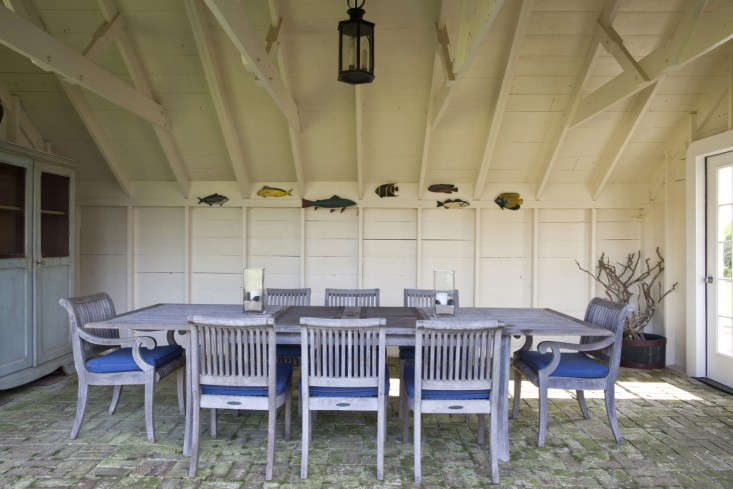
The area’s balance of preservation and daily life is essential. This is not a place where history exists only behind glass. It exists in road patterns, farm stands, old houses, beach routines, working waterfronts, and the way a windy outdoor dining area can become the most sensible room in the house. The Brewsters’ protected dining space, for example, reflects a very local truth: in a beautiful coastal setting, the view is free, but the wind always wants a seat at the table.
How to Bring the Brewster Look Into Your Own Home
You do not need a six-acre property on Sakonnet Point to borrow ideas from the Brewsters’ coastal cottage. The real inspiration is not about copying every object. It is about adopting the values: preserve character, choose natural materials, use handmade pieces, design for real life, and let a home evolve.
1. Keep What Has Soul
If your home has old floors, original trim, vintage hardware, or slightly imperfect built-ins, do not rush to replace them. Repair first. Refinish thoughtfully. Let age be an asset. The Brewster cottage proves that imperfections can create warmth when they are balanced with care.
2. Use Collected Objects, Not Theme Props
A coastal home does not need anchors printed on everything. Instead, choose objects that have a story: a flea-market mirror, handmade pottery, a woven basket, a weathered bench, a framed map, or stones collected from a meaningful beach. The Brewsters’ wedding place markers made from ocean-tumbled rocks show how simple personal details can outshine expensive décor.
3. Respect the Climate
Salt air is beautiful, but it is not gentle. Outdoor wood, shutters, metal fixtures, and garden plants all need to be chosen with weather in mind. The Brewsters’ experience replacing shutters every few years is a reminder that coastal charm comes with a maintenance schedule. The ocean gives you the view, then quietly invoices you.
4. Make the Kitchen the Heart
In beach houses and family homes alike, the kitchen often carries the emotional weight. Make it durable, welcoming, and easy to use. A kitchen does not have to be huge to feel generous. It needs good light, honest materials, comfortable flow, and enough space for someone to lean against the counter while telling a story that could have been an email but is better with snacks.
5. Let the Garden Be Local
Whether you live by the ocean, in the suburbs, or on a city balcony, choose plants suited to your conditions. The Brewsters’ seaside garden works because it respects salt, wind, and local character. A garden is always more convincing when it looks like it belongs where it is.
Why This Home Still Captures Attention
The Brewsters at home in Little Compton, RI continue to fascinate design lovers because their cottage offers a rare kind of aspiration. It is not about maximal luxury. It is about meaningful living. The home suggests that travel can deepen your eye without making your rooms feel rootless. It shows that renovation can improve a property without deleting its accent. It proves that a family house can be elegant and relaxed at the same time.
There is also something refreshing about a home that admits life happens. Mice happen. Wind happens. Wisteria gets ambitious. Wells need fixing. Gardens need reworking. Shutters surrender to salt air. Yet over time, with patience and humor, those challenges become part of the home’s identity. The Brewster cottage is beautiful because it has been lived with, not simply styled.
Experience Notes: What a Little Compton-Style Home Feels Like
The experience of a home like the Brewsters’ begins before you step inside. It starts on the road into Little Compton, where the landscape feels less like a destination and more like a gradual exhale. Stone walls appear beside fields. The air shifts. The light gets wider. By the time you reach Sakonnet Point, you understand why a family with a global life would choose this place as an anchor. After enough airports, deadlines, customs lines, and hotel pillows shaped like decorative regrets, a shingled cottage by the sea can feel like a very practical form of poetry.
At the house, the first impression is not grandeur. It is ease. The cottage does not perform. It settles. Roses at the entry soften the weathered shingles. The kitchen door feels like the right door because it skips ceremony and goes straight to hospitality. In a home like this, the best welcome is not a chandelier; it is the smell of something on the stove and the sound of someone saying, “You made it.”
Inside, the mood is layered but not crowded. Wood paneling gives the rooms a steady, old-soul feeling. Collected objects create little flashes of elsewhere: a handmade piece from a distant country, a market find, a stone from the shore, a light fixture with a previous life. Nothing feels random, yet nothing feels trapped in a design scheme. That balance is harder than it looks. It requires taste, yes, but also restraint. The house seems to know when to stop decorating and start living.
The garden adds another kind of experience: movement. You can imagine walking past hydrangeas, checking raised beds, noticing which flowers survived the wind, and accepting that the coast always has the final edit. A seaside garden is not a still life. It is a negotiation. The Brewsters’ use of hardy plants, local stone, and informal abundance makes the property feel both cared for and free. It is polished enough to admire, but not so precious that you would be afraid to carry a basket of tomatoes through it.
The outdoor dining area may be the most Little Compton detail of all. In theory, dining outside by the ocean sounds effortless. In reality, the wind can turn a napkin into a migrating bird. A protected dining room acknowledges that romance and practicality should be introduced to each other immediately. The best coastal homes are full of these quiet compromises. They do not fight the setting; they learn its habits.
What stays with you is the sense that the Brewster home is not trying to freeze a perfect summer afternoon. It is built for many seasons of use, repair, gathering, and return. It understands that a true family retreat is not measured by square footage or flawless finishes. It is measured by how often people come back, how naturally they gather in the kitchen, how many stories attach themselves to objects, and how gracefully the house absorbs another year of salt, sun, laughter, weather, and life.
Conclusion
The Brewsters’ home in Little Compton, Rhode Island is a master class in coastal authenticity. It combines a 1930s shingled cottage, a resilient seaside garden, global artisan pieces, salvaged materials, and a deep respect for place. More importantly, it shows that the most memorable homes are not the ones that erase difficulty. They are the ones that turn difficulty into character.
For anyone dreaming of a New England beach cottage, the lesson is wonderfully simple: keep the soul, fix what needs fixing, collect with meaning, plant for the climate, and never underestimate the design power of a kitchen that everyone wants to enter. The Brewsters at home in Little Compton, RI remind us that good living is not about perfection. It is about belongingto a house, to a landscape, to a history, and occasionally to a pot of steamers waiting on the stove.