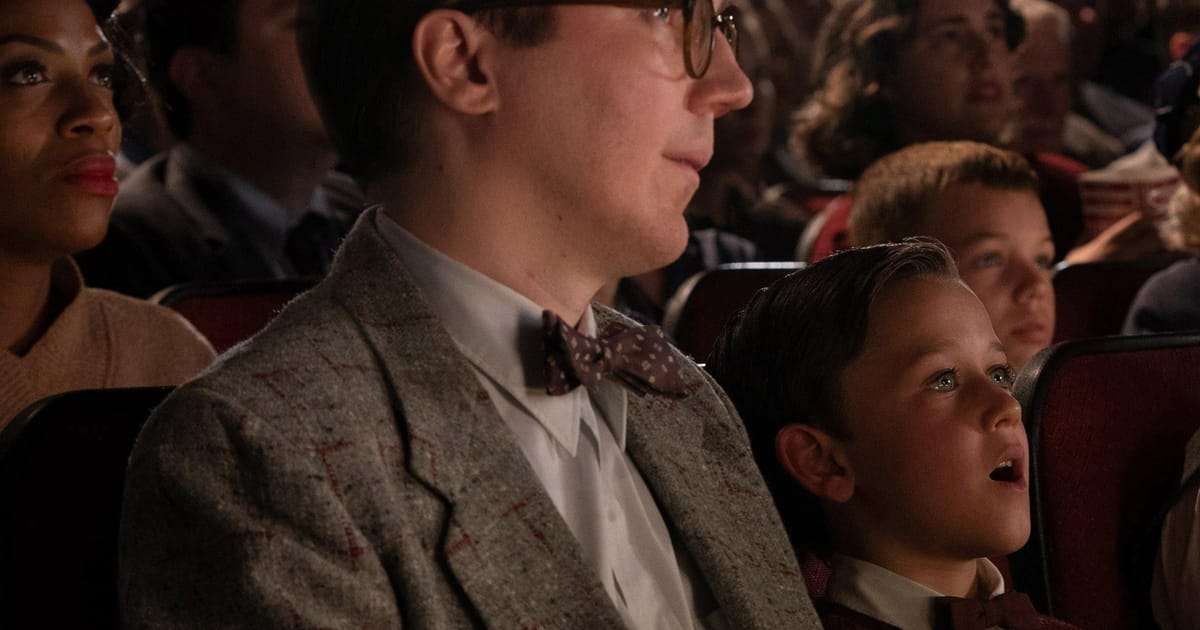
The Fabelmans is one of those movies that walks into the room wearing two outfits at once: an awards-season prestige drama and a personal memory scrapbook with excellent lighting. Directed by Steven Spielberg and co-written with Tony Kushner, the film is a semi-autobiographical coming-of-age story about Sammy Fabelman, a young movie lover who discovers that cinema can entertain, reveal, manipulate, heal, and occasionally make family dinner feel like a courtroom scene with better blocking.
When people search for The Fabelmans rankings and opinions, they usually want more than a number. They want to know whether the film is truly great, whether critics loved it more than audiences did, where it sits among Spielberg’s best movies, and why a movie with so much acclaim did not become a massive box-office event. The answer is surprisingly layered. The Fabelmans is admired, respected, sometimes adored, and occasionally accused of being too polished for its own emotional messiness. In other words, it is exactly the kind of film that makes movie people pull up a chair and start ranking things.
Quick Overview: What Is The Fabelmans About?
The Fabelmans follows Sammy Fabelman, a fictional stand-in for Spielberg, from childhood fascination with movies to teenage experiments with filmmaking. After watching The Greatest Show on Earth, Sammy becomes obsessed with recreating cinematic spectacle using toy trains, family members, and whatever equipment he can get his hands on. This is not just cute-kid-with-camera material. The film slowly reveals that Sammy’s camera can catch emotional truths that the people around him would rather keep off-screen.
The story centers on three big forces: Sammy’s artistic hunger, his family’s complicated love, and the painful separation between dreams and domestic reality. His mother, Mitzi, played by Michelle Williams, is expressive, musical, restless, and emotionally unpredictable. His father, Burt, played by Paul Dano, is gentle, brilliant, practical, and not exactly the guy you ask when you want a pep talk about becoming the next Hollywood legend. Add Seth Rogen as Bennie, Judd Hirsch as Uncle Boris, and Gabriel LaBelle as teenage Sammy, and the movie becomes less of a simple memoir and more of a living argument about art, family, and sacrifice.
The Fabelmans Ratings: Where It Ranks With Critics And Audiences
Critic Rankings: A High-Prestige Favorite
On major review platforms, The Fabelmans ranks as one of Spielberg’s most acclaimed late-career films. Rotten Tomatoes lists the film with a 92% Tomatometer score from hundreds of critic reviews, while Metacritic gives it an 85 Metascore, placing it in the “universal acclaim” range. Those are not “pretty good for a famous director” numbers. Those are “clear some shelf space for awards brochures” numbers.
Critics praised the movie for its emotional maturity, its craftsmanship, and its willingness to show Spielberg’s family story without turning every memory into a golden statue. The Los Angeles Times highlighted the film’s luminous quality and its meditation on filmmaking itself. NPR described it as both a family affair and a celebration of cinema’s power to reveal and shape truth. RogerEbert.com emphasized the movie’s conflict between artistic calling and personal responsibility. Together, these reactions explain why critics ranked the film so highly: it is not only about loving movies, but about understanding the cost of needing them.
Audience Rankings: Warm, But Not Universally Overwhelmed
Audience response has been positive, though slightly less ecstatic than the critical reception. Rotten Tomatoes lists an 83% Popcornmeter score, while Metacritic users give it a 7.4. That gap tells a useful story. Critics often approached The Fabelmans as a major filmmaker’s personal statement. General viewers sometimes approached it as a two-and-a-half-hour family drama about filmmaking, divorce, adolescence, and the emotional dangers of having a camera at every awkward moment.
Some viewers found it moving, elegant, and deeply human. Others felt it was slow, too sentimental, or too clearly engineered for awards season. That does not make either side wrong. It simply means The Fabelmans is not a popcorn roller coaster, even though one of its central images involves a train crash. It is a reflective drama with bursts of humor, pain, and movie-geek joy. Viewers who enjoy character-driven films tend to rank it higher. Viewers expecting the pace of Jurassic Park may spend some of the runtime wondering when the velociraptors arrive. Spoiler: they do not. The emotional damage does the chasing.
The Fabelmans Awards Ranking: Prestige Without Oscar Wins
In awards terms, The Fabelmans performed strongly but not perfectly. It received seven Academy Award nominations, including Best Picture, Best Director, Best Actress for Michelle Williams, Best Supporting Actor for Judd Hirsch, Best Original Screenplay, Best Original Score, and Best Production Design. That level of recognition places it among the most honored films of its year.
At the Golden Globes, the film had an even brighter night, winning Best Motion Picture – Drama and Best Director for Spielberg. The American Film Institute also named it among the outstanding achievements of 2022. These honors helped confirm its status as a major critical and industry favorite.
However, the film did not win an Oscar. That fact shaped many later opinions. For some, it became “the great Spielberg film that awards voters respected but did not fully embrace.” For others, it became a prestige movie that peaked too early in the awards conversation. Either way, its awards ranking is still impressive. It belongs in the upper tier of 2022 awards films, even if it ultimately lost momentum to louder, stranger, or more culturally explosive competitors.
Ranking The Best Performances In The Fabelmans
1. Michelle Williams As Mitzi Fabelman
Michelle Williams gives the film its emotional electricity. Mitzi could have become a simple “artist mother” archetype, but Williams makes her funny, wounded, loving, impulsive, and difficult to summarize. She is the kind of character who can make a room brighter and more unstable at the same time. Her performance ranks first because the movie’s emotional center depends on her. Without Mitzi’s contradictions, Sammy’s discovery of cinema would feel more like a hobby. With her, it becomes a survival tool.
2. Gabriel LaBelle As Sammy Fabelman
Gabriel LaBelle has a tricky job: he must play a Spielberg-like character without doing an imitation of Spielberg. He succeeds by making Sammy curious, awkward, intense, and sometimes self-absorbed in the way young artists often are before they learn that not every room is secretly waiting for their director’s cut. His best scenes show Sammy realizing that film is not just fantasy. It can expose reality with uncomfortable precision.
3. Paul Dano As Burt Fabelman
Paul Dano’s Burt is quiet, restrained, and deeply sympathetic. He is not a villainous dream-crusher. He is a practical father who believes stability is love. Dano gives the performance a soft sadness, showing a man who understands machines better than emotional chaos. In a louder film, Burt might vanish. Here, his stillness matters.
4. Judd Hirsch As Uncle Boris
Judd Hirsch appears briefly, but he storms through the film like a weather event with eyebrows. His Uncle Boris delivers the movie’s bluntest warning about art and sacrifice. The performance is theatrical, intense, and intentionally oversized. It ranks high because it gives Sammy a terrifying preview of the artist’s bargain: create, yes, but do not pretend creation comes free.
5. Seth Rogen As Bennie Loewy
Seth Rogen brings warmth and discomfort to Bennie. He is charming, generous, and central to the family’s hidden fracture. Rogen wisely avoids turning Bennie into a cartoon. Instead, he plays him as someone whose kindness makes the situation more painful, not less.
Ranking The Most Memorable Scenes
1. Sammy Discovers The Family Secret
The film’s most powerful sequence comes when Sammy edits family footage and notices something hidden in plain sight. This is the movie’s thesis in action: the camera does not merely record life; it can reveal what life is trying to conceal. It is quiet, devastating, and one of the clearest examples of Spielberg using editing as emotional discovery.
2. The Final Meeting With A Legendary Director
The final scene, featuring David Lynch as a famously blunt Hollywood master, is funny, strange, and perfect. It gives Sammy one practical piece of visual advice and then ends with a camera movement that feels like Spielberg winking at every film student who has ever overanalyzed a frame. It is fan service, but classy fan servicethe kind served on a silver tray with cigar smoke.
3. The Ditch Day Film
Sammy’s school film is one of the best scenes because it shows both the beauty and danger of filmmaking. He can transform real people into myths, making a bully look heroic and forcing everyone to confront a version of themselves they did not authorize. The scene suggests that movies are powerful partly because they are unfair. They choose angles. They create legends. They can flatter, wound, or confuse the person being filmed.
4. Mitzi Dancing In The Headlights
This scene captures Mitzi’s free spirit and fragility without reducing her to either. It is visually graceful, emotionally loaded, and slightly unreal in the way family memories often are. You remember the glow first, then the ache underneath.
Where Does The Fabelmans Rank Among Spielberg Movies?
Ranking Spielberg films is a dangerous activity. It starts as a harmless list and ends with someone defending Hook like it is a constitutional amendment. Still, The Fabelmans has a strong claim as one of his most important late-career works. It may not outrank cultural giants like Jaws, E.T., Schindler’s List, Raiders of the Lost Ark, or Jurassic Park in terms of influence. Those films changed popular cinema. The Fabelmans explains the person who helped change it.
A fair ranking would place it in Spielberg’s upper-middle to upper tier, depending on what you value. If you value spectacle, it may fall below his blockbusters. If you value personal reflection, emotional complexity, and late-career self-examination, it rises dramatically. It is not Spielberg at his most thrilling. It is Spielberg at his most openly reflective.
Why Some People Love The Fabelmans
Fans of the movie often praise its honesty. It does not present artistic genius as a magical gift floating above ordinary life. Instead, it shows creativity growing out of fear, family tension, loneliness, encouragement, and obsession. Sammy becomes a filmmaker not because everything is perfect, but because filming gives him a way to process what is not.
The movie also works beautifully for people who love cinema history. It shows how early moviegoing experiences can reshape a child’s imagination. It celebrates practical effects, amateur filmmaking, editing, staging, and the thrill of discovering that a camera can turn a backyard into a battlefield or a family picnic into evidence.
Why Some People Criticize The Fabelmans
The most common criticism is that the movie can feel too polished. Some viewers argue that even when it shows pain, it does so through elegant lighting, careful framing, and a sense of prestige-drama control. For these viewers, the film’s beauty creates distance. They want more rawness, less glow, and maybe one scene where nobody looks perfectly arranged by a master cinematographer.
Another criticism is the runtime. At 151 minutes, The Fabelmans asks for patience. Its pacing is novelistic rather than urgent. The film wanders through childhood, family moves, school trouble, artistic experiments, romantic awkwardness, and parental heartbreak. Viewers who connect with the rhythm may find it immersive. Viewers who do not may feel the movie takes the scenic route, then stops to admire the scenery’s childhood trauma.
Personal Viewing Experience: Why The Fabelmans Stays With You
Watching The Fabelmans feels different from watching a typical biographical drama because it does not simply say, “Here is how a famous person became famous.” Instead, it asks a more interesting question: what does a young artist notice before anyone else realizes he is an artist? That question makes the movie linger.
One of the strongest experiences related to The Fabelmans rankings and opinions is realizing how personal taste changes the ranking. If you watch it as a Spielberg origin story, you may focus on the movie references, the early experiments, and the final Hollywood encounter. If you watch it as a family drama, you may care more about Mitzi and Burt than Sammy’s filmmaking. If you watch it as a film student, you may notice how every scene teaches a lesson about framing, editing, performance, and perspective. The same movie becomes three different movies depending on the viewer’s angle. That is fitting, because the film itself is obsessed with angles.
The most relatable part is not necessarily Sammy’s talent. Most of us did not spend our teenage years making elaborate 8-millimeter war films. Some of us were busy trying to survive algebra, which also deserves a wartime soundtrack. The relatable part is the discovery that family stories are complicated. As children, we often see parents as fixed roles: the dreamer, the provider, the funny one, the strict one, the person who knows where the scissors are. Growing older means realizing they are full human beings with disappointments, secrets, compromises, and dreams they may have set aside. The Fabelmans captures that painful upgrade in vision.
The movie also makes you think about memory. Spielberg is not presenting a documentary record. He is shaping memory into drama, which is exactly what memory does anyway. We edit our lives constantly. We cut boring parts, brighten important moments, exaggerate villains, soften people we miss, and replay scenes where we wish we had said something smarter. In that sense, The Fabelmans is not just about filmmaking. It is about how everyone becomes the editor of their own past.
Another memorable experience is noticing how the film treats art as both gift and problem. Many inspirational movies tell young people to follow their dreams, preferably while music swells and a parent finally understands everything. The Fabelmans is more honest. It says following a dream can bring purpose, but it can also isolate you. Sammy’s camera helps him understand the world, but it also separates him from it. He watches, arranges, and transforms people. That ability is powerful, but it is not innocent.
This is why opinions on the film remain interesting. A viewer who wants emotional catharsis may love it. A viewer who wants sharper conflict may find it too gentle. A Spielberg fan may rank it as essential because it unlocks themes found across his career: absent fathers, anxious children, broken homes, awe, escape, spectacle, and reconciliation. A casual viewer may simply see a well-made drama that occasionally feels like homework assigned by the Academy. Both reactions can exist. Great movies do not always create agreement; sometimes they create better arguments.
In the end, The Fabelmans is best experienced as a reflective, bittersweet film about the price of seeing clearly. Its rankings are strong because the craftsmanship is undeniable. Its opinions are divided because emotional connection is personal. Some movies entertain you and leave. This one quietly follows you home, sets up a projector in your brain, and asks what you have been editing out of your own story.
Final Verdict: Is The Fabelmans Overrated, Underrated, Or Properly Ranked?
The Fabelmans is properly ranked by critics and slightly underrated by some general audiences. It is not a flawless film, and it is not designed to be everyone’s favorite Spielberg movie. But it is a rich, beautifully made, emotionally intelligent work from a director looking back without fully sanding down the splinters.
Its best qualities are its performances, its layered view of family, its understanding of cinema as both dream and evidence, and its willingness to complicate the myth of artistic destiny. Its weaknesses are a leisurely pace, occasional sentimentality, and a level of polish that may feel too controlled for viewers who prefer rawer autobiography.
For film lovers, The Fabelmans is essential. For Spielberg fans, it is close to mandatory viewing. For casual viewers, it depends on mood: watch it when you want a thoughtful drama, not when you want dinosaurs, sharks, aliens, or archaeology with a whip. The movie’s real ranking may be this: not Spielberg’s most entertaining film, but one of his most revealing.
Note: This article synthesizes public rating data, awards records, and mainstream critical discussion about The Fabelmans. It is written as original SEO content for web publication and does not include source-link blocks inside the article body.