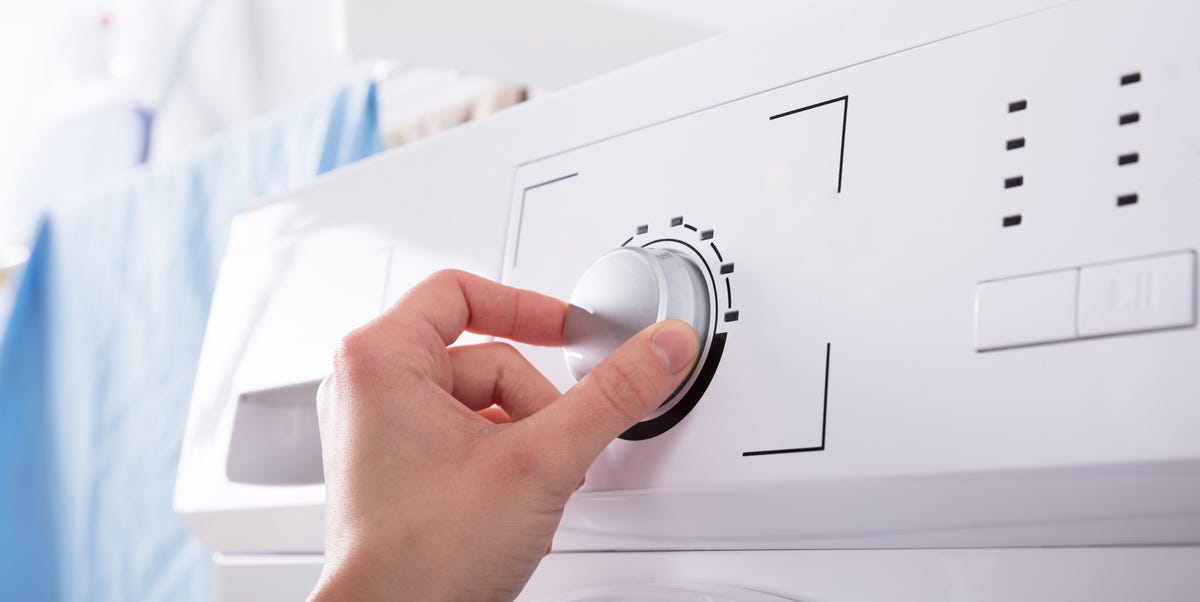
Most people treat the washing machine like a two-button game show: Normal if the clothes look ordinary, Delicate if the shirt feels fancy. Everything else on the dial? Decorative. Mysterious. Possibly there just to make the appliance look expensive.
But if you have been skipping the permanent press cycle, also called wrinkle control or sometimes casual, you are probably overlooking the most practical setting on the whole machine. This cycle is not flashy. It will not sing. It will not fold your laundry or talk your family into putting socks in the hamper. What it will do is help your everyday clothes come out cleaner than they would on delicate, and less beat-up than they would on normal.
That makes it a sweet spot for real life: office shirts, school uniforms, workout tops, synthetic blends, travel clothes, dark items, and all those “wash-and-wear” pieces that are supposed to save you time but somehow still emerge looking like they lost a fight with a fitted sheet.
If your laundry goal is simple, this article is for you: fewer wrinkles, less wear, better-looking clothes, and fewer regrettable ironing sessions. In other words, a small household victory with big “I have my life together” energy.
What Is the Permanent Press Cycle?
The permanent press cycle was designed for synthetic fabrics, blended fabrics, and wrinkle-resistant clothing. Think polyester, nylon, rayon blends, poly-cotton shirts, casual workwear, and many everyday garments that do not need a rough wash but are not fragile enough for delicate.
In plain English, this cycle is the laundry equivalent of a competent friend who says, “Let’s not make this harder than it needs to be.” It is gentler than normal, but more useful for everyday clothing than delicate.
On many washers, permanent press works by using a combination of:
- moderate wash action instead of aggressive agitation,
- a slower final spin speed,
- and often a cool-down or cold-rinse stage that helps reduce wrinkles from setting into fabric.
On dryers, the permanent press setting usually uses medium heat followed by a cool-down period. That matters because high heat plus over-drying can leave clothes wrinkled, shrunken, or just plain exhausted.
Why You Should Be Using It More Often
Here is the big reason: many people use the normal cycle for clothes that do not actually need that much mechanical force. The normal cycle is great for sturdy fabrics and heavily soiled items, but it can be rougher than necessary for everyday apparel.
That extra agitation and faster spin may help blast dirt from towels, socks, or durable cotton basics. But for synthetic shirts, blended tops, wrinkle-prone pants, and “business casual” items, it can create problems you then solve with extra work: ironing, steaming, reshaping, or replacing clothing sooner than expected.
The permanent press cycle earns more love because it helps solve three common laundry annoyances at once:
1. It helps reduce wrinkles
If you are tired of pulling shirts from the washer that already look like they have had a stressful week, this cycle can help. The gentler wash action and lower spin are designed to reduce hard creasing.
2. It is easier on fabric
Less aggressive movement means less friction. That can help maintain the look of blends, preserve shape, and reduce the kind of wear that leaves clothes looking tired before their time.
3. It still cleans better than delicate for many everyday loads
The delicate cycle is wonderful for fragile pieces, but it can be too cautious for typical day-to-day clothes. Permanent press is often the more practical middle ground: protective without being timid.
Which Clothes Belong on Permanent Press?
This is where the setting shines. Use it more often for items like these:
- polyester shirts and blouses,
- poly-cotton school uniforms,
- button-down shirts that wrinkle easily,
- office wear and casual business clothes,
- dark-colored synthetic blends,
- travel clothing,
- lightweight pants and skirts,
- table linens made from wrinkle-resistant materials,
- activewear that is not heavily soiled, depending on the care label,
- and everyday “easy care” items.
A good rule of thumb is this: if the garment is not delicate, not grimy, and not super sturdy, permanent press may be the better choice than normal.
When You Should Not Use It
Every laundry cycle has limits, and permanent press is no exception. It is not the answer to all fabric drama.
Skip it for heavy-duty loads
Towels, sheets, sturdy cotton whites, work clothes, and heavily soiled items usually do better on normal or heavy-duty settings. They often need more agitation and stronger cleaning action.
Skip it for truly delicate pieces
Lace, lingerie, hand-wash fabrics, embellished garments, some silks, and extra-fragile items should stay on delicate, hand wash, or whatever the care label recommends.
Skip it when labels say otherwise
Your washer has opinions, but your garment tag gets the final vote. Always check the care label, especially for wool, structured garments, specialty athletic wear, or items labeled line dry, air dry, or dry clean only.
Permanent Press vs. Normal vs. Delicate
If laundry settings feel like they were named by a committee that never met a sock, here is the simple breakdown.
| Cycle | Best For | Typical Action | Main Benefit |
|---|---|---|---|
| Normal | Durable everyday fabrics, towels, sheets, sturdy cottons | More agitation, faster spin | Strong cleaning power |
| Permanent Press | Synthetics, blends, wrinkle-prone everyday clothing | Moderate agitation, slower spin, wrinkle-reducing finish | Cleaner clothes with less wrinkling and less wear |
| Delicate | Fragile garments, lingerie, lightweight specialty fabrics | Very gentle action, low spin | Fabric protection |
So no, the permanent press cycle is not just the weird “middle child” of the laundry room. It is the cycle many people should probably be choosing first for day-to-day clothing.
Signs You Are Probably Using Normal Too Often
Still not convinced? Here are a few clues your favorite cycle may be a little too aggressive for your wardrobe:
- Your shirts come out twisted, crumpled, or heavily creased.
- Your synthetic tops look dull faster than expected.
- You keep needing to iron “easy care” clothing.
- Your workwear seems to age faster than your jeans.
- Your dark clothes look stressed, faded, or oddly rough.
- Your dryer becomes a wrinkle factory by the end of the week.
If any of that sounds familiar, the issue may not be your detergent or your folding technique. It may simply be that your clothes are getting tossed around more than they need to.
How to Get the Best Results From This Cycle
Sort smarter, not harder
Group similar fabrics and weights together. A lightweight polyester blouse and a chunky sweatshirt are not a dream team. Keeping loads more consistent helps the cycle do its job.
Do not overload the machine
This is one of the biggest laundry mistakes. When clothes are packed in too tightly, they cannot move properly, rinse well, or relax during the cycle. Translation: more wrinkles, more friction, and worse results.
Use the right water temperature
Many machines pair permanent press with warm or cool water, and some allow you to customize that. For colored or blended everyday clothing, cooler settings are often gentler. For moderately dirty items, warm can be helpful. Again, let the care label be your guide.
Take clothes out quickly
Even the best wrinkle-control cycle cannot save a load that sits in the drum for three hours while you forget it exists. Prompt removal helps preserve the wrinkle-reducing benefit.
Use the dryer wisely
If your dryer also has a permanent press setting, pair them up. That medium-heat, cool-down approach can be kinder to many garments than blasting everything on high heat and hoping for the best.
Why This Matters for Clothing Longevity
People often think of laundry only in terms of “Did it get clean?” But good laundry care also asks, “Did it stay wearable?”
The harshest cycle that gets clothes clean is not always the best cycle. Over time, too much agitation, too much heat, and too much spin can make fibers wear out faster. That can show up as fading, shape loss, pilling, frayed seams, or that vague but unmistakable look of “this shirt used to have ambition.”
Using the permanent press cycle more often can be a simple way to reduce unnecessary stress on the clothes you wear the most. That is especially helpful for modern wardrobes, which are full of blended fabrics, stretch materials, performance textiles, and easy-care finishes.
The Laundry Labels Are Trying to Help You
Here is a surprisingly useful detail: care symbols often point you in the right direction. In general, a single line under the wash tub symbol is associated with a permanent press or wrinkle-control type cycle, while two lines usually indicate an even gentler or delicate setting.
That little symbol is basically your clothing saying, “Please stop treating me like a bath towel.” It is worth listening.
A Few Real-World Examples
The office shirt problem
You wash your collared shirts on normal. They come out clean, yes, but also wrinkled enough to suggest you slept in a filing cabinet. Permanent press is often a better choice because it can clean the shirt while being gentler on the fabric and reducing creasing.
The school uniform situation
Uniforms and polos often contain synthetic blends made to resist wrinkles, but that does not mean they enjoy getting tossed around on the strongest cycle. Permanent press is often a better match for this kind of everyday load.
The “nice top but not fancy top” category
Every closet has these items: not delicate enough for mesh-bag babying, not sturdy enough to get the full normal-cycle roller coaster. This cycle was made for that middle zone.
Common Mistakes People Make
- Using normal for everything: convenient, but rougher than many clothes need.
- Thinking permanent press is outdated: the name may sound retro, but the function is very relevant for modern fabrics.
- Confusing it with delicate: they are not identical. Permanent press is usually a practical everyday setting, not the gentlest one on the dial.
- Ignoring the dryer setting: washing carefully and then drying on high heat can undo the benefits.
- Leaving the load in the machine: wrinkles love a delayed pickup.
The Bottom Line
If you only change one thing about your laundry routine this month, make it this: start using the permanent press cycle more often.
It is one of the easiest ways to better match your washer to the clothes most people actually wear every day. It can help reduce wrinkles, limit unnecessary wear, and give synthetic or blended garments a gentler clean than the normal cycle without dropping all the way down to delicate.
In other words, this setting deserves a promotion. It has been sitting there on the dial, underappreciated, quietly ready to rescue your button-downs, school uniforms, dark tops, and travel pants from a rougher laundry fate.
Not bad for a cycle that sounds like it should come with a fax machine.
Extra Section: Real-Life Experiences With the Laundry Cycle You Need to Be Using More Often
One of the most common experiences people have after switching to the permanent press cycle is not dramatic at all, and that is exactly why it is so convincing. They do not open the washer and gasp like they just witnessed a miracle. Instead, they notice that their clothes simply look better. A work blouse comes out with fewer hard creases. A pair of black pants keeps its shape. A polo shirt dries without that stubborn collar twist that usually leads to five minutes of annoyed tugging before work.
Another common experience happens with mixed wardrobes. A lot of people no longer wear clothing made from one simple fiber. Modern closets are full of stretch blends, athletic fabrics, wrinkle-resistant shirts, casual office wear, and travel pieces designed to be easy to maintain. These garments often survive the normal cycle, but they do not always thrive there. When people start using permanent press more regularly, they often say the load feels more “right” for the clothing. The items still get clean, but they do not come out looking roughed up.
Busy households also tend to appreciate this cycle once they begin using it intentionally. Parents washing school uniforms, casual tops, and lightweight pants often find that permanent press helps clothes come out looking a little more presentable without extra effort. That matters on weekday mornings when nobody wants to drag out an iron just because the washer was a little overenthusiastic the night before.
There is also the experience of people who thought delicate was their only gentle option. Many start there because they want to protect nicer clothing, but then realize delicate can be too mild for ordinary garments that need a more practical wash. Permanent press often feels like the happy medium. It protects the clothes better than normal, yet still handles real-life laundry instead of treating every shirt like it belongs in a museum case.
Apartment dwellers and anyone using shared laundry rooms often notice another benefit: less frustration. When you are paying per load, guessing wrong is extra annoying. Choosing a cycle that works well for wrinkle-prone everyday clothes can mean fewer do-overs, fewer ironing sessions, and less second-guessing about whether you should have separated that load differently.
Then there is the dryer side of the story. Many people realize too late that they washed carefully, then undid everything by drying on high heat. Once they pair the washer’s permanent press cycle with a matching dryer setting, they often report that their clothes feel less overdried and come out more wearable right away. That is the kind of boring household success that quietly improves your week.
In the end, the experience most people describe is simple: laundry becomes less of a fight. The clothes still get clean. They just come out looking a little more like themselves and a little less like they need a recovery day.
Note: This article is intended as general laundry guidance. Always check garment care labels and your washer or dryer manual, since cycle names, temperatures, and motion patterns can vary by brand and model.