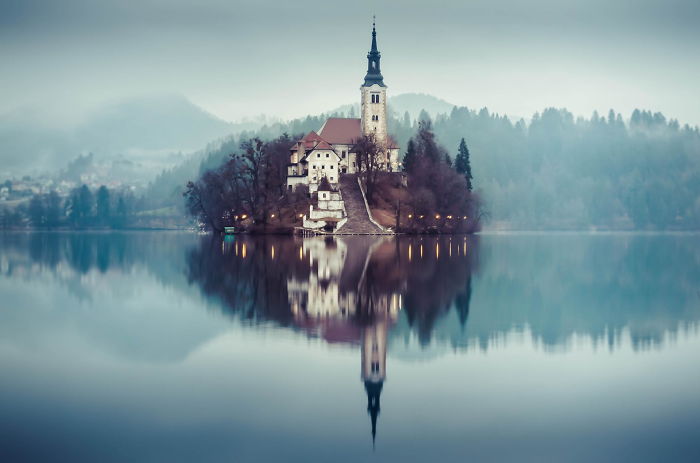
Some buildings politely ask for your attention. The world’s most spectacular churches do not. They rise above skylines, glow through stained glass, hide inside mountains, cling to islands, and occasionally look like a genius architect had a very dramatic dream after drinking too much espresso. These churches are more than places of worship; they are landmarks of art, engineering, history, faith, and human imagination.
From the unfinished wonder of Barcelona’s Sagrada Família to the rock-hewn churches of Ethiopia, the most beautiful churches in the world show how architecture can turn stone, glass, wood, salt, and concrete into emotion. Whether you are a traveler, history lover, photographer, architecture fan, or someone who simply enjoys standing in a huge building and whispering “wow” like it is a complete sentence, this guide explores churches that deserve a spot on the global bucket list.
Why Spectacular Churches Continue to Fascinate the World
Churches often sit at the crossroads of spirituality and spectacle. For centuries, communities poured their best materials, artists, engineers, and symbolic ideas into sacred architecture. The result is a global gallery of buildings that tell stories without needing a tour guide, although a good tour guide with comfortable shoes is always a bonus.
The most spectacular churches in the world are not impressive only because they are large. Some are tiny, remote, or hidden underground. What makes them unforgettable is the combination of design, setting, cultural meaning, craftsmanship, and atmosphere. A church can impress with a soaring dome, a lace-like Gothic façade, a rainbow of stained glass, a dramatic cliffside view, or a silence so deep it makes your phone feel personally embarrassed for existing.
1. Sagrada Família, Barcelona, Spain
A Church That Looks Like Nature Learned Architecture
Barcelona’s Sagrada Família is one of the most famous churches in the world, and for good reason. Designed by Antoni Gaudí, this basilica blends Gothic ambition with organic forms inspired by trees, bones, flowers, honeycombs, and sunlight. It is the rare building that looks ancient, futuristic, and slightly impossible all at once.
Construction began in 1882, and the church has become a symbol of patient creativity. Its towers rise like stone candles above the city, while the interiors feel like a forest made of columns and colored light. The Nativity façade bursts with sculptural life, while the Passion façade is sharper, more severe, and emotionally intense. Together, they make the building feel less like a single monument and more like an architectural epic.
For SEO travelers searching for spectacular churches in Europe, Sagrada Família is almost always near the top of the list. It is not merely beautiful; it is a reminder that architecture can be both deeply religious and wildly imaginative.
2. St. Peter’s Basilica, Vatican City
The Grand Stage of Renaissance Faith
St. Peter’s Basilica is monumental in every sense. Located in Vatican City, it is one of the most important Catholic churches in the world and a masterpiece of Renaissance and Baroque architecture. Its scale is breathtaking, but its power also comes from details: the curve of Bernini’s colonnades, the drama of the nave, the glow of marble, and the commanding dome associated with Michelangelo’s vision.
Inside, the basilica feels carefully choreographed. Every view leads somewhere meaningful. Visitors move from the vast piazza into an interior where sculpture, architecture, and symbolism work together like a very well-rehearsed orchestra. Michelangelo’s Pietà alone could stop a hurried traveler in mid-step.
St. Peter’s Basilica belongs on any list of the most spectacular churches in the world because it combines artistic mastery, spiritual importance, and architectural confidence. It is the kind of place where even people who are “just here for the photos” usually lower their voices.
3. Notre-Dame de Paris, France
The Gothic Survivor With a Global Heartbeat
Notre-Dame de Paris is one of the defining masterpieces of French Gothic architecture. Its flying buttresses, towers, rose windows, sculpted portals, and riverfront setting have made it an icon for centuries. The cathedral has witnessed royal ceremonies, revolutions, restorations, literature, tourism, and, in 2019, a devastating fire that shocked the world.
After years of restoration, Notre-Dame reopened in December 2024, giving the cathedral a renewed chapter in its long story. What makes Notre-Dame spectacular is not just its architecture, although the architecture is more than capable of showing off. It is the way the building carries memory. Its stones seem to hold Paris itself: solemn, elegant, resilient, and occasionally surrounded by people trying to take the exact same photo from the exact same bridge.
The cathedral remains a must-see for anyone interested in historic churches, Gothic cathedrals, Paris landmarks, or sacred architecture that has become part of world culture.
4. Milan Cathedral, Italy
A Marble Mountain of Gothic Detail
Milan Cathedral, often called the Duomo di Milano, is one of the most spectacular churches in Italy. Its construction began in 1386 and continued across centuries, producing a building that feels both grand and intricately handmade. The cathedral’s exterior is a forest of pinnacles, statues, spires, and pale marble surfaces that shift with the light.
The rooftop is one of the great church experiences in Europe. Walking among the spires gives visitors a close look at the stonework and a panoramic view over Milan. From below, the cathedral is impressive. From above, it feels like exploring the crown of a giant.
Milan Cathedral earns its place among the world’s most beautiful churches because it turns complexity into elegance. It is a building that rewards both the wide-angle photo and the slow, detail-hunting gaze.
5. Cologne Cathedral, Germany
The Twin-Spired Giant of the Rhine
Cologne Cathedral is a High Gothic masterpiece and one of Germany’s most recognizable landmarks. Its twin spires dominate the city skyline, creating a dramatic first impression for travelers arriving by train. The cathedral is enormous, but it also has a vertical energy that pulls the eye upward again and again.
Inside, the stained glass, vaulted ceilings, and long nave create the classic Gothic effect: human beings feel small, light feels sacred, and stone seems to float. The cathedral’s history stretches across medieval ambition, interrupted construction, 19th-century completion, wartime damage, and careful preservation.
For anyone researching Gothic churches in Europe, Cologne Cathedral is essential. It is not subtle, and frankly, it has no reason to be. It is a cathedral that announces itself from the skyline and then proves the point up close.
6. Hagia Sophia, Istanbul, Turkey
A Sacred Monument Between Worlds
Hagia Sophia began as a Byzantine church in the sixth century and has served different religious and cultural roles across its long life. Today, it stands as one of the world’s great monuments, admired for its vast dome, layered history, mosaics, and position at the meeting point of Europe and Asia.
Architecturally, Hagia Sophia changed what sacred space could feel like. Its central dome seems to hover above the interior, creating an effect that has amazed visitors for nearly 1,500 years. The building carries traces of Byzantine Christianity, Ottoman Islamic art, imperial power, and modern heritage debates.
Calling Hagia Sophia spectacular is almost too modest. It is a structure that feels like a conversation between empires, religions, architects, and centuries. Few buildings in the world hold so many layers under one roof.
7. St. Basil’s Cathedral, Moscow, Russia
The Cathedral That Looks Like a Fairytale Firework
St. Basil’s Cathedral on Moscow’s Red Square is one of the most visually distinctive churches on Earth. With its colorful onion domes, patterned surfaces, and playful silhouette, it looks as if someone asked architecture to dress for a festival and architecture said, “Absolutely.”
Built in the 16th century under Ivan IV, commonly known as Ivan the Terrible, the cathedral commemorated military victories and became a symbol of Russian architecture. Its design is not a single simple space but a cluster of chapels arranged into a highly memorable composition.
St. Basil’s is spectacular because it refuses to look like anything else. It is bold, theatrical, symbolic, and instantly recognizable. In a world full of stone façades, it arrives wearing color, pattern, and confidence.
8. Chartres Cathedral, France
The Blue Glow of Gothic Perfection
Chartres Cathedral is one of the finest examples of Gothic art and architecture. Located southwest of Paris, it is celebrated for its extraordinary stained glass, sculpture, and architectural harmony. The famous “Chartres blue” windows give the interior an atmosphere that feels both mysterious and calm.
Unlike many historic churches that have lost major original elements over time, Chartres preserves a remarkable amount of medieval artistry. The result is a cathedral that allows visitors to experience Gothic design with unusual depth and authenticity.
Chartres may not have the pop-culture fame of Notre-Dame, but among architecture lovers, historians, and stained-glass enthusiasts, it is a superstar. It proves that spectacle does not always need noise. Sometimes it arrives as blue light on ancient stone.
9. Rock-Hewn Churches of Lalibela, Ethiopia
Churches Carved Down Into the Earth
The rock-hewn churches of Lalibela are among the most astonishing sacred sites in the world. Instead of being built upward stone by stone, these medieval churches were carved directly from rock. The result is a group of monolithic and semi-monolithic churches connected by trenches, tunnels, and passageways.
Lalibela is often described as a “New Jerusalem,” and it remains an important place of Ethiopian Christian pilgrimage and devotion. The Church of Saint George, shaped like a cross and carved into the earth, is especially famous. Seeing it from above is a moment of pure architectural disbelief: the building is not on the landscape so much as revealed from within it.
These churches are spectacular because they challenge normal ideas of construction. They feel ancient, spiritual, geological, and human all at once.
10. Mont-Saint-Michel Abbey, France
The Church Above the Tides
Mont-Saint-Michel rises from a tidal bay between Normandy and Brittany, crowned by a Gothic-style Benedictine abbey dedicated to the Archangel Michael. Few religious sites have a more dramatic setting. At high tide, the island appears almost mythical; at low tide, the surrounding sands stretch outward like a stage set designed by nature.
The abbey was built between the 11th and 16th centuries, adapting to the challenges of a rocky island and powerful tides. Its vertical composition, winding village streets, stone walls, and soaring church create a silhouette that looks tailor-made for legends.
Mont-Saint-Michel is one of the best examples of how landscape can make architecture even more powerful. The abbey is beautiful, but the bay gives it drama, suspense, and a very strong sense of “yes, this was worth the trip.”
11. Westminster Abbey, London, England
A Royal Church Written Into British History
Westminster Abbey is one of the most historically important churches in the United Kingdom. It has been the site of coronations and major national ceremonies, while also serving as the burial place or memorial site for monarchs, writers, scientists, and public figures.
Architecturally, the abbey reflects the elegance of Gothic design, with pointed arches, ribbed vaults, and a strong ceremonial atmosphere. It is not just a church to look at; it is a church that helps explain the British national story.
Westminster Abbey is spectacular because it combines beauty with biography. Every chapel, tomb, and memorial seems to add another paragraph to the building’s long and complicated book.
12. Florence Cathedral, Italy
Brunelleschi’s Dome and the Confidence of the Renaissance
Florence Cathedral, also known as Santa Maria del Fiore, is one of the great landmarks of Renaissance Italy. Its colorful marble exterior and enormous dome dominate the city. Designed by Filippo Brunelleschi, the dome remains one of the most celebrated engineering achievements in architectural history.
The cathedral’s beauty comes from contrast. Outside, it is decorative, colorful, and monumental. Inside, it is comparatively restrained, allowing the structure itself to carry the drama. Climbing the dome is a workout, a history lesson, and a reminder that medieval and Renaissance builders were not joking around.
Florence Cathedral belongs among the most spectacular churches in the world because it helped define the visual identity of one of history’s most influential art cities.
13. Hallgrímskirkja, Reykjavík, Iceland
A Modern Church Inspired by Icelandic Landscapes
Hallgrímskirkja is the largest church in Iceland and one of Reykjavík’s most recognizable landmarks. Its tower rises above the city, and its design is often associated with Iceland’s basalt lava formations, mountains, and stark natural beauty.
Unlike many spectacular churches that impress through medieval ornament, Hallgrímskirkja uses clean lines, height, and sculptural simplicity. The exterior feels almost geological, as if the church grew out of the island’s volcanic character. From the tower, visitors can enjoy sweeping views over Reykjavík, the sea, and nearby mountains.
Hallgrímskirkja proves that spectacular church architecture is not limited to ancient cathedrals. Modern sacred buildings can be just as memorable when they speak clearly to their landscape.
14. Cathedral of Brasília, Brazil
Modernism With Wings, Light, and Nerve
Designed by Oscar Niemeyer, the Cathedral of Brasília is one of the most striking modern churches in the world. Instead of a traditional tower or Gothic façade, it uses sweeping concrete columns that curve upward like hands, flames, or a crown. The building feels open, futuristic, and surprisingly graceful.
Inside, stained glass floods the space with color, while suspended angel sculptures add a sense of movement. The cathedral fits perfectly within Brasília, a city famous for modernist planning and bold architectural forms.
This church is spectacular because it takes sacred architecture in a different direction. It does not imitate the past. It looks forward, smiles politely, and then makes concrete feel weightless.
15. Salt Cathedral of Zipaquirá, Colombia
An Underground Church Carved From Salt
The Salt Cathedral of Zipaquirá is one of the most unusual churches in the world. Located underground in a former salt mine near Bogotá, it offers a completely different kind of sacred experience. Visitors descend into the earth, passing carved stations, illuminated chambers, and massive salt-rock spaces.
The atmosphere is dramatic and almost cinematic. Light plays across dark stone and salt surfaces, creating a space that feels both ancient and modern. Although it is a major tourist attraction, it also carries religious meaning and reflects the history of miners who once prayed for protection before beginning their work.
The Salt Cathedral is spectacular because it reminds visitors that sacred architecture does not always need a skyline. Sometimes the wonder is below your feet.
What These Churches Teach Us About Travel, Art, and Wonder
The most spectacular churches in the world are not just sightseeing stops. They are living records of human ambition. They show what people build when they want beauty to last longer than a single lifetime. Some took centuries to complete. Some are still changing. Some were damaged, restored, repurposed, debated, protected, or rediscovered. All of them prove that architecture can carry memory in a way few other art forms can.
They also remind us that “spectacular” has many meanings. Sagrada Família is spectacular because it feels like imagination turned into stone. St. Peter’s Basilica is spectacular because of scale, power, and artistic control. Lalibela is spectacular because it reverses the logic of building. Chartres is spectacular because of light. Mont-Saint-Michel is spectacular because of setting. Brasília is spectacular because it dares to be modern.
For travelers, these churches offer a deeper kind of itinerary. They are not places to rush through while checking a box. The best way to experience them is slowly. Look up. Look down. Notice the doors. Watch how the light changes. Read a little before you arrive. Sit for a few minutes if visitors are allowed to do so respectfully. The building will usually reward patience.
Travel Experiences: How to Visit the World’s Most Spectacular Churches Like You Mean It
Visiting famous churches can be magical, but it is also easy to do it badly. Many travelers arrive tired, hungry, and armed with exactly 11 minutes before the next attraction. That is how masterpieces become blurry phone photos. To really enjoy the most spectacular churches in the world, treat each visit as an experience rather than a quick stop.
Start with timing. Early morning is often the best time to visit major churches because crowds are lighter and the light can be beautiful. In places such as Sagrada Família, Chartres, and Notre-Dame, sunlight is part of the architecture. Stained glass does not simply decorate the space; it transforms it. A window that looks impressive at noon may feel completely different in the softer light of morning or late afternoon.
Dress and behavior matter, too. Many spectacular churches are active places of worship, not just architectural attractions. Modest clothing, quiet voices, and respect for prayer areas are basic travel manners. Think of it this way: you are a guest in someone else’s sacred space. Also, your camera flash is not the Holy Spirit, so there is usually no need to make it descend upon everyone.
Consider booking guided tours for complex sites. At St. Peter’s Basilica, Westminster Abbey, Hagia Sophia, or Florence Cathedral, the history is dense enough that a knowledgeable guide can completely change the visit. You may learn why a dome matters, how a façade tells a theological story, or why a tiny carving hidden above a doorway deserves attention. Audio guides can also be helpful if you prefer moving at your own pace.
Photography is wonderful, but do not let it eat the whole experience. Take a few wide shots, capture details, and then put the phone away. The most memorable moments often happen when you stop trying to collect proof and simply stand inside the space. Listen to footsteps echo. Watch dust move through a shaft of light. Notice how the building makes people behave differently.
For physically demanding sites, plan ahead. Climbing Florence Cathedral’s dome, exploring Mont-Saint-Michel’s steep lanes, or navigating underground spaces like the Salt Cathedral can require stamina. Comfortable shoes are not optional; they are the quiet heroes of cultural travel. Bring water, check accessibility details, and allow more time than you think you need.
Finally, connect the church to its city or landscape. Visit Milan Cathedral, then walk through Milan’s historic center. See Hallgrímskirkja, then look at Icelandic basalt formations and notice the architectural echo. Explore Mont-Saint-Michel with awareness of the tides. A spectacular church becomes even richer when you understand the world around it.
The best church visits leave you with more than photographs. They give you a sense of scale, patience, artistry, and continuity. You may arrive as a tourist, but you often leave a little quieter, a little more curious, and perhaps slightly more willing to believe that stone can speak.
Conclusion: The World’s Most Spectacular Churches Are Human Imagination Made Visible
The most spectacular churches in the world are unforgettable because they combine beauty with meaning. They are works of devotion, engineering, politics, art, and community. Some dazzle with color, some with height, some with silence, and some with settings so dramatic they seem almost fictional.
Whether you are drawn to the Gothic majesty of Cologne Cathedral, the Renaissance brilliance of Florence Cathedral, the underground mystery of Zipaquirá, or the volcanic modernism of Hallgrímskirkja, these churches invite more than admiration. They invite attention. They ask visitors to slow down, look closely, and remember that human beings have always needed places where earth feels a little closer to heaven.
In a fast-moving world, these churches remain patient. They have survived centuries, weather, wars, fires, restorations, and millions of tourists trying to fit entire domes into vertical selfies. Their greatest lesson may be simple: beauty built with purpose can outlast almost everything.