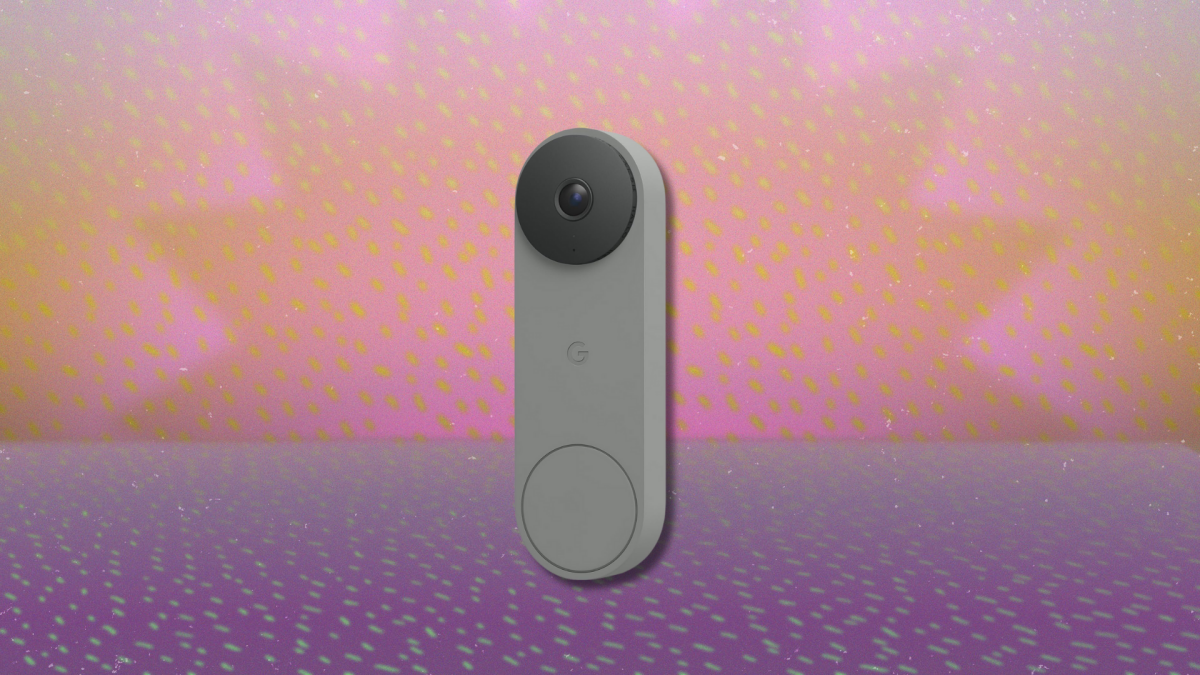
There are flashy smart-home purchases, and then there are gadgets that quietly prevent you from sprinting to the front door every time a delivery driver approaches the porch. The Google Nest Doorbell belongs in the second category, and the current discount makes it considerably more tempting.
At the time of publication, Google’s current battery-powered Nest Doorbell is available for about $129.99, down from its usual $179.99 price. That is a savings of $50, or roughly 28%. In other words, the discount is comfortably above 25%, with enough money left over for a Nest Mini, a mounting accessory, or an irresponsible quantity of celebratory snacks.
One clarification is important: this sale applies to Google’s current battery-powered model. The newest Nest Doorbell hardware overall is the wired third-generation version, which offers a sharper 2K camera and newer Gemini-powered capabilities. Shoppers should therefore choose according to installation needs rather than assuming that “newest” automatically means “best for every doorway.”
The Google Nest Doorbell Deal at a Glance
| Product | Google Nest Doorbell with battery power |
|---|---|
| Regular price | $179.99 |
| Current sale price | Approximately $129.99 at participating retailers |
| Total savings | $50, or about 28% |
| Camera resolution | 960 x 1280 HDR video |
| Field of view | 145 degrees diagonally |
| Power options | Rechargeable battery or compatible existing doorbell wiring |
| Free history | Up to three hours of event video history |
Deal prices and inventory can vary by color and retailer. Snow, Linen, Ash, and Ivy versions may not all receive identical pricing, so checking the final cart total is worthwhile before celebrating prematurely.
Why This Nest Doorbell Is Still a Strong Smart-Home Buy
The battery-powered Google Nest Doorbell is not the newest wired model with the biggest specification sheet. It remains attractive because it solves one enormous installation problem: it does not require existing doorbell wires.
That flexibility makes it a practical choice for renters, older houses, side entrances, detached workshops, and doors that were apparently designed during an era when visitors were expected to knock with their actual hands.
Wire-Free Installation Is the Main Attraction
The built-in rechargeable battery lets the doorbell operate almost anywhere within range of a reliable Wi-Fi network. The package includes a base plate, mounting wedge, screws, wall anchors, release tool, wire connector, spacers, and charging cable.
Most users can complete a basic battery installation with common household tools. The included 20-degree wedge can help angle the camera toward a walkway when the door frame does not face visitors directly.
The device can also connect to compatible existing doorbell wiring. That connection can activate an indoor mechanical chime and help maintain the battery’s charge. However, it does not transform the battery model into the fully wired Nest Doorbell or enable continuous 24/7 recording.
Its Vertical View Is Designed for People and Packages
The Nest Doorbell records at 960 x 1280 pixels in a tall 3:4 format. Although that resolution is lower than the 2K video available from Google’s latest wired model, the portrait-oriented frame is useful at a front door.
Instead of showing a cinematic panorama of the neighbor’s shrubs, the camera is designed to capture visitors from head to toe while also keeping packages near the doorstep visible. Its 145-degree diagonal field of view, HDR processing, night vision, and 6x digital zoom provide enough coverage for everyday visitor and delivery monitoring.
Video quality is generally clear enough to recognize familiar visitors, observe clothing, and confirm whether a package has arrived. Fine details at longer distances may be less distinct than they would be with a newer 2K or 4K doorbell, so this is better viewed as a practical entrance camera than a license-plate-reading surveillance telescope.
Useful Smart Alerts Are Included Without a Subscription
One of the Nest Doorbell’s biggest advantages is its on-device object recognition. It can distinguish among people, packages, animals, and vehicles, allowing the Google Home app to deliver more meaningful alerts than a generic “motion happened somewhere” notification.
Package detection is particularly helpful. The system can alert you when a delivery appears and may send another notification when it is removed. That second alert can be reassuring when a family member collects the boxand considerably less reassuring when the person collecting it is wearing a ski mask in July.
Activity Zones can reduce unnecessary notifications by focusing detection on selected parts of the camera’s view. For example, a homeowner can monitor the porch while excluding a busy sidewalk or road. Properly configured zones can also conserve battery power because the doorbell spends less time recording irrelevant movement.
Two-Way Audio Adds Everyday Convenience
The built-in microphone and speaker support two-way communication with noise cancellation. From the Google Home app, users can speak with visitors, ask a courier to leave a parcel behind a planter, or tell a salesperson that this is absolutely not a good time to discuss replacement windows.
Pre-recorded responses provide another option when speaking live would be inconvenient. The feature is useful during meetings, while traveling, or whenever answering the door in pajamas would require more confidence than the day has provided.
What You Get for Free and What Requires Google Home Premium
The Nest Doorbell can be used without a monthly subscription. Free features include live viewing, intelligent alerts for supported object categories, two-way audio, Activity Zones, and up to three hours of event video history.
That three-hour allowance is a rolling history window, not three total hours of permanent cloud storage. If an event occurred earlier in the day, it may disappear before you remember to review or save it. Anyone who regularly needs footage from overnight, during work hours, or after returning from a trip will probably want an extended plan.
Google Home Premium Standard
The Standard plan starts at approximately $10 per month and extends event-based video history to as many as 30 days. It also adds features such as Familiar Faces and additional Gemini-powered smart-home capabilities on compatible devices.
Google Home Premium Advanced
The Advanced plan costs approximately $20 per month and can provide up to 60 days of event history, along with more advanced video search, descriptions, and automation features on supported hardware.
There is an important limitation: the battery Nest Doorbell does not support continuous 24/7 video history, even when connected to doorbell wiring and paired with the Advanced subscription. It records detected events rather than maintaining an uninterrupted timeline. Buyers who need continuous recording should consider a wired Nest Doorbell instead.
How Long Does the Nest Doorbell Battery Last?
Battery life varies dramatically according to temperature, video settings, Wi-Fi strength, and the amount of activity at the door. Google’s estimates illustrate why two households can have completely different experiences with the same device:
- Busy entrance: Around one month with approximately 25 to 30 recorded events per day.
- Typical entrance: Around two and a half months with approximately 13 to 16 events per day.
- Quiet entrance: Up to six months with approximately two to five events per day.
A doorbell facing a sidewalk, apartment hallway, active street, or neighborhood squirrel convention will need charging more frequently. Shorter event clips, carefully drawn Activity Zones, and reduced detection sensitivity can extend the interval between charges.
Charging generally requires removing the unit from its base and bringing it indoors. The supplied release tool makes removal simple, although storing that tiny tool in a memorable location is recommended. “Somewhere safe” is not a location; it is where small accessories go to disappear forever.
Cold Weather Can Affect Charging
The doorbell is designed to operate in temperatures as low as -4 degrees Fahrenheit, but its battery cannot charge below 32 degrees Fahrenheit. In freezing climates, even a hardwired battery model may eventually require indoor charging.
Homeowners in very cold regions may prefer the dedicated wired third-generation model, provided their transformer and existing doorbell system meet Google’s electrical requirements.
Battery Nest Doorbell vs. Wired Third-Generation Nest Doorbell
Choosing between the discounted battery model and the newer wired doorbell depends more on the house than on the size of the discount.
| Feature | Nest Doorbell Battery | Nest Doorbell Wired, 3rd Gen |
|---|---|---|
| Typical retail price | $179.99 | $179.99 |
| Sale pricing seen recently | About $129.99 | About $139.99 |
| Power | Rechargeable battery or optional wiring | Compatible doorbell wiring required |
| Video resolution | 960 x 1280 HDR | Up to 2048 x 2048 2K HDR |
| Field of view | 145 degrees | 166 degrees |
| Free event history | Up to three hours | Up to six hours of event previews |
| 24/7 recording support | No | Yes, with the eligible Advanced plan |
| Best suited for | Renters, easy installation, doors without wiring | Permanent installations and higher video quality |
The battery model is the easier and less expensive choice at its current sale price. The wired third-generation doorbell is the stronger long-term security product when compatible wiring is already available. It delivers sharper video, wider coverage, more free preview history, and the option of continuous recording.
Google Home Integration Is a Major Selling Point
The Nest Doorbell makes the most sense in a household that already uses Google Home products. When someone presses the button, compatible Nest speakers can announce the visitor, while a Nest Hub can display the live camera feed.
Users can also check the stream from the Google Home app and supported Google TV devices. Centralized control is especially convenient in homes with Nest cameras, speakers, displays, thermostats, or smart locks.
The doorbell is managed through the Google Home app rather than the older Nest app. New buyers should know this before installation, particularly if they already own legacy Nest equipment and expect every device to appear in exactly the same interface.
Households built primarily around Apple Home or another platform may find the integration less satisfying. The doorbell can still perform its main security functions, but much of its appeal comes from how naturally it communicates with Google displays, speakers, and automations.
Who Should Buy the Discounted Google Nest Doorbell?
It Is a Good Choice For:
- Renters who need a removable, wire-free installation.
- Homes without usable doorbell wiring.
- Google Home users who already own Nest speakers or displays.
- People who want package and person alerts without an immediate subscription.
- Anyone who values a simple setup more than maximum video resolution.
- Shoppers who have been waiting for the price to fall near $130.
Consider Another Model If:
- You need continuous 24/7 video recording.
- You want 2K or 4K footage for finer visual details.
- Your entrance is so busy that monthly charging would become annoying.
- You live in an extremely cold climate where battery charging may be difficult.
- You prefer local storage instead of cloud-based event history.
- You already have compatible wiring and can spend slightly more on the third-generation wired model.
Why a 28% Discount Changes the Value Equation
At $179.99, the battery Nest Doorbell competes with newer models offering higher resolutions, longer battery estimates, local storage, or more generous subscription-free recording. At approximately $129.99, its compromises become easier to accept.
The discount does not magically upgrade the camera to 2K or eliminate charging. It does, however, place the doorbell in a friendlier price range for renters and casual smart-home users who want reliable alerts, a polished design, and Google ecosystem integration.
The included intelligent notifications also reduce the pressure to subscribe immediately. A buyer can install the doorbell, use the free three-hour event history, and decide later whether longer cloud storage is worth the recurring cost.
That trial-by-living-with-it approach is financially sensible. Smart-home subscriptions have a habit of multiplying when nobody is watching, rather like laundry or browser tabs.
Real-World Ownership Experience: What Daily Life With It Feels Like
A realistic ownership experience begins before the doorbell ever reaches the wall. The first decision is placement. Installing it too high can create an excellent documentary about the tops of people’s heads, while positioning it too close to a side wall may fill half the picture with bricks. Temporarily holding the doorbell in place and checking the live view before drilling is one of the most useful installation steps.
Once mounted, setup through the Google Home app is generally straightforward. The app guides the user through Wi-Fi connection, naming the device, testing the camera angle, and selecting notification preferences. The initial temptation is to activate every alert. This enthusiasm usually lasts until the phone announces a vehicle, animal, person, or motion event every four minutes.
The better experience comes after spending time with Activity Zones. A zone covering the porch and walkway can preserve alerts for visitors while ignoring traffic beyond the property. Reducing unnecessary recordings also improves battery life, so notification tuning is not merely an emotional wellness exercise.
In normal use, the most valuable feature is often package detection rather than live doorbell calls. A notification confirms that a delivery has arrived without requiring the resident to keep refreshing a carrier’s tracking page. When the package disappears from view, another alert can confirm that a family member brought it inside.
The head-to-toe framing works well for this purpose. A traditional wide landscape view may show more of the yard, but the Nest Doorbell’s vertical picture is more likely to include a parcel sitting directly below the camera. This becomes especially useful when a driver carefully places a package in the one location that seems specifically chosen to be invisible.
Two-way audio is convenient, although the quality of the conversation depends on Wi-Fi performance and mobile connectivity. With a strong connection, speaking to a visitor feels natural enough for short instructions. With weak Wi-Fi, there may be enough delay for both people to begin talking at the same time, stop politely, and then repeat the entire process.
A nearby mesh Wi-Fi point or well-positioned router can make a noticeable difference. Exterior walls, metal doors, brick, and distance from the router can weaken the signal even when indoor devices appear perfectly connected.
Battery management becomes part of the routine. In a quiet residential setting, charging may be needed only a few times each year. A busy porch can reduce that interval substantially. Fortunately, the app provides battery estimates, giving users time to schedule a charge instead of discovering a dead doorbell immediately after an important delivery van leaves.
Removing the unit for charging temporarily leaves the entrance without camera coverage. Some users solve this by charging overnight, while others connect the doorbell to compatible wiring for ongoing power. Hardwiring reduces maintenance but does not provide the continuous recording available from the dedicated wired model.
After several weeks, the doorbell tends to become less of a novelty and more of a quiet household utility. Users stop opening the live feed simply because they can and begin relying on it for specific moments: checking whether a child arrived home, confirming that a repair technician is waiting, monitoring a grocery delivery, or screening an unexpected caller.
The best ownership experience comes from understanding what the product is designed to do. It is not a full professional security system, and the free history window is limited. It is a convenient, intelligent front-door camera that can be installed without rewiring a house. At roughly $130, that combination is easier to recommend than it is at full price.
Final Verdict: Is the Google Nest Doorbell Deal Worth It?
The battery-powered Google Nest Doorbell is worth considering at more than 25% off, especially for renters, Google Home households, and anyone without existing doorbell wiring. Its strongest features are simple installation, useful person and package detection, a practical vertical field of view, two-way audio, and limited event history without a paid subscription.
Its weaknesses are equally clear. Video resolution trails the newest wired model, charging frequency depends heavily on activity, local storage is absent, and continuous recording is not available. Extended history and the most advanced recognition features also introduce an ongoing subscription cost.
Buyers with compatible wiring should compare the discounted battery model with the Nest Doorbell Wired, 3rd Gen before ordering. The wired version may cost slightly more during sales, but its 2K HDR footage and continuous-recording support make it the better permanent security upgrade.
For everyone else, the current price of approximately $129.99 hits a persuasive sweet spot. It delivers the core Nest experience without charging the full Nest pricewhich is exactly the kind of visitor most wallets are happy to welcome.