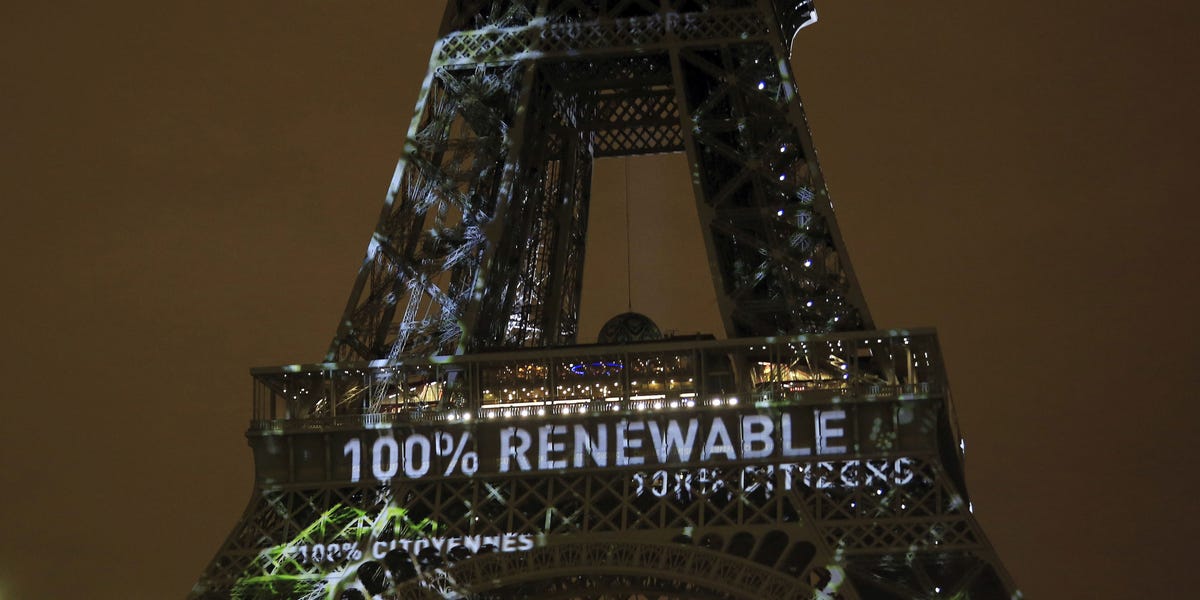
If that headline sounds dramatic, good. Climate headlines are usually dramatic, and sometimes they deserve a tiny drumroll. But this one needs a clarification before we sprint into the policy jungle: the Paris Climate Agreement did not just become international law yesterday afternoon while the rest of us were reheating coffee. The real story is more interesting. The Paris Agreement has been a legally binding international treaty for years, and what we are seeing now is something bigger than a ceremonial milestone. We are watching a global climate deal move from diplomatic poetry into operational law, policy, reporting, finance, and plain old political pressure.
That distinction matters. A treaty can exist on paper and still feel abstract, like a gym membership purchased with noble intentions in January. The Paris Agreement matters because it has evolved into a framework that shapes national plans, drives transparency, influences investment, and gives climate action a legal backbone in international affairs. It is not a world government. It is not a climate SWAT team. But it is a real legal structure with real consequences for countries, companies, cities, and everyday people.
So when people say the Paris Agreement is “now international law,” what they usually mean is this: the agreement is no longer just a hopeful promise made in a conference hall with too many lanyards. It is a living treaty with rules, cycles, expectations, review mechanisms, carbon-market architecture, and growing political force. That shift is worth understanding, especially if you care about climate policy, business risk, public accountability, or whether your future summers will feel like walking through soup.
What People Mean When They Say the Paris Agreement Is “Now” International Law
The phrase sounds like a breaking-news banner, but the deeper truth is about legal status versus legal effect. The Paris Agreement became a treaty in force when enough countries formally joined it. That transformed it from a negotiated text into an active instrument of international law. Since then, its implementation system has expanded through additional decisions, reporting rules, market guidance, and regular climate planning cycles.
From headline moment to legal architecture
At first, much of the public conversation focused on symbolism. Countries gathered. Leaders smiled. Cameras flashed. Optimism floated around like confetti with a graduate degree. But international law is rarely about one glamorous moment. It is about what comes next: what states must submit, what they must report, what meetings they must attend, what reviews they must undergo, and how often they must come back with stronger plans. That is where Paris became more than a famous photo.
In other words, the Paris Agreement works less like a single command and more like a system. It establishes long-term climate goals, requires countries to prepare and update national climate plans, builds a transparency framework for reporting progress, and creates recurring opportunities for global review. That combination gives the treaty staying power. It is not exciting in a superhero-movie sense. But in law and diplomacy, boring structure is often where the power lives.
What is binding, and what is not
Here is the part that confuses many readers: the Paris Agreement is legally binding, but not every promise inside it is binding in the same way. That is not a contradiction. It is the design. Countries are generally bound to submit nationally determined contributions, update them over time, report on emissions and progress, and participate in a shared framework of transparency and review. But the exact emissions cuts in each country’s plan are mostly nationally chosen rather than internationally imposed.
That hybrid structure was not an accident. It was the diplomatic breakthrough. Instead of trying to force one-size-fits-all targets on wildly different countries, the Paris model gave governments flexibility over the content of their climate plans while making the process of planning, reporting, and raising ambition part of international law. Think of it as a legal treadmill with no “skip leg day” button. Countries choose their pace, but they are expected to keep showing up.
How the Paris Agreement Actually Works
The Agreement is often described in big moral language, which is fair, because climate change is a big moral issue. Still, the treaty is also a technical machine. It has gears. Once you understand those gears, the entire climate diplomacy story becomes much less mysterious.
The long-term temperature goal
Paris aims to hold the increase in global average temperature to well below 2 degrees Celsius above preindustrial levels while pursuing efforts to limit warming to 1.5 degrees Celsius. That wording matters because it created a more ambitious benchmark than earlier diplomatic habits. It also changed the political conversation. Suddenly, 1.5 degrees was not just a scientific talking point. It became a central reference point for national policy, corporate pledges, activist campaigns, and investor expectations.
This matters because goals influence behavior even when they do not instantly produce perfection. A company deciding where to build a factory, a city deciding how to modernize transit, or a utility deciding whether to bet on more gas infrastructure all operate in a world shaped by the Paris temperature goals. The treaty helps signal where the global economy is supposed to head, even if the trip is messy, delayed, and full of political potholes.
The NDC cycle: the heart of the system
Every country under Paris is expected to prepare and communicate a national climate plan, known as a nationally determined contribution, or NDC. The phrase sounds like it was invented by a committee that feared joy, but the idea is simple: each country states what it plans to do on emissions, adaptation, and related climate efforts.
The genius of the NDC model is that it combines sovereignty with pressure. Governments get room to design plans that fit their politics and economies. But they are also expected to come back regularly with stronger plans over time. Paris does not assume the world gets climate policy perfect in one heroic leap. It assumes countries inch, stumble, negotiate, revise, and then hopefully move upward. It is less cinematic than a grand final battle, but far more realistic.
Transparency, reporting, and the global stocktake
Paris is sometimes described as a transparency-and-ambition machine, and that is a fair description. Countries are required to report emissions and provide information on implementation and progress. Those reports are then subject to review. The point is not only to produce spreadsheets that make policy nerds glow with happiness. The point is to create confidence, comparability, and pressure.
On top of that, the treaty includes a global stocktake, a recurring process that assesses collective progress toward climate goals. This is the moment when the world looks in the mirror and asks an uncomfortable but necessary question: are we actually doing enough? Unsurprisingly, the answer so far has been some version of, “Progress exists, but absolutely not enough, please stop pretending otherwise.” That may not fit neatly on a motivational poster, but it is how serious policy systems work.
Why This Matters More Than a Fancy Piece of Paper
A treaty matters when it changes decisions. The Paris Agreement does that in several ways, even without a global climate police force parachuting into ministries with clipboards.
It shapes domestic policy
Once a country files a climate plan, that plan starts influencing domestic debates. Legislators cite it. Courts notice it. Agencies build programs around it. Opposition parties attack it. Business groups lobby to shape it. In other words, Paris turns climate action into an ongoing governance issue rather than a one-off moral speech. That alone is powerful.
It also helps align national policies with long-term planning. Clean electricity standards, methane rules, electric vehicle incentives, building codes, industrial decarbonization strategies, and climate adaptation plans do not appear out of thin air. They often gain momentum because governments are operating inside a treaty system that expects updated national commitments and public explanation of progress.
It moves markets and investment
Investors are not reading climate treaties for fun on a beach towel, but they do care about signals. Paris sends one giant signal: over time, the direction of travel is toward lower emissions, more resilience, and more climate accountability. That affects risk models, financing costs, supply-chain choices, insurance assessments, and capital allocation.
When clean energy, grid upgrades, battery manufacturing, resilient infrastructure, and low-carbon technologies attract more attention, Paris is not the only reason. But it is part of the reason. It helps create a policy environment where businesses can see which way the economic wind is blowing. And yes, that wind is increasingly carrying solar panels.
It creates diplomatic and reputational pressure
Countries care about more than legal penalties. They care about credibility, alliances, trade relationships, and global standing. Paris creates a structured stage on which governments can be seen as serious, evasive, ambitious, slow, cooperative, or wildly out of sync with reality. That reputational effect is not fluff. In international politics, reputation can be a currency almost as valuable as formal enforcement.
What the Paris Agreement Does Not Do
To understand Paris clearly, it helps to say what it does not do. This is where the hot takes usually trip over their own shoelaces.
It does not impose identical emissions cuts on everyone
The treaty is built around nationally determined contributions, not one universal quota. That makes the system more flexible and more politically durable, but it also means ambition varies from country to country. Some governments move faster. Some move slower. Some move like they are late for a train. Others move like the train is theoretical.
It does not punish countries like a criminal code
Paris is not an international carbon courtroom handing out dramatic fines every Tuesday. Its compliance approach is facilitative and non-punitive. That frustrates critics who want stronger enforcement, and understandably so. Yet the treaty’s defenders argue that a softer accountability model was necessary to secure broad participation and keep the process moving forward.
It does not solve the climate finance gap by magic
Developing countries need substantial support for mitigation, adaptation, and recovery from climate-related loss and damage. Paris helped anchor the expectation that richer countries must play a major role, but finance remains one of the most contentious parts of climate diplomacy. Ambition without money is basically a motivational speech wearing a necktie. The gap between need and delivery remains one of the biggest weaknesses in the entire system.
Recent Developments Making the Agreement Feel More Real Than Ever
If Paris already became law years ago, why does it feel more concrete now? Because the framework has matured. The rulebook has grown. Reporting expectations have kicked in. Carbon market guidance has advanced. The first global stocktake has happened. The treaty is operating with more texture, more scrutiny, and more real-world consequences.
The rulebook and Article 6
One major sign of maturity is the continuing development of Article 6, the part of the Paris Agreement that allows countries to cooperate, including through carbon-market approaches. This is a technical area, but it matters. If done well, it can help channel finance, avoid double counting, and support higher ambition. If done badly, it can become a glittery loophole factory. The rulemaking work around Article 6 shows Paris evolving from broad framework to practical implementation.
The first global stocktake changed the tone
The first global stocktake was important because it turned collective climate progress into a formal reckoning. It made official what scientists, advocates, and many policymakers had been saying for years: yes, there has been movement, but no, the world is not yet on track to meet the treaty’s long-term goals. That kind of formal acknowledgment matters because it becomes part of the next round of political and policy decisions.
Recent climate summits have also pushed the conversation further, including stronger attention to the need to move away from fossil-fuel dependence and accelerate clean-energy deployment. The wording remains negotiated, careful, and occasionally allergic to bluntness. Still, the direction is clearer than it used to be.
The U.S. example proves both fragility and resilience
The United States has become a case study in climate-policy whiplash. It joined, withdrew, rejoined, and then headed toward withdrawal again under a different administration. That drama reveals something important. Paris is politically vulnerable at the national level, especially in polarized democracies. But it also shows the treaty’s broader resilience. The agreement did not collapse because one country changed course. Other countries kept filing plans, negotiating rules, and moving the process forward.
That is one reason the treaty still matters. It is not built to depend entirely on one capital city, one election, or one leader’s mood before breakfast. Its structure is bigger than any single administration, even when big emitters matter enormously.
Is the Paris Agreement Working?
The honest answer is both yes and not nearly enough. Paris has changed the global climate conversation, helped normalize net-zero thinking, strengthened transparency expectations, and influenced policy and investment across the world. It has likely bent the long-term trajectory away from even worse warming scenarios. That is meaningful.
But emissions remain too high. Fossil fuels still dominate much of the global energy system. Adaptation needs are rising. Climate finance remains inadequate. And the pace of change is still slower than the physics of warming would prefer, which is a polite way of saying the atmosphere does not care about diplomatic self-congratulation.
So the right takeaway is not cynicism and not blind optimism. It is disciplined realism. Paris is working as a framework for coordination, transparency, and rising ambition. It is not yet delivering climate outcomes at the scale and speed the world needs. Both statements can be true at once.
What Businesses, Cities, and Ordinary People Should Learn
For businesses, Paris means climate risk is not a temporary PR issue. It is part of the regulatory, financial, and strategic landscape. For cities, it means local decisions on housing, transport, heat resilience, flood control, and power systems increasingly fit into a global context. For households, it means the conversation about energy bills, home insurance, mobility, and disaster preparedness is tied to international climate policy more than many people realize.
For voters and citizens, the lesson is even simpler: treaties are not magical, but they matter. They shape the boundaries of what governments consider normal, expected, and defensible. Paris made it harder for serious leaders to argue that climate change can simply be ignored. That is not the finish line. It is the starting gun.
Experiences From the Real World: What This Treaty Feels Like on the Ground
Climate treaties can sound distant, as if they exist in a sealed room somewhere between Geneva, jargon, and bad conference coffee. But the lived experience of the Paris Agreement shows up in ordinary places. It shows up when a coastal mayor has to decide whether to spend public money on seawalls, drainage, and cooling centers because extreme weather is no longer a once-in-a-generation surprise. It shows up when a utility planner realizes the grid needs hardening against heat waves and storms, not just more wires and hope. It shows up when a manufacturer starts hearing from investors, customers, and overseas buyers that emissions reporting is now part of doing business, not a quirky side project for the sustainability team.
In farming communities, the experience can be even more direct. A grower dealing with shifting rainfall, longer droughts, or unpredictable planting seasons may never use the phrase “international legal architecture” at the dinner table, and honestly, who would. But that farmer is still affected by the world Paris helped create: one where adaptation funding, climate-smart agriculture, water management, and methane policy are increasingly part of public planning. When climate becomes a treaty issue, it eventually becomes a budget issue, a crop issue, and a survival issue.
Insurance offers another vivid example. Homeowners in fire-prone, flood-prone, or storm-battered regions are experiencing climate change not as an abstract science lesson but as a premium increase, a canceled policy, or a terrifying search for coverage. The Paris Agreement does not set your insurance bill, of course. But it has helped push climate risk into the center of how governments, analysts, and financial institutions think about the future. That shift influences regulation, disclosure, investment, and the economic choices that eventually trickle into neighborhoods.
Workers feel it too. Someone building transmission lines, installing solar arrays, retrofitting buildings, designing batteries, or developing low-emissions industrial processes is living inside the economic aftershocks of climate policy. Paris did not invent clean-energy jobs, but it helped legitimize the long-range direction of travel. It signaled that decarbonization was not a niche hobby for idealists hugging wind turbines. It was becoming part of mainstream planning.
Students and younger voters experience the treaty differently. For them, Paris often functions as a benchmark for accountability. They hear leaders make climate promises, then compare those promises to what science demands and what policy delivers. That can create frustration, activism, and sometimes outright fury. But it also creates civic engagement. A generation that sees climate policy as measurable and comparable is less likely to accept vague speeches as a substitute for action.
Even commuters experience the topic in small ways. More electric buses, better transit planning, cleaner air policies, charging infrastructure, and building-efficiency programs may feel local, but many are linked to the wider pressure and expectation created by global climate commitments. The Paris Agreement is not the hand turning every wrench, but it is often part of the reason the toolbox got opened.
That is the real experience of “international law” here. It is not dramatic because someone in a robe bangs a gavel and orders the planet to cool down. It is gradual, persistent, and structural. It changes what governments report, what companies disclose, what cities prioritize, what activists demand, and what citizens expect. It turns climate action from a noble suggestion into a standard against which performance is judged. And while that still leaves a wide gap between promises and reality, it is a lot more powerful than a symbolic handshake and a nice group photo.
Conclusion
The most accurate way to read the headline “The Paris Climate Agreement Is Now International Law” is this: the Paris Agreement is not merely a famous climate promise. It is a legally binding treaty framework that has matured into one of the central operating systems of global climate governance. Its magic, if that is not too whimsical a word for a dense international accord, lies in its blend of flexibility and pressure. Countries choose their own plans, but they do so inside a legal process that expects disclosure, review, and stronger ambition over time.
That does not mean Paris is enough on its own. It is not. It does not guarantee success, and it does not erase political backsliding, weak enforcement, or inadequate finance. But it does something crucial: it keeps climate action anchored in law, diplomacy, and public accountability. In a world where delay is easy and excuses are abundant, that is not a small achievement. It is the framework the world has, the framework the world is using, and for now, the framework the world cannot really afford to lose.