Some people mow the lawn because tthe stripes are not quite straight enough, one corner looks suspiciously fluffy, and the neighbors must be gently reminded who controls the finest patch of Bermuda on the block.
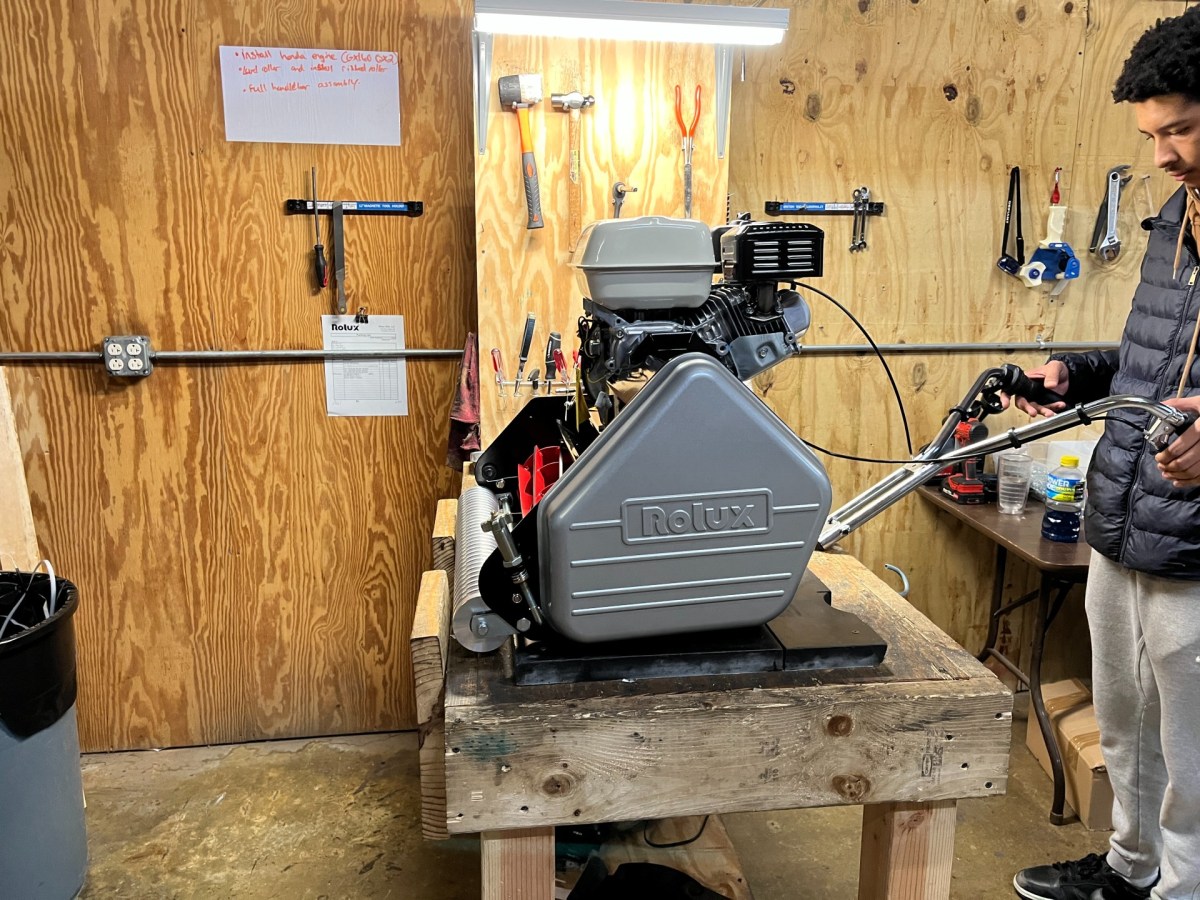
The Rolux X20 was built for that second group. This 20-inch, gas-powered reel mower combines commercial-style construction, a Honda engine, precise cutting-height adjustment, and a heavy rear roller designed to leave crisp, golf-course-inspired stripes. It is not a lightweight mower for occasionally knocking down an overgrown yard. It is a specialized lawn-care machine for homeowners who enjoy maintaining short, dense, carefully groomed turf.
After examining professional testing, manufacturer specifications, turfgrass guidance, engine documentation, maintenance recommendations, and real-world ownership considerations, the conclusion is clear: The Rolux X20 can deliver an exceptional cut, but only when paired with the right lawn and the right owner.
Rolux X20 Review at a Glance
| Category | Rolux X20 Details |
|---|---|
| Mower type | Self-propelled gas reel mower |
| Cutting width | 20 inches |
| Engine | 163cc Honda GX160 |
| Cutting system | Six-blade hardened-steel reel and bedknife |
| Cutting-height range | Approximately 1/8 inch to 1 3/8 inches |
| Weight | Approximately 143 pounds |
| Grass catcher | Approximately 40 liters, welded steel |
| Best lawn size | Roughly 2,500 to 7,500 square feet |
| Best turf types | Closely maintained Bermuda, zoysia, and similar warm-season grasses |
The specifications reflect a mower designed more like professional turf equipment than an ordinary residential machine. Independent testing highlighted its six-blade cylinder, 4-millimeter hardened-steel reel blades, 10-gauge powder-coated chassis, grooved front roller, vulcanized rear roller, chain drive, and steel catcher. ection>
What Makes the Rolux X20 Different?
It Cuts Grass Instead of Beating It Into Submission
A rotary mower uses a horizontally spinning blade to strike grass at high speed. When that blade is sharp, the result can be perfectly respectable. When it is dull, the grass tips look shredded, pale, and slightly offended.
A reel mower works differently. Its rotating cylinder passes the grass against a stationary bedknife, producing a scissor-like cut. Turf specialists generally favor reel mowers for low mowing heights and high-quality warm-season lawns because a properly adjusted reel can produce an exceptionally clean, uniform surface. Clemson Extension specifically notes that Bermuda and zoysia are especially well suited to reel mowing, while the USGA explains that reel and bedknife alignment is central to producing a precise cut. p>That clean cutting action is the main reason to consider an X20. It is not merely about shortening the grass. It is about creating a dense, smooth carpet where individual mowing passes blend together instead of leaving torn tips and random tufts.
A Rear Roller Built for Serious Lawn Stripes
The X20 uses a heavy, vulcanized rear roller rather than conventional drive wheels. As the roller travels across the turf, it bends the grass blades in the direction of travel. Alternating directions changes how light reflects from each pass, creating the familiar light-and-dark striping effect seen on athletic fields and golf courses.
Rolux describes the roller as a reinforced steel structure with a rubberized exterior for grip, durability, and quieter travel across hard surfaces. During independent testing, the mower produced clear, consistent stripes without requiring a separate striping attachment. p>The roller also distributes the mower’s weight more evenly than narrow wheels. On a smooth lawn, this helps stabilize the cutting unit and reduces the small dips and rises that can make a low-cut lawn look as though it received a haircut during turbulence.
Build Quality: More Steel, Less Plastic
The Rolux X20 weighs approximately 143 pounds, and the manufacturer states that nearly the entire machine is constructed from steel. The powder-coated chassis, steel catcher, cast-aluminum chain cover, hardened reel, and reinforced roller give it a reassuringly industrial feel. This is not the mower you casually hang from a garage hook between the leaf blower and the folding lawn chair. p>That weight is both an advantage and a drawback. Once the self-propel system is engaged, the mass contributes to stability, traction, and a smooth pass. When the engine is off and the mower must be lifted into a pickup, moved up steps, or wrestled around a crowded garage, 143 pounds suddenly becomes a very meaningful number.
Independent testing reported that initial assembly took about 20 minutes after the mower was removed from its shipping crate. The test machine started on the first pull after oil and gasoline were added. However, unloading it required more than one person, which is worth remembering before scheduling delivery for the exact weekend when every physically capable friend is mysteriously unavailable. ection>
Honda GX160 Engine Performance
The X20 is powered by Honda’s 163cc GX160 commercial-style engine. Honda rates the GX160 at 4.8 net horsepower at 3,600 rpm and 7.6 pound-feet of torque at 2,500 rpm. It is an air-cooled, four-stroke, overhead-valve engine with a recoil starter and a 3.1-liter fuel tank. p>Those numbers are more than adequate for a 20-inch reel mower. The value of the GX160 is not wild horsepower; your lawn is not entering a tractor pull. Its appeal is steady power delivery, a familiar design, and broad access to engine documentation, service knowledge, and replacement components.
The X20 provides seven throttle positions that affect reel speed and travel speed. In testing, the lowest setting allowed the mower to move without spinning the reel, which is useful when crossing a driveway or repositioning the machine. At normal mowing speeds, the engine maintained enough reel rotation to produce a clean cut across regularly maintained turf.
One Control-Design Compromise
The reel and propulsion speeds are not independently controlled. Increasing the throttle raises both, so owners who want fast reel speed with slower walking speed may need to feather the clutch. This works, but separate reel and drive controls would provide more precise operation, especially when maneuvering near landscaping or mowing thick sections of turf.
Cutting Performance and Height Adjustment
The X20’s micro-adjustable height-of-cut system covers approximately 1/8 inch to 1 3/8 inches. That range gives lawn enthusiasts plenty of flexibility for seasonal scalping, low Bermuda maintenance, compact zoysia lawns, and formal ornamental turf.
North Carolina State Extension recommends maintaining high-quality Bermuda at approximately 3/4 to 1 inch with a reel mower, while Clemson notes that very low Bermuda mowing heights generally require reel equipment. Those recommendations sit comfortably within the X20’s working range. p>The six-blade reel is a practical residential configuration. It balances clipping capacity with a fine cut, particularly at moderate reel-mowing heights. Extremely low putting-green turf often uses reels with more blades, but those surfaces also require specialized preparation, frequent mowing, and maintenance that can turn a backyard into a second occupation. The USGA notes that professional greens mowers may use 11 to 15 blades and require specialized sharpening procedures.
The Lawn Must Be Smooth
Low mowing exposes every imperfection in the soil surface. Small bumps become scalp marks, depressions remain taller, and tree roots behave like speed bumps designed by an angry landscape architect. NC State warns that uneven ground makes mowing below one inch difficult, even when the mower itself is capable of the height. p>For the best Rolux X20 results, the lawn should be leveled gradually with appropriate topdressing, maintained regularly, and kept free of stones, sticks, irrigation parts, and other objects that could damage the reel or bedknife.
Which Lawns Are Best for the Rolux X20?
Excellent Matches
- Hybrid or common Bermudagrass maintained below approximately 1 3/8 inches
- Fine-textured zoysiagrass maintained at a compatible height
- Level lawns measuring roughly 2,500 to 7,500 square feet
- Homeowners who mow two or more times per week during rapid growth
- People who genuinely enjoy adjusting, cleaning, and maintaining equipment
Rolux positions the 20-inch mower for lawns between about 2,500 and 7,500 square feet. The self-propelled drive makes that area manageable, while the 20-inch reel remains narrow enough for controlled turns and detailed striping.
Poor Matches
- Tall fescue or Kentucky bluegrass lawns maintained at 2.5 to 4 inches
- St. Augustinegrass lawns that need cutting above the X20’s maximum height
- Rough, rocky, sloped, or heavily rooted properties
- Lawns that are regularly allowed to become overgrown
- Owners seeking a nearly maintenance-free mower
Tall fescue is commonly maintained around 3 to 3.5 inches, with even higher settings sometimes recommended during summer. Because the X20 tops out near 1 3/8 inches, it is fundamentally unsuitable for that style of cool-season lawn. ection>
Maintenance Requirements
A reel mower is a precision cutting machine, so maintenance involves more than sharpening one horizontal blade every spring. The reel must remain parallel to the bedknife, and the contact or clearance between those components must be correctly adjusted across the entire cutting width.
Routine X20 ownership may include:
- Checking reel-to-bedknife adjustment
- Backlapping the reel when cutting quality declines
- Greasing chains and lubrication fittings
- Monitoring chain tension
- Changing engine oil
- Cleaning the reel, rollers, catcher, and chassis
- Inspecting the air filter and fuel system
Rolux provides manuals, lubrication information, backlapping guidance, roller-leveling instructions, chain-tension procedures, and reel-to-bedknife adjustment support. Independent testing estimated that a combined seasonal sharpening, lubrication, oil-change, and adjustment session could take approximately 45 minutes to an hour once or twice per season. Actual frequency depends on soil contamination, mowing volume, reel contact, and whether the mower encounters debris. p>Fuel also deserves attention. Outdoor Power Equipment Institute guidance recommends using gasoline containing no more than 10 percent ethanol and avoiding fuel that has been sitting in the tank for extended periods. Old gasoline and neglected storage can turn an easy-starting Honda into a pull-cord fitness program. ection>
Advantages and Disadvantages
What the Rolux X20 Does Well
- Exceptional cut quality: A correctly adjusted reel leaves clean, uniform grass tips.
- Professional striping: The heavy rear roller produces visible alternating patterns.
- Durable construction: Steel components dominate the design.
- Reliable engine platform: The Honda GX160 is widely documented and serviceable.
- Wide low-cut range: Micro-adjustment supports different warm-season mowing programs.
- Self-propelled operation: The drive system handles most of the forward effort.
- Replaceable components: Reels, bedknives, rollers, catchers, and chain-related parts have been offered separately.
Where the X20 Demands Compromise
- Heavy: Transporting or lifting a 143-pound mower is not convenient.
- Expensive: A past U.S. dealer listing priced the X20 at approximately $1,799 before it sold out.
- Specialized: It is designed for short, frequently mowed turf rather than general-purpose lawn care.
- Maintenance-sensitive: Reel and bedknife adjustment directly affects cutting quality.
- Combined speed control: Reel and propulsion speed cannot be adjusted independently.
- Gas-powered: Owners must manage fuel, oil, noise, exhaust, and seasonal storage.
- Limited availability: Current Rolux U.S. listings focus heavily on newer Z-series models, while dealer pages may show the X20 as sold out.
How to Get the Best Results From a Rolux X20
- Measure the actual cutting height. Do not trust a knob position alone. Check the distance on a hard, level surface.
- Follow the one-third rule. Remove no more than approximately one-third of the grass blade in one mowing. Shorter turf requires more frequent mowing, not magical slower growth.
- Mow dry grass. Dry turf cuts more cleanly and reduces clumping inside the catcher.
- Alternate mowing directions. Change the stripe direction to reduce grain, wear, and repeated compaction patterns.
- Keep the lawn free of debris. A single hidden stone can damage a carefully adjusted reel and bedknife.
- Inspect the cut after every mowing. Ragged tips, missed blades, or uneven paper-cut tests can indicate that adjustment or sharpening is needed.
- Lower the height gradually. Avoid dropping a tall lawn directly to showcase height in one heroic Saturday session.
Extended Experience: What Living With the Rolux X20 Is Really Like
The following experience-based assessment synthesizes documented product testing, reel-mower operating practices, and realistic ownership routines rather than claiming a separate firsthand test.
The First Mow Feels Different
The biggest surprise for someone moving from a rotary mower is how deliberate reel mowing feels. You are no longer charging around the yard simply trying to finish before the afternoon gets hot. The front roller becomes your guide, the previous stripe becomes your reference line, and turning at the end of each pass requires planning.
The X20’s weight initially feels intimidating, but the self-propel system changes the experience once the clutch engages. On a flat lawn, the mower pulls steadily while the operator concentrates on steering. The heavy roller helps the machine track straight, although it also rewards smooth control. Abrupt corrections can create curved stripes that remain visible long enough for visitors to politely pretend not to notice.
The throttle positions require experimentation. A moderate setting is likely to feel most comfortable for normal mowing, while tighter spaces may require clutch feathering to slow forward travel without sacrificing too much reel speed. After a few sessions, the controls become predictable, but the learning curve is more involved than squeezing one handle on a conventional mower.
The Lawn Begins Dictating the Schedule
Owning a low-cut reel mower changes how you think about mowing frequency. At a one-inch target height, the one-third rule suggests mowing before the turf grows much beyond approximately 1.5 inches. During active Bermuda growth, that may mean mowing two or three times per week. NC State notes that closely maintained Bermuda may require multiple weekly cuts, especially at lower heights. p>This frequency sounds demanding, but each session can become faster once the lawn is consistently maintained. Short clippings flow more easily into the catcher, the reel encounters less resistance, and there is no need to rescue a miniature prairie every weekend. The problem arrives after a vacation or a week of heavy rain. An overgrown lawn should be reduced in stages rather than cut directly back to its normal height.
Minor Lawn Problems Become Extremely Visible
A rotary mower at three inches can hide a surprising amount of unevenness. At three-quarters of an inch, the lawn reveals everything: low spots, high crowns, mower tracks, thin areas, weeds, and that one sprinkler head installed at exactly the wrong height.
For dedicated lawn lovers, this is part of the appeal. The X20 becomes a diagnostic instrument. Repeated scalping in one area points to a high spot. Taller patches indicate depressions or poor reel contact. Weak striping may signal inconsistent turf density. Over time, careful topdressing, leveling, fertilization, irrigation, and mowing can dramatically improve the surface.
Maintenance Becomes Part of the Hobby
The X20 is enjoyable for people who appreciate mechanical routines. Cleaning the reel, checking the bedknife, greasing fittings, monitoring chain tension, and performing a paper-cut test can feel satisfying rather than burdensome. For someone who considers oil changes an unacceptable interruption to leisure, the same tasks may feel like the mower has assigned homework.
The most rewarding moment comes after adjustment, when the reel slices paper cleanly across its full width and the next mowing pass leaves a smooth, even finish. The least rewarding moment comes when the machine encounters a hidden stone five minutes later. Reel-mower ownership teaches patience, precision, and a deep suspicion of children carrying gravel.
The Finished Lawn Is the Real Payoff
When the grass type, mowing height, soil surface, reel adjustment, and mowing frequency all cooperate, the X20 can create a genuinely premium result. The turf appears denser, the tips look cleaner, and the rear roller produces stripes that remain visible from multiple angles.
That result explains why the mower can feel worthwhile despite its cost and maintenance. It turns routine yard work into a craft. You are not simply maintaining grass; you are shaping a living surface one twenty-inch pass at a time.
Final Verdict: Is the Rolux X20 the Perfect Lawn Mower?
For the right homeowner, the Rolux X20 comes remarkably close. Its clean reel cut, Honda GX160 engine, rugged steel construction, precise height adjustment, self-propelled drive, and heavy striping roller make it a compelling machine for carefully maintained Bermuda and zoysia lawns.
It is not the best mower for tall cool-season grass, rough terrain, casual mowing, or owners who want zero mechanical involvement. It is heavy, specialized, maintenance-sensitive, and increasingly difficult to find as new Rolux models receive more attention.
But for a lawn lover who considers perfectly straight stripes a reasonable weekend objective, the X20 offers something ordinary rotary mowers rarely provide: the feeling that every pass is improving both the lawn and the operator’s reputation among nearby grass enthusiasts.
Editorial note: Product pricing, inventory, warranty terms, shipping restrictions, accessories, and model availability may change. Confirm current specifications and dealer support before purchasing a Rolux X20 or its newer equivalent.