Note: This article focuses on the historic fourth-birthday milestone celebrated on May 4, 2025. Because time has moved faster than a toddler with a cookie, newer updates also show that the same remarkable siblings turned 5 on May 4, 2026.
A Birthday Party Times Nine
Most parents consider it a major victory when one preschooler gets dressed, eats breakfast, and makes it through the day without turning the living room into a glitter-based disaster zone. Now imagine doing that with nine children who were born at the same time. That is the everyday reality for Malian parents Halima Cissé and Abdelkader Arby, whose children became known worldwide as the first surviving nonuplets in recorded history.
The siblingsfive girls and four boyscelebrated their fourth birthday on May 4, 2025, a milestone that felt less like a regular family party and more like a global standing ovation. Their story is not simply about a rare birth. It is about medical teamwork, parental endurance, family support, faith, patience, and the kind of laundry schedule that deserves its own emergency response unit.
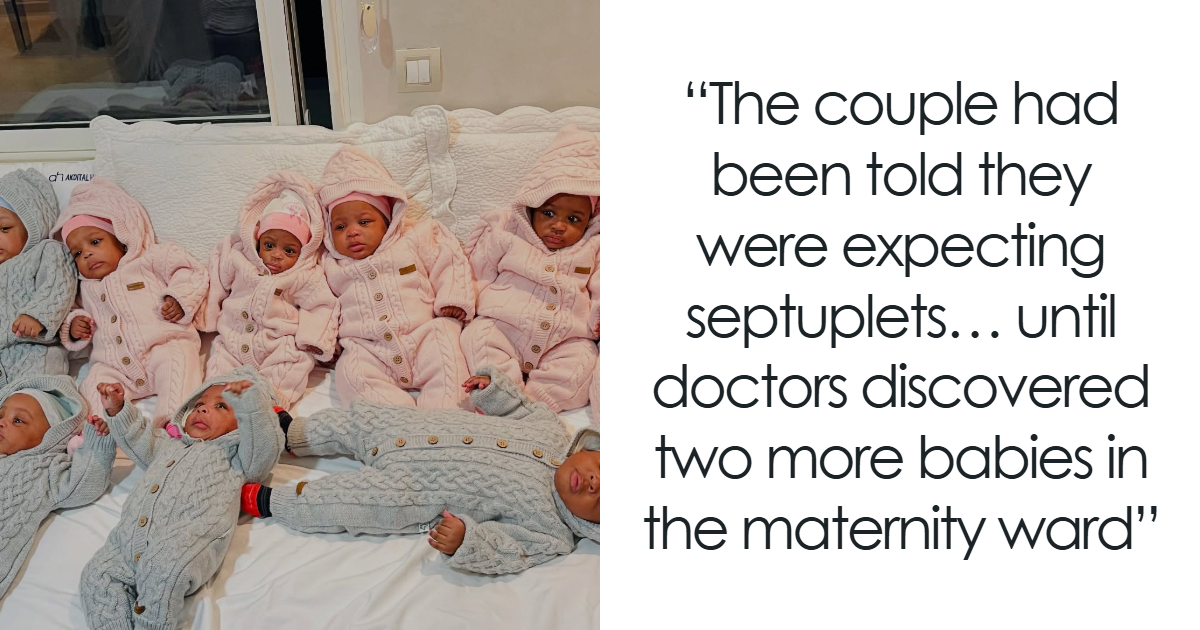
The world’s first surviving nonuplets were born on May 4, 2021, at the Ain Borja clinic in Casablanca, Morocco. Their mother, Halima Cissé, had traveled from Mali for specialized medical care after doctors initially believed she was carrying seven babies. Surprise: there were actually nine. In ordinary family life, finding two extra cupcakes is exciting. Finding two extra babies is the kind of plot twist that makes doctors double-check every monitor in the room.
Who Are the Mali Nonuplets?
The nine children are boys Mohammed VI, Elhadji, Oumar, and Bah, and girls Kadidia, Fatouma, Hawa, Adama, and Oumou. Together, they hold the Guinness World Records title for the most children delivered at a single birth to survive. Before their arrival, the record was held by Nadya Suleman’s octuplets, born in the United States in 2009.
Nonuplets are extraordinarily rare. A “nonuplet” birth means nine babies are born from the same pregnancy. Multiple births become progressively more medically complex as the number of babies increases. Twins are uncommon but familiar. Triplets draw attention. Quadruplets are rare. Nine babies from one pregnancy surviving birth and growing into active children is, medically speaking, a jaw-dropper.
The children were delivered by cesarean section at about 30 weeks of pregnancy. Each baby weighed roughly between 1.1 and 2.2 pounds at birth, making them extremely small and medically fragile. They spent their earliest months receiving intensive medical care, and the family remained in Morocco for an extended period before returning home to Mali.
Why Their Survival Is So Extraordinary
To understand why the nonuplets’ fourth birthday mattered so much, it helps to understand the medical mountain they climbed before they could even crawl. Multiple pregnancies are automatically considered higher risk because the mother’s body must support more than one developing baby. The risk of preterm birth, low birth weight, growth complications, high blood pressure, preeclampsia, gestational diabetes, and delivery complications rises with each additional fetus.
Medical organizations such as ACOG and March of Dimes note that preterm birth is one of the most common and serious complications in multiple pregnancies. Babies born before 37 weeks can face breathing difficulties, feeding challenges, infections, vision or hearing issues, and developmental concerns. These risks are already significant for twins and triplets. For nine babies, the challenge becomes almost unimaginable.
That is why the Cissé-Arby children’s survival captured worldwide attention. Their birth required specialized obstetric care, a cesarean delivery, neonatal support, incubators, careful monitoring, and a medical team prepared for a situation that most hospitals will never see in a lifetime. Their progress from tiny premature newborns to playful preschoolers is not just “cute family update” material. It is a rare human-interest story with real medical significance.
From Incubators to Matching Birthday Outfits
In the early days, the nonuplets’ story was dominated by medical updates: birth weights, incubators, survival, feeding, and recovery. By their fourth birthday, the tone had changed. New photos and family updates showed growing children with distinct personalities, coordinated outfits, bright expressions, and the unmistakable energy of preschool life.
The fourth birthday celebration was described as joyful and grand. Their mother said the children had grown visibly since their previous birthday and that the family wanted to celebrate in a big way. That makes sense. When your children have made history simply by surviving and thriving, a little birthday flair is not excessive. Frankly, it is emotionally necessary.
Pictures of the siblings together show what numbers alone cannot capture. “Nine children” sounds like a statistic. Nine faces, nine personalities, nine pairs of shoes, nine small opinions about snacks, and nine developing voices turn the number into a family. The miracle becomes less abstract and much more human.
The Parents Behind the Miracle
Halima Cissé and Abdelkader Arby did not just become parents to a large family. They became parents to a family the world wanted to watch. That attention can be joyful, but it can also be heavy. Raising children is already a full-contact sport. Raising nine children born on the same day is closer to managing a tiny preschool with no closing hours.
The parents have spoken about the difficulty and beauty of the experience. Their daily life requires structure, patience, and help from relatives. Feeding, bathing, dressing, comforting, teaching, and protecting nine children at the same developmental stage takes planning that would make a project manager cry into a spreadsheet.
Still, the family’s public updates have emphasized gratitude. The children are growing, active, and increasingly independent. Their mother has described them as healthy and full of joy. Their father has shared earlier milestones such as crawling, sitting, and walking with support. These may sound ordinary for many families, but for premature nonuplets, each milestone is a tiny parade.
Why the Fourth Birthday Became a Global Feel-Good Story
The internet loves a big family story, especially when it comes with matching outfits and adorable faces. But the Mali nonuplets’ fourth birthday resonated for deeper reasons. It reminded people that rare medical stories do not end at the delivery room. Survival is the beginning. Growth, development, school readiness, family routines, and emotional well-being are the next chapters.
The children’s fourth birthday was especially meaningful because age four is a bridge stage. They were no longer babies in incubators or toddlers taking first steps. They were becoming little people with preferences, moods, curiosity, humor, and the ability to turn one household into a nine-person negotiation summit over toys.
At four, children often begin showing stronger language skills, social awareness, imagination, and independence. For the nonuplets, that stage carried extra emotional weight. Their parents and medical teams had fought for survival first. Now the family could celebrate personalities, growth, learning, and daily childhood.
Growing Up as One of Nine
One fascinating part of the nonuplets’ story is what life might feel like from the children’s perspective. Most siblings compete for attention. These children share a birthday, a global record, and an origin story so unusual that adults will probably ask them about it forever. “Tell us something interesting about yourself” is one school icebreaker they will absolutely dominate.
Growing up as one of nine same-age siblings may offer both benefits and challenges. On one hand, there is always someone to play with. Loneliness has a hard time entering a room containing nine siblings, several toys, and at least one child who has decided a cardboard box is now a spaceship. On the other hand, individuality matters. Each child needs room to be known as a person, not just as part of “the nonuplets.”
Reports from the family suggest that the children already have different temperaments. Some are quieter. Some are more energetic. Some want more attention. That is normal sibling life, simply multiplied. The parenting challenge is to love the group while still seeing the individual child inside it.
The Role of Medical Care and Family Support
The Cissé-Arby family’s story also highlights the importance of access to specialized care. The decision to transfer Halima Cissé to Morocco for medical support was crucial. High-order multiple pregnancies require advanced monitoring, experienced obstetric teams, neonatal intensive care, and long-term follow-up. Without that support, the outcome could have been very different.
After birth, premature babies often need help regulating temperature, breathing, feeding, and gaining weight. For nine premature babies, the logistical demand is enormous. The medical team had to treat each child as an individual patient while managing a highly unusual group delivery. That kind of care requires equipment, expertise, coordination, and stamina.
Family support has also played a major role. Once the children returned to Mali, relatives helped with caregiving. This matters because no parent, no matter how loving, has nine arms. A large support network can help protect parental mental health, maintain routines, and give each child more consistent attention.
What Makes This Story Different From Other Multiple Births?
Multiple births have fascinated the public for decades. Twins and triplets often attract attention, and higher-order multiples have made headlines around the world. But the Mali nonuplets stand apart because they are the first known set of nine babies from one birth to survive.
Their story is not only about the number nine. It is about the combination of rarity, medical risk, international cooperation, and continued development. The children did not just survive the first hours after birth. They reached their first birthday, then their second, then their third, then their fourth, and later their fifth. Each birthday changed the story from “rare birth” to “remarkable childhood.”
That progression is important. In human-interest reporting, dramatic beginnings often get the spotlight. But the nonuplets’ growth reminds readers that the real story is long-term: nutrition, health checks, sleep, school preparation, emotional bonding, and ordinary family life with an extraordinary headcount.
Lessons From the World’s First Surviving Nonuplets
1. Medical miracles usually involve teamwork
It is tempting to call the nonuplets’ survival a miracle and stop there. But miracles often wear scrubs, carry clipboards, monitor oxygen levels, and work long shifts. The children’s survival involved doctors, nurses, neonatal specialists, family members, and government-level support.
2. Big milestones deserve celebration
A fourth birthday may sound routine, but for children born so early and so small, it is a victory lap. The family’s decision to celebrate grandly was more than a party plan. It was an act of gratitude.
3. Children are not records; they are people
The Guinness World Records title made the nonuplets famous, but the children themselves are more than a headline. They are siblings with names, moods, interests, and futures. The record explains why the world noticed them. Their humanity explains why people keep caring.
4. Parenting requires community
Modern parenting advice often focuses on individual parents doing everything perfectly. The nonuplets’ story offers a healthier truth: families need help. Whether raising one child or nine, support systems matter.
Where Are the Nonuplets Now?
Although this article centers on the fourth birthday milestone, the most recent public updates show that the children continued growing and later turned 5 on May 4, 2026. They were reported to be healthy, active, joyful, and preparing for school. That update adds a new layer of hope to the story.
Starting school is a major milestone for any child. For the world’s first surviving nonuplets, it signals another transition from medical wonder to everyday childhood. Soon, their story may include backpacks, pencils, classroom routines, friendships, and possibly nine separate opinions about lunch.
Their journey continues to inspire because it blends the extraordinary with the ordinary. Yes, they hold a world record. Yes, their birth was medically rare. But they are also children growing up, learning, laughing, testing boundaries, and probably hiding toys in places no adult will find until 2031.
Conclusion: Nine Little Lives, One Big Reminder
The world’s first surviving nonuplets turning 4 years old was more than a cute birthday update. It was a celebration of life after a high-risk birth, a tribute to medical care, and a reminder of what families can endure with support and love. Halima Cissé and Abdelkader Arby’s children entered the world under extraordinary circumstances, but their growing-up years are what make the story truly powerful.
Their fourth birthday showed the world a family moving beyond survival and into childhood. Their fifth birthday update confirmed that the journey continues with health, joy, and school on the horizon. From tiny premature babies in incubators to active children with personalities of their own, the Mali nonuplets remain one of the most remarkable family stories of our time.
And somewhere in Mali, there is probably a parent counting shoes, cups, snacks, and children before leaving the house. Twice. Maybe three times. Honestly, with nine kids, nobody is judging.
Experiences Related to the World’s First Surviving Nonuplets Turning 4
Stories like this feel powerful because they connect with experiences many families understand, even if very few people will ever raise nonuplets. Parents of premature babies know that birthdays can carry a meaning outsiders may not immediately see. For some families, a birthday is not just cake and candles. It is proof of breathing tubes removed, feeding goals reached, weight gained, infections avoided, appointments survived, and hope protected day after day.
When a child is born early or medically fragile, parents often remember details others forget: the first time they were allowed to hold the baby, the sound of monitors, the smell of hospital soap, the tiny diapers, the careful feeding routines, and the strange mix of fear and love that fills a neonatal unit. For the parents of the Mali nonuplets, those memories existed nine times over. Every small improvement likely mattered. Every gram gained was worth noticing. Every stable night was a reason to breathe a little easier.
The fourth birthday milestone also speaks to families raising multiples. Parents of twins and triplets often joke that they live in “organized chaos,” but behind the jokes is real labor. Feeding schedules overlap. Sleep schedules collide. One child cries and wakes another. A grocery trip becomes an expedition. Laundry multiplies with suspicious speed, as if socks are reproducing in the basket. Now imagine that reality with nine children of the same age. The humor is real, but so is the exhaustion.
At the same time, there is a special beauty in watching siblings grow side by side. Multiples often share a bond that begins before birth and continues through daily routines. They learn together, copy one another, comfort one another, and sometimes create mischief with the efficiency of a tiny committee. For the nonuplets, childhood may mean never lacking a playmate, never having a quiet birthday, and never being short of someone to blame when a toy mysteriously breaks.
The family’s experience also highlights how important community support can be. Many cultures understand child-rearing as a shared responsibility, not a solo performance. Relatives, neighbors, doctors, nurses, and caregivers can all become part of a child’s survival and growth story. The nonuplets remind us that children thrive best when families are not left to carry impossible loads alone.
For readers, the takeaway is not simply, “Wow, nine babies!” It is a broader reminder to celebrate progress. A child learning to walk, talk, share, eat independently, start school, or sleep through the night may look ordinary from the outside. Inside a family, it can feel monumental. The Cissé-Arby nonuplets turned 4 with the world watching, but every family has its own private world records: the first step after months of therapy, the first full night of sleep, the first day without worry, the first birthday that feels like relief instead of fear.
That is why this story continues to move people. It is rare, yes. It is historic, absolutely. But underneath the record is something beautifully familiar: parents loving their children through uncertainty, celebrating growth, and discovering that life can become joyful in ways nobody could have planned.