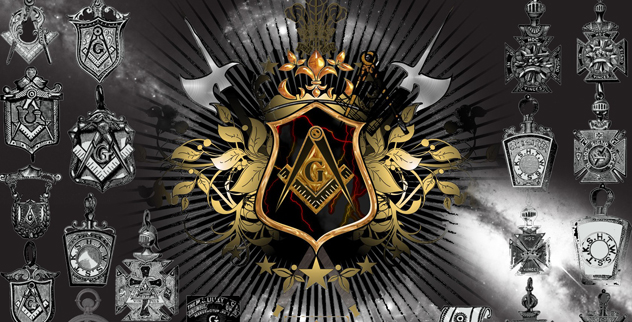
Few organizations have enjoyed better accidental marketing than the Freemasons. Mention a Masonic lodge, and someone will immediately picture hooded billionaires whispering beside a pyramid while deciding the price of gasoline. The reality is less cinematicbut often more historically fascinating.
Freemasonry developed from European stonemason traditions into a fraternal movement built around moral instruction, symbolic rituals, charity, fellowship, and carefully guarded ceremonies. The first known American lodge appeared in the early 1730s, and the organization influenced numerous fraternal associations that followed. However, Freemasonry is decentralized: separate grand lodges govern different jurisdictions, so there is no single Masonic headquarters operating a giant lever labeled “World Events.”
Still, some Freemason secrets are real. The fraternity uses private recognition signs, stages dramatic initiations, requires solemn promises, and has endured genuine political and religious controversies. The trick is separating documented history from conspiracy theories wearing tiny ceremonial aprons.
1. The Secret Handshakes and Passwords Are Real
They originally worked like professional credentials
Freemasons really have used handshakes, passwords, signs, and symbolic gestures. Historically, such recognition methods may have developed from medieval craft guilds. Traveling stonemasons needed ways to demonstrate their training before identification cards, online portfolios, and awkward LinkedIn endorsements existed.
Modern Masonic organizations openly acknowledge that certain ceremonies and methods of recognition remain private. Candidates traditionally learn different signs as they progress through the three foundational degrees: Entered Apprentice, Fellow Craft, and Master Mason.
The scandalous twist is that these secrets have rarely remained secret for long. Exposés describing Masonic ceremonies appeared as early as the 18th century. Today, alleged passwords and grips are scattered across books, archives, websites, and videos. Knowing one does not magically grant access to a lodge, however. Trying a handshake copied from the internet is more likely to produce confusion than admission to an underground treasury.
2. Masonic Initiation Includes a Symbolic Murder
The legend of Hiram Abiff delivers the drama
One of the most striking Masonic rituals centers on Hiram Abiff, a legendary master builder associated with King Solomon’s Temple. In the traditional story, Hiram refuses to reveal protected knowledge, is attacked by three men, dies, and is later symbolically raised.
The Master Mason ceremony uses this drama to explore loyalty, mortality, integrity, and the consequences of betraying one’s principles. It is theater with a moral lesson, not evidence that lodge meetings routinely conclude with a homicide and refreshments.
For outsiders, the symbolism can look unsettling. Death, darkness, burial, resurrection, architectural tools, and biblical imagery are combined in an intentionally memorable experience. Nineteenth-century America embraced elaborate fraternal initiations, and Freemasonry became the model copied by many later societies.
The secrecy surrounding the performance helped the ritual retain emotional power. Reading a summary is one thing; participating without knowing the next scene is another. That differencerather than hidden supernatural knowledgeis a major reason Masons protect ceremonial details.
3. Traditional Masonic Oaths Sound Extremely Gruesome
The penalties were symbolic, not criminal instructions
Historical versions of Masonic obligations included vivid descriptions of terrible punishments for revealing secrets. Depending on the degree and ritual tradition, the wording invoked mutilation, dismemberment, or an undignified disposal of the offender’s body.
That sounds scandalous because it was designed to sound scandalous. The language emphasized the seriousness of a candidate’s promise in an era when dramatic oaths were more culturally familiar. Modern Masonic authorities generally explain such penalties as symbolic references rather than punishments that members may actually enforce.
Critics have nevertheless argued that threatening imagery is inappropriate, even when understood allegorically. Supporters respond that the moral obligationnot the theatrical penaltyis the point. In practical terms, a Mason who reveals a ritual is more likely to face embarrassment or disciplinary action than an appointment with a medieval executioner.
4. Freemasonry Is Not a Religion, but It Is Not Entirely Secular
Many lodges require belief in a supreme being
Freemasons commonly insist that Freemasonry is not a religion. It has no universal doctrine of salvation, no single theology, and no requirement that every member belong to the same faith. Political and sectarian religious debates are traditionally discouraged inside lodge meetings.
Nevertheless, many mainstream American jurisdictions require candidates to believe in a supreme being. Masonic language often refers to the “Great Architect of the Universe,” allowing members from different religious traditions to interpret the phrase according to their own beliefs. Ceremonies may also involve prayer and a sacred text chosen or accepted by the candidate.
This creates an obvious tension. Freemasonry says it is not a church, yet it uses sacred language, moral allegories, solemn obligations, altars, and ritual. To outsiders, that can resemble religion wearing a builder’s apron and insisting it is merely attending a meeting.
Membership rules vary among Masonic organizations. The Grand Lodge of California, for example, states that applicants must be adult men of good character who believe in a supreme being, while acknowledging that other Masonic bodies follow different standards.
5. Traditional Freemasonry Has Excluded Women
Brotherhood has often meant exactly that
Most grand lodges belonging to the Anglo-American Masonic tradition admit only men. Defenders describe the lodge as a form of male fellowship with centuries-old customs. Critics see an influential network preserving gender exclusion behind closed doors.
Women have not been completely absent from the wider Masonic world. The Order of the Eastern Star developed as a Masonic-related organization in which women could participate, historically through family connections to Master Masons. Independent women’s lodges and coeducational Masonic organizations also exist, although mainstream male grand lodges do not always recognize them as regular Masonic bodies.
In other words, the secret is not that women never found a way into Masonic-style organizations. It is that recognition matters. A women’s lodge may consider itself authentically Masonic while a traditional grand lodge disagrees. The resulting debate has lasted considerably longer than most committee meetings should.
6. Masonic Equality Coexisted With Racial Exclusion
Prince Hall Freemasonry grew from rejection
Freemasonry frequently presented the lodge as a place where men met as brothers rather than according to social rank. American practice, however, did not escape the racism of American society.
Prince Hall and 14 other Black men were initiated by a British military lodge in Boston in 1775 after encountering exclusion from white colonial Masonry. Their organization eventually became the foundation of Prince Hall Freemasonry, the oldest continuously active African American Masonic tradition.
Prince Hall lodges became important centers of mutual assistance, leadership, education, abolitionist activity, and civil-rights organizing. They helped free Black communities build networks at a time when legal and social institutions routinely denied them equal participation.
For generations, many predominantly white grand lodges refused to recognize Prince Hall Masons. Recognition expanded gradually and unevenly, exposing the uncomfortable distance between Masonic ideals of universal brotherhood and actual racial practice.
7. Freemasons Influenced Early Americabut Did Not Secretly Design Everything
Real connections became fuel for imaginary plots
George Washington was genuinely a Freemason. He joined a Virginia lodge in 1752, remained connected to Masonic circles, participated in ceremonies, and received Masonic funeral rites. Benjamin Franklin and Paul Revere were also prominent Masons. A New York Masonic lodge even supplied the Bible used at Washington’s first presidential inauguration.
Those facts are significant, but they do not prove the United States was secretly created as a Masonic state. Freemasonry was one of several important social networks in the Revolutionary era. Lodges connected merchants, printers, military officers, craftspeople, and political figures who already moved through overlapping civic circles.
The famous Eye of Providence on the dollar bill is also not a reliable Masonic ownership label. Eye imagery existed in Christian and European art before its later Masonic use. Likewise, the number 13 on the Great Seal relates openly to the original statesnot a hidden lodge attendance sheet.
Even the supposedly all-powerful 33rd degree is commonly misunderstood. It belongs to the Scottish Rite, an additional Masonic system entered after the foundational degrees. Receiving it does not make someone the global commander of every Mason. There is no universal Masonic pope, emperor, or regional manager of moon landings.
Real elite membership made conspiracy claims believable, but historians distinguish social influence from centralized control. America’s long tradition of fearing secret organizations has repeatedly turned genuine associations into imaginary super-governments.
8. William Morgan Disappeared After Threatening to Expose the Masons
This was a genuine American political scandal
In 1826, William Morgan announced plans to publish material revealing Masonic rituals. After a series of legal confrontations, he was removed from jail by men connected to Freemasonry, taken toward Fort Niagara, and never reliably seen again.
No confirmed body was produced, and Morgan’s ultimate fate remains uncertain. Evidence did establish that Masons participated in his abduction. Several men were prosecuted, although convictions were limited and punishments relatively light. Public anger intensified when citizens realized that officials, judges, jurors, and other powerful community members also belonged to the fraternity.
The affair triggered a national anti-Masonic movement. Opponents argued that private loyalties and secret obligations threatened equal justice. The Anti-Masonic Party became the first major American third party and organized the country’s first national presidential nominating convention in 1831.
This scandal matters because it was not invented by a novelist or assembled from blurry photographs. A man disappeared, lodge members were implicated in his kidnapping, and the backlash changed American politics. Whether Morgan was murdered, escaped, or met another fate remains debated, but the institutional damage was undeniable.
9. The Catholic Church Still Prohibits Masonic Membership
The conflict has lasted for nearly three centuries
The Catholic Church formally condemned Freemasonry in 1738. Church authorities have objected to Masonic secrecy, religious pluralism, private obligations, and the concept of God expressed through the broad title “Great Architect of the Universe.”
Confusion emerged after the 1983 Code of Canon Law stopped naming Freemasonry explicitly. Some Catholics interpreted the change as permission to join. The Vatican’s doctrinal office clarified that the judgment had not changed: Catholics who knowingly embrace Masonic principles are considered to be in a state of grave sin and may not receive Communion.
In November 2023, the Vatican again reaffirmed that active Catholic participation in Freemasonry is forbidden because it considers Masonic principles irreconcilable with Catholic doctrine. Freemasons generally reject the claim that their fraternity replaces religion, arguing that members should remain active in their chosen faiths.
Thus, two institutions can look at the same lodge and see completely different things. Masons may see moral fellowship across denominations; Catholic authorities may see theological relativism concealed inside ritual. That disagreement is not a rumor. It remains an active religious controversy.
10. The P2 Lodge Became a Real Network of Hidden Political Power
One notorious lodge fed decades of conspiracy theories
Propaganda Due, commonly called P2, was an Italian Masonic lodge associated with businessman Licio Gelli. By the late 1970s and early 1980s, investigators alleged that it had developed into a clandestine network involving politicians, military officers, intelligence officials, business leaders, journalists, and financiers.
When a membership list became public in 1981, the resulting scandal forced resignations and shook the Italian government. P2 was connected in public investigations and reporting to political interference, financial corruption, covert influence, and figures involved in major banking scandals.
This is the kind of episode that keeps conspiracy literature employed. Yet P2 does not demonstrate that every Masonic lodge reports to a worldwide criminal council. Italian Masonic leaders had suspended the lodge, and regular Masons described it as a corrupt distortion of the fraternity.
The reasonable conclusion is less exciting but more useful: secretive organizations can be exploited by powerful individuals, especially when private loyalty, social status, and weak oversight intersect. P2 was a genuine scandal. Turning it into proof that every small-town Mason is managing international espionage between pancake breakfasts is where history becomes fantasy.
What Is the Greatest Freemason Secret?
The greatest secret may be that secrecy itself is the attraction. Freemasonry’s basic public teachingscharity, integrity, self-improvement, fellowship, mortality, and serviceare not revolutionary discoveries. They are familiar moral principles packaged inside architecture, theater, symbolism, formal clothing, and centuries of tradition.
That packaging creates emotional weight. A lesson delivered through a private ceremony can feel more significant than the same lesson printed on a coffee mug. Secrecy also strengthens group identity: members share an experience that outsiders have not undergone.
Unfortunately, mystery creates an empty space that speculation is eager to furnish. Freemasons have been blamed for revolutions, assassinations, banking crises, religious decline, monuments, currency symbols, and almost any historical event containing a triangle. Some accusations emerged from real concerns about elite networking and accountability. Others grew from religious prejudice, political panic, fabricated exposés, or the human desire to believe that complicated events must have one hidden mastermind.
The documented history is neither spotless nor supernatural. Freemasonry promoted charity and fellowship while also reflecting gender and racial exclusion. It connected civic leaders but sometimes generated conflicts of interest. Its rituals taught morality but used language that critics found disturbing. Individual lodges and members did admirable things, questionable things, andin exceptional casescriminal things.
That complexity is far more interesting than pretending every compass on a building points toward a secret vault.
Experience Addendum: Investigating Freemason Secrets in the Real World
Begin with public places, not anonymous videos
A practical exploration of Freemasonry feels very different from scrolling through conspiracy posts at midnight. Start with a public Masonic museum, historic lodge, archive, cemetery, or memorial. The George Washington Masonic National Memorial in Alexandria, Virginia, for example, is a visible landmark that offers public access rather than disappearing when someone knocks three times. Museums operated by the Smithsonian and other institutions also hold Masonic aprons, medals, ceramics, prints, and ceremonial objects.
Looking closely at these objects changes the experience. A square becomes an ethical reminder to behave fairly. Compasses symbolize personal restraint. An apron connects modern members to working stonemasons. Skulls, hourglasses, broken columns, stars, eyes, and temple imagery communicate mortality, knowledge, duty, or spiritual reflection. Symbols that appear sinister in an edited video often seem more like elaborate moral illustrations when viewed with their historical descriptions.
Compare claims with dates
The fastest way to test a supposed Freemason secret is to build a timeline. When did the symbol first appear? When did Masons adopt it? Was the accused person verifiably a member? Did the lodge exist when the alleged plot occurred?
This simple method causes many theories to collapse with a quiet historical thud. If an image predates documented Freemasonry, Masonry cannot be its original source. If a politician was never a confirmed member, a portrait containing a triangle is not enough. If independent grand lodges disagree about basic procedures, the claim that they flawlessly coordinate every government becomes difficult to maintain.
Attend a public event with sensible questions
Many lodges hold open houses, community meals, charitable events, historical lectures, or public cornerstone ceremonies. Visitors generally cannot observe private degree work, but they can ask members why they joined, what charitable programs the lodge supports, how officers are selected, and which portions of Masonry are actually confidential.
The answers will vary. One Mason may emphasize philosophy, another friendship, another family tradition, and another community service. That variety is valuable because it challenges the idea that every member receives one sinister international assignment manual.
Respectful investigation does not require accepting promotional claims uncritically. Ask how the lodge handles misconduct, whether members must disclose conflicts of interest, how it approaches its history of exclusion, and what recognition exists between predominantly white and Prince Hall grand lodges. Serious history includes uncomfortable questions.
Keep separate columns for facts and allegations
A useful research notebook has two headings: “Documented” and “Claimed.” Place dates, court records, membership rolls, official rules, museum descriptions, and contemporary reporting in the first column. Place unsupported interpretations, anonymous testimony, numerology, and suspiciously dramatic thumbnails in the second.
Some allegations may eventually move into the documented column. The Morgan kidnapping and P2 scandal demonstrate why researchers should not dismiss every concern merely because it involves a secret society. At the same time, extraordinary claims require more than eerie music and a red circle drawn around a building ornament.
The most rewarding experience is discovering that Freemasonry reflects the same contradictions found throughout human history: ideals and prejudice, charity and ambition, loyalty and secrecy, civic service and occasional abuse. You may not uncover a machine controlling civilization, but you will gain a better understanding of how symbols, networks, private rituals, and public fear can shape society. That is a genuine secret worth taking home.
Conclusion
The top Freemason secrets range from genuine private rituals to controversies hiding in plain sight. Handshakes, passwords, solemn oaths, symbolic death ceremonies, religious requirements, gender restrictions, and complicated racial history are all part of the record. So are the William Morgan affair, the Catholic Church’s continuing prohibition, and the extraordinary P2 scandal.
What the evidence does not establish is a perfectly coordinated global Masonic government. Freemasonry is too decentralized, internally diverse, and historically quarrelsome for the tidy supervillain structure imagined by popular conspiracy theories.
The real story is better: an influential fraternity tried to teach morality through secrecy, only to discover that secrecy attracts suspicion as reliably as a mysterious door attracts someone determined to open it.