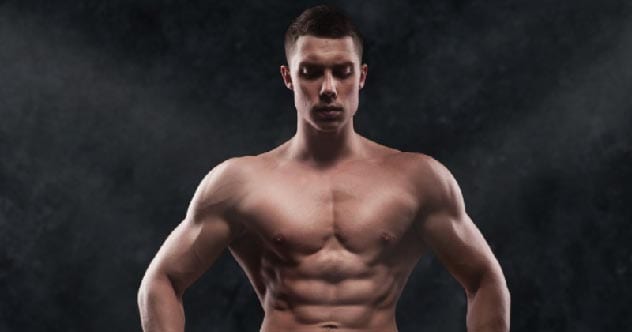
Statues of Greek gods tend to share a recognizable blueprint: broad shoulders, a powerful chest, a wide back, muscular lee-night pizza. Although marble genetics are unavailable to the general public, you can build a balanced, athletic physique by focusing on proven resistance-training principles.
The goal is not simply to become bigger. A Greek god body is about proportion. Your shoulders should complement your chest, your back should create a visible V-taper, and your legs should look like they belong to the same person as your upper body. That requires compound exercises, progressive overload, adequate recovery, sensible nutrition, and patience.
Current U.S. physical activity guidance recommends muscle-strengthening work for all major muscle groups on at least two days per week. Updated resistance-training guidance also emphasizes that consistency and progressive effort matter more than creating an unnecessarily complicated routine. In other words, Zeus did not need a 47-exercise arm day, and neither do you. ader>
What Does a Greek God Physique Actually Look Like?
The classic Greek god physique combines muscularity with symmetry. It is usually associated with capped shoulders, developed upper and lower chest muscles, visible lats, strong arms, a firm midsection, and athletic legs. It looks powerful without appearing as though every shirt sleeve is filing a workplace complaint.
Building that look requires attention to several physical qualities:
- Shoulder width: Well-developed deltoids help create a broader upper body.
- Back development: Strong lats and upper-back muscles contribute to the V-taper.
- Chest thickness: Pressing movements add mass to the torso.
- Leg strength: Squats, hinges, and single-leg work create balanced proportions.
- Core stability: A strong trunk supports heavy lifting and improves posture.
- Reasonable body-fat levels: Muscle definition becomes more visible when excess body fat is reduced.
No single exercise creates this entire appearance. The most efficient approach is to select movements that train multiple muscles at once and then perform them consistently with improving technique, repetitions, or resistance.
The Top 8 Exercises for Building a Greek God Body
1. Back Squat
The back squat is one of the best exercises for developing powerful thighs, glutes, and overall lower-body strength. It also forces your core and upper back to stabilize the load, making it far more than a leg-only movement.
A physique with a heroic chest and toothpick legs does not resemble a Greek god. It resembles an action figure assembled from two different boxes. Squats help prevent that unfortunate outcome.
How to perform it
- Position the bar securely across your upper back rather than directly on your neck.
- Stand with your feet approximately shoulder-width apart.
- Brace your abdomen and keep your entire foot in contact with the floor.
- Bend your knees and hips together, allowing your knees to track in the same general direction as your toes.
- Descend only as far as you can while maintaining control and a stable spine.
- Drive through the floor and return to a standing position.
Start with bodyweight squats, goblet squats, or a lightly loaded bar until your movement is consistent. Adding weight before mastering control is not progressive overload; it is progressive optimism. The American Council on Exercise recommends maintaining a stable torso and controlled movement during the back squat.
Suggested range: 3–4 sets of 5–10 repetitions.
2. Romanian Deadlift
The Romanian deadlift develops the hamstrings, glutes, spinal erectors, grip, and upper-back stabilizers. It trains the hip-hinge pattern, which is essential for creating strong posterior-chain muscles and lifting objects without folding like a lawn chair.
How to perform it
- Hold a barbell or pair of dumbbells in front of your thighs.
- Soften your knees without turning the exercise into a squat.
- Push your hips backward while keeping the weight close to your legs.
- Maintain a neutral, controlled spine throughout the movement.
- Lower the weight until you feel strong tension in your hamstrings.
- Drive your hips forward and stand tall without leaning backward.
The range of motion depends on your mobility and proportions. The weights do not need to touch the floor. Your goal is to load the hamstrings and glutes, not to win an imaginary contest for lowest bar position.
Suggested range: 3–4 sets of 6–10 repetitions.
3. Pull-Up or Chin-Up
Pull-ups and chin-ups are outstanding exercises for building the lats, upper back, biceps, forearms, and grip. They are especially valuable for developing the wide-back appearance associated with an athletic V-taper.
A pull-up uses an overhand grip, while a chin-up usually uses an underhand grip and places slightly more emphasis on the biceps. Both variations are useful. Choose the one that feels comfortable on your elbows and shoulders.
How to perform it
- Hang from a stable bar with your abdomen lightly braced.
- Pull your shoulders down rather than allowing them to remain shrugged.
- Drive your elbows toward your ribs as you lift your body.
- Bring your upper chest toward the bar without aggressively craning your neck.
- Lower yourself under control until your arms are extended.
Beginners can use resistance bands, an assisted pull-up machine, or slow negative repetitions. Advanced lifters can attach additional weight once clean bodyweight repetitions become easy. ACE identifies chin-ups as an intermediate movement targeting the arms and back.
Suggested range: 3–4 sets of 5–12 repetitions.
4. Incline Chest Press
An incline barbell or dumbbell press develops the chest, front deltoids, and triceps. The modest incline places useful emphasis on the upper portion of the chest, helping create a fuller transition between the chest and shoulders.
How to perform it
- Set the bench to a modest incline rather than an almost-vertical position.
- Plant your feet firmly on the floor.
- Draw your shoulder blades gently down and back against the bench.
- Lower the weight toward your upper chest with your wrists stacked over your forearms.
- Press upward without allowing your shoulders to roll forward.
Dumbbells allow each arm to move independently and can offer a comfortable range of motion. Barbells make it easier to standardize loading. Both work, provided the movement is controlled and your shoulders remain stable. ACE’s chest-press guidance emphasizes keeping the head, shoulders, hips, and feet supported while maintaining stable shoulder positioning.
Suggested range: 3–4 sets of 6–12 repetitions.
5. Standing Overhead Press
The standing overhead press builds the shoulders, triceps, upper chest, and core. Few movements contribute more directly to the broad-shouldered silhouette that makes an athletic physique look impressive even under ordinary clothing.
How to perform it
- Hold a barbell or dumbbells near shoulder height.
- Stand tall with your glutes and abdominal muscles engaged.
- Press the weight overhead while keeping your wrists relatively neutral.
- Avoid excessively arching your lower back to manufacture extra range.
- Lower the weight slowly to the starting position.
If you cannot press overhead without significant discomfort or back extension, use a seated dumbbell press, landmine press, or machine press while addressing mobility and technique. ACE recommends maintaining a stable trunk and avoiding lower-back arching during overhead pressing.
Suggested range: 3–4 sets of 6–10 repetitions.
6. Barbell Row or One-Arm Dumbbell Row
Rows add thickness to the lats, rhomboids, trapezius muscles, rear deltoids, and biceps. While pull-ups help create width, rows give the back the dense, three-dimensional appearance that makes a physique look powerful from every angle.
How to perform a barbell row
- Hold the bar with your hands slightly wider than shoulder width.
- Hinge at the hips and brace your abdomen.
- Keep the bar close as you pull it toward your lower ribs or upper abdomen.
- Pause briefly without shrugging your shoulders toward your ears.
- Lower the bar under control.
If your lower back tires before your upper back, use a chest-supported row or one-arm dumbbell row. The best row variation is the one that allows your back muscles to do the work without turning every repetition into an interpretive dance.
Suggested range: 3–4 sets of 8–12 repetitions.
7. Bulgarian Split Squat
The Bulgarian split squat trains the quadriceps, glutes, hamstrings, adductors, and core while challenging balance. Because each leg works independently, the exercise can reveal and reduce noticeable strength differences between sides.
How to perform it
- Stand a comfortable distance in front of a bench.
- Place the top of one foot behind you on the bench.
- Keep most of your working pressure through the front leg.
- Lower your body under control while keeping the front foot planted.
- Push through the front foot to return to the starting position.
Begin with bodyweight and hold onto a rack if balance limits your leg training. Once stable, add dumbbells. The rear leg is there for support; it should not perform a frantic trampoline impression.
Suggested range: 3 sets of 8–12 repetitions per leg.
8. Farmer’s Carry
The farmer’s carry is wonderfully uncomplicated: pick up heavy weights and walk. Despite its simplicity, it trains the grip, forearms, trapezius muscles, shoulders, core, hips, and postural muscles.
Carries help create the sturdy, athletic appearance that isolation exercises alone often fail to provide. They also teach you to remain stable while moving under loada useful skill both inside and outside the gym.
How to perform it
- Stand between two heavy dumbbells or kettlebells.
- Lift them using a controlled hip hinge.
- Stand tall with your ribs stacked over your pelvis.
- Walk with short, deliberate steps.
- Avoid leaning, rushing, or allowing the weights to swing.
- Set the weights down with the same care used to lift them.
Suggested range: 3–4 carries of 20–40 yards or 20–45 seconds.
How to Turn These Exercises Into a Weekly Workout
You do not need to perform all eight exercises in one enormous session. Divide them across two alternating full-body workouts and train three times per week.
Workout A
- Back squat: 4 sets of 6–8 repetitions
- Incline chest press: 4 sets of 6–10 repetitions
- Pull-up or chin-up: 3 sets of 6–12 repetitions
- Farmer’s carry: 3 rounds of 30 seconds
Workout B
- Romanian deadlift: 4 sets of 6–8 repetitions
- Standing overhead press: 3 sets of 6–10 repetitions
- Barbell or dumbbell row: 4 sets of 8–12 repetitions
- Bulgarian split squat: 3 sets of 8–12 repetitions per leg
During the first week, perform Workout A on Monday, Workout B on Wednesday, and Workout A on Friday. The following week, start with Workout B. This structure trains the major muscle groups frequently while providing recovery days between sessions.
Mayo Clinic guidance recommends avoiding hard training for the same muscle groups on consecutive days, while federal recommendations call for strength work involving all major muscle groups at least twice weekly. ction>
Use Progressive Overload Without Sacrificing Form
Progressive overload means gradually increasing the training challenge. You might add a small amount of weight, perform another repetition, add a set, improve your range of motion, or execute the same workload with better control.
A simple double-progression system works well. Choose a repetition range, such as 6–10. Use the same weight until you can complete all prescribed sets near the upper end of that range with one to three technically sound repetitions still available. Then increase the resistance slightly and begin again near the lower end.
Gradual progression helps muscles adapt while reducing the temptation to make reckless jumps in weight. Current guidance from Cleveland Clinic and the NSCA similarly emphasizes increasing training stress progressively and managing how close sets are taken to muscular failure. ction>
Recovery, Nutrition, and Body-Fat Management
Training supplies the stimulus for muscle growth, but recovery provides the opportunity to adapt. Resistance exercise and adequate protein intake support muscle protein synthesis, while sleep, calories, and rest affect your ability to train consistently. h3>Eat Enough Protein
Include a quality protein source in several meals throughout the day. Examples include eggs, fish, poultry, lean meat, Greek yogurt, milk, tofu, beans, lentils, and protein-fortified foods. Supplements can be convenient, but they are not magical powder from Mount Olympus.
Manage Total Calories
People who need more muscle may benefit from a modest calorie surplus. Those who already carry substantial body fat may prefer maintenance calories or a moderate deficit while following a structured strength program. Avoid aggressive diets that destroy training performance and make every refrigerator appear emotionally supportive.
Sleep Consistently
Establish a regular sleep schedule and allow your body to recover between demanding workouts. Constant exhaustion makes progressive training harder, increases irritability, and may cause dumbbells to feel personally offensive.
Keep Some Cardio
Walking, cycling, swimming, or other cardiovascular exercise supports general fitness and can help manage energy balance. Keep intense cardio appropriately separated from major lifting sessions when muscle and strength development are your priorities.
Common Mistakes That Ruin Greek God Physique Training
- Chasing weight instead of tension: Moving heavier loads with poor control does not guarantee better muscular development.
- Skipping legs: A balanced physique requires trained glutes, hamstrings, quadriceps, and calves.
- Changing routines every week: Exercises need time to produce measurable progress.
- Training every set to failure: Occasional hard sets can be productive, but constant failure can reduce performance and recovery.
- Ignoring pain: Sharp, persistent, or joint-centered pain is not a badge of honor.
- Expecting instant transformation: Visible muscle development normally takes sustained training over months, not three workouts and an inspirational playlist.
Proper technique, gradual progression, and a balanced weekly routine can reduce unnecessary injury risk. Reputable sports-medicine guidance also recommends varying training, paying attention to pain, and increasing intensity gradually. ction>
Experience-Based Lessons From the Gym Floor
The first lesson most lifters eventually learn is that the basic exercises keep working long after they stop feeling exciting. Beginners often search for unusual movements because ordinary squats, presses, rows, and pull-ups seem too simple. A few months later, they discover that simple exercises become brutally effective when performed with more control and progressively heavier resistance.
Another common experience is that strength improves before the mirror changes dramatically. During the early weeks of training, coordination becomes better, repetitions feel smoother, and the nervous system becomes more efficient at using the available muscle. Visible changes usually follow consistency rather than appearing immediately. This is why progress photos, tape measurements, and workout records are often more useful than inspecting your biceps under seventeen different bathroom lights.
Most successful trainees also discover that technique is not a one-time achievement. Form evolves as loads become heavier. A squat that looks perfect with an empty bar may reveal weaknesses when additional plates are added. Filming occasional working sets from the side can expose changes in depth, bar path, posture, and control that are difficult to notice while lifting.
Pull-ups provide another memorable reality check. A person may be strong on machines yet struggle to move their own bodyweight. Instead of treating this as failure, experienced lifters scale the exercise. They use assisted repetitions, controlled negatives, or pulldowns while building the strength required for full pull-ups. Eventually, the first clean repetition feels more satisfying than adding another decorative attachment to a cable machine.
Lower-body exercises frequently produce the greatest temptation to progress too quickly. Adding weight to a squat or Romanian deadlift feels rewarding, but the muscles of the hips and legs can generate more force than an inexperienced lifter can safely coordinate. Small increases maintained for months usually outperform dramatic jumps followed by stalled progress, sore joints, or an awkward explanation to a physical therapist.
Recovery habits also become more important as training improves. A beginner may grow while sleeping inconsistently and eating whatever happens to be nearest. As the weights increase, poor sleep and inadequate nutrition become obvious. Repetitions slow down, motivation drops, and soreness lasts longer. The body is not being lazy; it is submitting an overdue maintenance request.
Experienced lifters commonly stop judging every workout as either amazing or terrible. Some sessions feel powerful, while others feel average because of work stress, poor sleep, travel, or normal fluctuations in energy. The important question is not whether every workout breaks a record. It is whether the program produces gradual progress across several weeks.
Finally, the best physique is rarely built by copying someone else’s routine exactly. Limb lengths, injury history, mobility, equipment access, and exercise tolerance differ. One person may thrive on barbell presses, while another feels better using dumbbells. One lifter may back squat comfortably, while another achieves better leg development with goblet squats or safety-bar squats. Consistency with suitable movements beats loyalty to an exercise that repeatedly causes pain.
The practical conclusion from years of common gym experience is refreshingly unglamorous: choose productive exercises, perform them well, record your training, improve gradually, eat sensibly, and repeat the process. The statues may be ancient, but the method remains remarkably modern.
Conclusion
Building the body of a Greek god does not require mythical genetics, a secret supplement, or a workout designed by someone shouting beside a ring light. It requires a balanced program built around squats, hip hinges, presses, pull-ups, rows, unilateral leg work, and loaded carries.
Train the eight exercises consistently, add resistance or repetitions gradually, and respect recovery. Support the program with adequate protein, appropriate calories, regular sleep, and enough patience to let your body adapt. Over time, you can develop broader shoulders, a stronger chest and back, muscular legs, improved posture, and the athletic proportions that define the classic Greek god physique.