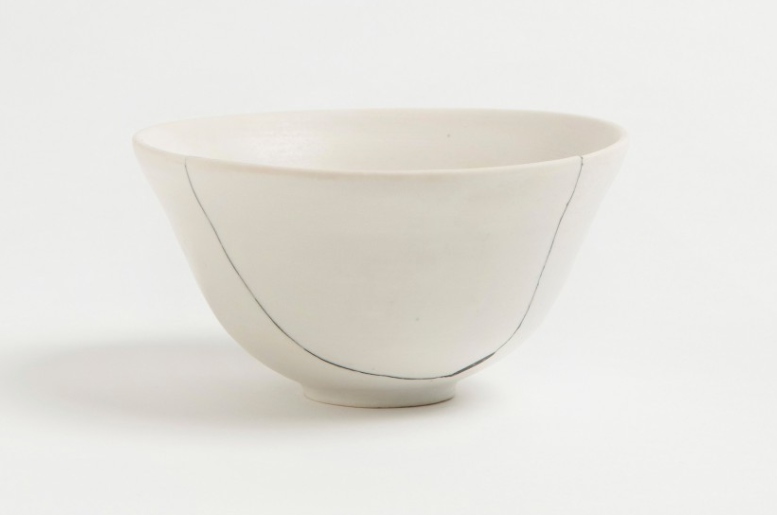
There is a particular kind of heartbreak reserved for dropping your favorite mug. It happens in slow motion: the slip, the clatter, the tiny ceramic explosion across the kitchen floor, and the immediate realization that your morning coffee ritual has lost a beloved cast member.
Most of us respond in one of two ways: reach for super glue or deliver the broken pieces to the trash can with a small, dramatic sigh. Kintsugi offers a third option. Instead of hiding a vessel’s damage, this centuries-old Japanese art of repair turns cracks into part of the design. The break becomes visible, intentional, and sometimes more beautiful than the object’s original unbroken form.
In a culture that loves spotless countertops, filtered selfies, and products that arrive in suspiciously perfect packaging, kintsugi feels like a stylish little rebellion. It asks us to stop treating damage as failure. It suggests that wear, repair, age, and history can add value. Also, it gives broken pottery a more glamorous career path than becoming a sad pile of shards in a landfill.
What Is Kintsugi?
Kintsugi is a Japanese ceramic repair practice often translated as “golden joinery.” Traditionally, broken pottery is repaired with lacquer, commonly called urushi, then finished with powdered gold, silver, or another decorative material. Rather than disguising the repaired seam, the process highlights it.
The result is not a ceramic object pretending nothing happened. It is a bowl, cup, plate, or vase that openly displays its history. The cracks become glittering lines across the surface, like a tiny map of an accident that was transformed into art.
Traditional kintsugi is far more involved than squeezing glue from a tube and hoping for the best. It can require careful cleaning, alignment, filling, sanding, curing, polishing, and the application of decorative metal powder. Depending on the condition of the piece and the method used, a restoration can take weeks or much longer. Patience is not merely encouraged; it is basically part of the tool kit.
Today, the word “kintsugi” is also used broadly for modern decorative repairs. Many beginner kits use epoxy or other adhesives with metallic powders, which can create a gold-veined look more quickly. These projects may be beautiful and meaningful, but they are better described as kintsugi-inspired repairs rather than identical versions of the traditional craft.
A Brief History of Golden Repair
Kintsugi developed in Japan and became especially associated with valued tea wares. Japanese tea culture placed great importance on handmade vessels, subtle surface variation, and the relationship between a person and an object used over time. A tea bowl was not simply a container for tea. It could be an artistic companion, a family heirloom, a conversation starter, and, on a good day, the reason someone paused long enough to notice their own breathing.
A popular origin story connects kintsugi to the fifteenth-century shogun Ashikaga Yoshimasa. According to the tale, a damaged Chinese tea bowl was returned after repair with unattractive metal staples. Japanese craftspeople were then inspired to seek a more elegant solution. Historians treat this story carefully, because the exact origins of kintsugi are more complex than one dramatic tea-bowl mishap. Still, the legend captures the central idea: repair could be functional without being visually apologetic.
Gold lacquer repairs became fashionable in Japan during the sixteenth century and were used on both Japanese ceramics and imported vessels from China and Korea. Museums in the United States hold examples of repaired ceramics whose golden seams show that a crack did not automatically end an object’s useful life. In fact, the repair itself often became part of the object’s appeal.
This is important because kintsugi is not simply “breaking things and putting gold on them.” It belongs to a long history of skilled making, preservation, tea culture, material knowledge, and aesthetic judgment. The goal was not to manufacture damage for decoration. The goal was to care for something that had already earned a place in someone’s life.
Kintsugi and the Beauty of Imperfection
Kintsugi is frequently discussed alongside wabi-sabi, a Japanese aesthetic sensibility that appreciates impermanence, irregularity, age, simplicity, and quiet beauty. A handmade bowl with an uneven rim, a weathered wood table, or a repaired cup can feel more alive than something produced to look identical to ten thousand other objects.
That does not mean every crack is automatically charming. A broken plate is still a broken plate. A chipped mug may still be unsafe for coffee. A shattered vase may still leave you crawling around the floor in socks, which is a thrilling way to learn about household risk management. The point is not to romanticize every accident. The point is to recognize that repair can be meaningful.
Kintsugi challenges the idea that value depends on flawlessness. In modern consumer culture, replacement is often easier than repair. A damaged item is treated as outdated, inconvenient, or embarrassing. Kintsugi flips that logic. It asks: What if the repair gives the object another layer of personality?
A golden seam does not erase the break. It acknowledges it. That small difference is where much of the philosophy lives.
Why Kintsugi Is Trending Again
Kintsugi has become a major source of inspiration in interior design, wellness culture, contemporary art, sustainable living, and social media. Its visual appeal is easy to understand. Gold against ceramic glaze is dramatic. A white bowl with a black crack filled in gold can look like a miniature lightning storm. A dark tea cup repaired with a fine metallic line can feel understated and luxurious at the same time.
But the trend is about more than pretty cracks. Kintsugi resonates because people are reconsidering their relationship with stuff. Fast furniture, disposable décor, and constant replacement have started to feel exhausting. Repairing an object can be a small act of resistance against the idea that everything is temporary and replaceable.
The Sustainability Appeal
Repairing ceramics can keep useful objects out of the waste stream and encourage people to buy fewer, more meaningful pieces. Kintsugi is not a complete answer to overconsumption, but it is a powerful symbol of reuse. It turns “Oops, I dropped it” into “Maybe this is still worth saving.”
That mindset is catching on in the broader repair movement, from mending clothes to restoring furniture to repairing electronics. Kintsugi stands out because it makes repair visible. It does not whisper, “Nothing happened here.” It says, “Yes, this happened. Look how we responded.”
The Slow-Living Appeal
Traditional kintsugi also fits beautifully into the slow-living movement. The process cannot be rushed without consequences. Pieces must be positioned carefully. Adhesives need time to cure. Fine details require calm hands and focused attention. In other words, it is the opposite of ordering a replacement at 11:47 p.m. while half-watching a reality show.
For many people, the process itself is therapeutic. Handling the fragments, fitting edges together, and allowing each stage to dry can create a sense of quiet concentration. It is not magic, and it is not a substitute for professional support when life feels overwhelming. But working patiently with a broken object can offer a satisfying reminder that restoration often happens in stages.
Traditional Kintsugi vs. Modern Kintsugi-Inspired Repair
Before you turn your kitchen into a glittery repair laboratory, it helps to understand the difference between authentic traditional kintsugi and modern beginner-friendly approaches.
Traditional Kintsugi
Traditional kintsugi often uses natural lacquer derived from tree sap, along with materials such as flour paste, clay-like fillers, charcoal powder, and precious metal powders. The process requires specialized knowledge, careful handling, and controlled curing conditions. Raw urushi can cause allergic skin reactions, so this is not a craft to improvise after watching one cheerful 30-second video.
Professional kintsugi artists may spend years learning lacquer work and restoration techniques. Their work is especially valuable for heirlooms, art objects, tea ware, and ceramics that deserve serious care rather than a quick cosmetic fix.
Kintsugi-Inspired Repair Kits
Modern repair kits often use food-safe epoxy, non-food-safe epoxy, metallic mica powder, brass-colored powder, or gold-toned paint. These kits can be enjoyable for decorative objects, flower vases, trinket dishes, and beginner craft projects. They are accessible, less expensive, and usually much faster than traditional lacquer repair.
However, “gold-colored” does not necessarily mean real gold, and “repair kit” does not automatically mean safe for eating or drinking. Always read the manufacturer’s instructions. If a repaired piece will hold hot food, beverages, or anything acidic, confirm that the adhesive and finish are approved for food contact. When in doubt, use the repaired piece as décor instead of making it your new soup bowl.
How to Try Kintsugi at Home
A simple kintsugi-inspired project can be a satisfying weekend craft, especially if you begin with a non-valuable ceramic piece. Do not start with Grandma’s antique porcelain bowl unless Grandma specifically enjoys suspense.
Choose the Right Piece
Pick a ceramic object with a few large, clean breaks rather than dozens of tiny fragments. A small bowl, decorative dish, planter, or vase is often easier to repair than a shattered mug. Avoid repairing pieces with missing fragments unless your kit includes a filler designed for ceramic restoration.
Gather Your Materials
For a modern kintsugi-inspired project, you may need a repair adhesive, disposable mixing surface, wooden sticks, gloves, painter’s tape, fine sandpaper, a small brush, and metallic powder or pigment. Work in a clean, ventilated space and protect your table. Gold powder has a remarkable talent for traveling farther than your intentions.
Dry-Fit Before You Glue
Arrange every fragment before applying adhesive. Check which edges belong together and plan the order of assembly. Taking a quick photo can help. This step may feel overly cautious until you have adhesive on your fingers, a ceramic fragment in your hair, and no idea where the last triangle-shaped piece belongs.
Repair Slowly
Attach pieces in manageable sections. Use tape or gentle support to hold them in place while the adhesive cures. Wipe away excess adhesive according to the product instructions. Once the repair is fully cured, you can add metallic powder or a gold-toned finish to emphasize the seam.
Accept the Handmade Look
Your first repair may not resemble a museum-quality tea bowl. That is fine. A slightly uneven line is not proof that you failed. It is proof that you are a person who repaired something instead of immediately replacing it. In the world of kintsugi, that is a pretty strong start.
Design Ideas for Kintsugi-Inspired Décor
Kintsugi-inspired pieces can work in nearly any interior style, from minimalist to maximalist, rustic to modern. The secret is to let the repaired object feel intentional rather than overly staged.
- Display a repaired bowl on an open shelf: A single gold-seamed bowl can add texture and story to a kitchen or dining room.
- Turn a repaired cup into a planter: Use it for a tiny succulent, herbs, or a collection of paintbrushes.
- Create a gallery of repaired ceramics: Pair mismatched plates, vases, and cups with different repair patterns for an artful display.
- Use a repaired vessel as a catchall: A kintsugi-inspired dish can hold keys, jewelry, matches, or the mysterious collection of coins that appears near every front door.
- Mix old and new: A repaired vintage ceramic beside a modern lamp or clean-lined furniture can create a memorable contrast.
The best pieces are not necessarily the most expensive ones. They are the ones with a story. A chipped bowl from a first apartment, a plate from a favorite dinner set, or a handmade cup from a local potter may be worth preserving because it carries memory, not because it belongs behind glass.
Kintsugi as a Metaphor: Useful, but Handle With Care
It is easy to see why kintsugi has become a popular metaphor for resilience. The image is powerful: something breaks, receives care, and continues with visible evidence of what it survived. That idea can be comforting.
Still, it is worth using the metaphor thoughtfully. Not every hardship needs a shiny lesson. Not every painful experience becomes beautiful on command. Sometimes the most honest response to a crack is simply to say, “That was hard.” Kintsugi does not demand instant optimism. It suggests that care, time, and attention can create a meaningful next chapter.
That is a gentler and more realistic lesson. Repair is not pretending the break never happened. Repair is deciding that the story is not over.
Experiences With Kintsugi: What the Process Can Teach You
The first experience many people have with kintsugi is not through a formal workshop or a museum exhibit. It is through a small accident at home. A favorite cup slips from the dish rack. A handmade bowl cracks in the sink. A thrift-store vase chips during a move. In that moment, kintsugi changes the question from “Can I hide this?” to “Could this become something else?”
Working with broken ceramic pieces can feel unexpectedly emotional. You may remember where the item came from, who gave it to you, or how often it appeared during ordinary moments. A plate from a holiday dinner can hold more than mashed potatoes. A cup can hold years of rushed mornings, late-night tea, and conversations that lasted longer than planned. Repairing such an object is not always practical, but it can be deeply personal.
A beginner kintsugi workshop often begins with a table full of fragments and a room full of people trying not to look nervous. At first, everyone tends to focus on making the repair invisible. Then the metallic powder appears, and the mood changes. Participants begin tracing seams, comparing patterns, and realizing that the crack is not an embarrassing interruption. It is the composition.
There is also a useful lesson in the slow pace of the work. Modern life trains us to expect quick fixes. We refresh pages, reorder products, restart devices, and send messages before our thoughts have fully arrived. Kintsugi has no interest in that speed. A repair must settle. A bond must cure. A surface must be refined. The object refuses to be rushed, which can be mildly inconvenient and strangely refreshing.
For some people, a kintsugi-inspired project becomes a mindful creative ritual. The careful placement of fragments requires concentration. The gold line demands a steady hand. The final result encourages you to look closely at the object rather than treating it as background clutter. It is a small exercise in attention, and attention is one of the rarest luxuries in a noisy world.
The experience can also change how you shop. After repairing one meaningful bowl, you may become less interested in owning twenty replaceable ones. You may choose handmade pottery, vintage pieces, or objects that can age gracefully. You may start seeing a scratch, chip, or uneven glaze not as a reason to reject something, but as evidence that it has already lived a life.
Kintsugi is especially compelling because it does not promise perfection. It offers something more believable: an object can remain useful, beautiful, and worthy of care after it changes. A repair may be visible. It may be imperfect. It may even be a little wonky. But it can still be complete in a new way.
That is why the art of the mended vessel continues to matter. In a world eager to replace, upgrade, erase, and move on, kintsugi makes a case for pausing. It asks us to look at the crack, respect the history, and decide whether the thing in front of us deserves another life.
Conclusion: The Golden Case for Keeping What Matters
Kintsugi is more than a décor trend with excellent lighting. It is a traditional Japanese repair practice that celebrates craftsmanship, patience, memory, and visible restoration. Whether you admire museum-quality lacquer work or try a modest kintsugi-inspired craft at home, the message remains powerful: a break does not have to be the end of an object’s value.
The next time a favorite ceramic piece falls, take a breath before reaching for the trash. It may not be repairable. It may not be safe to use again. But it may be worth reimagining. Sometimes the crack is not the part of the story to hide. Sometimes it is the line that makes the whole piece worth looking at.
Note: Traditional kintsugi uses specialized lacquer techniques and may involve materials that require expert handling. For home projects, follow product safety instructions carefully and use only materials approved for food contact when repairing pieces intended for food or drink.