Note: This article is written for editorial publication and is based on real publicly available information from reputable design, preservation, education, and home-decor sources, synthesized into original American English content without source-link inserts.
Every parent knows the quiet terror of the backpack dump. Out comes one permission slip, half a granola bar, a suspiciously damp mitten, and thenlike confetti from a very determined tiny art departmenttwenty-seven pieces of children’s artwork. Some are masterpieces. Some are “a dinosaur eating spaghetti during a thunderstorm.” Some appear to have been created entirely with glue, hope, and one exhausted teacher’s patience.
That is exactly why Walls, Windows & Floors: Children’s Artwork Collage by Jan Eleni remains such a memorable idea in family-centered interior design. Jan Eleni, known for her thoughtful work in children’s spaces and decor, helped popularize a sophisticated solution to a very common household problem: how to honor a child’s creativity without turning every refrigerator, hallway, closet door, and unsuspecting window into a paper avalanche.
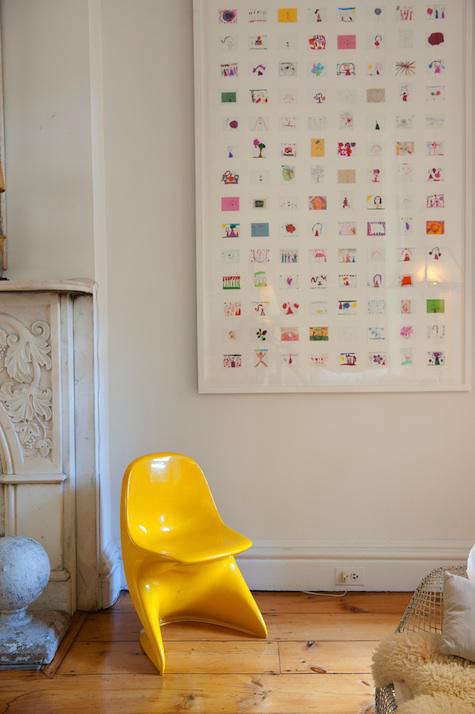
Her children’s artwork collage concept is simple in theory and brilliant in execution. Instead of choosing one drawing and guiltily recycling the rest, the work gathers many pieces of a child’s art, reduces them into a coordinated format, and arranges them as a modern collage. The result feels less like “craft pile rescue mission” and more like a contemporary family heirloom. It is personal, graphic, colorful, and emotionally loaded in the best possible way.
What Makes Jan Eleni’s Children’s Artwork Collage So Special?
The charm of Jan Eleni’s collage work lies in its balance between sentiment and design discipline. Children’s art is naturally expressive. It rarely asks permission from color theory. A child will put a purple sun next to a green dog and call it Tuesday. That freedom is exactly what makes the art so alive, but it can also make display tricky in a polished living room.
Eleni’s approach respects the original energy of the work while giving it structure. Historical design coverage of her collages describes a process in which children’s artworks are photographed, reduced, and arranged into a clean grid. One early collage reportedly included 112 pieces of her own children’s art, documenting about a year of creativity. Each small image was roughly business-card sized, with horizontal and vertical pieces balanced to create a pleasing composition.
That grid is the magic trick. It turns chaos into rhythm. It lets a crayon rocket ship sit beside a watercolor rainbow, a lopsided family portrait, and a mysterious orange blob that may be a cat, a volcano, or Dad before coffee. Individually, these pieces are sweet. Together, they become a visual biography of childhood.
The Design Philosophy Behind the Collage
Jan Eleni’s broader design work has long been associated with children’s spaces, imagination, collaboration, and the idea that a child’s environment should feel personal rather than showroom-perfect. Her interiors suggest that children are not decorative accessories to a house; they are active contributors to its personality.
That mindset matters. Too often, kids’ rooms are designed around adult fantasies of childhood: perfect wallpaper, coordinated bins, tiny furniture that no actual child will use without covering it in stickers. Eleni’s collage approach flips that model. It starts with what children actually make. Their lines, fingerprints, color choices, obsessions, and experiments become the foundation of the design.
This is why the collage works across walls, windows, and floors as a design idea. The phrase “Walls, Windows & Floors” evokes a whole home, not just a nursery corner. Children’s artwork does not have to be hidden in a playroom. When edited and framed with care, it can hold its own in a hallway, kitchen, family room, office, or stair landing.
Why Children’s Art Deserves Better Than the Refrigerator
The refrigerator has done noble service for generations. It has held spelling tests, birthday invitations, pizza coupons, and that one macaroni portrait that lost three noodles but gained emotional power. Still, the fridge is not exactly an archival display system. Magnets slip. Paper curls. Sunlight fades pigments. Tomato sauce somehow gets involved. Nobody knows how, but it does.
Children’s artwork deserves better because it is more than decoration. Early childhood education experts often emphasize that process-focused art helps children explore materials, make choices, develop fine motor skills, express feelings, build vocabulary, and practice problem-solving. In other words, the artwork is not just the final product. It is evidence of thinking.
A child’s drawing can show what they notice, what they value, what they fear, what they love, and what they think a horse looks like after five minutes of intense concentration. Displaying that work tells the child, “Your ideas matter here.” That message is bigger than the frame.
How a Collage Solves the Great Kids’ Art Storage Problem
Most families face the same impossible math: one child can produce enough art in a school year to wallpaper a modest colonial. Add siblings, camps, holiday crafts, birthday cards, Sunday doodles, and “I made this for you while you were on a phone call,” and suddenly the house has a paper population problem.
The Jan Eleni-inspired collage solves this problem by transforming quantity into composition. Instead of treating each piece as a separate storage decision, the collage turns many works into one finished artwork. It preserves the range of a child’s creativity while reducing visual clutter.
It creates one strong focal point
A single framed collage can anchor a wall more effectively than dozens of loose papers. The grid format provides order, while the artwork itself supplies movement and color. It is personal without feeling messy.
It preserves a creative season
A collage can represent one school year, one age, one summer, or one particularly productive dinosaur phase. That makes it feel like a time capsule rather than a random assortment.
It allows editing without guilt
Parents do not need to keep every sheet forever. Photographing or scanning favorite pieces allows families to save the memory, recycle the excess, and reclaim the dining table from the construction-paper empire.
Original, Printed, or DIY: Understanding the Options
Historically, Jan Eleni’s custom collages were offered in more than one format. The high-end version used hand-cut archival-quality images and professional framing. A more accessible version involved a custom printed collage using pigmented inks. The original handmade approach was labor-intensive, which explains why it sat in the luxury design category. This was not a quick craft-night project with dull scissors and a glue stick that had seen better days.
For today’s families, the same idea can be adapted in several ways. A professional designer or artist can create a custom children’s artwork collage. A fine-art printer can help produce a high-quality print from scanned images. Parents with patience, a decent scanner, and a strong relationship with coffee can also create a DIY version.
The professional route
A professionally made collage is ideal when the goal is heirloom quality. This option often includes color correction, layout expertise, high-quality printing or hand assembly, and proper framing. It is especially useful for milestone gifts, grandparents, graduation memories, or a statement piece in a home.
The digital print route
A digital collage is more budget-friendly and flexible. Artwork can be scanned, arranged in a grid, and printed as one large piece. Pigmented inks and quality paper can create a polished look that lasts longer than basic home printing.
The DIY route
A DIY collage can be deeply satisfying. The key is restraint. Choose a consistent background, repeat similar spacing, and avoid cramming in so many images that the final piece resembles a visual traffic jam. Children’s art is lively enough; it does not need help becoming loud.
How to Choose Artwork for a Children’s Collage
The best collage does not always include the “prettiest” artwork. It includes the pieces that tell the richest story. A wobbly self-portrait may matter more than a perfect classroom craft. A drawing with a misspelled caption may capture a child’s voice better than a neat painting.
Start by sorting artwork into broad categories: portraits, animals, abstract marks, letters, handprints, school projects, holiday art, and funny experiments. Then look for variety. A strong collage usually needs a mix of colors, line weights, textures, and orientations.
Look for personality
Choose pieces that feel unmistakably connected to the child. If your kid drew 43 cats wearing hats, include a cat in a hat. That is not clutter; that is a historical record.
Include imperfect pieces
Smudges, fingerprints, crooked cutting, and accidental paint blobs often make the collage more charming. Childhood is not a museum label. It is motion, experimentation, and occasionally marker on the elbow.
Think in color families
If the final piece will hang in a living room, consider choosing artworks with colors that loosely connect to the room. This does not mean forcing a child into beige. It simply means selecting pieces that work together visually.
Where to Display a Children’s Artwork Collage
A children’s artwork collage can work almost anywhere if the scale and framing are right. The secret is to treat it like real art, because it is real art. Use a proper frame, generous matting if needed, and a location where people can actually enjoy it.
In the hallway
Hallways are perfect for family storytelling. A collage placed near bedrooms or stairs becomes part of the daily rhythm of the home. It says, “This family makes things.” That is a lovely message to pass several times a day.
In the kitchen
The kitchen is where much of family life happens, so a children’s art collage feels natural there. Just keep it away from direct steam, grease, and splash zones. Pancake batter is not a recommended finishing varnish.
In the playroom
A playroom collage reinforces creativity in the space where new masterpieces are born. It can also help children see their progress over time, from early scribbles to more detailed drawings.
In the living room
This is the boldest and often most rewarding choice. When children’s artwork is framed and displayed in a shared adult space, it becomes part of the family’s visual identity. It also gives guests something better to talk about than the weather.
Preserving Children’s Artwork the Smart Way
If you want the original pieces to last, basic preservation matters. Paper is vulnerable to light, humidity, heat, tape, rubber bands, and questionable storage decisions. Professional preservation guidance for works on paper generally recommends clean handling, stable room conditions, minimal light exposure, and acid-free or lignin-free storage materials.
That means the attic is not your friend. Neither is the basement. Both places can invite humidity, temperature swings, leaks, pests, and the kind of mystery smell that makes you reconsider every life choice. Store important originals flat in archival folders or boxes when possible. Avoid paper clips, self-adhesive tape, and rubber bands, which can stain, tear, or deform paper over time.
For fragile pieces, scan or photograph them before handling too much. Oversized works can be stored flat or rolled carefully if appropriate, but flat storage is usually safer when space allows. If a drawing uses pastel, charcoal, thick tempera paint, glitter, or collage materials, be extra cautious. Some media can smudge, flake, or stick to protective sleeves.
Why This Collage Idea Still Feels Fresh
The children’s artwork collage by Jan Eleni continues to feel relevant because it answers several modern home-design needs at once. Families want homes that are beautiful but not sterile. Parents want to celebrate their children without surrendering every surface to clutter. People want decor that means something, not just another print selected because it matched the throw pillows.
This type of collage is emotional minimalism. It keeps the meaning and edits the mess. It takes the wild abundance of childhood creativity and gives it a frame sturdy enough to live with adults.
It also fits a broader shift in interior design toward personal storytelling. The most interesting homes are not the ones that look untouched. They are the ones with evidence of life: travel photos, inherited objects, handmade pieces, books with cracked spines, and children’s art that proudly refuses to obey perspective.
Tips for Creating a Jan Eleni-Inspired Collage at Home
If you want to create your own version, begin with a manageable goal. Do not start with “I will archive every mark my child has ever made since birth.” That way lies madness, or at least three bins of glitter paper. Instead, choose a theme: one year, one child, one school stage, one color palette, or one subject obsession.
Step 1: Gather and sort
Collect the artwork and sort it into yes, maybe, and memory-only piles. The yes pile should include pieces with strong color, emotional value, or clear personality. The maybe pile can fill gaps later. The memory-only pile can be photographed, appreciated, and released.
Step 2: Digitize carefully
Scan flat pieces at high resolution, or photograph them in natural indirect light. Keep the camera straight and avoid shadows. If the paper is wrinkled, gently flatten it under books for a day before scanning. Do not iron artwork unless you know exactly what materials were used. Melted crayon surprise is not a design feature.
Step 3: Choose a layout
A grid is classic because it creates order. You can use equal squares, mixed rectangles, or a loose mosaic. Keep consistent spacing between images. White space is not wasted space; it is what lets the artwork breathe.
Step 4: Print with quality materials
For a lasting piece, use a reputable print shop, pigmented inks, and quality paper. Ask about archival or fine-art printing options if longevity matters. A cheap print may look fine at first, but color fading can sneak up like a toddler with permanent marker.
Step 5: Frame simply
Neutral frames usually work best. White, natural wood, or black frames keep attention on the art. Avoid overly decorative frames that compete with the colors and lines. The children have already provided enough visual fireworks.
The Emotional Value of Turning Kids’ Art Into Heirloom Decor
A children’s artwork collage is not only a design object. It is a family memory system. It captures the age when houses had triangle roofs, people had very long fingers, dogs floated in the sky, and every sun wore sunglasses because apparently the sun is also on vacation.
Years later, these details become priceless. Parents may forget which Tuesday a drawing came home, but they remember the phase: the robot phase, the rainbow phase, the “everyone has giant teeth” phase. A collage preserves those stages in one glance.
For children, seeing their work displayed beautifully can be powerful. It shows that their ideas are not disposable. It encourages creative confidence and reinforces the idea that art is not only something professionals do in studios. Art is also what happens at the kitchen table with washable markers and a snack nearby.
Common Mistakes to Avoid
The first mistake is trying to include everything. A good collage is edited. Too many pieces can dilute the impact. Choose the artworks that best represent the child’s voice and the story you want to tell.
The second mistake is using poor photos. Blurry, shadowy images will make the final print feel less polished. Good digitizing makes a major difference.
The third mistake is over-designing the collage. Children’s art already has charm, movement, and surprise. The layout should support it, not smother it with effects, borders, filters, and fonts. No child’s drawing has ever improved because someone added a drop shadow.
The fourth mistake is forgetting the originals. If the pieces matter, store them safely. The collage can become the display version while the original drawings rest in archival storage.
Experience Notes: Living With a Children’s Artwork Collage
There is something unexpectedly grounding about living with a children’s artwork collage. It changes the mood of a room without trying too hard. Unlike generic wall art, it carries a private language. Guests may see color and pattern first, but the family sees stories: the birthday when the child drew everyone as balloons, the month when every animal had roller skates, the preschool self-portrait with hair that looked like a cheerful explosion.
One of the best experiences related to a Jan Eleni-inspired collage is the sorting process itself. At first, it feels like a chore. You spread the papers across the floor and wonder how one small person produced enough material to open a regional art fair. Then the memories start to surface. A scribble becomes a reminder of early mark-making. A crooked house recalls a first week of kindergarten. A rainbow with too many colors reminds you that children are not limited by the box label on the crayons.
The process can also become a family conversation. Ask the child to help choose favorites. Their selections may surprise you. Parents often pick the polished pieces; children often choose the ones connected to a story. “That was the dragon who ate the moon.” “That was Grandma’s garden.” “That is me, but as a superhero dentist.” Suddenly the collage is not just visual. It becomes oral history.
Another experience worth mentioning is how the finished piece affects the child. Many children light up when they see their artwork treated seriously. Not taped casually, not tucked into a pile, but framed and placed where everyone can see it. That moment tells them their imagination has a place in the family home. It is a quiet confidence builder.
From a decorating perspective, the collage also solves a real adult problem. A home can feel too controlled when everything matches perfectly. Children’s art breaks that stiffness. It brings in asymmetry, humor, and color that no catalog can fake. Even in a neutral room, a collage can act as a warm visual heartbeat. It says people live here, make things here, spill paint here, and keep going.
There is also relief in turning many pieces into one. Parents often feel guilty discarding artwork, even when the pile becomes unmanageable. A collage offers a kinder system. You can preserve the essence without preserving every single worksheet. You can celebrate abundance without drowning in it. The best part is that the final piece often becomes more meaningful than the individual papers because it shows growth, repetition, experimentation, and change.
Over time, a children’s artwork collage becomes more than decor. It becomes a family landmark. People point to it. Children compare older drawings with newer ones. Parents notice phases they might have forgotten. The artwork grows in emotional value as the child grows out of the stage that created it. That is the beauty of the idea Jan Eleni made so memorable: it turns temporary childhood output into lasting visual memory. And honestly, any design solution that saves the refrigerator, honors the child, and makes a wall look fantastic deserves applause.
Conclusion
Walls, Windows & Floors: Children’s Artwork Collage by Jan Eleni is more than a clever display idea. It is a thoughtful way to preserve childhood creativity, reduce household clutter, and create meaningful art for the home. By shrinking, arranging, and framing children’s work with intention, the collage transforms everyday drawings into a polished design statement.
The reason this concept lasts is simple: it respects both the child and the room. It does not hide children’s creativity in a box, and it does not ask adults to live inside a permanent craft explosion. It finds the sweet spot between memory and style. Whether professionally commissioned, digitally printed, or made at home, a children’s artwork collage can become one of the most personal pieces in any family home.