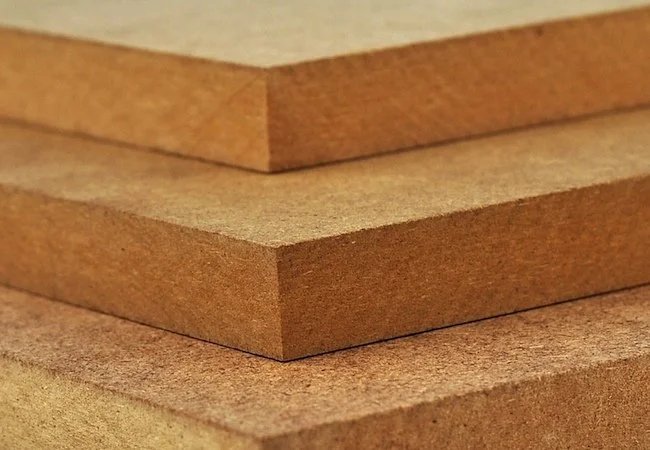
MDF, short for medium-density fiberboard, is one of those building materials that quietly shows up everywhere: cabinet doors, painted shelves, wall paneling, trim, furniture, closet systems, craft projects, and probably at least one thing in your house that you assumed was “wood.” Surprise! It may be MDF wearing a very convincing paint job.
At its simplest, MDF is an engineered wood panel made by breaking wood down into fine fibers, mixing those fibers with resin and wax, and pressing everything into dense, flat sheets under heat and pressure. The result is a smooth, uniform board with no knots, no grain direction, and very little drama. If solid wood is the moody artist of the lumber aisle, MDF is the reliable coworker who labels the files and arrives early.
But MDF is not perfect. It is heavy, it hates water, it creates very fine dust when cut, and it does not hold screws the same way plywood or solid wood does. Still, when used correctly, MDF can be one of the most useful, budget-friendly materials for interior DIY projects. This MDF 101 guide explains what MDF is, how it compares with plywood and particleboard, where it works best, where it absolutely should not go, and how to cut, paint, seal, and live with it without muttering words your neighbors can hear.
What Is MDF?
MDF stands for medium-density fiberboard. It belongs to the family of engineered wood products, which also includes plywood, oriented strand board, hardboard, and particleboard. Unlike plywood, which is made from thin layers of wood veneer, MDF is made from refined wood fibers. Those fibers are blended with binders, formed into mats, and compressed into panels.
Because the material is made from tiny wood fibers rather than visible chips or wood layers, MDF has a very consistent structure. It cuts cleanly, machines well, and has a smooth face that accepts paint beautifully. That is why MDF is so common in painted cabinetry, built-ins, baseboards, crown molding, decorative wall panels, and furniture components.
MDF is not fake wood in the “plastic pretending to be oak” sense. It is wood-based, but it has been processed into a new form. Think of it as the smoothie version of lumber: the original ingredients are still there, but the texture and behavior are completely different.
How MDF Is Made
The MDF manufacturing process starts with wood residuals, such as chips, shavings, and fibers from hardwoods and softwoods. These raw materials are cleaned, softened, and mechanically refined into a fluffy fiber mass. The fibers are then mixed with resin and wax. Resin helps bond the board together, while wax improves water resistance slightly and helps the panel release during manufacturing.
Next, the fiber mixture is spread into a thick mat and compressed under high heat and pressure. This process creates dense, flat panels that can be sanded, cut, routed, laminated, veneered, or primed. The finished sheets are commonly sold in 4-by-8-foot panels, although trim boards, shelving panels, pre-primed boards, and specialty thicknesses are also widely available.
The “medium-density” part of the name separates MDF from lower-density fiberboard and high-density fiberboard. MDF is dense enough to be strong and smooth, but not as hard as some high-density panels. For most home projects, that middle-ground density is exactly why people reach for it.
Why MDF Is So Popular
MDF has earned its place in workshops and job sites because it solves several common problems at once. It is generally more affordable than high-grade plywood or solid hardwood. It is flat and predictable. It does not have knots, voids, twisting grain, or random weak spots. When you want a painted surface that looks sleek and modern, MDF is hard to beat.
1. MDF Has a Smooth Surface
The face of MDF is famously smooth. Paint sits evenly on it, and the finished result can look clean, professional, and expensive. This makes MDF a favorite for painted cabinet doors, furniture panels, closet systems, and trim.
2. MDF Is Easy to Machine
Because MDF has no grain direction, it can be cut, routed, drilled, and shaped without the tear-out that often happens with solid wood. Routed profiles come out crisp, and curves are easier to manage. That is one reason MDF is commonly used for decorative molding, speaker boxes, templates, jigs, and CNC projects.
3. MDF Is Budget-Friendly
Compared with furniture-grade plywood or solid hardwood, MDF is usually easier on the wallet. For large painted projects, that cost difference can matter. A built-in bookcase, media wall, or long run of painted shelving can quickly become expensive if every component is hardwood.
4. MDF Is Dimensionally Stable Indoors
Solid wood expands and contracts across the grain as humidity changes. MDF is more uniform, so it is less likely to warp, cup, or twist in normal interior conditions. This stability is valuable for painted panels and cabinet doors where seasonal movement can crack paint lines.
Common Uses for MDF
MDF is best for indoor projects where the surface will be painted, laminated, or veneered and where the material will not be exposed to standing water or heavy abuse. Used in the right place, it performs like a quiet champion. Used in the wrong place, it swells like a sponge with a gym membership.
Painted Cabinets and Cabinet Doors
MDF is widely used for painted cabinet doors because it does not have visible wood grain that can telegraph through the finish. Shaker-style doors, slab doors, and routed decorative profiles often use MDF panels or full MDF construction.
Built-In Shelving
MDF can work well for painted built-ins, bookcases, and display shelves. However, long shelves need support because MDF can sag under heavy loads. A front edge made from solid wood, thicker material, or a hidden support can make a big difference.
Interior Trim and Molding
Pre-primed MDF baseboards, casing, and crown molding are common because they are smooth, straight, and ready for paint. They are especially useful for long walls where solid wood trim might have more variation.
Wall Paneling and Accent Walls
Board-and-batten walls, picture-frame molding, wainscoting, and modern geometric accent walls often use MDF strips. The material cuts cleanly, paints well, and keeps the budget from bursting into flames.
Furniture and DIY Projects
MDF is often used for desks, storage benches, craft tables, closet organizers, toy shelves, and shop fixtures. It is also excellent for templates, router jigs, and workbench accessories because it is flat and inexpensive.
MDF vs. Plywood vs. Particleboard vs. Solid Wood
Choosing between MDF, plywood, particleboard, and solid wood depends on the project. None of these materials is automatically “best.” They are tools, not personality tests.
MDF vs. Plywood
Plywood is made from layers of wood veneer glued together with alternating grain directions. It is usually stronger, lighter, and better at holding screws than MDF. It also handles moisture better, although standard plywood is not waterproof unless specifically rated for exterior or marine use.
MDF has the smoother surface for painting and is often less expensive than high-quality plywood. It is great for painted doors, panels, trim, and decorative projects. But for structural cabinet boxes, long unsupported shelves, garage storage, or damp areas, plywood is often the better choice.
MDF vs. Particleboard
Particleboard is made from larger wood chips and particles. It is usually cheaper than MDF but less dense and not as smooth. It is common in budget furniture and laminate-covered cabinet boxes.
MDF is generally denser, smoother, and better for machining and painting. If you are choosing a material for a painted visible surface, MDF usually wins. If you are choosing purely on cost for a hidden laminated panel, particleboard may be acceptable.
MDF vs. Solid Wood
Solid wood is strong, repairable, beautiful, and suitable for staining. It can last for generations when properly built and maintained. It also moves with humidity, can warp, and costs more.
MDF is more stable for painted panels and usually cheaper, but it cannot be sanded and refinished like solid wood. Once MDF is badly swollen, crushed, or delaminated, repair options are limited. For tabletops, chairs, heirloom furniture, and surfaces that take daily punishment, solid wood is still the heavyweight champ.
Pros of MDF
- Smooth surface: Excellent for painted finishes.
- No knots or grain: Easy to cut, rout, and shape consistently.
- Affordable: Often less expensive than plywood or hardwood.
- Stable indoors: Less likely to warp or twist in normal interior conditions.
- Good for profiles: Routed edges and decorative shapes come out clean.
- Widely available: Sold as panels, boards, trim, shelving, and pre-primed products.
Cons of MDF
- Poor moisture resistance: Standard MDF can swell badly if exposed to water.
- Heavy weight: Full sheets are awkward and can be back-unfriendly.
- Dusty cutting: Sawing and sanding create very fine dust.
- Weaker screw holding: Screws can strip or split edges if installed carelessly.
- Can sag: Long shelves need support.
- Hard to repair after water damage: Swollen MDF rarely returns to its original shape.
Is MDF Waterproof?
Standard MDF is not waterproof. In fact, water is MDF’s arch-nemesis. If raw MDF absorbs moisture, especially through cut edges, it can swell, puff, bubble, and lose strength. Once that happens, it usually cannot be restored perfectly.
There are moisture-resistant MDF products, often labeled MR MDF, that perform better in humid interior areas. However, moisture-resistant does not mean waterproof. For bathrooms, laundry rooms, kitchens, mudrooms, basements, and window areas, MDF must be sealed carefully, and in some cases PVC trim, plywood, solid wood, or cement-based products may be smarter choices.
If you use MDF near potential moisture, seal every face and edge, including nail holes and cut ends. Paint is not just decoration here; it is armor.
Is MDF Safe?
MDF can be used safely, but it deserves respect. The two main concerns are wood dust and formaldehyde emissions.
Wood Dust
Cutting, routing, or sanding MDF creates a large amount of fine dust. This dust can irritate the eyes, nose, throat, skin, and lungs. Always cut MDF in a well-ventilated area, use dust collection when possible, and wear a properly fitted respirator or dust mask rated for fine particles. Safety glasses are also a good idea unless you enjoy blinking sawdust confetti.
Formaldehyde
Some composite wood products, including MDF, use resin systems that may emit formaldehyde. In the United States, composite wood products must meet EPA TSCA Title VI formaldehyde emission standards and be labeled as compliant. When buying MDF, look for products marked TSCA Title VI compliant, CARB Phase 2 compliant, no-added-formaldehyde, or ultra-low-emitting-formaldehyde when those features matter for your project.
For most homeowners, the practical takeaway is simple: buy compliant products, work with good ventilation, control dust, and seal finished surfaces. If you are building for a nursery, bedroom, or sensitive household member, consider low-emission panels and finishes.
How to Cut MDF Cleanly
MDF cuts well, but clean results depend on the right tools and setup. Use a sharp carbide-tipped blade with a high tooth count for smooth cuts. Support full sheets properly so the panel does not sag or pinch the blade. If using a circular saw, a straightedge guide helps keep long cuts accurate.
For the cleanest edges, score the cut line first or use painter’s tape along the cut path. A table saw, track saw, or circular saw with a guide can all work. The biggest issue is not splintering, because MDF has no grain; it is dust. Hook up a shop vacuum or dust extractor, and do not cut MDF in the living room unless you want your sofa to look like it survived a bakery explosion.
How to Fasten MDF
MDF holds fasteners differently than plywood or solid wood. Screws driven into the face usually hold better than screws driven into the edge. Edges can split or crumble if you skip preparation.
For better results, drill pilot holes, use coarse-thread screws, avoid over-tightening, and keep screws away from edges. Confirmat screws, pocket screws, and specialty MDF fasteners can work well when used correctly. Glue also bonds MDF effectively, especially on face-to-face joints. For trim, finish nails or brad nails are common, but be careful near edges and corners.
How to Paint MDF Like a Pro
Painting MDF is where the material shines, but preparation matters. The flat faces are smooth; the edges are thirsty little monsters. If you paint raw MDF edges without sealing them, they may absorb primer unevenly and look fuzzy.
Step 1: Sand Lightly
Sand the surface with fine-grit sandpaper, usually around 180 to 220 grit. Do not go wild. You are smoothing the surface, not excavating a canoe.
Step 2: Seal the Edges
Use sanding sealer, shellac-based primer, oil-based primer, or a suitable filler on cut edges. Some DIYers use thinned wood glue or drywall compound for edges, then sand smooth after drying. The goal is to stop the edges from drinking paint like iced tea in July.
Step 3: Prime Properly
Use a primer that is compatible with MDF. Water-based primers can work on sealed surfaces, but they may raise fibers on raw edges. Shellac-based or oil-based primers are often used when a very smooth finish is needed.
Step 4: Sand Between Coats
After priming, sand lightly to remove raised fibers or brush marks. Wipe away dust thoroughly before painting.
Step 5: Apply Paint
Use a high-quality latex, acrylic, alkyd, or enamel paint depending on the project. A foam roller, fine-bristle brush, or sprayer can create a smooth finish. For cabinets and furniture, choose a durable paint designed for trim or cabinetry.
Best Projects for MDF
MDF is a great choice for:
- Painted cabinet doors
- Interior trim and molding
- Built-in bookcases
- Closet systems
- Decorative wall paneling
- Craft projects
- Router templates and jigs
- Painted furniture panels
- Speaker boxes
- Shop storage and workbench accessories
Projects Where MDF Is a Bad Idea
Avoid standard MDF for:
- Outdoor projects
- Wet bathroom areas
- Shower surrounds
- Unsealed kitchen sink cabinets
- Garage shelving for very heavy loads
- Structural framing
- High-impact furniture
- Tabletops exposed to spills and heat
- Areas where fasteners carry major weight
In these situations, plywood, solid wood, PVC trim, exterior-rated products, or other moisture-resistant materials may be better.
How to Buy MDF
When shopping for MDF, consider thickness, grade, surface condition, moisture exposure, and whether the panel is raw or pre-primed. Common panel thicknesses include 1/4 inch, 1/2 inch, 5/8 inch, and 3/4 inch, though availability varies by store and region. Thicker panels are stronger and resist sagging better, but they are also heavier.
For trim and wall projects, pre-primed MDF boards save time. For cabinet doors or custom furniture, raw MDF panels may be more flexible. For kitchens, bathrooms, and laundry rooms, look for moisture-resistant MDF or choose a different material entirely if direct water exposure is likely.
Check panels before buying. Look for damaged corners, swollen edges, dents, and deep scratches. MDF’s smooth surface is one of its biggest benefits, so do not pay full price for a sheet that already looks like it lost a fight with a forklift.
Practical Tips for Working With MDF
- Carry full sheets with help; MDF is heavy and floppy.
- Use sharp blades and bits to reduce burning and rough edges.
- Wear respiratory protection when cutting or sanding.
- Seal all exposed edges before painting.
- Use pilot holes for screws.
- Add support under long shelves.
- Keep MDF away from standing water.
- Store panels flat in a dry area.
- Vacuum dust instead of sweeping it into the air.
- Use low-emission products for indoor furniture when possible.
of Real-World Experience: What MDF Teaches You After the First Project
The first time you work with MDF, it may feel like you have discovered a cheat code. The saw glides through it. The edges look clean. There are no knots to dodge and no grain direction to argue with. You measure, cut, dry-fit, and suddenly your project looks suspiciously professional. This is usually the moment a DIYer thinks, “Why doesn’t everyone use this stuff for everything?” Then the dust cloud arrives, and MDF politely introduces the fine print.
The biggest experience lesson is dust control. MDF dust is not like a few wood shavings from pine. It is powdery, clingy, and everywhere. Cut one sheet without a vacuum and the garage will look like a powdered donut crime scene. The smart move is to cut outdoors or near a dust extractor, wear a respirator, and vacuum frequently. Sweeping just launches the dust back into the air, where it waits for your lungs like an uninvited guest.
The second lesson is that edges matter more than faces. The broad surface of MDF paints beautifully, but cut edges can turn fuzzy and uneven if ignored. On a bookcase or cabinet door, that difference can make the project look homemade in the bad way. Sealing the edges with primer, sanding sealer, shellac, or filler is the difference between “custom built-in” and “weekend panic project.” A little extra prep here pays off every time.
The third lesson is to respect weight and sag. MDF feels solid because it is dense, but a long unsupported shelf can bow under books, tools, or storage bins. A front nosing strip, center divider, thicker panel, or hidden support rail can prevent disappointment. If the shelf will hold heavy objects, design the support before the paint goes on, not after it starts smiling downward.
The fourth lesson is moisture paranoia. MDF can survive normal indoor humidity, but raw edges near water are a gamble. Around sinks, windows, exterior doors, laundry rooms, or bathrooms, sealing is not optional. Even then, standard MDF is not the hero for every wet location. Sometimes the best MDF decision is choosing plywood or PVC instead.
The final lesson is that MDF rewards planning. It is excellent for painted finishes, flat panels, trim, templates, and clean modern designs. It is less excellent when you expect it to behave like hardwood, hold screws forever at thin edges, or shrug off spills. Use it for the right project, protect it from its enemies, and MDF becomes one of the most practical materials in the shop. Treat it like waterproof oak, and it will humble you faster than a misread tape measure.
Conclusion: So, Should You Use MDF?
MDF is a smart, affordable, and versatile engineered wood product for interior projects that need a smooth painted finish. It is especially useful for cabinets, trim, built-ins, accent walls, shelving, furniture panels, and workshop templates. Its biggest strengths are surface quality, stability, machinability, and cost. Its biggest weaknesses are moisture sensitivity, weight, dust, limited screw-holding strength, and poor repairability after damage.
The best way to think about MDF is this: it is not a cheaper version of solid wood, and it is not a miracle board. It is its own material. When you choose it for painted indoor projects and take time to seal, support, and finish it properly, MDF can look fantastic and last for years. When you put it outside, soak it, overload it, or skip dust protection, it will remind you that every building material has boundaries.
For DIYers, homeowners, and weekend woodworkers, MDF deserves a place in the material lineup. Just give it dry conditions, sharp tools, sealed edges, good paint, and a dust mask. MDF will handle the rest without complaintmostly because it has no grain and therefore no attitude.
Note: This article is for general home-improvement education. Always follow product labels, tool manuals, dust-control practices, and local building requirements for your specific project.