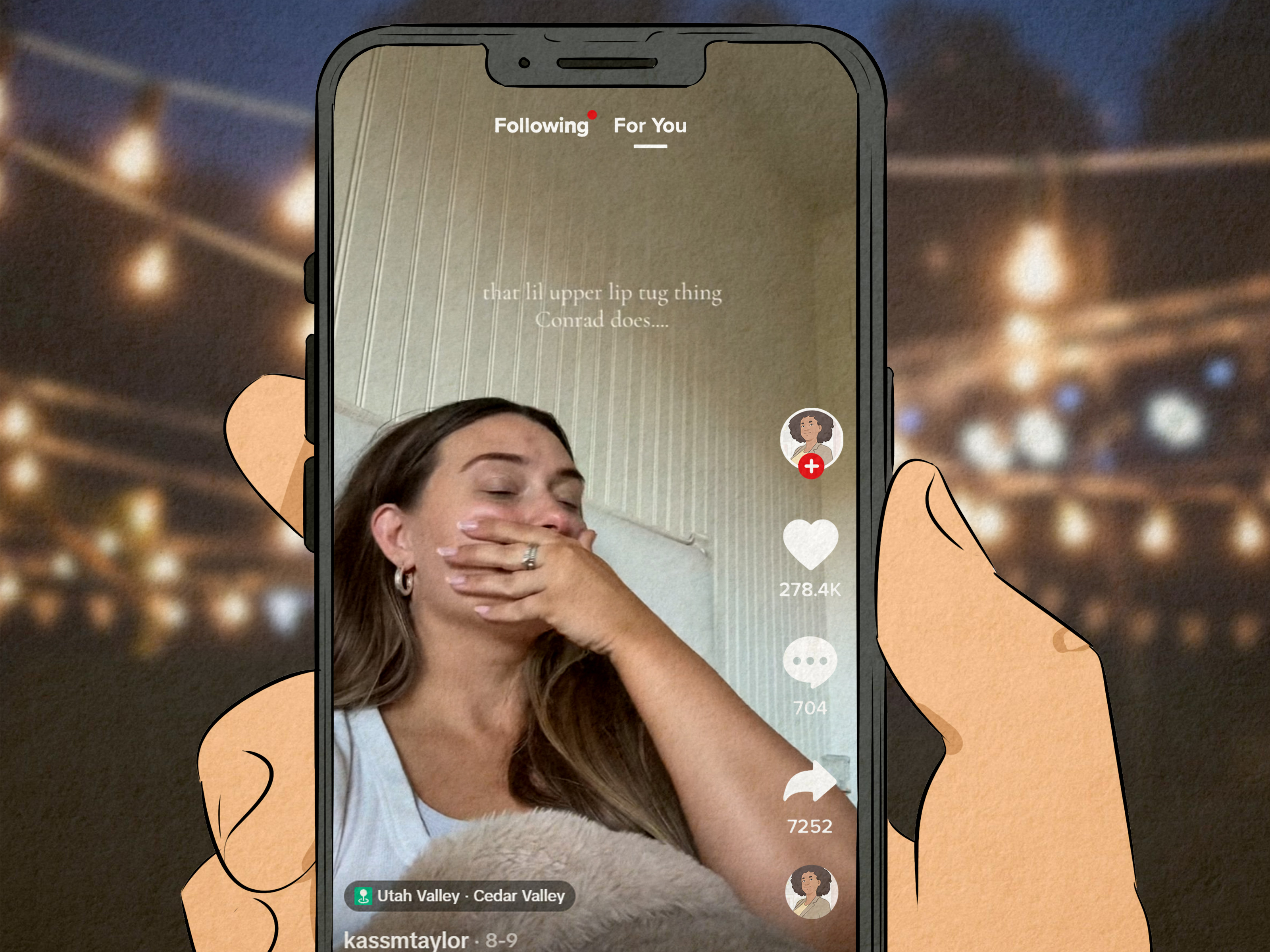
Note: TikTok users sometimes use “the bottom lip thing” to describe different facial gestures. In most discussions of the viral trend, however, they are referring to bottom-teeth talkingthe way a person’s lower teeth and lower lip become more visible while speaking.
You open TikTok for a harmless five-minute break. Three videos later, strangers are analyzing how their teeth appear when they pronounce ordinary words. Suddenly, you are standing in front of the bathroom mirror saying, “Where did you put my coffee?” while studying your lower lip like it has been withholding classified information.
Welcome to the bottom lip thing on TikTok, more commonly known as the top teeth versus bottom teeth talker trend. The trend asks users to observe which row of teeth is more visible when they speak or lip-sync. Some people naturally show mostly their upper teeth. Others reveal more of their lower teeth. A third group shows both and gets placed in the delightfully noncommittal “middle teeth talker” category.
Despite the dramatic reactions in comment sections, the trend is not a medical test, personality quiz, aging calculator, or secret measurement of attractiveness. It is mainly a playful observation about facial movement that TikTok transformed into a beauty debatebecause apparently eyebrows, jawlines, and hair parts were no longer keeping the internet busy enough.
What Does the Bottom Lip Thing on TikTok Mean?
When people mention the bottom lip thing, they usually mean that a person’s lower lip moves prominently or their bottom teeth remain visible while they talk. TikTok creators often call this person a bottom teeth talker.
The basic categories are simple:
- Top teeth talker: The upper front teeth are more visible during speech.
- Bottom teeth talker: The lower front teeth are more visible.
- Middle teeth talker: Both rows appear with roughly equal prominence.
These labels describe appearance, not ability. A bottom teeth talker does not necessarily speak differently, sound different, or have a dental problem. The label merely describes what a camera captures while that person’s lips, jaw, and facial muscles produce speech.
The phrase “bottom lip thing” may also refer to lip biting, tucking the lower lip inward, pushing it forward in a pout, or moving it sideways. Those gestures are separate from the teeth-talker trend. Context matters: a video comparing upper and lower teeth is discussing tooth display, while a skit featuring a dramatic pout may simply be using facial expression for comedy.
Where Did the TikTok Trend Come From?
Videos comparing top and bottom teeth had circulated for years, but the conversation gained major attention again in 2024. Clips of actress Megan Fox speaking on a podcast inspired users to notice that her lower teeth were often more visible than her upper teeth.
Creators began copying her relaxed mouth position, subtle head movements, and lower-teeth-forward style of speaking. Other users recorded themselves lip-syncing to Daya’s “Hide Away,” using the familiar audio as a consistent test. The idea was that everyone could mouth the same words and compare which teeth appeared most often.
That format was perfect for TikTok. It required no special equipment, took only a few seconds, invited comments, and encouraged viewers to immediately try it themselves. One person posted a result, friends debated the result, and dozens of viewers opened their front-facing cameras to conduct highly unofficial dental research.
Why Megan Fox Became Part of the Conversation
Megan Fox did not invent bottom-teeth talking. She simply became a recognizable example at the right moment. Because celebrities are recorded from countless angles, viewers can repeatedly study their expressions and turn ordinary mannerisms into identifiable “looks.”
Some creators attempted to imitate Fox’s speech pattern because they associated it with a calm, confident, or slightly mysterious presence. Others argued that upper-teeth talking looked more youthful or conventionally friendly. The preferences changed depending on the video, proving that TikTok beauty rules can reverse direction faster than someone switching cameras after accidentally opening the front-facing lens.
How to Tell Whether You Are a Top or Bottom Teeth Talker
You do not need a filter, quiz, ruler, or consultation with a committee of influencers. You only need a camera and a sentence long enough to produce natural mouth movement.
Use Your Normal Speaking Voice
Record yourself describing your day for about 20 seconds. Do not exaggerate your smile, clench your jaw, or intentionally expose either row of teeth. Watch the video without sound and notice which teeth appear most consistently.
Try More Than One Sentence
Different speech sounds change the position of the lips and jaw. A single word may make you look like a top teeth talker even when your lower teeth are usually more visible. Record several sentences before declaring yourself the emperor of Lower-Tooth Island.
Compare Speaking With Smiling
A deliberate smile generally raises the corners of the mouth and may reveal more upper teeth. A neutral or deadpan expression can make the lower teeth appear more prominent. This is why lip-sync tests may produce misleading results when one person smiles enthusiastically and another performs the same audio like a detective questioning a suspicious sandwich.
Check the Camera Position
A phone held below the face emphasizes the lower jaw and bottom teeth. A higher angle may make the upper teeth easier to see. For a fair comparison, place the camera at eye level, use ordinary lighting, and avoid beauty filters that reshape the lips or jaw.
Why Do Some People Show More Bottom Teeth?
Visible tooth display is influenced by several ordinary anatomical and behavioral factors. It is not controlled by one mysterious “bottom lip gene,” and it cannot be accurately explained by a five-second TikTok clip.
Lip Length and Mobility
A shorter or more mobile upper lip may expose more of the upper front teeth. A longer or less elevated upper lip can cover more of those teeth, allowing the lower teeth to become more noticeable. The lower lip also varies in thickness, resting position, and movement.
Jaw and Bite Relationships
The position of the upper and lower jaws affects how the teeth sit behind the lips. Overbites, underbites, tooth alignment, and the natural angle of the front teeth can all influence what becomes visible during speech.
This does not mean that being a bottom teeth talker automatically indicates an underbite or another dental condition. People with healthy, well-aligned teeth can display either row more prominently.
Speech Patterns
Speaking involves coordinated movement of the lips, tongue, jaw, teeth, and soft palate. Certain sounds require the lips to come together, spread apart, or move around the teeth. Accent, speaking speed, emotional tone, and emphasis can therefore change tooth visibility from one sentence to another.
Facial Expression
A relaxed face often produces a different result from an animated face. Smiling, laughing, raising the cheeks, or widening the mouth can reveal more upper teeth. Speaking with a restrained expression may emphasize the lower teeth and lower lip.
Age-Related Changes
Dental research has found general age-related patterns in tooth display. As people age, the upper lip may lengthen, upper-incisor exposure may decrease, and lower-incisor exposure may become more noticeable.
However, this is a population-level pattern, not a reliable method of guessing an individual’s age. A young adult may naturally show mostly bottom teeth, while an older adult may show plenty of upper teeth. Genetics, facial structure, dental treatment, expression, and camera angle all matter.
Does Bottom-Teeth Talking Make Someone Look Older?
This is where a harmless observation became another TikTok beauty standard. Some videos claim that showing upper teeth makes a person look younger, while showing lower teeth creates an older appearance.
There is a small piece of anatomy behind the discussion: upper-tooth display often decreases gradually with age. But TikTok tends to transform “one measurable tendency across groups” into “a universal rule that determines whether your face is acceptable.” Those are not the same thing.
Viewers judge a face using many features at once, including expression, skin, lighting, posture, voice, hairstyle, and emotional energy. Tooth visibility is only one small element. A warm bottom-teeth talker may appear younger than a tense top-teeth talker simply because facial attractiveness is not a spreadsheet with one winning cell.
There is also no stable agreement about which style is more attractive. During earlier versions of the trend, some users praised lower-tooth visibility. Later videos favored upper-teeth talking. The preferred answer changed while everyone’s natural anatomy remained exactly where it had been.
Can You Change From a Bottom Teeth Talker to a Top Teeth Talker?
People can temporarily change how their mouth looks by smiling, lifting the upper lip, altering jaw position, speaking through a different mouth shape, or adjusting the camera angle. Actors and public speakers may intentionally practice facial presentation, but forcing a new posture during every conversation can look unnatural and feel tiring.
You should not seek dental or cosmetic treatment solely because a TikTok video assigned you to the “wrong” category. Veneers, orthodontics, injectables, lip procedures, and other treatments have costs, limitations, and potential risks. Veneers, for example, may require permanent removal of some natural enamel and can eventually chip, loosen, or need replacement.
Dental treatment should address an actual health concern or a carefully considered personal goalnot a beauty ranking that may disappear before your next appointment reminder arrives.
Why Small Facial Trends Become So Addictive
The bottom lip trend succeeds because it reveals something people have rarely noticed about themselves. Once someone asks, “Which teeth do you show?” it becomes difficult not to check.
TikTok’s recommendation system learns from interactions such as watch time, likes, shares, comments, and searches. Watching several teeth-talker videos can lead to more videos about smiles, lips, facial harmony, jawlines, and cosmetic dentistry. A tiny curiosity may quickly feel like a worldwide emergency because the feed repeatedly presents similar content.
The format also encourages social comparison. Users divide themselves into categories, associate one category with celebrities, and debate which version looks better. A neutral physical difference becomes a competition even though nobody agreed to enter one.
Appearance-based comparison can be especially uncomfortable for teenagers and young adults. Professional health guidance recommends being cautious with social media content that encourages constant evaluation of beauty, body shape, or facial features. The problem is not noticing your mouth. The problem begins when that observation becomes a reason to dislike it.
Is the Bottom Lip Thing a Medical Concern?
Usually, no. Showing more lower teeth while speaking is commonly a normal variation in facial anatomy and movement.
A dental or medical evaluation may be reasonable when tooth or lip movement is accompanied by symptoms such as:
- Pain while speaking, chewing, or opening the mouth
- A sudden change in facial symmetry
- New numbness or muscle weakness
- Difficulty producing speech sounds
- Jaw locking, clicking with pain, or limited movement
- A bite that interferes with eating or damages the teeth
A dentist, orthodontist, physician, or speech-language professional can evaluate those concerns. TikTok comments cannot diagnose jaw alignment, nerve function, or speech conditions, even when a commenter has an impressive profile picture and types with tremendous confidence.
Similar TikTok Lip Gestures That People Confuse With the Trend
The Lower-Lip Bite
Some creators lightly bite the bottom lip to communicate nervousness, flirtation, concentration, or comic discomfort. It is an expression rather than a classification based on tooth visibility.
The Lip Tuck
A lip tuck occurs when someone pulls one or both lips inward over the teeth. People may do it while thinking, holding back laughter, reacting awkwardly, or preparing to apply lip products.
The Exaggerated Pout
Pushing the lower lip forward creates an intentionally sad, cute, or disappointed expression. It is the grown-up internet cousin of the face children make after being told that cookies do not count as dinner.
Overlining the Lower Lip
Makeup creators sometimes draw slightly outside the natural lower-lip border to create a fuller appearance. This is a cosmetic technique and has nothing to do with whether the upper or lower teeth show during speech.
How to Join the Trend Without Creating a New Insecurity
Treat the bottom lip thing as a funny observation, not a verdict. Record a clip, identify your likely category, share it with friends if that sounds entertaining, and then continue using your mouth for its traditional responsibilities: talking, smiling, eating snacks, and asking why the Wi-Fi stopped working.
Avoid repeatedly recording yourself in search of a “better” result. Do not compare a casual phone video with professionally lit celebrity footage. Remember that creators may use filters, makeup, dental work, editing, or carefully selected angles.
If the trend starts making you feel embarrassed about speaking or smiling, move away from that content. TikTok allows users to mark videos as “Not Interested,” adjust content preferences, or refresh recommendations. Your feed should not function like a tiny critic living inside your phone.
What People Commonly Experience When Trying the Bottom Lip Trend
The most common experience begins with complete confidence. A person assumes they are a top teeth talker because upper teeth seem like the obvious teeth to display. They press record, speak naturally, replay the video, and discover that their lower teeth have been quietly starring in every conversation for years.
The next stage is experimentation. The person records another video while smiling. This time, the upper teeth appear. Then they try a serious expression and become a bottom teeth talker again. After several attempts, they realize that facial movement is dynamic and the categories are less permanent than TikTok makes them sound.
Friends often produce different answers. One friend may insist that the person is a middle teeth talker. Another focuses entirely on the fact that the camera angle is terrible. A third announces that everyone involved needs a hobby. Ironically, that third friend will probably record the test later in private.
Some users notice that they speak differently when they know they are being recorded. They slow down, smile too much, tighten their jaw, or pronounce every word as though auditioning to narrate a documentary. Their test therefore measures “how I talk while intensely thinking about my teeth” rather than normal speech.
A more useful experience comes from comparing several situations. In a planned selfie video, someone may show mostly upper teeth because they are smiling toward the lens. In a candid video, the same person may show more lower teeth because their face is relaxed. During laughter, both rows may appear. The result changes with mood, posture, speech sounds, and camera placement.
Another common reaction is temporary hyper-awareness. After learning about the trend, people begin watching everyone’s mouth: friends, teachers, actors, news anchors, cashiers, and the person explaining why the restaurant is out of fries. This usually fades once the novelty wears off.
For some viewers, however, the trend becomes uncomfortable. They may decide that their natural speech looks unattractive and begin holding their mouth differently. The forced posture can feel stiff and distract them from conversation. Their attention shifts from what they are saying to how each syllable looks.
The healthier approach is to use the experience as evidence of how easily social media can manufacture a concern. Before seeing the trend, most people had never categorized speakers by visible teeth. Their faces had not changed; only the standard had appeared.
Many participants eventually reach the funniest and most accurate conclusion: their category depends on the moment. They may be a bottom teeth talker during relaxed conversation, a top teeth talker while smiling, and a no-teeth talker while trying not to reveal that they forgot someone’s name.
The trend can therefore be enjoyable when it encourages curiosity rather than criticism. It shows that speech involves countless small movements we rarely notice. It also demonstrates that natural faces are mobile, variable, and difficult to squeeze into three internet-approved boxes.
Final Takeaway
The bottom lip thing on TikTok usually refers to the top-versus-bottom-teeth talker trend. Bottom teeth talkers reveal more of their lower teeth during speech, while top teeth talkers show more upper teeth. The difference can be influenced by lip length, facial anatomy, bite, expression, speech sounds, age, and camera angle.
It does not reveal personality, determine beauty, or automatically indicate a dental problem. Although research has identified general age-related patterns in tooth display, an individual TikTok clip cannot tell you whether someone is young, old, attractive, healthy, or secretly qualified to review lip posture.
Try the trend for fun, laugh at the result, and resist turning an ordinary facial variation into a repair project. Your natural way of speaking has already survived every conversation you had before TikTok pointed a magnifying glass at it.