Note: This article is written for web publishing in standard American English and is based on current U.S. automotive maintenance guidance, motor oil standards, and real-world car-care best practices. No source links are inserted, per request.
Choosing the best oil for your car sounds simple until you walk into an auto parts store and face a wall of bottles shouting things like 0W-20, 5W-30, full synthetic, high mileage, API SQ, and turbo protection. Suddenly, buying motor oil feels less like routine maintenance and more like decoding a secret message from a very greasy wizard.
The good news? You do not need to become a mechanic, chemist, or person who says “viscosity” at parties to choose the right engine oil. The best oil for your car is the one that matches your vehicle manufacturer’s requirements, your driving conditions, your engine’s age, and your budget. In most cases, the answer is hiding in your owner’s manual, on your oil cap, or in your vehicle maintenance app. The trick is knowing how to read the clues.
This ultimate guide breaks down motor oil types, oil grades, synthetic vs. conventional oil, high-mileage formulas, climate considerations, and the most common mistakes drivers make. By the end, you will know what to pour into your engineand what to leave on the shelf looking dramatic.
The Best Oil for Your Car Starts With the Owner’s Manual
Before choosing a brand, bottle color, or oil that promises to make your engine feel twenty-one again, check your owner’s manual. Your car’s manufacturer designed and tested the engine around specific oil requirements. That includes the oil viscosity grade, performance standard, and sometimes a manufacturer-specific certification.
Your manual may say something like SAE 0W-20 full synthetic, SAE 5W-30 meeting API SQ or ILSAC GF-7, or a brand-neutral specification such as GM dexos, Ford WSS, VW 508.00, or Mercedes-Benz 229.5. Those letters and numbers are not decoration. They are the engine’s grocery list.
If the manual specifies an oil grade and certification, follow it. If it gives a range based on temperature, choose the grade that fits your climate. If you are still unsure, a dealership parts department, reputable repair shop, or major oil selector tool can confirm the right match using your year, make, model, and engine.
What Do Oil Numbers Like 0W-20 and 5W-30 Mean?
Motor oil viscosity is a measure of how easily oil flows. A lower-viscosity oil flows more easily; a higher-viscosity oil is thicker. The numbers on the bottle describe how the oil behaves when cold and when hot.
The First Number and the “W”
In 0W-20, the 0W describes cold-temperature performance. The “W” stands for winter, not weight. A lower number before the W means the oil flows better during cold starts. That matters because most engine wear happens when you start the car and the oil has not fully circulated yet. In cold weather, thinner cold-start oil reaches critical parts faster, which is exactly what your engine wants before it has had its morning coffee.
The Second Number
The second number, such as 20, 30, or 40, describes viscosity at operating temperature. A 5W-30 oil is thicker at high temperature than a 5W-20 oil. That does not automatically mean it is “better.” Modern engines are built with tight tolerances, variable valve timing, turbochargers, and fuel-efficiency targets. Using oil that is too thick can reduce efficiency and may interfere with oil flow in systems designed for a thinner grade.
Common modern grades include 0W-16, 0W-20, 5W-20, and 5W-30. Older vehicles may call for 10W-30 or 10W-40. Performance, diesel, European, or heavy-duty engines may require other grades and certifications. Again, the manual wins the argument. The oil shelf may be loud, but the manual is the judge.
Motor Oil Types: Conventional, Synthetic Blend, Full Synthetic, and High Mileage
Once you know the correct viscosity, the next decision is oil type. Motor oils generally fall into four categories: conventional, synthetic blend, full synthetic, and high mileage. Each has a job, and each makes sense for different vehicles.
Conventional Oil
Conventional oil is refined from crude oil and enhanced with additives. It is usually the least expensive option and can work well in older vehicles that were designed for it. However, many newer cars require synthetic oil because modern engines run hotter, use tighter internal clearances, and often rely on turbocharging or advanced timing systems.
If your vehicle manual allows conventional oil, and you drive under normal conditions, it can be a reasonable choice. But if your car requires synthetic, do not try to save a few dollars by downgrading. Engines are much more expensive than oil changes, and they hold grudges.
Synthetic Blend Oil
Synthetic blend oil mixes conventional oil with synthetic base stocks. It generally offers better protection than conventional oil at a lower price than full synthetic. It can be a smart middle-ground option for vehicles that tow, idle often, drive in hot weather, or need a little extra protection without the full synthetic price tag.
Some high-mileage oils are also synthetic blends. If your manual permits it, a synthetic blend can be a practical upgrade for older vehicles or daily drivers that face stop-and-go traffic.
Full Synthetic Oil
Full synthetic oil is engineered for stronger performance under stress. It typically resists breakdown better, flows well in cold temperatures, handles heat more effectively, and helps keep engines cleaner. For many modern vehicles, full synthetic is not a luxury; it is the required oil type.
Full synthetic oil is especially useful for turbocharged engines, high-performance cars, newer vehicles with long oil-change intervals, hybrid vehicles with frequent engine start-stop cycles, and drivers who face extreme heat or cold. Yes, it costs more up front. But because it often lasts longer and protects better under severe conditions, it may save money over time.
High-Mileage Oil
High-mileage oil is typically marketed for vehicles with more than 75,000 miles. It contains additives that can help condition seals, reduce oil consumption, fight sludge, and protect worn engine surfaces. It will not magically turn a tired engine into a showroom hero, but it can help older engines age more gracefully.
If your car has small leaks, burns a little oil, or needs frequent top-offs, high-mileage oil may be worth considering. Choose the correct viscosity and certification first, then look for a high-mileage version if appropriate.
Synthetic vs. Conventional Oil: Which One Is Best?
For most newer cars, full synthetic oil is usually the best choice because many engines are designed for it. It performs better in extreme temperatures, resists oxidation, and provides strong protection during demanding driving. If your vehicle specifically requires synthetic oil, use synthetic oil. This is not the place to get creative.
For older vehicles, the answer depends on the engine and the manual. If the vehicle has always used conventional oil and the manufacturer allows it, conventional can still be acceptable. But switching to synthetic is not automatically harmful. The old myth that synthetic oil “ruins” older engines is mostly outdated. What sometimes happens is that synthetic oil’s cleaning ability may reveal existing leaks in old seals that were already tired. The oil did not cause the problem; it simply turned on the lights.
If you own an older vehicle and want to switch, consider a high-mileage synthetic or high-mileage synthetic blend. It offers upgraded protection while including seal conditioners designed for aging engines.
Understanding API, ILSAC, and Manufacturer Certifications
Oil bottles carry certification marks that show the oil meets industry standards. For gasoline engines in the U.S., common standards come from the American Petroleum Institute and ILSAC. Current modern gasoline-engine oils may carry standards such as API SQ and ILSAC GF-7, while many vehicles on the road still reference API SP or ILSAC GF-6.
These standards address more than basic lubrication. They include requirements for engine cleanliness, wear protection, fuel economy, emissions-system compatibility, oxidation resistance, turbocharger protection, timing-chain wear, and low-speed pre-ignition protection. In plain English: the letters on the bottle help prove the oil is not just slippery, but properly engineered.
Look for certification marks such as the API “donut,” the API “starburst,” or the newer API “shield” for certain low-viscosity oils. If your manual calls for a specific manufacturer standard, such as dexos for many General Motors vehicles, make sure the bottle lists that approval. “Seems close enough” is not a maintenance strategy; it is how engines learn sarcasm.
Does Climate Affect the Best Oil for Your Car?
Climate matters, especially when temperatures get extreme. Cold weather makes oil thicker, which can delay lubrication during startup. Hot weather can increase oil stress and oxidation. That is why multi-grade oils exist: they flow well when cold while maintaining protection when hot.
If you live in Minnesota, a 0W oil may help with winter starts if your manual allows it. If you live in Arizona or Texas, high-temperature protection and synthetic stability become more important. However, do not jump to a thicker oil just because it is hot outside. Modern cooling systems and engine designs are built around specific oil flow rates. If your manual recommends 0W-20 year-round, use 0W-20 year-round unless the manual gives an alternate severe-temperature recommendation.
Driving Habits Matter More Than You Think
Your oil does not live the same life in every engine. Highway miles at steady speed are relatively gentle. Short trips, stop-and-go traffic, towing, idling, mountain driving, dusty roads, and extreme temperatures are harder on oil.
Short trips are especially sneaky. If the engine does not reach full operating temperature, moisture and fuel dilution can build up in the oil. Your odometer may say you barely drove, but your oil may feel like it has been through a tiny automotive obstacle course.
If your driving falls under “severe service,” follow the severe-service maintenance schedule in your manual. That may mean shorter oil-change intervals even with synthetic oil. Delivery driving, rideshare work, repeated short commutes, towing, off-road use, and heavy idling usually count as severe conditions.
How Often Should You Change Your Oil?
The old “every 3,000 miles” rule is no longer universal. Many modern vehicles using synthetic oil can go much farther between oil changes, often somewhere in the 5,000- to 10,000-mile range depending on the vehicle, oil, and driving conditions. Some manufacturers allow even longer intervals under ideal conditions.
But the correct answer is not printed on a sticker from 1998. It is in your owner’s manual and, for many newer vehicles, your oil-life monitoring system. These systems estimate oil life based on driving conditions, engine temperature, mileage, and other factors. When the oil-life monitor says it is time, listen.
Even if you drive very little, oil should still be changed periodically. Time matters because oil can degrade, absorb moisture, and lose effectiveness. Many low-mileage drivers should still change oil at least once a year unless the manual says otherwise.
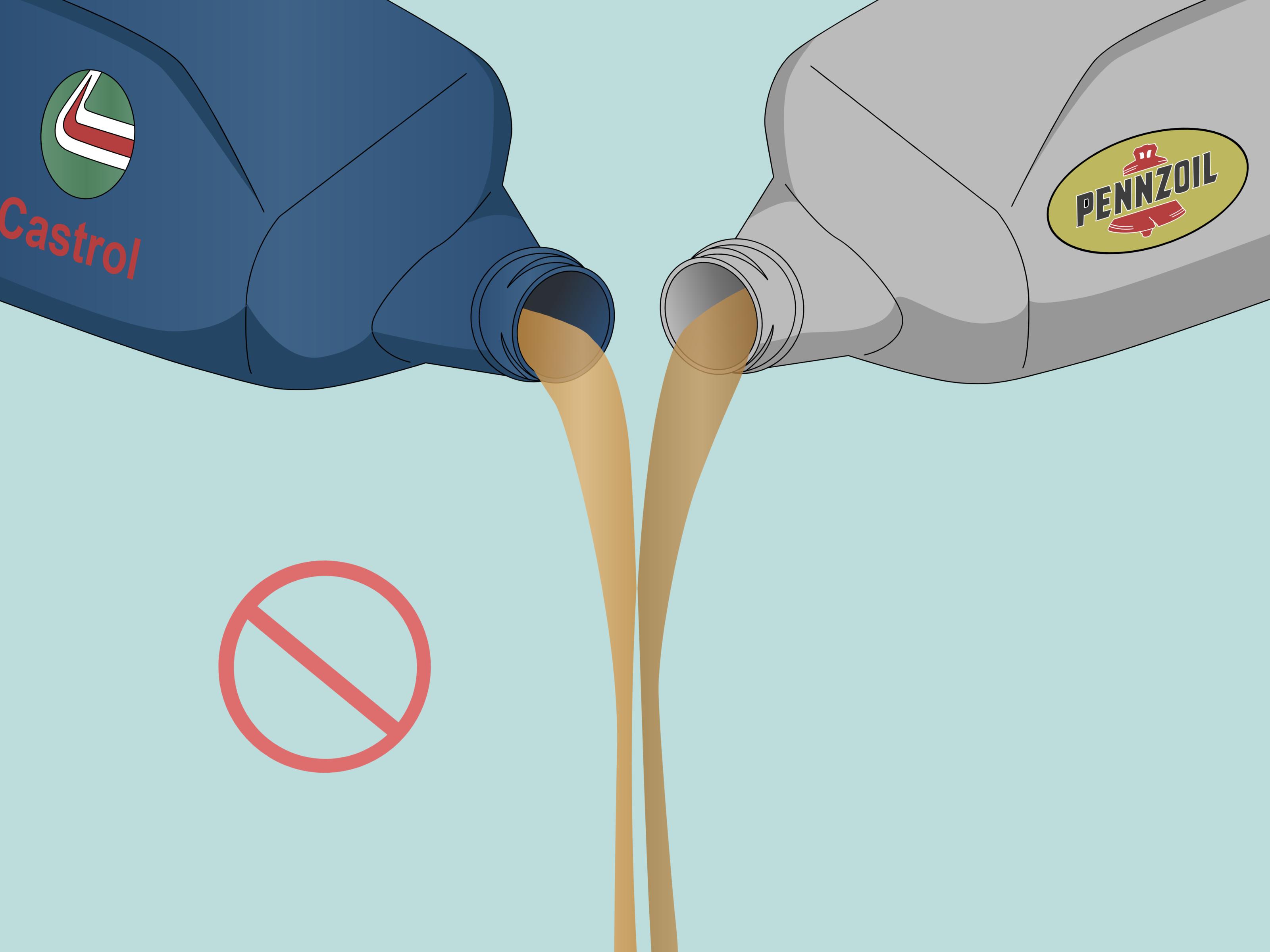
Can You Mix Oil Brands or Types?
In an emergency, topping off with a different brand of the correct viscosity and specification is usually better than driving with low oil. Most modern passenger-car oils are designed to be compatible. However, for best performance, use the same oil type and specification at each oil change.
Do not mix random viscosities unless there is no other safe option. And never use oil that lacks the required certification for your engine. Topping off with half a quart of the right-grade oil is sensible. Playing kitchen scientist with four leftover bottles from your garage is less sensible.
What About Diesel, Hybrid, Turbo, and European Cars?
Diesel Engines
Diesel engines often require diesel-rated oil with standards such as API CK-4 or FA-4, depending on the engine. Diesel oil handles soot, higher compression, and different emissions-system demands. Do not assume gasoline-engine oil is acceptable for a diesel vehicle unless the manual explicitly allows it.
Hybrid Vehicles
Hybrids may start and stop the engine frequently, which makes cold-flow protection important. Many hybrids use low-viscosity synthetic oils such as 0W-16 or 0W-20. Because the engine may run differently than a conventional vehicle, always follow the hybrid-specific oil recommendation.
Turbocharged Engines
Turbochargers generate serious heat. Full synthetic oil is commonly recommended or required because it resists high-temperature breakdown and helps protect turbo bearings. If your car has a small turbo engine, do not cheap out on oil. That turbo spins fast enough to make your blender look lazy.
European Cars
Many European vehicles require oils meeting specific approvals from Volkswagen, BMW, Mercedes-Benz, Porsche, or Audi. The correct viscosity alone is not enough. A 5W-30 oil that works beautifully in one car may be wrong for a European engine requiring a low-ash or long-life specification.
Common Motor Oil Mistakes to Avoid
The first mistake is choosing oil based only on price. Cheap oil that meets your car’s exact requirements may be fine. Expensive oil that does not meet the specification is not fine. Approval matters more than marketing sparkle.
The second mistake is using thicker oil to “protect better.” Thicker oil can sometimes help specific older engines with wear or oil consumption, but it can also reduce flow, hurt fuel economy, and cause issues in modern engines. Never change viscosity without a good reason and professional guidance.
The third mistake is ignoring low oil levels. Even the best oil cannot protect your engine if there is not enough of it. Check your oil regularly, especially before road trips or if your vehicle is known to consume oil between changes.
The fourth mistake is skipping the oil filter. The filter removes contaminants from circulation. A fresh oil change with an old filter is like taking a shower and putting dirty socks back on. Technically possible, emotionally disappointing.
So, What Type of Oil Is Best for My Car?
The best oil for your car is the oil that meets all three requirements below:
- Correct viscosity: Use the SAE grade recommended by your manufacturer, such as 0W-20, 5W-30, or 0W-16.
- Correct certification: Match the API, ILSAC, dexos, European, diesel, or manufacturer-specific approval listed in your manual.
- Correct formulation: Choose conventional, synthetic blend, full synthetic, or high-mileage oil based on what your car requires and how you drive.
For most modern gasoline vehicles, the best answer will be a full synthetic oil in the manufacturer-recommended viscosity with the required certification. For older vehicles, a high-mileage oil may be helpful. For diesel, European, turbocharged, or hybrid vehicles, the exact approval is especially important.
Real-World Examples
Example 1: A Newer Toyota Sedan
A late-model Toyota may require 0W-16 or 0W-20 full synthetic. In this case, using 5W-30 because “it feels stronger” is not a smart upgrade. The engine was designed for low-viscosity oil to support fuel economy, cold starts, and internal oil flow.
Example 2: A 120,000-Mile Honda Civic
If the manual calls for 5W-20 and the engine has minor oil consumption, a 5W-20 high-mileage synthetic blend or full synthetic may be a practical choice. It keeps the correct viscosity while adding seal conditioners and wear-protection additives for an aging engine.
Example 3: A Turbocharged Ford, Hyundai, or Subaru
Turbocharged engines often benefit from full synthetic oil because of high heat. The correct certification is important because modern turbo engines may be vulnerable to low-speed pre-ignition. Use an oil that meets the latest required API or manufacturer standard.
Experience Section: What Drivers Learn After Choosing the Right Oil
One of the most common real-world lessons about motor oil is that small decisions become big habits. Many drivers start paying attention to oil only after a warning light appears, a mechanic mentions sludge, or the engine begins making a noise that sounds like coins in a washing machine. But the drivers who get the longest, calmest life from their cars usually treat oil as routine care, not emergency medicine.
A practical experience many car owners share is the difference between guessing and checking. Someone buys a used SUV, sees 5W-30 on sale, and assumes it is fine because “that is what my old car used.” Later, they discover the engine requires 0W-20 full synthetic with a specific certification. The engine may not explode dramatically like an action movie, but fuel economy can drop, cold starts may be rougher, and long-term wear protection may not match what the engine needs. The lesson is simple: the best oil is not the one your last car liked. Cars are picky. They have preferences. They are basically mechanical house cats.
Another experience comes from high-mileage vehicles. A driver with a 150,000-mile sedan may notice the oil level dropping between changes. Switching to the correct high-mileage oil can sometimes reduce consumption or slow small leaks. It is not a miracle cure for worn piston rings, cracked gaskets, or a neglected engine, but it can help a healthy older engine stay cleaner and more stable. The key is patience. High-mileage oil works over time, not by performing a magic trick in the parking lot.
Drivers in cold climates often learn the value of cold-flow performance. A vehicle that starts easily with the recommended 0W oil may crank more slowly with a thicker cold-weather grade. During winter, oil has to move quickly from the pan to the engine’s moving parts. If it flows like refrigerated honey, your engine has to work harder at the exact moment it needs protection most. That is why modern low-viscosity synthetics are common in newer vehicles.
Hot-climate drivers learn a different lesson. Heat, traffic, towing, and long idling can punish oil. In those conditions, synthetic oil’s resistance to breakdown becomes valuable. A commuter who spends an hour crawling through summer traffic every day may be harder on oil than someone who drives the same mileage on open highways. Mileage alone does not tell the whole story. Your oil does not care that the trip was only five miles if those five miles involved heat, idling, and constant stop-and-go driving.
DIY oil changers also learn to respect the oil filter, drain plug washer, and correct oil capacity. Overfilling oil can create problems, underfilling is worse, and forgetting to tighten the filter properly can turn a simple Saturday project into a driveway crime scene. The best habit is to measure carefully, check for leaks, start the engine, shut it down, wait a few minutes, and recheck the dipstick.
Finally, experienced car owners learn not to be hypnotized by marketing. Premium oil can be excellent, but the front label is less important than the back label. Look for the correct viscosity and approvals. If two oils meet the same required standard, the best choice may come down to price, availability, driving conditions, and trust in the brand. Your engine does not care if the bottle looks heroic. It cares whether the oil meets the spec.
Conclusion
Choosing the best oil for your car is not about finding the fanciest bottle or following advice from someone who once changed oil in 1997 and still talks about it with confidence. It is about matching your engine’s requirements. Start with the owner’s manual, confirm the correct viscosity, choose the required certifications, and then decide whether conventional, synthetic blend, full synthetic, or high-mileage oil fits your vehicle and driving style.
For most modern cars, full synthetic oil in the manufacturer-recommended grade is the safest and smartest option. For older cars, high-mileage formulas can help. For diesel, turbocharged, hybrid, and European vehicles, exact specifications matter even more. Treat oil as cheap insurance for an expensive engine, and your car will reward you with smoother starts, cleaner operation, and fewer dramatic dashboard lights.