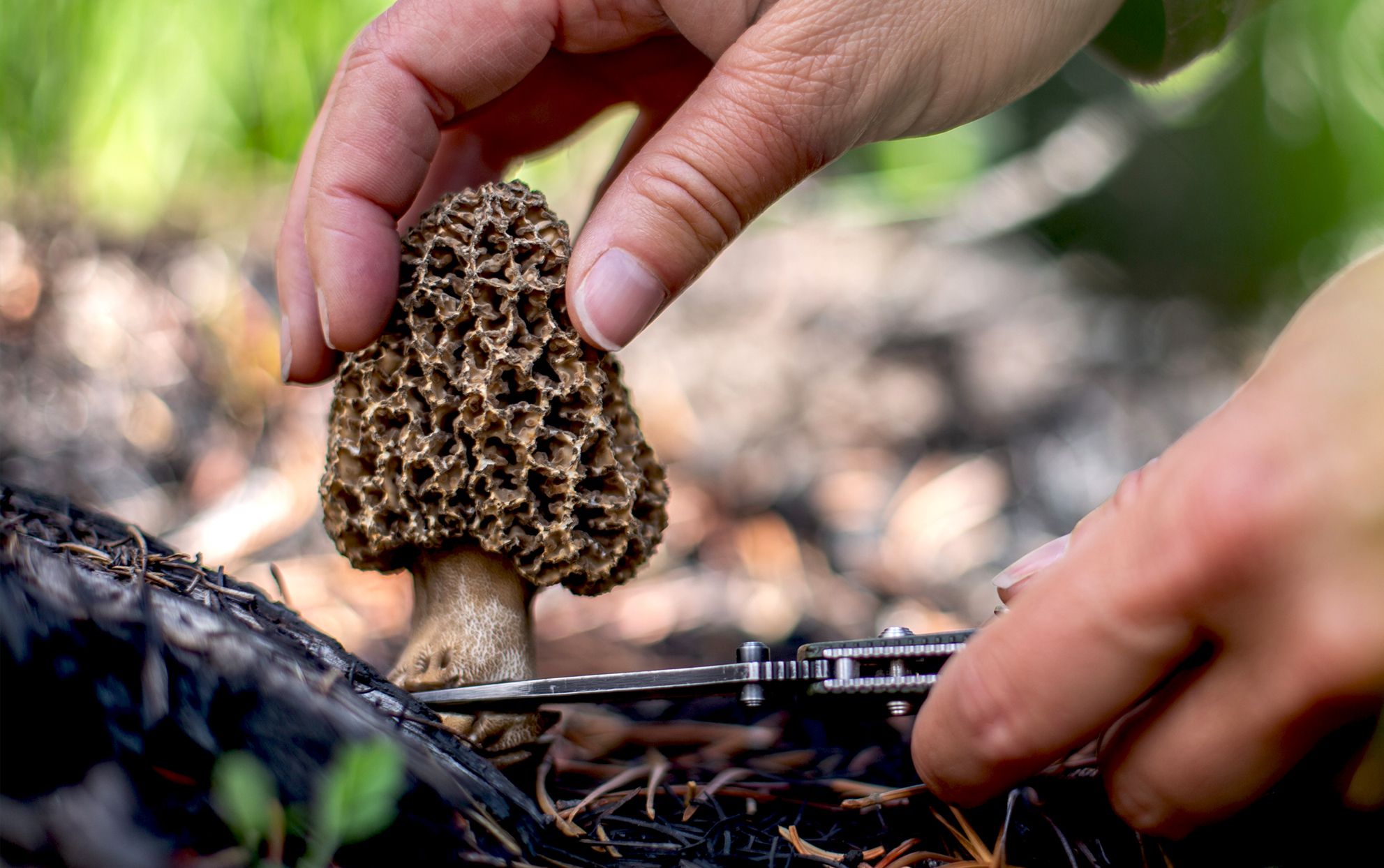
Morel season turns otherwise sensible adults into woodland detectives with dirty boots, hopeful grins, and the focus of someone hunting for truffles made of gold. The appeal is easy to understand. Morels are earthy, meaty, and just fancy enough to make a weeknight skillet feel like a restaurant special. But the real thrill starts before the pan: it starts in the woods, the orchard edge, the fire-scarred hillside, or the quiet patch of leaf litter that suddenly looks like it’s hiding treasure.
If you are wondering where to find morel mushrooms, the short answer is this: look in spring, look in the right habitat, and look with patience. The longer and smarter answer is that morels tend to favor certain trees, certain weather patterns, and certain kinds of disturbed ground. They are famous for showing up near dying elms, ash, poplar, and old apple trees, and in some regions they can flush in impressive numbers after wildfire. They also have one major rule that outranks every “secret spot” rumor ever whispered over a camp stove: wild mushrooms are never worth guessing about.
Note: This article focuses on likely habitats, timing, and safety-minded foraging habits. It is not a substitute for expert mushroom identification. Never eat a wild mushroom unless a qualified local expert has verified it, and always cook true morels thoroughly before eating.
Why Morels Are Worth the Fuss
Morels are among the most sought-after wild mushrooms in the United States because they hit a rare sweet spot: distinctive flavor, seasonal scarcity, and a hunt that feels like part sport, part spring ritual. Their taste is rich and nutty, and their hollow, honeycombed caps soak up butter, shallots, cream, and all the culinary bragging rights a cook could want. In other words, morels are not just dinner. They are an event.
That said, the romance of the hunt should never crowd out common sense. Morels are generally considered edible when properly identified and thoroughly cooked, but “generally” is doing some heavy lifting there. False morels exist, they can be toxic, and even true morels have been linked to illness when eaten raw or undercooked. So yes, chase the feast, but bring your brain to the buffet.
Where Morel Mushrooms Usually Grow
1. Around Certain Trees
The best-known morel habitats are woodland edges and mixed forests with scattered hardwoods. Across much of the Midwest and upper Midwest, productive morel territory often includes areas around decaying or stressed elms, ash, poplar, and old apple trees. Old orchards can be especially promising because they offer the mix of decaying roots, filtered sun, and spring moisture that morels seem to appreciate.
In some regions, morels also appear near oak, hickory, black cherry, cottonwood, silver maple, sycamore, and even white pine plantations. That does not mean every one of those trees is a magic mushroom button. It means morels are more flexible than their mythology suggests. They like a good neighborhood, not just one exact address.
2. South-Facing Slopes, Creek Bottoms, and Moist Woodland Edges
If you like your clues practical, topography helps. South-facing slopes often warm first in spring, making them strong early-season candidates. Creek bottoms and riparian woods can also be productive because they hold humidity and moisture longer than exposed, dry ground. In dry spells, lower ground and mossier patches can be better bets than the dusty hilltop that looks scenic but feels like a giant crouton.
Morels commonly emerge in leafy, woody places rather than open lawns. Think forest edges, mixed woods, brushy margins, and places with enough leaf litter to hold moisture without turning swampy. They usually prefer rich, organic soil and often pop where the ground is warm and damp, not soaked and miserable.
3. Burn Sites and Disturbed Ground
One of the most talked-about morel patterns is the post-fire flush. In parts of the West, North, and Alaska, morels can fruit abundantly in the year after wildfire, especially in forested burn areas. Burned conifer stands, disturbed soils, and recently affected forest landscapes can all be productive in the right season. This is one reason morel hunting has such a devoted following in places where fire reshapes the landscape.
Disturbed ground more broadly can also matter. Some foragers find morels in logged woodlands, around old road cuts, on slopes with limestone or shale influence, or in places where the forest floor has changed just enough to create the right mix of warmth, moisture, and decaying organic matter. Nature, as always, enjoys rewarding pattern recognition while refusing to become fully predictable.
4. Old Orchards and Semi-Wild Human Landscapes
Morels do not always insist on a deep wilderness vibe. Old apple orchards, abandoned homesteads, and semi-wild edge habitats can be surprisingly productive. These spots often combine aging trees, loose soil, filtered light, and a long accumulation of organic material. In plain English: the mushrooms may enjoy places where humans once worked, then politely backed away and let nature handle the decorating.
Best Time to Look for Morels
Morel season is a spring affair, but it moves like a traveling show. In warmer states, hunters may begin scanning in late March or early April. In the Midwest and Great Lakes region, the prime window often runs from April into May. Farther north, or at higher elevations, morels may continue into June. In Alaska, especially after wildfire, the season can shift later still.
The key is not the calendar alone. Morels respond to weather. Warm, wet springs are your friend. Cool, dry springs can delay or shrink the season. Many foragers use natural signs as rough cues: leaf-out on trees, spring wildflowers blooming, and the general moment when the woods stop looking half asleep and start acting like they had coffee.
A useful rule of thumb is that morels begin appearing when spring temperatures become consistently mild, with warm days and no longer-frigid nights. Early in the season, south-facing slopes may produce first. As the season progresses, activity can shift northward, upward in elevation, or toward cooler aspects. The mushrooms are not checking your calendar app. They are checking moisture and temperature.
The Best U.S. Regions for Morel Hunting
Midwest and Great Lakes
Michigan, Minnesota, Wisconsin, Iowa, Indiana, Illinois, and Ohio are classic morel territory. These states combine hardwood forests, old orchards, spring moisture, and a near-religious devotion to not sharing exact spots. Michigan is especially famous for morel hunting, with productive forests, seasonal burn maps, and a culture that treats morel season with the respect usually reserved for major holidays.
Appalachia and the East
Pennsylvania, Kentucky, West Virginia, and parts of the Mid-Atlantic offer strong habitat in mixed hardwood forests and wooded slopes. Look for wooded edges, older tree stands, moist hollows, and orchard remnants. In these regions, a little elevation change can mean a lot, especially when spring weather flips from chilly to promising in a hurry.
The South and South-Central States
Oklahoma and neighboring states can start earlier than northern zones. Riparian woods, mixed forests, and areas with oak, hickory, and eastern red cedar may produce during the right stretch of spring. Because the window can be shorter and earlier, timing matters even more than wishful thinking.
The Mountain West, Pacific Northwest, and Alaska
In western states, post-fire morel hunting is a major piece of the story. Burn scars on public lands can draw serious interest, and regulations may vary depending on the forest, district, and whether the harvest is personal or commercial. Alaska also has notable post-fire morel habitat, with fruiting tied to warm conditions after snowmelt and often concentrated in the year after a burn.
How to Search Smarter Without Getting Reckless
Finding morels is less like grabbing a pumpkin in a field and more like noticing camouflage that suddenly becomes obvious once your eyes adjust. Move slowly. Scan ahead, then scan again from a different angle. A morel can blend into leaves, bark, and shadows so well that you can walk past five of them, turn around, and feel personally insulted by the forest.
Focus on promising habitat rather than marching randomly through every patch of trees. Start near likely host trees, check the base of slopes when conditions are dry, and work woodland edges with good moisture. If you spot one morel, stop charging forward like you just won the lottery. Morels often appear in clusters or loose patches, and careful searching nearby may reveal more.
Carry mushrooms in a breathable mesh bag or similar container, wear good boots, and dress for spring woods conditions. Ticks, uneven ground, and fallen branches are much more reliable than mushroom folklore. Bright clothing is also smart in areas where mushroom season overlaps with hunting seasons.
Public Land, Private Land, and the Rules Nobody Should Pretend Not to Notice
Some of the best morel habitat is on public land, but “public” does not mean “do whatever you want.” Rules vary by agency and location. Some state lands allow hand collection for personal use. Some parks restrict where you can walk or harvest. Some national parks allow only limited collection of edible mushrooms for personal use, while others prohibit certain harvesting entirely. National forests and Bureau of Land Management lands may allow personal-use gathering in some areas, but permits, gallon limits, or seasonal restrictions can apply.
Private land is even simpler: get permission. Not “my cousin says the owner is chill” permission. Actual permission. Mushroom hunting without it is trespassing, and that is a terrible way to begin a gourmet meal.
Before you head out, check the current rules for the exact forest, park, wildlife area, or state property you plan to visit. Morel hunting is fun. Arguing with a ranger about gallon limits is less so.
How to Keep the Feast Safe
Never Rely on Guesswork
The most important safety rule is brutally simple: do not eat a wild mushroom unless a qualified local expert has confirmed it. Wild mushroom poisoning often happens because people misidentify look-alikes, trust a folk rule, or assume a species from another region works the same where they live. Mushrooms do not care about confidence.
False Morels Are Not a Cute Little Technicality
False morels can resemble true morels enough to cause dangerous mistakes, and some contain toxins that can cause severe illness and even death. Cooking does not make toxic false morels safe. This is exactly why “I watched three videos and felt pretty sure” is not a food safety plan.
True Morels Still Need Thorough Cooking
Even true morels should not be eaten raw. Recent public-health investigations have highlighted illnesses associated with morels, including a Montana restaurant outbreak in which raw morels were more strongly linked to illness than cooked or partially cooked morels. The safest approach is to cook true morels thoroughly before serving them.
Go Easy the First Time
Even correctly identified edible mushrooms can cause stomach upset in some people. A cautious first serving makes more sense than eating a heroic mountain of sautéed mushrooms and then spending the evening bargaining with your digestive system. If someone in your group has never eaten morels before, smaller portions are the wise move.
What to Do If Someone Gets Sick
If illness follows wild mushroom consumption, stop eating them immediately, save a sample if possible, and contact Poison Help or seek urgent medical care. Fast action matters, especially if symptoms are severe or involve repeated vomiting, diarrhea, confusion, dizziness, or signs of dehydration. Heroics are for comic books, not mushroom poisonings.
From Basket to Table: Turning a Find Into a Feast
Once morels are confirmed safe and fully edible, keep handling simple and food-safe. Brush off debris, trim damaged ends, and store them in a paper bag in the refrigerator rather than trapping moisture in plastic. Fresh morels are best cooked soon. Sautéing thoroughly in butter or oil until tender is a classic move for a reason: it is easy, delicious, and far more elegant than pretending you were going to make “deconstructed forest foam.”
Morels pair beautifully with eggs, pasta, risotto, roasted chicken, steak, cream sauces, and spring vegetables like asparagus and peas. Their flavor is bold enough to stand out, but refined enough to work in simple dishes. The best feast is usually the one that lets the mushrooms stay the star instead of burying them under half the spice cabinet.
Final Thoughts: The Smartest Morel Hunter Still Leaves Some in the Woods
Where do you find morel mushrooms? In spring woods with the right moisture, around certain trees, in old orchards, along promising slopes, and sometimes in dramatic post-fire landscapes. But the bigger truth is that you find them by combining habitat knowledge with patience, local rules, and real caution. The goal is not just to find dinner. The goal is to find it responsibly.
That is what separates a satisfying morel season from a bad decision in hiking boots. Respect the land, follow property and permit rules, learn from trustworthy local experts, and cook what you collect thoroughly. Do that, and your morel feast can be exactly what it should be: memorable for the flavor, not for the emergency phone call.
The Morel Hunt Experience: Muddy Boots, Quiet Woods, and a Skillet Worth Waiting For
There is a particular feeling that comes with hunting morels that is hard to explain to anyone who has never spent a spring morning peering at leaf litter like it owes them money. At first, the woods seem ordinary. A little damp. A little chilly. A soundtrack of birds, creaking branches, and your own footsteps making it very clear that stealth is not your gift. Then your eyes start to adjust. The brown leaves become less random. The shape of every stump, root flare, and patch of moss starts to matter. Suddenly, the forest stops looking empty and starts looking full of possibility.
That change in attention is part of the magic. Morel hunting slows people down in a way modern life rarely does. No one can effectively sprint through a likely patch and still spot much of anything. You drift. You scan. You kneel. You stand back up with all the grace of an aging lawn chair. You tell yourself the next slope looks better. Then you spot one little morel near a dying tree, and the whole morning changes. One becomes proof. Proof becomes hope. Hope becomes a very serious commitment to checking every similar patch within twenty feet.
For many people, the best part is that the hunt feels half wild and half inherited. Grandparents teach kids. Friends guard favorite spots with the intensity of state secrets. Old stories come out about the time someone found a patch the size of a dinner platter, or the time someone mistook a pinecone, a wrinkled leaf, or their own optimism for a mushroom. The humor is built in. So is the humility. Morel hunters know that even a good day often begins with uncertainty and ends with just enough success to make you come back again.
Then there is the walk back to the car, when the basket or mesh bag finally has enough mushrooms to feel like a reward. Everything smells better on the way out. The air feels warmer. Even the mud seems less offensive. Back home, the ritual continues: brushing off debris, checking each mushroom carefully, cooking them thoroughly, and waiting for that first nutty, buttery aroma to rise from the pan. It is one of those rare kitchen moments where the meal tastes better because it came with a story.
And that, really, is why morels inspire such loyalty. They are not just delicious. They ask something of you first: attention, patience, restraint, and respect. The experience is not about conquering the woods or coming home with a ridiculous haul for bragging rights. It is about joining the season for a few hours and noticing what the landscape is doing. It is about understanding that the best feast starts long before the stove turns on. When done safely, the morel hunt becomes one of spring’s great pleasures: part treasure hunt, part nature lesson, part family folklore, and part excuse to eat something wonderful with the smug satisfaction of a person who earned every bite.