Few grammar questions make people freeze up faster than the moment a caller asks, “May I speak to Emily?” Suddenly, your brain turns into a middle school English teacher with a whistle, and you wonder: do I say “This is she” or “This is her”? If you have ever answered the phone and immediately felt judged by an invisible grammar panel, welcome. You are among friends.
Here is the short answer: “This is she” is traditionally considered grammatically correct, while “This is her” is more common in everyday American English. In other words, one answer wins the grammar trophy, and the other wins the popularity contest. The real question is not just which phrase is “correct,” but when each one makes sense.
That is where things get interesting. English is full of rules, exceptions, and social habits that refuse to sit quietly in the corner. This particular debate touches on pronoun case, formal versus informal usage, and the odd way people speak when they are half on the phone and half trying to remember whether they left the oven on.
So, Which One Should You Use?
If you want the cleanest traditional grammar answer, go with “This is she.” If you want the phrase that sounds most natural to many Americans in ordinary conversation, “This is her” will not shock anyone. In fact, it will probably sound more familiar.
That means the real answer is nuanced:
- Use “This is she” in very formal speech, careful writing, or if you want to follow traditional grammar rules closely.
- Use “This is her” in casual spoken English, especially in everyday phone conversations.
- Use “Speaking” if you want to avoid the whole debate and preserve your inner peace.
Yes, “Speaking” may be the Switzerland of phone grammar.
Why “This Is She” Is Traditionally Correct
To understand why traditional grammar favors “This is she,” you need one key idea: the verb to be is a linking verb. Linking verbs do not show action the way verbs like call, hug, or drop your phone into the couch cushions do. Instead, they connect the subject to something that renames or describes it.
In the sentence “This is she,” the word this refers to the speaker, and she also refers to the speaker. Since both words point to the same person, traditional grammar treats she as a subject complement, often called a predicate nominative. That is why the subjective pronoun she is preferred rather than the objective pronoun her.
Think of it this way:
- She is speaking.
- This is she.
In both cases, she is functioning in a subject-like role. Traditional grammar says that if a pronoun follows a linking verb and identifies the subject, it should stay in the subjective case: I, he, she, we, they.
That is the same logic behind older constructions like:
- It is I.
- This is he.
- The winner was she.
Do these sound slightly formal, maybe even a little dramatic? Absolutely. But by traditional rules, they are grammatically tidy.
Why “This Is Her” Sounds More Natural to Many People
Now for the other half of the story. If “This is she” is the traditional grammar winner, why do so many people say “This is her” without blinking?
Because everyday English is guided by usage as much as rules. Native speakers often feel that a pronoun appearing after a verb belongs in the object form. So even though is is a linking verb, many people instinctively reach for her instead of she.
This is not new. English speakers have been favoring object pronouns after forms of be for a very long time. That is why phrases like “It’s me”, “That’s him”, and “This is her” sound normal in conversation. Spoken English tends to prioritize what sounds natural over what looks perfect on a grammar worksheet.
And honestly, that is how language works. Real speech is messy, efficient, social, and full of habits that grammar purists would like to send to detention.
Formal English vs. Everyday American English
The phrase you choose often depends on context. English is not one single mode of speech. We shift our language depending on the setting, the audience, and whether we are answering a work call or talking to a cousin who opens every conversation with, “Guess what happened.”
In Formal Contexts
“This is she” can still be a smart choice in formal or polished communication. It may appear in business phone etiquette, old-school customer service training, or writing that leans conservative in tone. If you want to sound careful, proper, and grammatically aware, this version works.
In Informal Contexts
“This is her” fits more naturally into casual American speech. It is common, widely understood, and rarely causes confusion. In normal conversation, clarity and comfort usually matter more than grammatical prestige.
In Practical Contexts
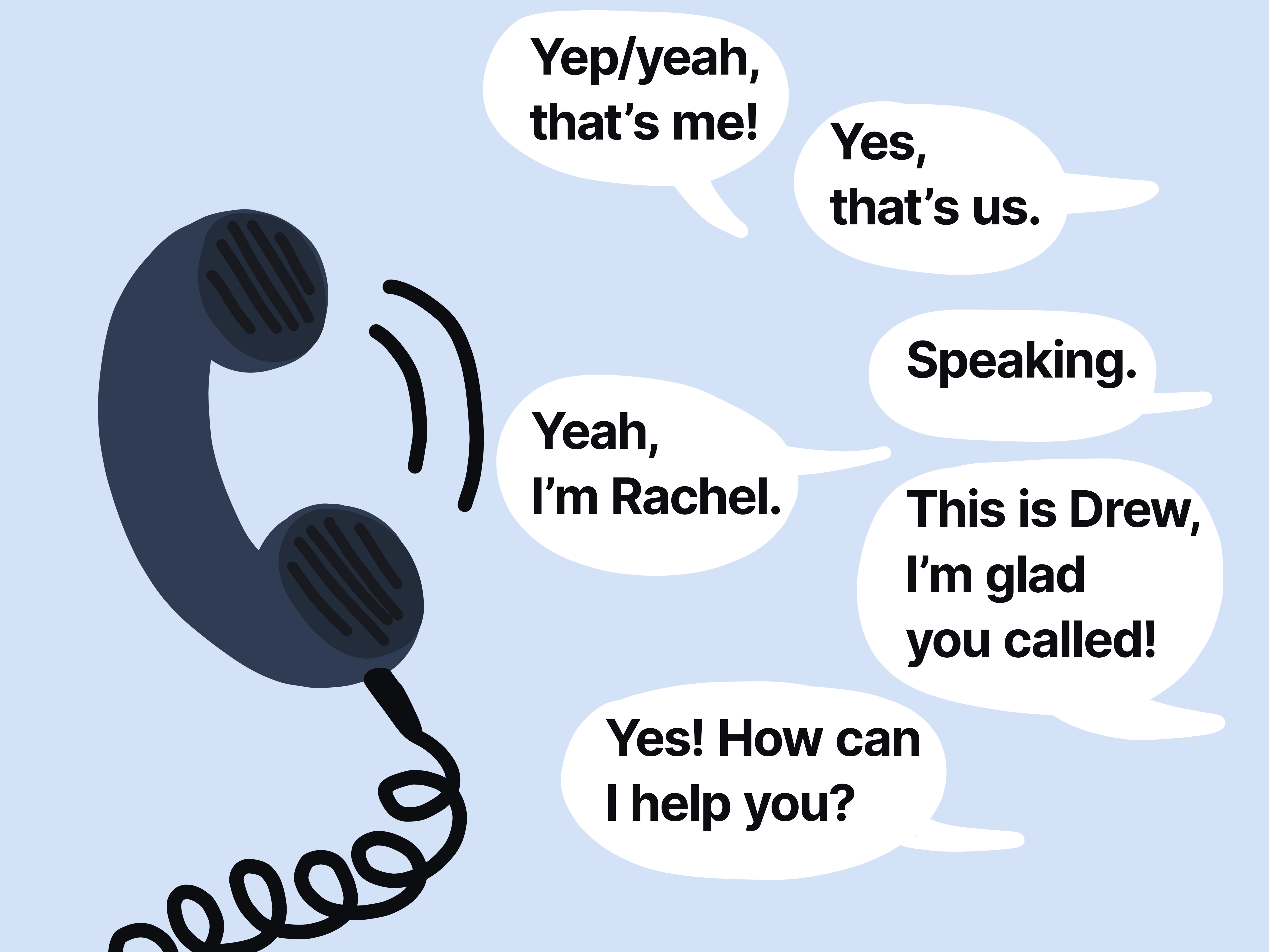
You can dodge the issue entirely with replies like:
- Speaking.
- Yes, this is Emily.
- Emily speaking.
- You’ve got her.
These options sound natural and avoid turning a two-second greeting into a pronoun debate.
Examples That Make the Difference Clear
Examples help more than grammar jargon, so let’s put both phrases into real-life situations.
Phone Conversation
Caller: May I speak to Lauren?
Response 1: This is she.
Response 2: This is her.
Both responses identify the speaker. The first sounds more formal. The second sounds more conversational.
Comparing Similar Sentences
- Traditional: It is I.
- Common modern usage: It’s me.
- Traditional: This is she.
- Common modern usage: This is her.
The pattern is the same. Traditional grammar prefers subjective pronouns after linking verbs. Everyday usage often prefers objective pronouns.
Where “Her” Is Definitely Correct
Sometimes people get nervous and start doubting her everywhere. No need. There are plenty of sentences where her is clearly the right choice:
- Please tell her I called.
- I saw her at the library.
- Give the package to her.
In those sentences, her is an object. No controversy. No grammar summit. No emergency.
Is “This Is Her” Wrong?
If you are asking from a strict traditional grammar standpoint, many guides would say “This is her” is less formally correct than “This is she.” But if you are asking whether it is acceptable in modern American English, the answer is much more forgiving.
In actual usage, “This is her” is common, natural, and broadly accepted in speech. It does not usually strike listeners as uneducated or careless. Most people will not notice it at all, because it matches the rhythms of everyday English.
So no, it is not “wrong” in the sense that it causes misunderstanding or sounds bizarre. It is simply less traditional and more conversational.
Why This Tiny Grammar Question Feels So Big
Questions like this feel bigger than they are because they sit at the intersection of grammar and identity. The way we speak shapes how others perceive us. A person who says “This is she” may sound polished, formal, or old-fashioned. A person who says “This is her” may sound relaxed, natural, and modern.
Neither impression is automatically better. The best choice depends on your goal. Are you trying to sound highly formal? Go with “This is she.” Are you just answering a phone call from your dentist’s office while balancing groceries and trying not to drop your keys? “This is her” is doing just fine.
That is one reason language advice can be so frustrating. People often want one universal answer, but English keeps responding with a shrug and a footnote.
A Quick Grammar Breakdown of Subjective and Objective Pronouns
If you want to really lock this in, it helps to review pronoun case.
Subjective Pronouns
These are used for subjects and traditional subject complements:
- I
- he
- she
- we
- they
Objective Pronouns
These are used for objects:
- me
- him
- her
- us
- them
Traditional grammar says that after a linking verb like is, the pronoun should remain subjective if it renames the subject. That is why people taught under formal grammar rules often prefer “This is she.”
Modern usage, however, often treats the pronoun after is more like an object. That is why “This is her” sounds normal to so many speakers. The grammar rule and the spoken habit are pulling in different directions.
Best Choice for Writing, Speaking, and Business Communication
For Academic or Formal Writing
Use “This is she” if the context calls for traditional correctness or a formal tone.
For Casual Conversation
Use “This is her” if you want to sound natural and conversational.
For Business Calls
Either can work, but the smoothest options are often:
- This is Emily.
- Emily speaking.
- Speaking.
These versions are clear, professional, and blissfully low-drama.
Final Verdict: “This Is She” or “This Is Her”?
If you want the grammar-book answer, “This is she” is the traditional choice. If you want the phrase most people naturally say in modern American English, “This is her” is widely used and sounds more conversational.
So which one is correct? The honest answer is this: “This is she” is traditionally correct, while “This is her” is commonly accepted in everyday speech. English allows both to live in the same neighborhood, even if one keeps its lawn trimmed with tiny grammar scissors.
The smartest move is to choose based on context. Formal situation? Use “This is she.” Everyday conversation? “This is her” is perfectly natural. Want to skip the debate entirely? Say “Speaking.” and continue living your life.
Experiences Related to “This Is She” or “This Is Her”
One reason this grammar question keeps popping up is that people do not usually encounter it in a textbook first. They encounter it in real life, often while answering a phone call and trying to sound competent in under two seconds. That pressure makes the choice feel bigger than it is.
A lot of people remember learning “This is she” from a parent, teacher, or customer service job. For them, the phrase carries a little badge of correctness. It sounds polished, maybe slightly formal, and sometimes even comforting because it follows a rule they were taught clearly. When they say it, they feel prepared and professional, like they have shown up to the phone call wearing a blazer, even if they are actually in sweatpants.
Other people have the exact opposite experience. They hear “This is she” and think it sounds stiff or old-fashioned, almost like a line from a black-and-white movie where everyone answers the phone with perfect posture. To them, “This is her” sounds warmer and more natural. It matches the rhythm of real American conversation, where people usually say what feels intuitive instead of what wins points on a grammar quiz.
There is also the workplace factor. In offices, reception roles, and customer-facing jobs, employees are often taught scripts for answering calls. One company may encourage “This is she,” while another prefers “This is Maria speaking.” That means people sometimes pick up one form simply because it is the language of their job, not because they sat around reading about predicate nominatives for fun.
Then there are the mildly embarrassing moments that make this topic unforgettable. Someone says “This is her,” and a friend corrects them. Or someone proudly says “This is she,” only to feel weirdly theatrical afterward. Many speakers have had the experience of choosing one phrase, then spending the next five minutes wondering if they sounded smart, pretentious, relaxed, or completely normal. That tiny burst of self-consciousness is part of why the debate never really dies.
In the end, most real experiences point to the same conclusion: people care less about the pronoun itself than about the tone it creates. We want to sound clear, confident, and like ourselves. That is why some speakers stick with “This is she,” some prefer “This is her,” and many avoid the choice altogether with “Speaking.” The lived experience of English is not just about rules; it is about comfort, habit, and social context. And that is exactly what makes this tiny grammar question so strangely human.