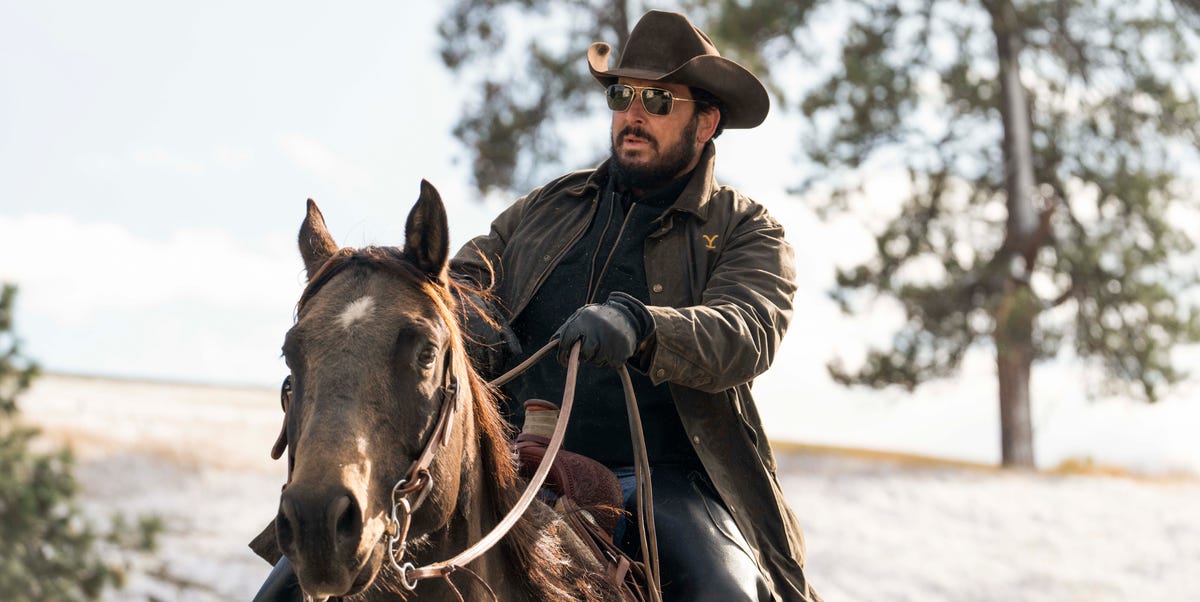
Some actors leave a long-running series with a framed photo, a pair of boots, or maybe a jacket that still smells faintly of craft services and heartbreak. Cole Hauser, however, did something much more Rip Wheeler-coded: he took home a horse. Not just any horse, either. The Yellowstone star owns King, the horse connected to his time on the hit neo-Western drama, making it arguably the most meaningful souvenir a cowboy character could ever claim.
For fans who spent years watching Hauser’s Rip Wheeler ride across the Dutton ranch like a thundercloud in a black hat, the news feels perfect. Rip was never the kind of man who needed a speech when a look would do. He was loyal, patient, dangerous when necessary, and surprisingly tender with the few people and animals he trusted. So, naturally, Hauser’s real-life bond with King gives viewers a warmer glimpse behind the leather jacket, sunglasses, and famous cowboy scowl.
The story also says something bigger about why Yellowstone became such a cultural force. The series was not only about land, family conflict, ranch politics, and very dramatic porch conversations. It was about attachment: to a place, to a code, to a way of life, and sometimes to a horse that becomes more than a working animal. In Hauser’s case, King was not a prop. He was a partner with four legs, a job to do, and apparently, enough star quality to deserve his own fan club.
Cole Hauser’s Ultimate Yellowstone Memento Was His Horse, King
Cole Hauser revealed that he owns King, the horse associated with his work on Yellowstone. While many cast members might keep a hat, belt buckle, jacket, or script page, Hauser’s keepsake has a heartbeat, a personality, and probably a snack schedule. King has remained under trusted care connected to the ranching world surrounding the show, and Hauser has spoken about checking in to make sure the horse stays healthy and fit.
That detail is what makes the story so memorable. A celebrity taking home a costume piece is charming. A celebrity maintaining a real relationship with a horse after years of ranch scenes? That feels like a tiny Western movie all by itself. Fans loved the idea because it blurs the line between actor and character in the best possible way. Hauser did not simply play a ranch foreman who understands horses; he built a real connection with one.
It also fits the Yellowstone brand beautifully. Taylor Sheridan’s universe has always treated horses as more than background decoration. They are part of the language of the show. A horse can reveal confidence, fear, discipline, status, and trust without anyone needing to announce it over a dramatic fiddle score. King, in that sense, became part of Rip Wheeler’s visual identity, and Hauser’s decision to keep him close feels like a sincere tribute to the years he spent in the saddle.
Why King Means More Than a Regular Set Souvenir
A set souvenir usually says, “I was there.” King says, “I lived it.” That is a very different kind of memory. A hat can sit on a shelf. A jacket can hang in a closet. A horse requires care, attention, responsibility, and a genuine bond. In other words, King is not a trophy. He is a continuing relationship.
That is why the story landed so strongly with fans. Yellowstone viewers are not casual about Rip Wheeler. They quote him, defend him, name pets after him, and treat his romance with Beth Dutton as if it were national infrastructure. When those same fans learned Hauser had a real off-screen bond with King, it added another layer to the character’s authenticity. The man looked comfortable on horseback because he actually was comfortable on horseback.
There is also a long Hollywood tradition of actors bonding with animals during major productions. When a performer spends weeks, months, or years working with a horse, the connection can become deeply personal. Horses are not machines. They respond to energy, rhythm, patience, and confidence. The best screen riding does not look forced because it is not just technical; it is relational. Hauser and King had that kind of chemistry, and viewers could feel it even if they did not know the full story.
Rip Wheeler, Cole Hauser, and the Art of Looking Like You Belong on a Ranch
One reason Rip Wheeler became one of the most beloved characters in Yellowstone is that Cole Hauser played him with total commitment. Rip did not feel like a tourist in a cowboy hat. He felt like a man who had weather in his bones, dust in his boots, and a strict personal policy against unnecessary small talk. Hauser gave the character weight by making him quiet, watchful, and completely believable in the ranch environment.
That authenticity matters in a show like Yellowstone. The series asked audiences to buy into a world where family legacy, land ownership, cattle work, political pressure, and personal loyalty all collided. If the cowboys did not look like they could actually ride, rope, work, and survive a long day outdoors, the illusion would collapse faster than a lawn chair at a tailgate.
Hauser’s riding helped keep that illusion intact. His scenes on horseback were not just action beats; they were character beats. Rip on a horse looked controlled, grounded, and dangerous in a calm way. He did not need to wave his arms around to dominate the frame. Sometimes he only had to sit still, and the audience understood: this man is not here for nonsense.
The Power of Animals in Yellowstone’s Storytelling
Yellowstone used horses as symbols of freedom, work, tradition, and survival. The Dutton ranch was not merely a pretty backdrop. It was a working environment, and horses were essential to making that world feel lived-in. They gave the series movement and texture. They also reminded viewers that ranch life depends on trust between humans and animals.
For Rip, that trust was especially important. His character was often guarded with people, but his ease around horses communicated a softer, more disciplined side. That is the magic of animal scenes: they reveal what dialogue sometimes cannot. A person can lie in a conversation, but body language around a horse is harder to fake. If someone is impatient, nervous, or disconnected, the animal often tells on them immediately.
Hauser’s relationship with King therefore adds meaning to his performance. It suggests that some of Rip’s quiet confidence came not from acting tricks alone, but from time spent learning, listening, and respecting the animal beneath him. In Western storytelling, that matters. A cowboy is not made by the hat. The hat helps, obviously, especially if it is dramatic enough to cast a shadow over three counties. But the real test is how he handles the horse.
How Yellowstone Turned Rip Wheeler into a Fan Favorite
Rip Wheeler began as John Dutton’s loyal ranch enforcer and evolved into one of the emotional anchors of the series. He was tough, sometimes intimidating, and often morally complicated, but he was also fiercely devoted to Beth Dutton. That contrast made him fascinating. He could be terrifying in one scene and heartbreakingly gentle in the next.
Hauser understood that balance. He did not soften Rip too much, because then the character would lose his edge. He also did not play him as one-note tough, because then viewers would get bored. Instead, he built Rip as a man shaped by pain, loyalty, and a deep need to belong somewhere. The Dutton ranch gave him that place. Beth gave him a person to love without apology. The horses gave him a rhythm and a world where actions mattered more than speeches.
That combination turned Rip into more than a supporting character. He became a symbol of the show’s emotional core: loyalty with teeth. Fans admired him because he seemed unshakable, but they loved him because he was not empty. Beneath the black hat was a man capable of devotion, grief, humor, and tenderness. He just preferred to express most of those feelings through practical acts, protective silence, and the occasional stare that could make a fence post apologize.
Why Fans Loved the Story of Cole Hauser and King
The internet loves behind-the-scenes stories, especially when they confirm what audiences already want to believe. In this case, fans wanted to believe Cole Hauser was not just pretending to understand the cowboy world. His ownership of King supported that idea in a warm and surprisingly wholesome way.
It also gave fans a gentler story connected to a show famous for conflict. Yellowstone was full of family battles, betrayals, power struggles, and emotional explosions. The story of Hauser and King is simple by comparison: actor meets horse, actor bonds with horse, actor keeps caring about horse after the cameras stop rolling. Nobody needs a flowchart. Nobody needs to remember which Dutton ancestor did what in 1883. It is just nice.
And honestly, in a television universe where nearly every peaceful breakfast seems one phone call away from disaster, “man loves horse” is a refreshing headline. It reminds fans that behind all the grit and drama were real performers, real animals, and real relationships built during years of production.
The Yellowstone Finale Made the Memento Feel Even More Meaningful
Yellowstone wrapped its main story in December 2024 after five seasons, closing the book on the original Dutton ranch saga. The finale resolved major conflicts around the family, the land, and the future of the ranch. For longtime viewers, it felt like the end of an era, even though the broader franchise continues to expand.
That ending makes Hauser’s connection to King feel even more symbolic. When a series runs for years, the cast does not simply finish a job; they leave behind a routine, a community, and a version of themselves that existed inside that production. Hauser played Rip from the beginning of the show’s rise into a cultural phenomenon. Taking King forward in real life gives him a living reminder of that period.
It also mirrors the way fans carry pieces of the show with them. Some keep quotes. Some keep playlists. Some buy jackets inspired by Rip’s wardrobe. Some plan vacations around Western landscapes because Yellowstone made Montana look like a place where every sunset has a union contract. Hauser’s keepsake just happens to be bigger, hungrier, and much harder to fit in a display case.
From Yellowstone to Dutton Ranch: Rip’s Story Is Not Finished
Although the original Yellowstone series concluded, Cole Hauser’s journey as Rip Wheeler continues through the Beth-and-Rip spinoff Dutton Ranch. The new series brings Hauser back alongside Kelly Reilly, with the characters stepping into a different chapter after the events of the flagship show. The continuation gives fans what they clearly wanted: more Beth, more Rip, and probably more emotionally loaded conversations delivered with the intensity of a thunderstorm.
The new chapter also changes the context around King. Hauser’s real-life memento is not simply a memory of a completed role. It represents a bridge between what Yellowstone was and what the franchise is becoming. Rip Wheeler may be moving into new territory on screen, but the essence of the character remains tied to horses, land, loyalty, and hard-earned trust.
For fans, that continuity matters. Yellowstone was never just about plot twists. It was about the feeling of a world: saddle leather, cold mornings, family wounds, wide country, and people who say less because they carry more. Hauser owning King keeps that feeling alive in a surprisingly literal way.
What This Says About Cole Hauser as a Performer
There is a reason viewers respond to actors who fully inhabit their roles. Audiences can sense when a performer is merely wearing the costume versus when they have absorbed the environment. Hauser’s connection to King suggests a level of investment that goes beyond showing up, hitting marks, and heading back to the trailer.
Great screen performances often come from details the audience may never consciously notice. How a character holds the reins. How he shifts his weight in the saddle. How he looks at a horse before a ride. How comfortable he seems when the scene is quiet. Those small choices create believability. In Hauser’s case, the real relationship with King likely helped deepen those details.
That does not mean Cole Hauser is Rip Wheeler. Actors are not their characters, no matter how passionately fans may wish otherwise. But it does mean Hauser respected the world enough to learn it from the inside. He understood that in a Western, the horse is not furniture. The horse is a scene partner.
Why the Story Works So Well for SEO and Fan Interest
The headline “Yellowstone Star Cole Hauser Took Home the Ultimate Memento from Set” works because it combines celebrity curiosity, fan nostalgia, and a surprise reveal. Readers want to know what the memento is. Once they learn it is King, the story becomes even more clickable because it is specific, emotional, and perfectly aligned with the show’s cowboy identity.
For entertainment readers, this kind of story has strong appeal because it is positive without being fluffy. It offers a real behind-the-scenes detail, connects to a beloved character, and gives fans a reason to revisit their attachment to the series. Keywords such as “Cole Hauser horse,” “Yellowstone memento,” “Rip Wheeler,” “King the horse,” and “Yellowstone set souvenir” all fit naturally because they describe the core story rather than forcing search terms into awkward places.
Most importantly, the topic has heart. Search engines reward useful, clear, satisfying content, but humans still reward feeling. This story gives both. It answers the question quickly, then expands into why the detail matters. That is the difference between a thin celebrity blurb and a web article people actually finish reading.
Experiences Related to Cole Hauser Taking Home King
The most relatable part of this story is not that Cole Hauser is a famous actor from one of television’s biggest Western dramas. Most of us, tragically, do not get paid to ride across cinematic ranchland while looking mysterious in a cowboy hat. The relatable part is the idea of taking something meaningful from a life-changing experience and refusing to let it disappear when the official chapter ends.
Think about the objects people keep after important moments: a ticket from a first concert, a jersey from a final game, a notebook from college, a chipped mug from a first apartment, or a dog-eared script from a school play. These things are not valuable because of their price. They are valuable because they hold memory. They become proof that a season of life really happened.
Hauser’s memento is simply a grander, more Western version of that same instinct. King represents early mornings, long shoots, cold weather, dusty trails, training, repetition, trust, and the strange intimacy of making a fictional world feel real. When fans hear that Hauser owns King, they are not just hearing trivia. They are hearing that the work mattered enough to follow him home.
Anyone who has worked closely with an animal understands this feeling. Animals have a way of making memories physical. A horse remembers tone, posture, routine, and confidence. A dog remembers the sound of your car. A cat remembers that you once opened tuna at 7:03 p.m. and will now hold you legally responsible forever. Bonds with animals are built through consistency, not grand speeches. That makes them powerful.
On a set like Yellowstone, that bond would be even more important. Film and television production can be chaotic. There are lights, cameras, crew members, weather delays, repeated takes, and long stretches of waiting. For an actor working with a horse, calmness and trust are essential. The animal is not impressed by fame, reviews, ratings, or fan edits. The horse responds to the person in the saddle. That is humbling, and probably useful.
King also represents the larger experience of saying goodbye to a long-running project. When people leave a job, school, team, or community after many years, the ending can feel strange. You are proud, tired, grateful, and maybe a little lost. Keeping a meaningful reminder helps organize those feelings. It gives the past a place to live.
For Hauser, King is not tucked away in a box labeled “Yellowstone memories.” He is alive, cared for, and connected to the ranching world that shaped the show. That is what makes the memento feel ultimate. It is not frozen nostalgia. It continues. It needs attention. It grows older alongside the person who chose to keep it close.
Fans respond to that because it reflects what they want from Yellowstone itself. They do not want the series to vanish after the finale. They want the feeling to continue through spinoffs, rewatches, interviews, cast stories, and small behind-the-scenes details that make the world feel real. King gives them one of those details. He is a living thread between the show and the people who made it.
In the end, Cole Hauser taking home King is not just a cute celebrity anecdote. It is a perfect little Western parable about loyalty, memory, and the bonds that outlast the job. Rip Wheeler would probably never say all that out loud. He would just nod, adjust his hat, and ride off. Fortunately, the rest of us are allowed to be sentimental.
Conclusion
Cole Hauser’s ultimate Yellowstone memento is not a costume piece or a souvenir destined to gather dust. It is King, the horse that became part of his journey as Rip Wheeler. That choice captures why Hauser’s performance resonated so deeply with fans: it was rooted in commitment, authenticity, and respect for the Western world the series brought to life.
As Yellowstone continues through new chapters and spinoffs, King remains a powerful reminder of the original show’s emotional pull. The Dutton ranch may have changed forever, but the bond between cowboy and horse still says everything the franchise does best: loyalty matters, trust is earned, and some memories are too important to leave behind.