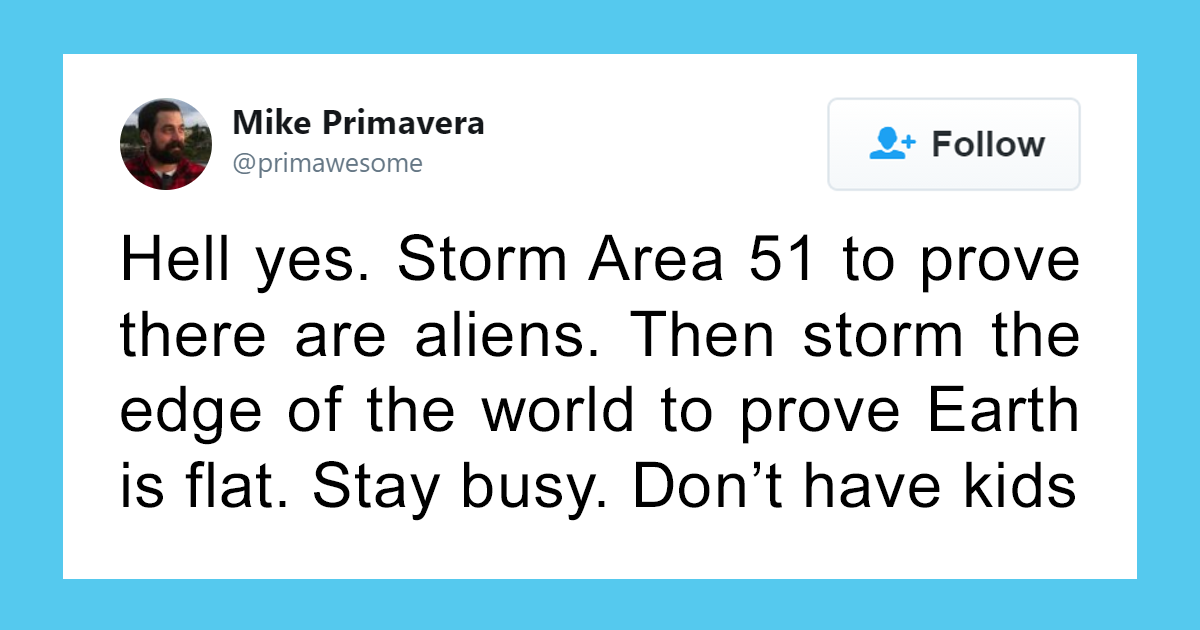
Every so often, the internet wakes up, stretches its chaotic little arms, and decides to do something so beautifully ridiculous that even aliens allegedly hiding in a Nevada desert bunker have to peek through the blinds. In 2019, that moment was “Storm Area 51, They Can’t Stop All of Us,” a Facebook event that began as a joke and quickly became one of the most unforgettable meme explosions in modern internet culture.
At one point, more than 1.2 million people said they were “going,” while even more clicked “interested.” The plan, at least according to the joke, was simple: meet near Area 51, run at the gates, and finally “see them aliens.” Because apparently, nothing says strategic military operation like thousands of sleep-deprived internet users sprinting through the desert in anime formation.
Of course, the U.S. Air Force did not find the joke quite as adorable as Twitter did. Officials reminded the public that Area 51 is part of a real military training range, not an escape room with extraterrestrial prizes. But by then, the meme machine had already taken off faster than a suspicious glowing object over the Nevada sky.
The result was a perfect storm of internet humor: Naruto runners, alien rescue squads, tin foil hats, fake battle plans, “Karen negotiates with the guards” jokes, and enough Area 51 memes to keep Reddit, Instagram, Facebook, and TikTok laughing for weeks.
What Was the Storm Area 51 Event?
The viral event was created in June 2019 as a satirical Facebook invitation. The title alone had the kind of energy that makes both teenagers and bored office workers immediately smash the share button: “Storm Area 51, They Can’t Stop All of Us.” The event proposed that people meet on September 20, 2019, near the Area 51 Alien Center tourist attraction and rush the mysterious base together.
The joke leaned heavily into internet absurdity. The event description famously referenced the “Naruto run,” an anime-inspired running style where a person leans forward with both arms stretched behind them. In the logic of the meme, this would somehow allow raiders to move faster than bullets. In the logic of physics, absolutely not. But memes do not ask physics for permission.
Area 51 itself has long been tied to UFO legends, alien conspiracy theories, and secret aircraft testing. Officially, it is associated with the Nevada Test and Training Range and has a real history connected to Cold War aviation projects, including the U-2 spy plane. Unofficially, it has become pop culture shorthand for “the government definitely has a weird basement.”
Why Did the Area 51 Meme Go So Viral?
The Storm Area 51 meme worked because it combined three powerful ingredients: mystery, rebellion, and extremely dumb group confidence. Most people did not actually intend to invade a military base. They were participating in a collective joke, the kind where everyone knows it is absurd, but that absurdity is exactly the point.
The event also arrived during a golden age of fast-moving meme culture. Social platforms were already primed for remixing jokes into formats, captions, reaction images, and short videos. One person posted about rescuing an alien roommate. Another imagined showing up with a squad of gamers, anime fans, and conspiracy uncles. Before long, the internet had built a full cinematic universe out of one Facebook event.
It also helped that Area 51 already had decades of cultural baggage. UFO rumors, classified aircraft, “The X-Files,” Roswell references, alien autopsy jokes, and late-night conspiracy documentaries had all trained the public to treat the base as America’s most suspicious locked garage. The meme simply gave people a fake mission: unlock the garage and check whether E.T. needed snacks.
30 Funny Area 51 Meme Ideas That Captured the Chaos
Instead of reposting old images, here are 30 original meme-style concepts inspired by the viral Storm Area 51 moment. They capture the spirit of the joke without copying anyone’s meme directly.
- The Naruto Runner: A guy sprinting with arms behind him while everyone else is still looking for parking.
- The Alien Roommate: “I came to free him, but now he pays half the rent and keeps eating my cereal.”
- The Government Intern: “First week on the job and 1.2 million people want to see the basement.”
- The Tactical Gamer: “I played three hours of Call of Duty, so yes, I am basically qualified.”
- The Karen Strategy: “Let me speak to the base manager.”
- The Alien’s POV: “They are coming to rescue me? Bro, I just renewed my lease.”
- The Snack Squad: Raiders bringing chips, energy drinks, and zero survival skills.
- The Group Chat Hero: Someone says, “I’m in,” then immediately Googles “how hot is Nevada?”
- The Military Warning: “Please do not invade.” The internet: “So you’re saying aliens confirmed?”
- The UFO Uber: “Your driver Zorblatt is arriving in 4 light-years.”
- The Desert Outfit: Full tactical vest, alien sunglasses, and flip-flops.
- The Conspiracy Uncle: “I’ve been preparing for this since 1997.”
- The Influencer Angle: “Risking federal charges, but the lighting is incredible.”
- The Alien Gift Shop: “We came for secrets and left with a magnet.”
- The Failed Escape: Alien gets rescued, sees rent prices, asks to go back.
- The Dad Joke: “Area 51? I prefer Area 52. Less crowded.”
- The Overplanner: “I made a spreadsheet for the invasion.”
- The Underplanner: “Does anyone know where Nevada is?”
- The Sci-Fi Fan: Arrives expecting “Independence Day,” finds porta-potties and dust.
- The Alien Fashion Critic: “Earthlings really wore cargo shorts to first contact?”
- The Base Guard: “I trained for threats. I did not train for memes.”
- The Reddit Commander: “Phase one: run. Phase two: unclear.”
- The TikTok Reporter: Filming a dance while standing next to a warning sign.
- The UFO Mechanic: “Sorry, your saucer needs an oil change.”
- The Group Leader: “Everybody stay together.” Immediately loses everyone.
- The Alien Playlist: “Take Me to Your Leader” followed by “Old Town Road.”
- The Desert Reality Check: “The real alien was dehydration all along.”
- The FBI Visit: “When your joke gets a little too much engagement.”
- The Festival Version: “We didn’t storm the base, but we did buy glow sticks.”
- The Final Boss: Not the military, not the aliens, but spotty cell service.
From Joke Raid to Real-World Festival
As the event grew, reality began knocking on the meme’s door. Local officials in Nevada had to prepare for the possibility that a significant number of people might actually show up. Rachel, Nevada, a tiny desert community near Area 51, suddenly found itself at the center of global attention. The town was not built for a sudden alien-themed tourism wave. It had limited lodging, limited infrastructure, and a lot of desert.
The original joke eventually evolved into festival-style gatherings, including Alienstock and Area 51 Basecamp. The expected mass raid never happened. Instead, the real-life scene was more like a strange desert convention: UFO fans, content creators, curious travelers, costumed visitors, vendors, police, reporters, and people hoping to witness a little history without accidentally becoming a cautionary tale.
Reports from the weekend described mostly peaceful crowds, a few arrests, and a much smaller turnout than the millions of online RSVPs suggested. In other words, the internet did what the internet often does: it made an enormous amount of noise, sold some T-shirts, generated endless jokes, and then mostly stayed home.
Why the Memes Were So Funny
The funniest Area 51 memes were not really about aliens. They were about confidence without competence. The joke imagined everyday people suddenly forming specialized “teams” for an impossible mission: anime runners in front, gamers in the middle, conspiracy theorists decoding signs, and someone’s cousin Kyle punching drywall near the back for morale.
That structure made the meme endlessly flexible. Anyone could insert themselves into the fictional raid. Fitness influencers joked about training. Gamers made battle maps. Parents joked that their kids could not clean their rooms but wanted to storm a federal facility. Pet shelters even joined the fun by encouraging people to “storm” shelters and adopt animals instead.
The humor also came from the gap between online bravery and real-world consequences. Clicking “going” on Facebook is easy. Standing in the Nevada desert near a guarded military installation at 3 a.m. is a slightly different hobby. The memes played with that contrast perfectly.
The Cultural Impact of Storm Area 51
Storm Area 51 became more than a meme because it showed how online jokes can spill into real life. The event forced public agencies, local governments, businesses, newsrooms, and law enforcement to react to something that began as digital nonsense. That is what made it fascinating: a joke with no serious plan still created real logistics, real safety concerns, and real economic opportunities.
It also showed the strange power of participatory internet culture. People did not just laugh at the meme; they built on it. They wrote imaginary strategies, designed alien rescue scenarios, created parody videos, made music references, and turned the whole thing into a shared comedy project. In that sense, Storm Area 51 was less like a single joke and more like a worldwide improv sketch where everyone got one line.
And while the actual raid fizzled, the meme endured. Years later, “Storm Area 51” still works as shorthand for chaotic online enthusiasm. It belongs in the same cultural cabinet as planking, bottle flipping, Tide Pod jokes, and other viral moments that make future historians whisper, “Humanity was under a lot of stress, wasn’t it?”
What Area 51 Really Represents
Area 51 is funny in meme form, but its appeal comes from something deeper. It represents secrecy, curiosity, and the irresistible human urge to ask, “What are they hiding over there?” Even when official history points to aircraft testing and military training, the public imagination prefers a more cinematic answer. A hangar full of experimental planes is interesting. A hangar full of aliens playing poker is internet gold.
That mix of real secrecy and fictional possibility gives Area 51 its staying power. The base does not have to confirm anything for people to keep speculating. In fact, the mystery is the brand. The less people know, the more they imagine. The more they imagine, the more memes they make. Somewhere in that loop, a Facebook joke became a global event.
Lessons From the Area 51 Meme Explosion
1. The Internet Loves a Shared Mission
Storm Area 51 gave people a silly common goal. Nobody needed to agree on politics, sports, or the best pizza topping. For one glorious moment, the mission was simple: aliens. That shared absurdity made the meme feel inclusive and easy to join.
2. Humor Travels Faster Than Facts
By the time serious warnings appeared, the jokes were already everywhere. That does not mean warnings were unnecessary. It means public communication now has to compete with memes that move at warp speed and wear sunglasses indoors.
3. Online RSVPs Are Not Real Attendance
Millions of people can click a button. Far fewer will book a flight, rent a car, drive into the desert, and risk meeting law enforcement before breakfast. The difference between digital enthusiasm and real-world action is enormous.
4. Memes Can Affect Real Communities
Rachel and Hiko, Nevada, had to deal with the practical side of viral fame. Roads, bathrooms, emergency services, lodging, food, fuel, and crowd control suddenly mattered. The joke was online, but the consequences landed in small desert towns.
Experience Section: What It Felt Like to Watch the Area 51 Craze Unfold
For many people, the Storm Area 51 moment felt like watching the entire internet pile into one oversized clown car and point it toward the Nevada desert. At first, it was just another ridiculous post floating around social media. You saw a screenshot, laughed for three seconds, and kept scrolling. Then the numbers started climbing. Hundreds of thousands became more than a million. The joke stopped feeling like a normal joke and started feeling like a live experiment in what happens when irony gets a calendar date.
The best part was how everyone seemed to understand their role. Some people became fake military strategists. Some became alien rights activists. Some showed up only to make jokes about snacks. The internet created imaginary departments: Naruto runners, rock throwers, gamers, Kyles, Karens, medics, conspiracy experts, and one poor person assigned to bring bottled water. Nobody appointed these roles. They simply appeared, as if meme culture had its own emergency management agency.
There was also a weird sense of collective nostalgia baked into the event. Area 51 reminded people of old UFO shows, late-night radio mysteries, science fiction movies, and childhood curiosity about whether aliens were real. The memes turned that curiosity into comedy. Instead of seriously debating government secrecy, people imagined adopting an alien best friend and taking him to Taco Bell. Somehow, that felt more honest than pretending anyone had a workable plan.
Watching news organizations cover the event added another layer of comedy. Serious anchors had to say phrases like “Naruto run” with professional faces. Local officials had to explain that storming a military base was, in fact, a bad idea. The Air Force had to respond to a joke without sounding like it was confirming the very mystery everyone was joking about. It was a rare moment where internet culture forced traditional institutions to speak fluent meme, and the translation was delightfully awkward.
By the time September arrived, the whole thing felt less like an invasion and more like a bizarre road trip fantasy. Most people stayed home, which was wise. A few traveled to Nevada, took photos, attended events, wore alien costumes, and gave the world the anticlimax it deserved. No alien jailbreak happened. No hidden spacecraft rolled out of a hangar. But the experience still mattered because it proved that online humor can become a real-world gathering, even if the original idea was nonsense with a Wi-Fi signal.
In the end, Storm Area 51 was funny because it was impossible, but memorable because people briefly pretended it was not. It captured the internet at its most ridiculous and creative: reckless enough to joke about storming a military base, smart enough mostly not to do it, and committed enough to leave behind a galaxy of memes.
Conclusion
The “1.2M People Are Saying They’re Gonna Storm Area 51” phenomenon remains one of the funniest examples of how a single joke can escape the group chat and become a global cultural event. It had everything the internet loves: mystery, aliens, government warnings, anime references, fake confidence, real consequences, and memes sharp enough to survive long after the desert dust settled.
What started as a playful Facebook event turned into a lesson in viral behavior, public safety, digital comedy, and the strange relationship between online imagination and offline reality. Nobody found aliens, but millions found a reason to laugh together. Honestly, that may be the most human ending possible.