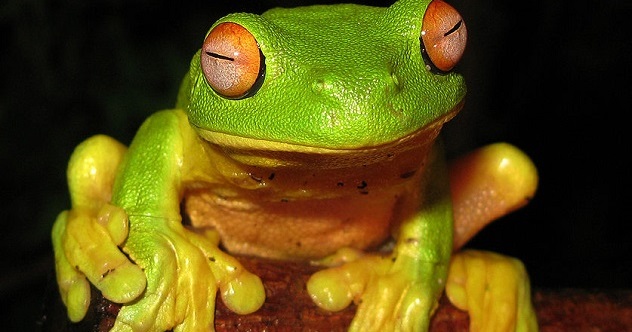
Note: In this article, “superpowers” means real biological adaptations that look wildly unreal. No capes, no radioactive swamp accidentsjust evolution showing off.
Frogs may look like soft little blobs with jumpy legs and questionable eye contact, but do not be fooled. The amphibian world is packed with creatures that freeze solid, glide through forests, hide their own blood, weaponize poison, and even raise babies in places no parenting book would recommend. If superheroes had a wetland division, frogs would be running the meeting from a lily pad.
The title “10 Frogs With Freakish Superpowers” sounds like comic-book bait, but the facts are very real. Frogs and toads have survived for millions of years by turning ordinary body parts into survival technology: skin becomes armor, feet become parachutes, stomachs become nurseries, and sometimes bones become claws. Nature, apparently, skipped the focus group and went straight to “make it weird.”
Below are ten frogs with abilities so strange they feel invented. They are not just fun facts; they are examples of adaptation, environmental pressure, predator defense, reproductive strategy, and evolutionary creativity. Some are beautiful. Some are disturbing. A few are both, which is basically the amphibian brand.
1. The Hairy Frog: The Bone-Claw Brawler
The hairy frog, also called the horror frog or Wolverine frog, earns its dramatic nickname honestly. When threatened, this Central African frog can push sharp bone structures through the skin of its toes, creating claw-like weapons. Unlike a cat’s claws, these are not made of keratin. They are actual bone. Yes, this frog basically says, “I will injure myself to make this fight worse for you.”
Male hairy frogs also develop hair-like skin structures along their sides and thighs during breeding season. These structures are believed to increase surface area for oxygen absorption while the male stays in water near eggs. So this frog has two freakish talents: emergency bone weapons and temporary “hair” for better breathing. Somewhere, a superhero writer is taking notes.
Superpower: Retractable bone claws
This adaptation likely helps the frog defend itself from predators. It is not elegant, but it is effective in the same way a panic button attached to a chainsaw would be effective.
2. The Wood Frog: The Living Frogsicle
The wood frog is one of North America’s most astonishing amphibians because it can survive being frozen. During winter, much of its body water turns to ice. Its heart stops beating. Its breathing halts. Brain activity drops dramatically. By ordinary animal standards, that sounds like the end. For the wood frog, it is just seasonal scheduling.
As temperatures fall, the frog’s body produces cryoprotectants such as glucose and urea, which help protect cells from damage. Ice forms outside the cells rather than inside them, reducing the risk of cellular rupture. When spring returns and temperatures rise, the frog thaws, restarts, and hops away like nothing happened. Meanwhile, humans complain when the office thermostat is two degrees off.
Superpower: Freeze-and-thaw survival
The wood frog’s cold tolerance helps it live in northern forests and breed early in temporary spring pools before many predators arrive.
3. The Glass Frog: The Invisible Sleeper
Glass frogs are famous for translucent skin that lets observers see internal organs through the belly. That alone is strange enough to make them look like biology-class stickers. But recent research has made them even more fascinating: while resting, some glass frogs can become more transparent by hiding a large portion of their red blood cells in the liver.
Blood is usually a problem for transparency because red blood cells absorb light and make tissues visible. Glass frogs appear to solve that problem by temporarily pulling many of those cells out of circulation while they sleep. The result is camouflage so good that the frog nearly disappears against a leaf. It is basically the amphibian version of closing your laptop and pretending you are not home.
Superpower: Blood-hiding camouflage
This ability helps glass frogs avoid predators during the vulnerable hours when they are resting in plain sight on vegetation.
4. The Golden Poison Frog: The Tiny Toxic Tyrant
The golden poison frog is small, bright, and dangerously overqualified in the defense department. Native to Colombia’s rainforests, this frog produces batrachotoxin, one of the most powerful natural toxins known. Its vivid yellow, orange, or greenish color is not a fashion choice. It is a warning sign that says, “Please choose a different snack.”
In the wild, golden poison frogs are believed to gain their toxins from their diet, likely from certain insects and arthropods. In captivity, where their diet is different, they become far less toxic. That detail is important because it shows the frog is not simply a poison machine; it is part of a chemical network involving habitat, prey, and evolution.
Superpower: Skin-based chemical defense
The golden poison frog does not need claws, fangs, or a scary roar. Its skin is enough to make predators regret every life decision leading up to lunch.
5. Wallace’s Flying Frog: The Rainforest Glider
Wallace’s flying frog does not truly fly, but it glides well enough to deserve its dramatic name. Found in the rainforests of Southeast Asia, this tree-dwelling frog has large webbed feet and loose skin flaps that catch the air when it leaps from branches. By spreading its limbs wide, it can glide from tree to tree or down to the forest floor.
This is not a casual hop. It is controlled falling with style. Oversized toe pads help the frog stick its landing on tree trunks and branches. In a dense rainforest canopy, gliding can help avoid predators, reach new feeding areas, or move efficiently through a vertical world where the ground is not always the safest place to be.
Superpower: Parachute-style gliding
Wallace’s flying frog turns webbed feet into living air brakes, proving that sometimes the best escape plan is to become a tiny green hang glider.
6. The Surinam Toad: The Backpack Nursery
The Surinam toad is technically a toad, but all toads are frogs, so it absolutely belongs in this lineup. This flat, leaf-like aquatic amphibian has one of the strangest reproductive strategies in the animal kingdom. After mating, eggs become embedded in the female’s back, where the skin grows around them in a honeycomb-like pattern.
The developing young remain protected in these pockets until they emerge as fully formed little toads. No free-swimming tadpole stage is needed outside the mother’s body. It is efficient, protective, and deeply unsettling if you have a strong reaction to holes. The Surinam toad is basically wearing a nursery on its back and acting as if that is a normal Tuesday.
Superpower: Skin-pocket parenting
This reproductive strategy protects developing young from many aquatic predators and gives them a safer start in life.
7. Darwin’s Frog: The Dad With a Throat Full of Babies
Darwin’s frog, native to the temperate forests of Chile and Argentina, has a parenting strategy that sounds like a dare. After the female lays eggs, the male guards them. When the embryos begin to move, he takes them into his vocal sac, where they continue developing until they emerge as froglets.
In most frogs, vocal sacs help males call for mates. In Darwin’s frog, the vocal sac becomes a living nursery. The father carries the young in his throat while they grow. It is one of the most memorable examples of paternal care among amphibians. It also makes every human complaint about diaper duty seem a little less impressive.
Superpower: Vocal-sac brooding
This adaptation gives developing young protection during a vulnerable stage and turns the male’s calling equipment into a baby carrier.
8. The Gastric-Brooding Frog: The Stomach Nursery
The gastric-brooding frog may be extinct, but its superpower remains one of the most astonishing ever documented. Native to Australia, female gastric-brooding frogs swallowed fertilized eggs and raised the developing young inside the stomach. During this process, the stomach stopped functioning as a digestive organ so the mother would not digest her offspring.
The young developed inside her and eventually emerged from her mouth as small frogs. It sounds like science fiction written during a fever, but it was real. This species is especially important because it reminds us that extinction does not just erase animals; it erases biological possibilities we may never fully understand again.
Superpower: Turning the stomach into a womb
The gastric-brooding frog showed how extreme reproductive adaptation can become. Sadly, its disappearance also shows how fragile unusual species can be.
9. The Water-Holding Frog: The Desert Canteen
Australia’s water-holding frogs survive dry periods by burrowing underground and entering a dormant state known as aestivation. Some form a cocoon-like layer from shed skin that helps reduce water loss. They can store water in the bladder and wait out harsh conditions until rain returns.
When heavy rains finally arrive, these frogs emerge quickly to feed and breed in temporary pools. Their timing must be sharp because desert water can vanish fast. The water-holding frog’s life is a masterclass in patience, resource management, and not wasting moisture. Basically, it is the amphibian version of a survival expert with a built-in water bottle.
Superpower: Long-term drought survival
This frog can endure dry conditions by slowing down, sealing in moisture, and waiting underground for the desert to become a wet playground again.
10. The Paradoxical Frog: The Frog That Shrinks With Age
Most animals grow larger as they mature. The paradoxical frog laughs politely at that rule and does something weirder. Its tadpoles can be several times larger than the adult frog. During metamorphosis, instead of simply growing into a bigger adult, the animal appears to “shrink” into its final form.
This strange life history gives the paradoxical frog its name. The oversized tadpoles may benefit from living in warm, food-rich aquatic environments where growing large before metamorphosis can be useful. Still, watching a giant tadpole become a smaller frog feels backward, like seeing a teenager turn into a toddler with a mortgage.
Superpower: Reverse-looking growth
The paradoxical frog turns the typical idea of development upside down, proving that in nature, even growing up can come with a plot twist.
Why Frogs Evolve Such Freakish Abilities
Frog superpowers are not random party tricks. They are solutions to serious survival problems. Predators want to eat frogs. Climate can freeze or dry them. Eggs and tadpoles are vulnerable. Habitats change. Diseases spread. In response, frogs have evolved defenses and life strategies that may look bizarre but serve clear biological purposes.
Skin is especially important. Frogs breathe, drink, defend, and communicate partly through their skin. That makes them incredibly adaptable, but also highly sensitive to pollution, disease, and climate shifts. Their unusual abilities are impressive, yet many frog species are threatened by habitat loss, invasive species, chytrid fungus, pesticides, and changing weather patterns.
That is the serious side of this slimy superhero story. Frogs are funny, fascinating, and occasionally nightmare-shaped, but they are also environmental indicators. When frog populations decline, ecosystems may be sending a warning. Protecting wetlands, forests, streams, and clean water does not just help frogs. It helps the insects, birds, reptiles, mammals, and people connected to those habitats.
Experience Section: What These Freakish Frogs Teach Us
Spending time learning about frogs changes the way you look at ordinary ponds, creeks, and rainy nights. At first, frogs seem simple: they jump, croak, eat bugs, and vanish when you get too close. But once you discover the wood frog freezing through winter or the glass frog hiding its blood while sleeping, even a common backyard frog starts to feel like a tiny mystery wearing green pajamas.
One of the best experiences related to this topic is simply listening. On warm evenings after rain, frogs can turn a ditch, garden pond, or wetland trail into a full orchestra. Different species call in different rhythms, from deep bullfrog notes to high peeps and trills. You may not see them at first. Frogs are excellent at making sound from invisible locations, as if the mud itself has opinions. But the longer you listen, the more the habitat comes alive.
Another memorable experience is observing how cautious frogs are. A frog at the edge of a pond may sit perfectly still, pretending to be a wet leaf with legs. Move too fast, and it disappears with one splash. That simple jump is connected to the same evolutionary story as gliding frogs and burrowing frogs. Every movement has a purpose: escape, feeding, mating, or staying hidden long enough to survive another night.
For readers, families, students, or nature lovers, frogs offer an easy gateway into biology. You do not need a rainforest expedition to appreciate them. A local nature center, a clean stream, or a backyard water feature can reveal frog behavior up close. Watching tadpoles develop is especially powerful because metamorphosis feels like magic happening in slow motion. A small swimming comma gradually becomes a legged, air-breathing animal. No special effects required.
The stranger species in this list also teach humility. Human inventions are impressive, but evolution has already explored wild design ideas: antifreeze bodies, chemical armor, skin nurseries, throat nurseries, parachute feet, and drought-proof cocoons. Frogs remind us that nature does not need to be large to be spectacular. Sometimes the most astonishing creature in the forest is not a tiger or eagle. Sometimes it is a two-inch amphibian sitting quietly on a leaf, hiding its blood so nobody notices it.
The practical lesson is clear: protect the places frogs live. Avoid polluting waterways, reduce pesticide use, support wetland conservation, and never collect wild frogs as pets. Their superpowers work best in the ecosystems that shaped them. Remove the clean water, forest cover, or seasonal pools, and even the weirdest biological tricks may not be enough.
In the end, frogs are more than cute rain-singers. They are survivors, inventors, parents, chemists, climbers, gliders, and occasionally tiny horror-movie props with excellent scientific credentials. The more you learn about them, the harder it becomes to see a frog as ordinary again.
Conclusion
Frogs are proof that evolution has a wild imagination. The ten species above show how survival can take astonishing forms, from the hairy frog’s bone claws to the wood frog’s frozen body, the glass frog’s disappearing act, and Darwin’s frog’s throat-based daycare. These adaptations may sound freakish, but each one helps solve a real problem in the frog’s environment.
That is what makes frogs so compelling for nature lovers, students, and curious readers. They are small animals with enormous biological stories. Some are toxic. Some are transparent. Some glide, shrink, burrow, brood, freeze, or carry their babies in places that would make a pediatrician faint. Together, they show that the natural world is far more inventive than fiction.
So the next time you hear frogs calling after rain, remember: somewhere in the amphibian family tree, a frog is surviving winter as ice, wearing poison like armor, or turning its body into a nursery. Superpowers are real. They are just a little slimier than Hollywood promised.