Choosing a tiefling name in Dungeons & Dragons 5e is not just a cosmetic decision. It is the first dramatic entrance your character makes before they ever roll initiative, fail a stealth check, or accidentally intimidate a tavern keeper by smiling too enthusiastically. A great tiefling name can hint at infernal ancestry, personal rebellion, mysterious charm, tragic backstory, or the simple fact that your warlock absolutely owns three capes.
Tieflings are one of the most visually iconic species in D&D 5e: horns, tails, unusual eyes, dramatic skin tones, and a reputation they may or may not deserve. Their names often reflect that same tension. Some tieflings use traditional Infernal-inspired names. Others take names from the culture where they grew up. Many adopt “virtue names,” choosing a word like Hope, Creed, Glory, or Sorrow as a personal statement. In other words, tiefling names are wonderfully flexibleand yes, occasionally very extra. That is part of the fun.
This guide gives you more than 160 tiefling name ideas for your next D&D 5e character, organized by style, personality, class, and roleplaying flavor. Whether you are creating a silver-tongued bard, a brooding paladin, a chaotic rogue, or a wizard who looks like they were born during a candlelit prophecy, you will find a name here that feels campaign-ready.
What Makes a Good Tiefling Name?
A strong tiefling name usually does three things: it sounds memorable, it matches the character’s background, and it gives the table something to imagine. Tiefling names in D&D often fall into a few broad categories. Some sound ancient and Infernal, with sharp consonants, flowing vowels, and a faint “do not open this cursed book” energy. Others are virtue names, built around ideals, emotions, or concepts. A tiefling named Mercy, for example, immediately raises questions. Are they kind? Ironic? A cleric? A bounty hunter with branding issues?
The best name should also fit how your character sees themselves. A tiefling who grew up among humans might have a local human name and only later discover their infernal lineage. A tiefling raised in a tiefling community might proudly carry a traditional name. A tiefling who rejected their past might choose a virtue name as a declaration of independence. Names are tiny backstory machines. Turn the crank and character drama comes out.
Classic Infernal Tiefling Names
These names work well for characters who lean into their fiendish heritage, ancient family line, or mysterious magical presence. They are ideal for warlocks, sorcerers, wizards, rogues, and anyone who enjoys walking into a room as if the torches dimmed out of respect.
Masculine Tiefling Names
- Akzar
- Barakos
- Caelum
- Damakir
- Ekvar
- Feron
- Gavrix
- Haemir
- Iados
- Kaedros
- Lazren
- Malvek
- Narvian
- Orzeth
- Pyros
- Ravok
- Skamos
- Therion
- Valcrix
- Zarion
Feminine Tiefling Names
- Akta
- Bryseis
- Crimella
- Damaia
- Elixira
- Farideh
- Haelyra
- Invara
- Kallista
- Lerissa
- Makaria
- Nemeia
- Orianna
- Pyrelle
- Rieta
- Serapha
- Tavira
- Velatha
- Xymera
- Zethira
Gender-Neutral Tiefling Names
- Ashren
- Baelith
- Craven
- Dusk
- Emberis
- Fable
- Gloom
- Harrow
- Ivren
- Jaxis
- Kael
- Lumen
- Mordai
- Nox
- Onyx
- Riven
- Solace
- Thorn
- Vesper
- Zephyr
Tiefling Virtue Names
Virtue names are one of the coolest naming traditions associated with tieflings. They are not always sweet or noble. A virtue name can be aspirational, sarcastic, poetic, tragic, or deeply personal. A tiefling named Patience might be a gentle healeror the most impatient barbarian at the table, which is arguably funnier.
Heroic Virtue Names
- Valor
- Mercy
- Honor
- Justice
- Grace
- Hope
- Glory
- Resolve
- Truth
- Radiance
- Bravery
- Faith
- Charity
- Promise
- Kindle
Dark or Dramatic Virtue Names
- Sorrow
- Ruin
- Despair
- Silence
- Regret
- Vengeance
- Fury
- Grief
- Hunger
- Woe
- Ash
- Dread
- Hollow
- Reckoning
- Sever
Poetic Tiefling Virtue Names
- Wander
- Whisper
- Echo
- Starlight
- Moonfall
- Wildfire
- Velvet
- Afterglow
- Lantern
- Tempest
- Omen
- Story
- Mirage
- Frost
- Bloom
Tiefling Names by Class
Your tiefling’s class can help shape the perfect name. A paladin named Mercy feels different from a rogue named Mercy, and both feel different from a sorcerer named Mercy who keeps setting curtains on fire. Here are name ideas sorted by popular D&D 5e classes.
Tiefling Warlock Names
- Azravel
- Malphas
- Veyrith
- Nyxara
- Omen
- Zephrix
- Caindusk
- Hex
- Velkor
- Seraphyx
- Nightbloom
- Rhaziel
- Thirteen
- Vow
- Xarven
Tiefling Bard Names
- Lyris
- Charm
- Velvet
- Cadence
- Amarion
- Sable
- Refrain
- Lyric
- Vaelora
- Silver
- Encore
- Belladren
- Honeythorn
- Rhapsody
- Zamira
Tiefling Rogue Names
- Shade
- Locke
- Vex
- Slip
- Cinder
- Knave
- Rook
- Whisper
- Dagger
- Mirex
- Trick
- Silk
- Blackstep
- Hush
- Ravel
Tiefling Paladin Names
- Honor
- Temerity
- Gravesun
- Aurelian
- Sanctus
- Mercy
- Vigil
- Truth
- Righteous
- Solanar
- Devotion
- Brightflame
- Haven
- Oath
- Justice
Tiefling Sorcerer and Wizard Names
- Pyraxis
- Velmora
- Arcanis
- Emberlyn
- Runeth
- Mystraen
- Ignivar
- Lunessa
- Spellscar
- Vaelith
- Starfall
- Cyranox
- Ashspell
- Vyrra
- Quillion
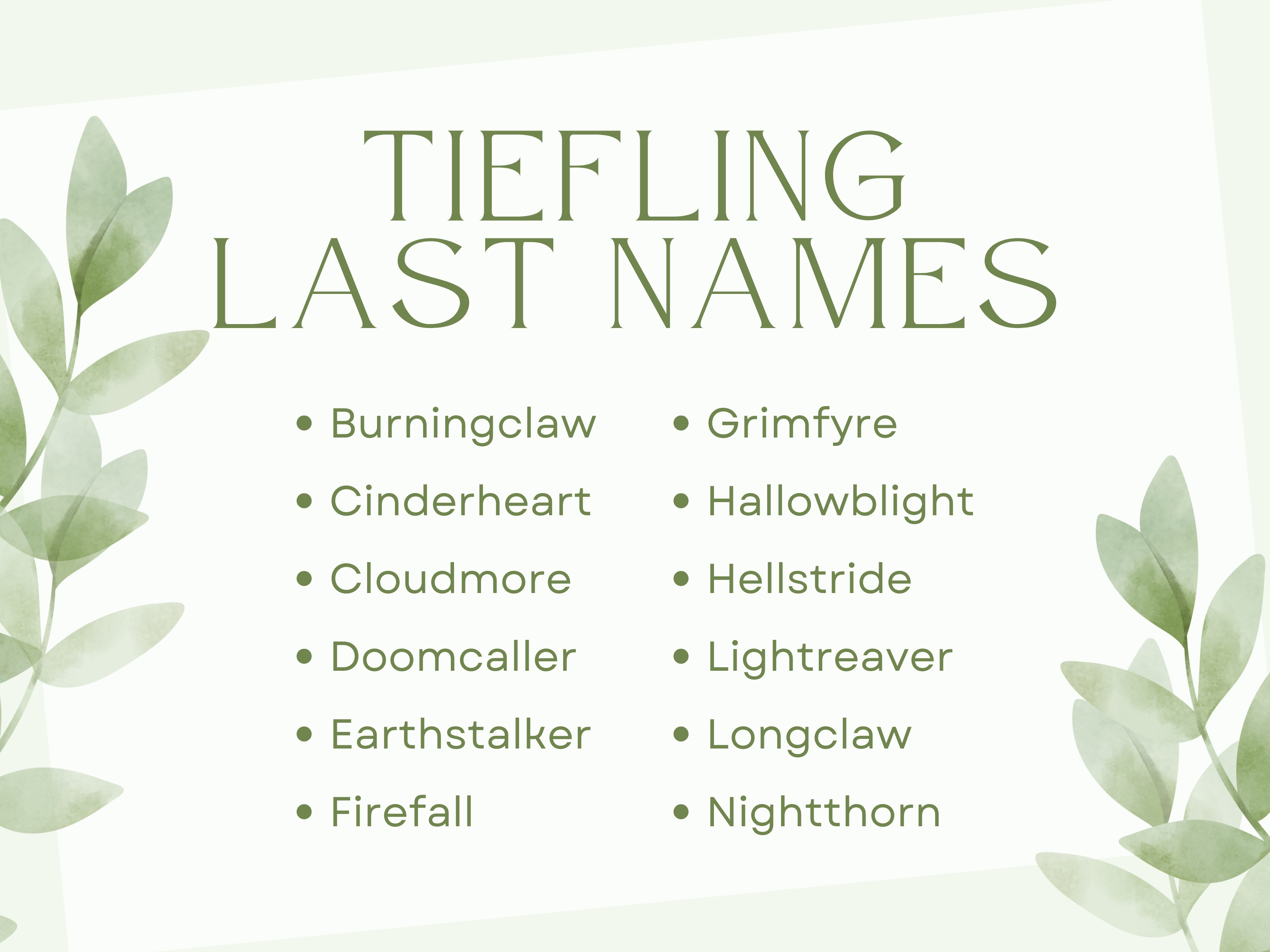
Tiefling Surnames and Family Names
A surname can make your character feel rooted in the world. It may represent a family, a city, a reputation, or a rumor that refuses to die. Tiefling surnames can sound noble, ominous, elegant, or slightly suspiciousperfect for a character who insists the glowing eyes are “just a family thing.”
- Ashmantle
- Blackhorn
- Cinderveil
- Duskwhisper
- Emberwake
- Fellstar
- Gloamspire
- Hellbrook
- Ironbrand
- Kindlemark
- Lowflame
- Moonscar
- Nightvale
- Oathbinder
- Pyreroot
- Ravenshade
- Smokeveil
- Thornspire
- Vexmoor
- Wyrmglass
Unique Tiefling Name Combinations
Want a complete name ready for your character sheet? Try pairing a first name with a virtue name, a surname, or a nickname. These combinations are designed to feel usable at the table without sounding like you spilled alphabet soup into an Infernal dictionary.
- Kael Ashmantle
- Serapha Cinderveil
- Vex Ravenshade
- Mercy Blackhorn
- Azravel Nightvale
- Kallista Emberwake
- Riven Oathbinder
- Nyxara Thornspire
- Valor Fellstar
- Velvet Duskwhisper
- Pyraxis Wyrmglass
- Truth Moonscar
- Zethira Hellbrook
- Harrow Smokeveil
- Lyris Gloamspire
- Omen Vexmoor
- Grace Kindlemark
- Malvek Ironbrand
- Sable Lowflame
- Therion Pyreroot
How to Choose the Best Tiefling Name
Start with your character’s origin. Were they raised by tieflings, humans, elves, criminals, priests, merchants, or a traveling circus that definitely was not haunted? A tiefling raised in a noble house might have a polished name like Serapha Veyrune. A streetwise rogue might go by Hush. A paladin might abandon an old name and become Justice after taking an oath.
Next, consider tone. D&D campaigns vary wildly. In a gothic horror campaign, names like Sorrow, Vesper, and Duskwhisper feel right at home. In a heroic fantasy campaign, Valor, Radiance, and Brightflame may fit better. In a comedy-heavy game, a tiefling named Patience who immediately starts arguments is table gold.
Finally, say the name out loud. This is the secret test. If you cannot introduce your character without tripping over the syllables like a goblin in roller skates, simplify it. A name should be memorable, not a pronunciation boss fight.
Tips for Creating Your Own Tiefling Name
If you want to invent an original tiefling name, mix sharp sounds with elegant endings. Consonants like k, v, z, r, x, and th often create an Infernal tone, while endings like -ia, -os, -eth, -ara, -ion, and -iel give the name fantasy polish. For example, you can combine “Vel” with “ara” to create Velara, or “Zar” with “ion” to create Zarion.
You can also build names from meaning. A fire-themed tiefling might use Ember, Cinder, Pyraxis, or Ashmantle. A celestial-leaning tiefling could choose Grace, Solace, Radiance, or Haven to contrast with their infernal ancestry. A morally complicated rogue might prefer Vex, Trick, Rook, or Silence. The name should not explain everything, but it should open a door.
of Real Table Experience: What Tiefling Names Actually Do in Play
In actual D&D play, a tiefling name becomes more than a label very quickly. The first time the Dungeon Master says it in a dramatic NPC voice, the name becomes part of the campaign’s rhythm. A name like “Riven Ashmantle” gives the DM something weighty to use during serious scenes. A name like “Charm” gives the whole table permission to expect mischief, flirtation, or spectacularly bad decisions involving a lute. Neither is better; they simply create different expectations.
One of the best experiences with tiefling characters is watching a name evolve. A player might begin with an Infernal name like Malvek because it sounds cool, then slowly reveal that the character hates the family that gave it to him. Later, after a major story moment, he might adopt the virtue name Mercynot because he was always merciful, but because he is trying to become someone better. That kind of name change can feel more powerful than a new magic item. Though, to be fair, players still want the magic item.
Virtue names are especially useful for roleplay because they invite questions. Why would someone call themselves Despair? Did they choose it, or was it given to them? Is Hope genuinely hopeful, or is the name a shield against a cruel world? Is Glory noble, vain, or both? These names help other players interact with your character. They are conversation hooks disguised as nouns.
For Dungeon Masters, tiefling names can also make worldbuilding easier. A city with tieflings named Creed, Ash, Sorrow, and Radiance feels different from one where tieflings use only noble family names. You can create cultural patterns: perhaps young tieflings receive birth names, then choose a virtue name after coming of age. Perhaps noble tiefling houses keep Infernal surnames as a point of pride. Perhaps a religious order encourages tieflings to take names like Grace, Vigil, and Oath to symbolize chosen identity over inherited reputation.
Another practical tip from the table: avoid names that are too similar to other party members. If your party already has a Kael, do not name your tiefling Kairon unless everyone enjoys confusion. Also be careful with joke names. A silly name can be hilarious in a one-shot, but in a two-year campaign, “Lord Hotpants Doomtail” may lose some of its majesty around session thirty-seven. Unless your group is into that. No judgment. The dice have seen worse.
The strongest tiefling names usually leave room for growth. A rogue named Whisper might become a famous hero whose name is shouted in public squares. A paladin named Vengeance might learn forgiveness. A bard named Velvet might secretly be the most dangerous negotiator in the realm. Let the name suggest a beginning, not a cage. The campaign will add the scars, songs, and embarrassing tavern stories later.
Conclusion
The best tiefling names for D&D 5e combine sound, story, and personality. Whether you choose an Infernal name like Azravel, a virtue name like Mercy, a poetic name like Moonfall, or a full title like Serapha Cinderveil, the right choice should make you excited to introduce your character at the table. Tieflings are built for dramatic entrances, complicated histories, and unforgettable roleplay. Give yours a name that can survive bad dice rolls, suspicious villagers, and at least one party member asking, “Wait, are your horns natural?”