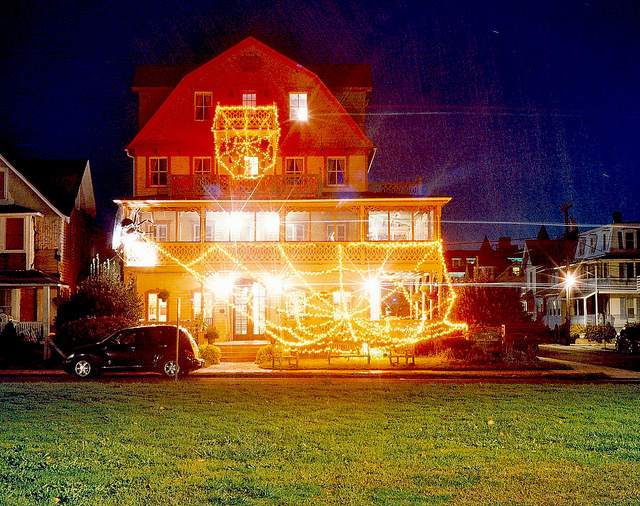
Every neighborhood has one. You know the house. The one that starts looking suspiciously spooky in late September. The one with a twelve-foot skeleton leaning over the porch like it is checking the mail. The one with fog rolling across the lawn, glowing pumpkins on the steps, rubber rats in the bushes, and a witch who appears to have crashed headfirst into a maple tree. By Halloween night, this house is no longer a house. It is a local landmark, a low-budget theme park, and possibly the reason small children develop both courage and excellent candy-route strategy.
That one house on your street that gets really, really into Halloween is more than a decorated front yard. It is a public service. It gives the block a pulse. It turns an ordinary sidewalk into a tiny adventure. It makes parents slow down, kids point, teenagers pretend not to be impressed, and adults whisper, “Okay, that is actually awesome.” In a world where many people barely know their neighbors, the Halloween house says, “Come closer. Laugh a little. Be mildly terrified. Also, please take a fun-size chocolate bar.”
This article celebrates the over-the-top Halloween house: why people love it, how it became part of American neighborhood culture, what makes a display memorable, and why a porch full of fake cobwebs can somehow make a community feel more alive. Grab your flashlight. Avoid the animatronic clown. Let’s knock on the door.
Why the Big Halloween House Feels So Awesome
The magic of a great Halloween display is that it changes the mood of an entire street. A regular lawn becomes a haunted graveyard. A quiet porch becomes a stage. A garage becomes a monster mouth. For one month, the rules of respectable suburban landscaping are politely thrown into a cauldron. Suddenly, a giant spider on the roof is not a problem; it is a feature.
Part of the fun comes from surprise. Most holidays are predictable from the curb. Christmas has lights. Fourth of July has flags. Thanksgiving has wreaths and inflatable turkeys that look like they have seen things. But Halloween allows complete creative chaos. One house might go gothic with flickering lanterns and skeletal crows. Another might build a pirate ship in the driveway. A third might create a zombie wedding, because apparently even the undead have seating charts.
The best Halloween houses are not just decorated; they are committed. They have a theme. They have timing. They have someone inside who has spent three weekends untangling orange lights while muttering, “This is fun. This is definitely fun.” That dedication is exactly what makes neighbors love it. The house becomes a seasonal tradition, and the people behind it become unofficial mayors of October.
A Little History: Halloween Was Made for Neighborhood Theater
Halloween’s roots stretch far deeper than plastic pumpkins and motion-sensor zombies. Many historians connect the holiday’s early influences to Samhain, an ancient Celtic festival marking the end of harvest season and the arrival of winter. Over time, European customs, Christian observances, immigrant traditions, folk beliefs, costumes, pranks, and community gatherings all blended into the Halloween Americans recognize today.
In the United States, Halloween grew especially strong as a neighborhood holiday. Trick-or-treating, costume parties, pumpkin carving, school events, and porch decorations made the celebration social and walkable. Unlike holidays that happen mostly around a dining table, Halloween spills outside. It belongs to sidewalks, stoops, yards, apartment hallways, cul-de-sacs, and front doors.
That is why the “one house” matters. It carries forward the holiday’s spirit of playful performance. It says the neighborhood is not just a collection of buildings; it is a place where people can create a shared memory. Nobody needs a ticket. Nobody needs a password. You just follow the laughter, the fog machine, and the sound of someone’s dad saying, “Careful, the werewolf moves.”
What Makes a Halloween House Truly Legendary?
Not every decorated home becomes famous on the block. A few pumpkins are charming. A wreath with a bat on it is festive. But the house everyone talks about has a few special ingredients: scale, personality, storytelling, and just enough ridiculousness to make people smile.
1. A Clear Theme
A strong Halloween display usually has a story. It might be a haunted cemetery, a witch’s kitchen, a mad scientist lab, a ghost pirate ship, a pumpkin patch gone rogue, or a skeleton family barbecue. The theme gives the chaos direction. Instead of looking like a seasonal aisle exploded, the yard feels like a scene.
The theme does not have to be expensive. Some of the best displays use cardboard tombstones, thrift-store sheets, homemade signs, old lanterns, and clever lighting. A skeleton holding a coffee mug beside a sign that says “Dead Tired” can be more memorable than a pricey animatronic that screams every eight seconds like it just opened its electric bill.
2. A Sense of Humor
Scary is good. Funny-scary is often better. The most beloved Halloween houses usually understand that the goal is not to traumatize the mail carrier. It is to create delight. A skeleton mowing the lawn, a vampire waiting for a rideshare, a ghost holding a “Boo, but politely” sign, or a zombie reaching out of a flower bed can turn fear into neighborhood comedy.
Humor also makes the display friendly for all ages. Little kids may not appreciate a horror-movie-level jump scare, but they absolutely understand a skeleton dog chasing a skeleton squirrel. That kind of visual joke gives everyone a way into the fun.
3. Lighting That Builds the Mood
Lighting is the secret sauce of Halloween decorating. A simple porch can look theatrical with orange bulbs, purple pathway lights, flickering lanterns, or a glowing jack-o’-lantern. Good lighting also helps visitors move safely, which matters when your yard includes extension cords, fake bones, and a seven-year-old dressed as a dragon who cannot see through the mask.
The best displays balance spooky shadows with practical visibility. Dark corners are dramatic, but walkways should be clear and easy to navigate. A haunted house loses points if Grandma trips over a foam tombstone while trying to compliment the décor.
4. Movement and Sound
Motion brings a Halloween display to life. A waving ghost, a rattling skeleton, a bubbling cauldron, or a crow that caws when someone walks by can transform a static yard into a mini attraction. Sound matters too, whether it is creaking doors, distant thunder, spooky organ music, or a playlist that knows when to stop before the neighbors file a peaceful but firm complaint.
The trick is restraint. One animatronic witch is charming. Five animatronic witches shrieking in different keys may accidentally summon the homeowners association.
Why Americans Keep Going Bigger for Halloween
Halloween has become one of America’s most expressive seasonal celebrations. Families spend on candy, costumes, decorations, pumpkins, pet outfits, party supplies, and front-yard displays. In recent years, oversized decorations have become especially popular, from towering skeletons to giant spiders, inflatable monsters, glowing arches, and elaborate porch scenes.
Part of the trend is social. People love sharing photos of creative yards, and Halloween displays are perfect for quick videos, neighborhood groups, and “you have to see this” texts. Part of it is emotional. Halloween gives adults permission to play. It offers a break from routine, a chance to make something silly, spooky, or spectacular without needing a practical reason.
And part of it is community. A decorated house creates a destination. It gives families a reason to walk around. It starts conversations between neighbors who might otherwise only wave while taking out the trash. A big Halloween house is basically an icebreaker wearing a vampire cape.
The Social Power of the Over-the-Top Halloween House
At its best, that one Halloween house becomes a gift to the neighborhood. It is not only about the homeowners showing off their decorating skills. It is about creating a moment other people can enjoy. Children remember the house with the fog. Parents remember the house that handed out full-size candy bars. Teenagers remember the house that scared their friend so badly he dropped his plastic sword. These memories stick because they happen in a shared place.
Neighborhood traditions often begin accidentally. One family adds a few decorations. Kids love it. The next year, the family adds more. Then neighbors start expecting it. Soon people are asking, “Are you doing the graveyard again this year?” Now the decorators are trapped by their own success, but in the best possible way.
That tradition can even inspire friendly competition. One house puts up ghosts. Another adds pumpkins. Someone else installs a spider web across the porch. Suddenly the whole street has energy. Nobody needs to win. The point is participation. Halloween works beautifully when everyone adds a little weirdness to the recipe.
How to Create a Memorable Halloween Display Without Losing Your Mind
If you want your house to become the one everyone talks about, you do not need a Hollywood budget. You need a plan, a theme, a few focal points, and the wisdom to avoid buying every skeleton within a twenty-mile radius.
Start With One Big Idea
Choose a theme before you shop. A haunted garden, ghost hotel, pumpkin carnival, monster laboratory, or classic cemetery gives you a clear direction. When every piece supports the same idea, even simple decorations look intentional.
Create a Focal Point
Every great display needs one thing people notice first. It might be a giant skeleton, a glowing doorway, a spooky tree, a coffin on the porch, or a cauldron with bubbling lights. The focal point anchors the scene and helps the rest of the decorations feel connected.
Use Layers
Think in zones: sidewalk, yard, porch, windows, and front door. Add low decorations near the ground, medium decorations at eye level, and taller decorations for drama. Layering makes the display feel immersive instead of flat.
Add Homemade Details
DIY touches make a Halloween house feel personal. Hand-painted tombstones with funny names, homemade potion labels, paper bats in the windows, or a scarecrow wearing old family clothes can be more charming than store-bought props. Also, homemade decorations give you permission to be imperfect. On Halloween, crooked lettering just looks cursed.
Safety: Keep the Scares Fake and the Sidewalks Real
A great Halloween house should thrill visitors, not send them into the shrubbery. Safety is part of good design, especially if trick-or-treaters will walk through or near your display.
Keep pathways clear of cords, stakes, props, toys, loose rugs, and decorations that could trip someone. Use outdoor-rated lights and extension cords. Avoid overloading outlets. Secure inflatables, hanging decorations, and tall props so wind does not turn your ghost into a neighborhood weather event. If you use fog, make sure it does not hide steps or uneven ground.
Flameless candles are usually a smarter choice than real flames, especially around costumes, dried leaves, paper decorations, and excited children. Jack-o’-lanterns can glow beautifully with battery-operated lights. The pumpkins will not know the difference, and your porch will be much less likely to become a cautionary tale.
For trick-or-treat night, make your entrance easy to find. Good lighting helps families feel welcome. If your display includes jump scares, consider keeping the scariest effects away from very young children. A toddler dressed as a bumblebee deserves candy, not a lifelong grudge against motion sensors.
Full-Size Candy Bars: The Nuclear Option
We cannot discuss the legendary Halloween house without addressing the ultimate neighborhood power move: full-size candy bars. Decorations make a house memorable. Full-size candy bars make it mythological.
Children track these houses with the seriousness of explorers mapping ancient treasure routes. Word spreads fast. “The blue house has full-size bars.” Suddenly, foot traffic increases. Parents pretend they are not interested, but they are absolutely interested. A full-size candy house becomes part of local folklore by 7:12 p.m.
Of course, you do not have to hand out giant chocolate to be generous. Small candies, allergy-friendly treats, stickers, glow sticks, pencils, mini toys, and non-food options can all make kids feel included. The best treat is one offered with warmth. Still, if you do choose full-size bars, please understand that you have entered the Halloween Hall of Fame and there may be expectations next year.
The Experience: Growing Up With “That House” on the Block
There is a special kind of childhood memory attached to the Halloween house. It begins before October 31. You notice the first decorations while riding your bike or sitting in the back seat of the car. Maybe it starts with one pumpkin. Then a scarecrow appears. A few days later, tombstones sprout from the lawn. By mid-October, there is a skeleton on the porch wearing sunglasses, and everyone understands that the season has officially begun.
As a kid, that house feels enormous. The driveway seems longer. The shadows seem darker. The porch light looks like a signal from another world. You walk toward it with your plastic pumpkin bucket bumping against your knee, trying to act brave because your friends are watching. The decorations are fake, obviously. You know this. Mostly. But when the werewolf growls from behind the shrubs, your legs briefly become spaghetti.
The adults love it too, though they try to be casual. Parents pause at the sidewalk and admire the work. Someone asks how long setup took. Someone else says, “Every year they add more.” A neighbor laughs because the skeleton in the rocking chair looks suspiciously like Uncle Gary after Thanksgiving dinner. For a few minutes, everyone is part of the same little scene.
The Halloween house also teaches kids how neighborhoods can feel magical. It shows that adults are not only rule-makers, bill-payers, and people who say “We have candy at home.” Adults can be artists. They can be pranksters. They can spend an entire Saturday building a cardboard mausoleum because joy sometimes requires duct tape.
Years later, people remember those houses clearly. They remember the fog curling over the grass. They remember the carved pumpkins lined up like glowing faces. They remember the woman at the door dressed as a friendly witch, the man pretending to be a statue, the candy bowl guarded by a skeleton hand, and the thrill of being scared in a place that was actually safe.
That is the real charm of the over-the-top Halloween house. It creates safe fear. It lets children test bravery in small doses. It lets adults play with imagination. It turns the familiar into something strange, but only for a night. Tomorrow, the yard will still be a yard. The porch will still be a porch. But tonight, under orange lights and plastic bats, it becomes a story.
Why This Belongs on the List of 1000 Awesome Things
Some awesome things are grand: mountain views, wedding dances, perfect summer days. Others are small and local, like the smell of leaves under your shoes or the first kid who yells “Trick or treat!” before you have even opened the door. That one house on your street that gets really, really into Halloween belongs on the list because it combines creativity, generosity, nostalgia, and community in one gloriously spooky package.
It is awesome because somebody cared enough to make the street more fun. It is awesome because kids will talk about it for weeks. It is awesome because even the grumpiest neighbor has to admit the skeleton mariachi band is impressive. It is awesome because it proves joy does not always need to be practical. Sometimes joy is a fog machine, six pumpkins, a talking raven, and a grown adult in a vampire cape saying, “Take two pieces, please.”
Conclusion
That one house on your street that gets really, really into Halloween is not just showing off. It is keeping a neighborhood tradition alive. It invites people outside, gives children a destination, sparks conversation, and reminds everyone that a little imagination can transform an ordinary block into a seasonal adventure.
The best Halloween displays are not measured only by size, cost, or the number of skeletons per square foot. They are measured by smiles, gasps, photos, laughter, and the number of people who slow down just to look. Whether the house has a simple pumpkin path or a full haunted-yard production, the spirit is the same: welcome to the fun, watch your step, and enjoy the weirdness.
So here is to the neighbors who climb ladders for fake cobwebs, test spooky sound effects in the driveway, buy candy too early and then have to buy it again, and somehow make October feel bigger for everyone else. Your house may be haunted, but your contribution is deeply alive. Awesome.