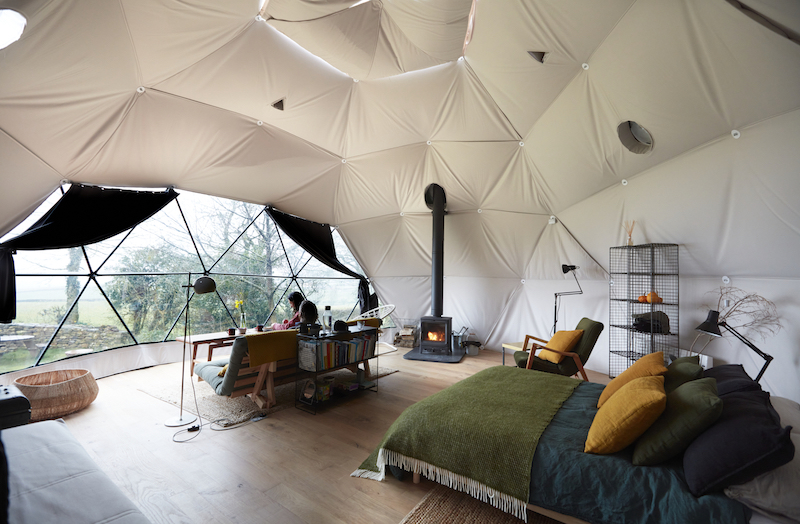
Some places ask you to arrive. Others politely grab your shoulders, remove your digital noise, hand you a cup of tea, and say, “Right, let’s remember how to be human.” Praktyka, a creative retreat tucked into the wild folds of North Devon, belongs firmly in the second category. It is not simply a place to sleep, although the sleeping part looks delightfully easy. It is a design-led eco retreat where architecture, nature, craft, and slow living meet without needing a group chat, a productivity app, or a laminated wellness schedule.
The name Praktyka means “practice” in Polish, and that idea shapes the entire experience. Practice is not perfection in the glossy, impossible sense. It is repetition, attention, patience, and the willingness to make something with your hands even when your first attempt looks like a potato wearing jewelry. At this North Devon retreat, creativity is treated less like a rare talent and more like a daily rhythm: walk, notice, make, rest, repeat.
Set near the North Devon coast, close to countryside, beaches, hedgerows, and the edge of Exmoor, Praktyka offers architectural cabins, a geodesic dome, a converted barn, gardens, workshops, and space for small gatherings. It is the kind of place that makes “unplugging” feel less like punishment and more like a very sensible life decision.
What Makes This Creative Retreat in North Devon Special?
North Devon is already doing quite a lot of the heavy lifting. The region is known for dramatic cliffs, long sandy beaches, coastal walks, quiet villages, wildlife-rich habitats, and landscapes that look as if they were designed by someone with an excellent sense of mood lighting. The North Devon Coast National Landscape covers a protected stretch of coast with places such as Woolacombe, Croyde, Saunton, Braunton Burrows, Hartland Peninsula, and Westward Ho! nearby. This is not scenery as wallpaper; it is scenery as teacher.
Praktyka builds on that setting by creating a retreat that is both restful and active. Guests can stay in design-conscious spaces, join creative workshops, gather with friends, walk the coast, cook slowly, read beside a wood burner, or simply watch clouds move over the Devon hills like nature’s own screensaver. The result is a creative retreat in North Devon that feels thoughtful rather than trendy.
A Place Built Around Practice, Not Performance
The most refreshing thing about Praktyka is that it does not treat creativity as a competition. There is no invisible judge standing behind you with a tiny clipboard. Instead, the retreat encourages the kind of making that begins with curiosity. Jewelry workshops, craft sessions, quiet writing time, drawing, photography, or simply noticing the shape of a leaf all count. The point is not to leave with a masterpiece worthy of a museum security guard. The point is to leave more awake than when you arrived.
This matters because creative retreats work best when they lower the pressure. Modern life often turns hobbies into side hustles and rest into something that must be optimized. Praktyka offers a calmer invitation: come here, slow down, and practice being present. Radical stuff, apparently.
The Setting: Wild North Devon as a Creative Partner
A creative retreat is only as good as the environment that holds it. North Devon has the rare ability to make even a short walk feel like a plot development. One moment you are crossing a lane edged with hedges; the next you are looking toward Atlantic water, sandy beaches, old stone walls, and hills that seem to roll away into another century.
The wider area includes the North Devon UNESCO Biosphere, a remarkable landscape connecting coast, farmland, dunes, rivers, woodland, and sea. Braunton Burrows, one of the region’s most important dune systems, sits within this ecological story. For visitors, that means a retreat here is not isolated from its surroundings. It is part of a living landscape where conservation, farming, tourism, wildlife, and community overlap.
The South West Coast Path Effect
The South West Coast Path runs through North Devon and offers some of the most inspiring walking in the region. Nearby stretches include views around Combe Martin, Ilfracombe, Woolacombe, Croyde, Saunton Sands, and Braunton Burrows. These routes are more than scenic cardio with better branding. Walking has a way of shaking ideas loose. Many writers, artists, designers, and professional overthinkers know the magic of a path: feet move, thoughts untangle, and suddenly the sentence, sketch, or solution that refused to appear at a desk arrives halfway up a hill.
For a guest at Praktyka, a morning walk can become part of the creative process. You might collect colors from the landscape for a painting, notice textures for a textile idea, photograph shadows on a gate, or simply return with a calmer nervous system and a strong opinion about which shoes were a mistake.
Beaches, Cliffs, and the Art of Looking Slowly
North Devon’s beaches are famous for good reason. Woolacombe, Croyde, and Saunton Sands are beloved for their broad horizons, surf culture, and open skies. Baggy Point, managed by the National Trust, adds cliffs, seabird views, and coastal drama. For creative people, these places offer a practical lesson: look longer. The ocean changes by the minute. Clouds alter the color of the water. Gorse, grasses, rocks, and dunes create patterns that no design software can improve without becoming annoying.
This slow looking is central to retreat culture. It gives the mind a break from constant input and allows attention to return. In a place like North Devon, inspiration is not forced. It sneaks in through salt air, footpaths, gardens, and the quiet luxury of having nowhere urgent to be.
Inside Praktyka: Dome, Cabin, Barn, and Gardens
Praktyka is not a one-size-fits-all retreat. It offers different spaces for different kinds of travelers: the dome for a magical glamping-style stay, the cabin for simple reflective living, and the barn for families or couples who want more home-like comfort. Together, they create a small, intimate retreat rather than a large resort. That scale matters. Creativity often needs quiet corners, not buffet lines and lobby music doing its best.
The Dome: A Circle for Rest and Imagination
The geodesic dome is one of Praktyka’s most distinctive spaces. It sits within the landscape with views toward the Devon hills and Exmoor, offering a balance of shelter and openness. Inside, guests find a warm, comfortable setting with natural materials, carefully chosen furniture, a wood burner, and room to lounge, sleep, read, or stare into the middle distance in a deeply artistic manner.
The dome suits travelers who want an experience that feels close to camping but with fewer arguments with tent poles. It has a sense of play built into its shape. Circles change behavior. People gather differently. Conversations soften. The space feels less like a room and more like a pause.
The Cabin: Simple Living for Creative Reflection
The cabin is designed for one or two adults and is especially appealing for solo creatives, couples, writers, and anyone who suspects their brain might work better without a dozen browser tabs open. Its purpose is to inspire reflection. With a private garden, outdoor shower, wood-fired bath, writing desk, compact kitchenette, and a pared-back interior, it treats simplicity as a feature rather than a compromise.
What makes the cabin compelling is its connection to daily rituals. Cooking, bathing, sleeping, and sitting outdoors become part of the retreat experience. The design encourages guests to slow down enough to notice these actions. That may sound small, but small is often where creativity hides. Big ideas are dramatic, but they are usually assembled from tiny observations.
The Barn: Comfort, Books, and Family-Friendly Calm
The Barn offers a more spacious stay, suitable for couples or small families. With two bedrooms, an open-plan kitchen and living area, underfloor heating, a Danish wood burner, mid-century furnishings, a broad library, and a garden setting, it feels like a home arranged for peace rather than clutter. The second bedroom can also function as a study, which is excellent news for guests who want to write, sketch, plan, or pretend they are writing while actually making another coffee.
The Barn shows that a creative retreat does not have to mean roughing it. Comfort supports creativity. Warm floors, good light, books within reach, and a proper kitchen can turn downtime into fertile thinking time. Not every breakthrough happens in a studio. Some arrive while stirring soup.
Workshops: Making With Your Hands
Creative workshops are central to the Praktyka experience. Led by artist and co-founder Ania Wawrzkowicz, the workshops include jewelry-making sessions such as lost wax carving, private group classes, intermediate sessions, gift workshops, and wedding ring-making experiences. The retreat’s workshop philosophy is welcoming: art is for everyone, including beginners who may arrive convinced they have the hand skills of a sleepy raccoon.
Lost wax carving is a particularly fitting activity for a place called Praktyka. It requires patience, touch, shaping, refining, and trust in process. You begin with wax, not gold. You carve, adjust, smooth, make tiny decisions, and gradually form something personal. That is a useful metaphor for creative life in general: start soft, keep working, and do not panic because the first version looks suspicious.
Why Craft Belongs at a Retreat
Craft pulls attention into the present. Unlike scrolling, which creates the illusion of doing something while gently stealing your soul in thumb-sized increments, making an object asks for full participation. Your eyes, hands, and imagination work together. Mistakes are visible, but so is progress. A ring, sketch, print, poem, or photograph becomes proof that attention can be shaped into something real.
This is why creative retreats feel different from ordinary vacations. A vacation may help you escape your routine. A retreat helps you re-enter your life differently. You come home not only with memories, but with a method: slow down, practice, make, notice, repeat.
Why Nature Helps Creativity
The link between nature and creativity is not just poetic fluff wearing hiking boots. Research on nature exposure has connected time in natural environments with benefits for mood, attention, stress recovery, and cognitive function. In plain language: trees, coastlines, gardens, and open skies can help the brain stop behaving like a browser with 47 tabs and one mysterious audio ad playing.
At Praktyka, nature is not treated as a decorative background. It is integrated into the experience. The gardens offer seclusion and habitat. The views draw the eye outward. Outdoor baths, showers, decks, firebowls, and walking routes encourage guests to experience the elements directly. This kind of contact with nature supports the retreat’s larger purpose: helping people find rhythm again.
Creativity Needs Boredom, Beauty, and Breathing Room
Many people arrive at retreats hoping to become instantly inspired. Inspiration, however, can be shy. It does not always appear when summoned. Sometimes it waits until you have stopped trying so hard. A retreat gives inspiration the conditions it likes: open time, low pressure, sensory detail, and enough boredom for the imagination to stretch its legs.
North Devon supplies the beauty. Praktyka supplies the breathing room. Guests supply the willingness to practice. Together, those three ingredients create the ideal environment for creative renewal.
Who Should Visit a Creative Retreat in North Devon?
Praktyka is a strong fit for artists, writers, designers, photographers, makers, teachers, solo travelers, couples, and small groups who want something quieter than a standard hotel break. It is also ideal for people who do not consider themselves creative but feel a tug toward making something. Creativity does not require a beret, dramatic scarf, or complicated coffee order. It requires attention and a bit of courage.
Writers may use the cabin as a focused drafting space. Couples may choose the barn for a restorative weekend. Friends may book a group stay and gather around the communal Black Barn kitchen. Families may use the area as a base for beaches, walks, and relaxed evenings. Workshop guests may come for a single making session and discover that three hours with wax, tools, and guidance can reset a week’s worth of stress.
Best Times to Go
Spring brings green lanes, wildflowers, and that hopeful feeling that makes everyone briefly believe they might start journaling. Summer offers beach days, long evenings, and outdoor dining. Autumn gives golden light, quieter paths, and ideal conditions for reading by a fire. Winter strips the landscape back to essentials, making it perfect for reflection, writing, and watching weather roll across the hills like theater with better clouds.
Because North Devon’s climate can change quickly, guests should pack layers, waterproofs, sturdy shoes, and a sense of humor. The last item weighs nothing and is extremely useful when the weather decides to improvise.
How to Plan a Retreat Day at Praktyka
A good creative retreat day does not need to be packed. In fact, overplanning is how retreats become spreadsheets wearing hiking socks. A simple rhythm works better.
Morning: Walk and Notice
Begin with a slow breakfast, then take a walk. This could be a short wander through the gardens, a longer coastal route, or a visit to a nearby beach. Bring a notebook or camera, but do not force yourself to produce anything. Your only job is to notice: color, texture, sound, light, weather, birds, waves, stone walls, the heroic persistence of moss.
Afternoon: Make Something
Use the afternoon for a workshop, writing session, sketchbook practice, photography review, or quiet reading. If you are in a jewelry-making class, let the process lead. If you are working alone, set a small creative goal: draft , draw five shapes from the landscape, make a color palette, outline a project, or write a postcard to your future self. Keep it manageable. This is a retreat, not a productivity boot camp with nicer towels.
Evening: Gather, Rest, and Let Ideas Settle
Evenings at a retreat are for integration. Cook something simple, sit outside if the weather allows, read, talk, soak, listen to the wind, or watch the sky darken. Nearby Exmoor is known for exceptional dark skies, and on clear nights the region can offer memorable stargazing. Even if clouds arrive, the act of looking up still helps. Not everything has to perform on command, including the universe.
Sustainable, Slow, and Design-Led
Praktyka fits into a broader travel trend: people want stays that feel personal, low-impact, and connected to place. But the best slow travel is not about collecting rustic aesthetics for social media. It is about reducing speed enough to understand where you are. In North Devon, that means respecting footpaths, supporting local makers and food producers, being mindful of wildlife, and choosing experiences that do not flatten the destination into a backdrop.
The retreat’s design-led approach helps here. Its spaces use compact footprints, natural materials, carefully chosen objects, and indoor-outdoor living. The result feels curated but not stiff. It has style, yes, but the kind of style that invites muddy boots at the right door and books left open on a chair.
Experience Notes: What a Stay Might Actually Feel Like
Imagine arriving in North Devon after a week of emails, traffic, notifications, and the low-level suspicion that your calendar has become sentient. The lanes narrow. The hedges rise. Phone signal becomes less bossy. You reach Praktyka, and the first thing you notice is not luxury in the loud sense. It is quiet. Not empty quiet, but layered quiet: leaves, birds, distant weather, a gate, perhaps someone laughing near the communal kitchen.
You put your bag down. Already, the place begins its gentle work. In the dome, the curved structure changes the mood immediately. There are no hard corners demanding efficiency. The wood burner suggests that sitting still is a valid activity. The deck outside frames the hills, and suddenly you understand why painters keep chasing light like it owes them money.
In the cabin, the experience is more inward. The room is simple, but not bare. A writing desk waits without judgment. The garden feels private enough for real thinking. The outdoor bath takes time, which is part of its charm. You cannot rush a wood-fired soak. You prepare it, wait, listen, check the temperature, wait again. By the time steam rises, you have already slowed down. The bath is almost a reward for patience, which is inconvenient for modern people but excellent for the soul.
In the barn, the retreat becomes social and domestic. Someone makes coffee. Someone opens a book and vanishes into it for an hour. The kitchen turns into the center of gravity. Plans are loose: perhaps Baggy Point if the weather clears, perhaps a beach walk, perhaps no plan at all. No plan, when done properly, is highly underrated.
A workshop adds another layer. Sitting at a table with tools and materials, you remember how satisfying it is to use your hands. At first, you may feel clumsy. Then the mind begins to settle. A line becomes smoother. A shape becomes more intentional. Conversation comes and goes. The room has that special workshop atmosphere: concentration without pressure. By the end, the object you make matters, but the bigger gift is the feeling that you can begin again.
The surrounding area deepens the experience. A walk on the South West Coast Path brings salt air and perspective. Woolacombe stretches wide and bright. Croyde carries surf energy. Saunton feels expansive. Braunton Burrows offers dunes, rare habitats, and textures that seem designed for sketchbooks. Exmoor adds moorland, wooded valleys, and night skies that make ordinary worries feel smaller without dismissing them.
Food becomes part of the retreat, too. Simple meals taste better after walking. Tea becomes an event. Breakfast becomes a small ceremony. You may find yourself eating more slowly, not because anyone told you to be mindful, but because the place has removed the hurry. This is the secret of a good retreat: it does not lecture. It arranges conditions so your better habits can quietly return.
By the final morning, you may not feel transformed in a dramatic movie-trailer way. There may be no orchestral swell, no sudden decision to abandon everything and become a full-time ceramicist with excellent linen aprons. Instead, the change may be smaller and more useful. You leave with a calmer pace, a few pages of notes, a handmade object, a photo of light on the hills, and the memory of yourself paying attention. That is the real practice. And practice, as Praktyka suggests, is where the good stuff begins.
Conclusion: Practice, Place, and the Joy of Beginning Again
Practice Makes Perfect : A Creative Retreat in North Devon is more than a charming title. It captures the deeper appeal of Praktyka and the landscape around it. Here, practice is not a demand for flawless results. It is an invitation to return to the basics: walking, looking, making, resting, gathering, and noticing. In a world that rewards speed, Praktyka offers rhythm. In a culture that often confuses creativity with performance, it offers process.
North Devon gives the retreat its wild beauty: beaches, cliffs, dunes, footpaths, dark skies, and protected landscapes. Praktyka gives that beauty a human scale through thoughtful accommodation, intimate workshops, gardens, and design that supports reflection. Together, they create a retreat for anyone who wants to reconnect with creativity without needing to become a different person first.
You do not have to arrive as an artist. You do not have to leave with a masterpiece. You only have to practice paying attention. In North Devon, that may be more than enough.