Walk into IMTS, the International Manufacturing Technology Show, and you quickly learn one thing: manufacturing people do not play around. The machines are enormous, the booths look like small airports, and somewhere between the five-axis machining centers and robotic arms, you hear the words that make engineers lean forward like someone just opened a treasure chest: metal 3D printing.
Not desktop plastic printing. Not a little boaty test print in PLA. We are talking about lasers, metal powder, argon gas, stainless steel, titanium, nickel alloys, binder jetting, directed energy deposition, and parts that may eventually end up inside aircraft, medical implants, race cars, energy systems, or tooling inserts. In other words, this is 3D printing after it got a gym membership, a safety manual, and a six-figure purchase order.
The metal additive manufacturing equipment seen around IMTS shows how far the industry has moved beyond “cool prototype” territory. Today, the conversation is about production, repeatability, powder handling, quality control, post-processing, and whether a shop can make a difficult part faster, lighter, stronger, or simply less painfully than with traditional machining.
Why Metal 3D Printing At IMTS Matters
IMTS is not a science fair. It is where machine shops, aerospace suppliers, automotive engineers, medical manufacturers, defense contractors, tooling companies, and contract manufacturers go to see what can actually survive on a production floor. That makes it a perfect place to judge metal 3D printing without the marketing fog machine running at full blast.
At the show, the most interesting metal printing systems fall into a few major families: laser powder bed fusion, directed energy deposition, laser cladding, binder jetting, and hybrid systems that combine additive and subtractive manufacturing. Each method has a different personality. Laser powder bed fusion is the detail-obsessed perfectionist. Directed energy deposition is the repair-and-build bruiser. Binder jetting is the ambitious production scaler. Hybrid manufacturing is the multitasker that refuses to choose between printing and machining.
The common thread is simple: metal additive manufacturing is not trying to replace every mill, lathe, casting line, or forging press. That would be like replacing every kitchen tool with a waffle maker. Instead, metal 3D printing is carving out the jobs where geometry, speed, part consolidation, weight reduction, customization, or material efficiency matter more than raw per-part simplicity.
How Laser Powder Bed Fusion Works
Laser powder bed fusion, often shortened to LPBF, is the metal 3D printing process most people picture when they imagine “lasers melting powder into parts.” A recoater spreads a thin layer of metal powder across a build plate. A laser scans the exact cross-section of the part, melting the powder only where the digital model says solid metal should exist. Then the platform drops slightly, another layer of powder is spread, and the laser repeats the process until the full part emerges from the powder bed like a very expensive archaeological discovery.
The powder is usually fine, carefully specified, and handled under controlled conditions. Materials can include stainless steels, tool steels, titanium alloys, aluminum alloys, nickel superalloys, cobalt-chrome, copper alloys, and other specialty metals. The chamber may use inert gas to reduce oxidation. The printed part usually needs post-processing, such as stress relief, heat treatment, support removal, machining, polishing, bead blasting, or hot isostatic pressing.
This is where metal 3D printing becomes less like pressing “print” and more like running a miniature foundry with software, metallurgy, and process control all fighting for the same cup of coffee.
Why LPBF Gets So Much Attention
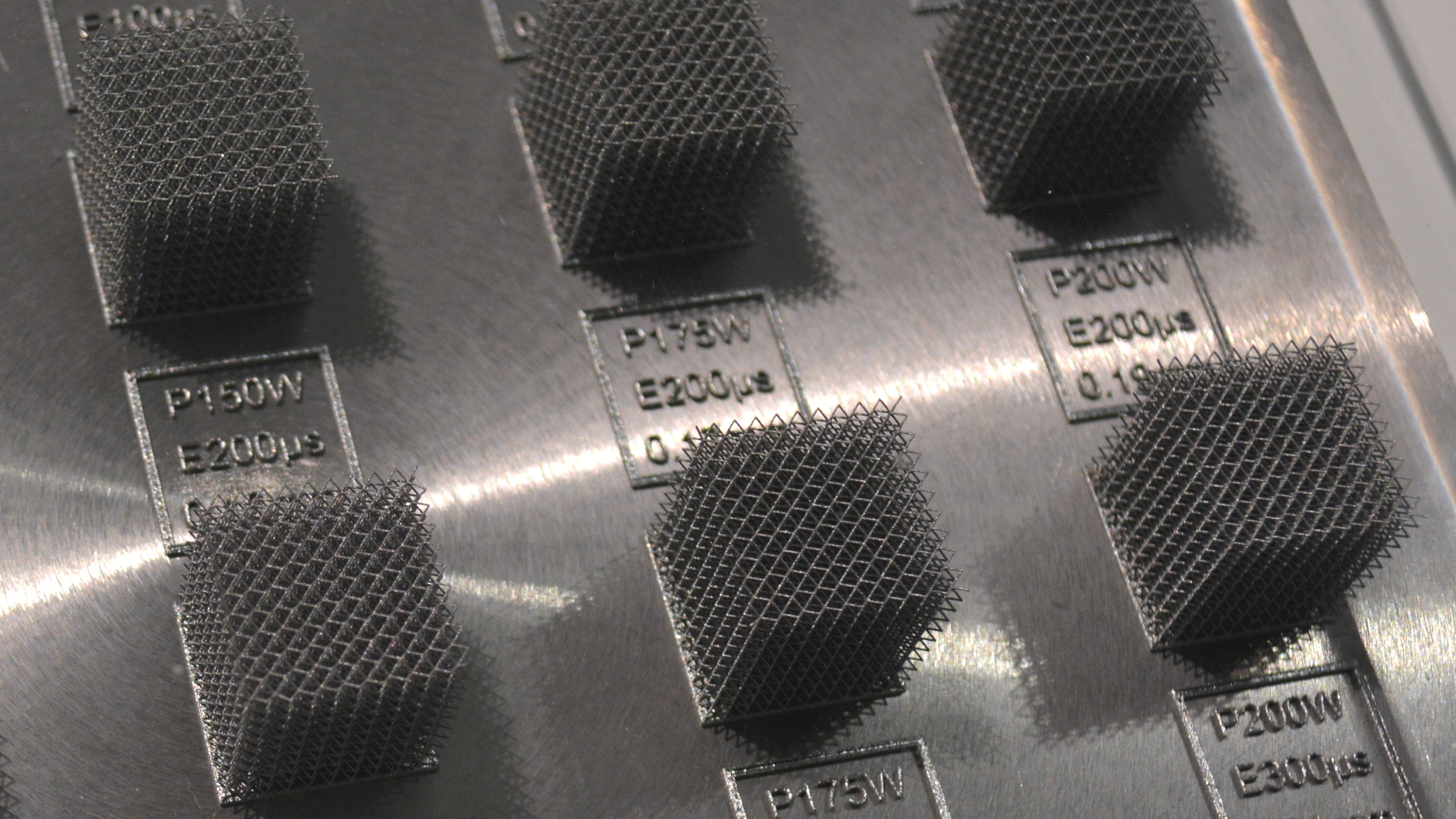
LPBF is popular because it can produce dense, complex metal parts with fine details and internal features that traditional machining cannot easily create. Think conformal cooling channels inside mold inserts, lightweight lattice structures, optimized brackets, fuel nozzles, medical implants with porous surfaces, and aerospace components with fewer assemblies.
The catch is that the process is sensitive. Laser power, scan speed, hatch spacing, layer thickness, powder quality, gas flow, chamber oxygen level, build orientation, support design, and thermal stress all matter. A tiny change can affect porosity, distortion, surface finish, or mechanical properties. Metal printing rewards patience and punishes “eh, close enough” energy.
The Machines: From Single-Laser Systems To Multi-Laser Beasts
One big trend visible in the metal additive manufacturing world is the move from single-laser machines toward multi-laser systems. A single laser can produce excellent parts, especially for smaller builds, research, application development, or lower-volume production. But when manufacturers want throughput, more lasers enter the chat.
Multi-laser systems divide the build area so several lasers can work at once. This can dramatically improve productivity, especially for larger parts or batches of smaller parts nested together. Machines from companies such as EOS, 3D Systems, Nikon SLM Solutions, Velo3D, Renishaw, Trumpf, AddUp, Xact Metal, Farsoon, Colibrium Additive, and others show how competitive the field has become.
At the high end, some systems use many lasers and large build volumes to pursue serial production of aerospace, space, defense, automotive, and energy components. These machines are not bought because they look cool in a brochure. They are bought because a company has a business case: fewer parts, less assembly, improved performance, faster iteration, or a supply chain that no longer requires waiting 18 weeks for a component that looks like a caffeinated octopus.
Directed Energy Deposition: The Metal Printer With A Welding Attitude
Directed energy deposition, or DED, works differently from powder bed fusion. Instead of spreading powder across an entire bed, DED feeds metal powder or wire directly into a melt pool created by a focused energy source, often a laser, electron beam, or arc. The print head deposits material where needed, building up features layer by layer.
DED is especially useful for repairing parts, adding features to existing components, building large near-net-shape parts, or depositing expensive alloys only where they are needed. At IMTS, examples of nozzle-based metal deposition and laser cladding show why this process is attractive to heavy industry. You can add material to a worn shaft, reinforce a surface, rebuild a damaged turbine component, or create a ribbed structure on a formed metal part.
The finish may not be as refined as powder bed fusion, but that is not always the point. DED is often followed by machining. It is the “build it up, then cut it precisely” school of manufacturing. Not glamorous in the Instagram sense, but very glamorous if you are trying to save a $40,000 component from becoming scrap.
Laser Cladding: Repair, Reinforcement, And Practical Magic
Laser cladding is closely related to directed energy deposition. A stream of metal powder is blown into a laser-created melt pool, bonding new material to a substrate. This can create wear-resistant coatings, restore worn surfaces, or build raised geometries on existing parts.
At a trade show, laser cladding is fun to watch because it looks almost theatrical: powder flows, the laser activates, the workpiece rotates or moves, and a shiny new metal feature appears. It is the closest industrial manufacturing gets to a magic trick, except the magician is wearing safety glasses and talking about dilution rates.
For maintenance, repair, and overhaul operations, laser cladding can be a powerful tool. Aerospace, power generation, mining, oil and gas, and heavy equipment industries often deal with expensive parts that suffer localized wear. Replacing the whole part may be wasteful. Adding material only where needed can extend service life and reduce downtime.
Binder Jetting: Fast Printing, Furnace Required
Binder jetting takes a very different approach. Instead of melting metal powder with a laser during printing, the machine deposits a liquid binder into a bed of metal powder. The printed “green” part is fragile at first. It is then cured, depowdered, and sintered in a furnace so the metal particles bond into a solid part.
The big appeal is speed and scalability. Because the printhead can move quickly across the powder bed, binder jetting can produce many parts at once. It also does not require support structures in the same way laser powder bed fusion often does, because the surrounding powder helps hold the part during printing.
However, binder jetting is not a cheat code. Sintering causes shrinkage, and that shrinkage must be predicted and controlled. Material density, dimensional accuracy, furnace profiles, part geometry, and powder-binder behavior all matter. Binder jetting is promising for higher-volume metal part production, but it requires serious process knowledge. The printer may be fast, but the furnace is where the final exam happens.
What Kinds Of Parts Make Sense?
The best metal 3D printed parts usually have a reason to exist beyond “we printed it because we could.” Good candidates often include internal passages, complex curves, lattice structures, part consolidation, lightweighting, customization, or low-volume demand.
For aerospace, that might mean a bracket with topology optimization, reducing weight while maintaining strength. For medical manufacturing, it could mean a titanium implant with a porous surface designed for bone integration. For tooling, it might be a mold insert with conformal cooling channels that reduce cycle time. For energy systems, it could be a heat exchanger with internal channels that would be miserable or impossible to machine conventionally.
Bad candidates are usually simple blocks, basic plates, standard shafts, or parts that can be quickly machined from bar stock. Printing a plain cube of metal is like hiring a symphony orchestra to play a doorbell sound. Technically possible, spiritually questionable.
Post-Processing: The Part Is Printed, But It Is Not Done
One of the biggest misunderstandings about metal 3D printing is that the finished part pops out ready to bolt into a jet engine. In reality, printing is often just the first major step.
Parts may need support removal, heat treatment, stress relief, machining, surface finishing, inspection, and testing. Titanium parts may require careful thermal processing. High-performance alloys may need hot isostatic pressing to reduce internal porosity. Critical parts may undergo CT scanning, tensile testing, metallography, dimensional inspection, and documentation that could make a filing cabinet cry.
This is why many serious metal additive manufacturers invest as much in post-processing and quality assurance as they do in the printer itself. A laser printer may be the flashy centerpiece, but the complete workflow is what makes production possible.
Powder Handling And Safety Are Not Optional
Metal powder is not glitter for engineers, even though it sometimes appears to be treated with the same emotional intensity. Fine metal powders can be reactive, combustible, irritating, expensive, and sensitive to contamination. Powder handling requires proper training, protective equipment, ventilation, grounding, housekeeping, storage, and disposal practices.
Materials like titanium and aluminum require special care because fine powders can pose fire or explosion risks under the wrong conditions. Even less reactive powders need controlled handling to protect workers and maintain material quality. A serious metal printing facility is designed around safety as much as productivity.
This is also why many companies choose service providers before buying their own equipment. Outsourcing allows a shop to test applications, validate demand, and learn design rules without immediately building a powder-handling operation that looks like a small industrial moon base.
Why IMTS Shows The Shift From Prototyping To Production
For years, 3D printing was associated with prototypes. That reputation was fair, but it is no longer complete. At IMTS, the language around additive manufacturing increasingly focuses on end-use parts, production workflows, contract manufacturing, hybrid systems, integrated inspection, and digital process control.
This does not mean every printed part is production-ready by default. It means the industry has matured enough that serious manufacturers now evaluate metal additive as a production process, not just a clever way to make show-and-tell objects. The companies that succeed tend to treat additive manufacturing as an engineering discipline, not a novelty act.
The winners are not necessarily the companies with the biggest printer. They are the ones that understand design for additive manufacturing, qualification, inspection, post-processing, cost modeling, and when not to print something. Knowing when not to use metal 3D printing is an underrated superpower.
What The Laser And Metal Powder Printers Tell Us About The Future
The metal printers seen at IMTS point toward a future where additive manufacturing becomes more integrated, automated, and application-specific. Machines are improving, but the bigger change is in the ecosystem around them: simulation software, build monitoring, powder characterization, automated depowdering, improved gas flow, better materials, smarter scan strategies, and hybrid cells that combine printing, machining, and inspection.
Expect more specialization. Some systems will chase large aerospace structures. Others will focus on dental and medical devices. Some will aim at toolrooms. Others will target production service bureaus. Smaller, more accessible machines will continue to appear, but industrial metal printing will still demand respect. The laser may be precise, but metallurgy remains stubbornly real.
The most exciting possibility is not that metal 3D printing replaces traditional manufacturing. It is that engineers stop designing parts around the limitations of old processes and start designing around performance. Lighter parts. Fewer assemblies. Internal channels. On-demand spares. Better cooling. Faster iteration. Less material waste. More freedom, with enough process discipline to keep the freedom from turning into expensive confetti.
Experience Notes: What It Feels Like To See Metal 3D Printing At IMTS
Seeing metal 3D printing in person at IMTS is different from reading a spec sheet. Online, a laser powder bed fusion machine is a tidy rectangle with a build volume, wattage number, and glossy sample part. On the show floor, it feels much more physical. You see the sealed chamber, the powder handling equipment, the filters, the gas lines, the glove ports, the heavy doors, the warning labels, and the people who talk about oxygen levels with the seriousness of submarine operators.
The first impression is usually scale. Even the “compact” machines are not exactly desktop pets. They are industrial systems with weight, plumbing, power requirements, and procedures. Then you notice the sample parts. A titanium manifold with twisting internal passages. A lattice that looks too delicate to be metal. A tool insert with cooling channels that snake through the part like secret tunnels. A repaired shaft where new metal has been built up and machined back down. These parts explain the value faster than any slogan can.
The second impression is that metal additive manufacturing is wonderfully unsentimental. A booth representative may admire the technology, but the conversation quickly turns to build time, cost per part, powder reuse, surface finish, heat treatment, tolerances, and inspection. Nobody serious says, “Print everything.” Instead, they ask, “What problem are you trying to solve?” That question is the gateway between expensive experimentation and useful production.
One memorable experience is watching a deposition or cladding demonstration. Unlike powder bed fusion, which often happens behind a closed chamber window, deposition can feel more visibly active. The nozzle moves, metal powder flows, the laser creates a molten pool, and the part grows in real time. It is not pretty in the way a polished consumer gadget is pretty. It is pretty in the way a bridge girder, weld bead, or turbine blade is pretty: functional, hot, and completely uninterested in your aesthetic preferences.
The third impression is how much of the technology is about the boring details. That may sound negative, but it is actually the sign of a maturing industry. Early 3D printing conversations were often about possibility. IMTS conversations are about repeatability. Can the machine make the same part on Tuesday that it made on Monday? Can the powder lot be tracked? Can the porosity be controlled? Can the support strategy be removed without destroying the geometry? Can the part pass inspection? Can the accountant survive the quote?
For a visitor, the best way to understand the show is to compare metal additive to traditional machining rather than treating it as a rival religion. Machining is still magnificent. Casting is still powerful. Forging is still unbeatable for many applications. But metal 3D printing adds a new set of options. It lets engineers make shapes that were previously impractical, consolidate assemblies that used to require welding or fastening, and iterate complex parts without committing to expensive tooling too early.
The experience also teaches humility. A printed metal part may look finished, but experts will point out the supports, the stress relief step, the machining allowance, the surface treatment, and the inspection plan. The printer is the star of the booth, but the process chain is the real story. In metal additive manufacturing, the magic is not just in the laser. It is in the discipline surrounding the laser.
That is what makes IMTS such a valuable place to see these systems. You do not just see the dream; you see the hardware, the workflow, the constraints, and the business case. Metal 3D printing is no longer a futuristic rumor hiding in a lab. It is on the manufacturing floor, wearing steel-toed boots, asking about throughput, and quietly changing how difficult parts get made.
Conclusion
Metal 3D printing has grown from a fascinating demonstration into a serious manufacturing option. The laser and metal powder printers seen at IMTS show an industry moving toward larger builds, multi-laser productivity, better process control, safer powder handling, more qualified materials, and real production use cases. Laser powder bed fusion delivers complex, high-value parts with fine detail. Directed energy deposition and laser cladding bring repair and feature-building power. Binder jetting offers a path toward scalable production, provided sintering and shrinkage are mastered.
The best takeaway is simple: metal additive manufacturing is not magic, and it is not a universal replacement for machining. It is a powerful tool for the right jobs. Used wisely, it can reduce weight, simplify assemblies, improve performance, and create geometries that traditional methods struggle to touch. Used carelessly, it can become the most expensive way imaginable to make a bracket. Like most great manufacturing technologies, the secret is not hype. It is knowing the process well enough to use it where it wins.