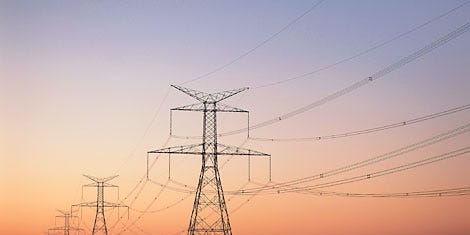
If the U.S. electrical grid had a Venmo account, the request would arrive with a subject line that makes everyone suddenly “forget” their password: $5 trillion. That number sounds cartoonish, like the price tag for a moon base with heated sidewalks. But repg purchase. It is millions of separate purchases, projects, permits, crews, transformers, substations, poles, wires, control systems, software upgrades, vegetation crews, storm-hardening programs, and construction headaches wearing hard hats.
The U.S. power grid is often called the largest machine ever built, and that is not just engineer poetry. It includes power plants, high-voltage transmission lines, local distribution wires, substations, transformers, meters, control rooms, communications systems, and the people who keep it all from turning into a national camping trip. A University of Texas analysis estimated that the depreciated value of the existing U.S. electric system was roughly $1.5 trillion to $2 trillion, while replacing it could approach $5 trillion. In today’s world of data centers, electrification, extreme weather, aging equipment, and renewable-energy interconnection queues, the question is no longer whether the grid needs investment. The real question is: where does all that money actually go?
The $5 Trillion Grid Is Not One Thing
When people hear “replace the grid,” they often imagine replacing power lines. That is part of it, but it is only the visible tip of a very expensive iceberg. The electrical grid has three main layers: generation, transmission, and distribution.
Generation includes the power plants and energy resources that create electricity: natural gas plants, nuclear plants, wind farms, solar farms, hydroelectric plants, batteries, and other facilities. Transmission moves high-voltage electricity across long distances, usually through tall towers and big corridors that look like something a robot spider would design. Distribution is the neighborhood-level system that brings power to homes, stores, schools, hospitals, traffic lights, and the refrigerator quietly protecting your leftovers.
A full replacement cost includes all three layers. It is not just buying new wire. It is rebuilding a national nervous system while the patient is awake, working, running air conditioners, charging phones, and asking why the Wi-Fi is slow.
1. Power Plants and Energy Resources: The Biggest Hardware Bill
A major share of any full replacement estimate goes to generation. America still relies heavily on large power plants, many of which were built decades ago. Replacing them means developing new facilities, upgrading existing ones, retiring old units safely, connecting new plants to the grid, and ensuring enough reliable electricity is available during heat waves, cold snaps, droughts, storms, and ordinary Tuesday evenings when everybody decides to run laundry at once.
Generation costs include land acquisition, engineering, turbines, boilers, solar panels, wind towers, inverters, batteries, fuel systems, cooling systems, environmental controls, interconnection equipment, financing, and long construction timelines. A nuclear plant, a gas-fired plant, and a solar-plus-storage project have very different price tags, but they all need one thing: a way to deliver power into the grid without causing chaos.
This is where the modern grid challenge gets spicy. The U.S. is adding more renewable energy, but wind and solar resources are often located far from major population centers. A windy plain in the middle of the country may be an excellent place to generate electricity, but if the wires are not there, that power is basically a concert with no speakers. That is why generation spending and transmission spending are joined at the hip.
2. High-Voltage Transmission: The Interstate Highway System for Electricity
Transmission lines are the big, high-voltage routes that move electricity across regions. If distribution lines are local streets, transmission lines are interstates. And like interstates, they are expensive, politically complicated, and somehow always under construction when you need them most.
Transmission spending covers towers, conductors, foundations, rights-of-way, substations, high-voltage transformers, switchgear, control systems, environmental studies, engineering studies, legal work, and land agreements. Building a new line can take years or even more than a decade because the project may cross private land, federal land, state borders, tribal lands, sensitive habitats, farms, forests, and neighborhoods where nobody wants a steel tower photobombing the sunset.
The Department of Energy’s transmission studies have found that nearly all U.S. regions would benefit from additional transmission investment, especially where congestion keeps low-cost power from reaching customers. Congestion sounds like a traffic problem because it is one. When transmission capacity is limited, cheaper electricity may be stuck on one side of the system while customers on the other side pay for more expensive local power. More transmission can improve reliability, reduce congestion, and help move electricity during emergencies.
But transmission is not cheap. A single major line can cost billions. The bill includes not only the visible steel and wire, but also planning, permitting, public engagement, interconnection studies, grid modeling, construction access roads, and financing. In other words, the money buys electrons a better highway, but first it buys a mountain of paperwork.
3. Distribution Lines: The Neighborhood Grid Eats a Lot of the Budget
Distribution is where most customers actually experience the grid. It is the network of poles, wires, underground cables, local substations, line transformers, meters, and service connections that bring electricity to your building. If the transmission system is glamorous in a “giant towers at sunset” way, distribution is the hardworking local delivery driver.
This layer consumes enormous spending because it is everywhere. The U.S. has millions of miles of distribution lines. Every neighborhood, business park, rural road, apartment complex, and commercial strip needs equipment. Distribution assets also take a beating from storms, trees, squirrels with questionable life goals, vehicle crashes, floods, wildfires, salt air, ice, and simple age.
Recent utility-spending data shows how the money breaks down. In 2023, major U.S. utilities spent tens of billions of dollars on distribution infrastructure. Overhead lines, poles, and towers accounted for a large chunk. Underground lines represented another major category, especially in new developments and in areas trying to reduce storm or wildfire risk. Line transformers, substations, meters, and customer-side equipment added billions more.
Why so much? Because the local grid was designed for yesterday’s electricity habits. Today, homes may have rooftop solar, electric vehicles, heat pumps, induction stoves, smart thermostats, and backup batteries. Commercial buildings may have fast chargers, server rooms, and electrified heating systems. The neighborhood transformer that once handled lights, a refrigerator, and a heroic 1990s television may not be thrilled about five EV chargers and a summer heat wave.
4. Transformers: The Unsung Budget Monsters
Transformers are the quiet workhorses of the electric system. They step voltage up for efficient long-distance transmission and step it down so electricity can safely enter homes and businesses. Without transformers, the grid is just a very expensive lightning-themed art project.
Transformer costs have become a major concern. Lead times for some units have stretched dramatically, and prices have risen sharply since 2020. Distribution transformers are needed by the millions, while large power transformers and generator step-up transformers are custom, heavy, and difficult to replace quickly. Some are so large that moving them requires special railcars, heavy-haul trucks, route planning, permits, and bridges that politely agree not to collapse.
National labs and grid agencies have warned that transformer demand could increase substantially by 2050 because of aging infrastructure, electrification, renewable integration, and resilience work. This is one reason grid replacement is not just a money problem. It is also a manufacturing problem. You can approve a project, finance it, and celebrate with a ribbon-cutting speech, but if the transformer arrives in three years, the ribbon may need storage.
5. Substations: Where the Grid Does Its Heavy Thinking
Substations are the hubs where voltage is changed, circuits are switched, equipment is protected, and grid operators keep electricity moving in the right direction. They are filled with transformers, breakers, relays, busbars, control houses, communications gear, and protective equipment. They do not look glamorous, but neither does a pancreas, and you absolutely want yours working.
Substation spending goes toward replacing aging transformers, adding capacity, improving voltage control, installing digital relays, upgrading circuit breakers, improving physical security, and preparing for two-way power flows from rooftop solar and batteries. As more renewable energy and distributed energy resources connect to the grid, substations need smarter controls and better visibility.
Utilities also invest in substation hardening. That may mean elevating equipment in flood-prone areas, adding fire protection, improving fencing, installing cameras, building redundant circuits, or replacing older components before they fail. None of this makes for a catchy television commercial, but it can prevent outages that cost customers, businesses, and communities far more than the upgrade itself.
6. Grid Modernization: Sensors, Software, and the Digital Brain
Not every grid upgrade is made of steel. A growing share of spending goes into software, communications, sensors, automation, and analytics. The old grid was designed mostly for one-way power flow: big power plant to transmission line to local utility to customer. The modern grid is becoming a two-way, data-heavy system with rooftop solar, batteries, electric vehicles, flexible demand, microgrids, and real-time monitoring.
Modernization spending includes advanced meters, distribution management systems, outage management systems, supervisory control and data acquisition systems, cybersecurity tools, dynamic line rating equipment, advanced power-flow controls, and grid-enhancing technologies. These tools can help utilities squeeze more capacity out of existing infrastructure before building entirely new lines.
That matters because new transmission can take a very long time. Grid-enhancing technologies can sometimes increase usable capacity faster by showing operators how much power a line can safely carry under real-time weather conditions or by redirecting flows around congested paths. Think of it as giving the grid a traffic app instead of building a new freeway every time someone opens a data center.
7. Resilience: The Weather Is No Longer Playing Nice
Another large bucket is resilience. This includes hardening the grid against hurricanes, wildfires, floods, winter storms, heat waves, cyberattacks, and physical threats. A century ago, planners did not design every power line with modern climate extremes in mind. Today, utilities are dealing with stronger storms, heavier wildfire risk in some regions, hotter summers, and more customers who depend on electricity for medical devices, cooling, work, and communication.
Resilience spending may include undergrounding power lines, replacing wooden poles with stronger composite or steel poles, installing covered conductors, widening vegetation clearances, adding sectionalizing equipment that isolates faults, building microgrids for critical facilities, and adding backup generation or battery storage. It also includes better forecasting, emergency operations centers, spare-equipment programs, and mutual-aid systems.
Undergrounding lines can reduce exposure to wind, trees, and wildfire ignition risks, but it is expensive. In dense urban areas, digging means navigating water lines, gas lines, fiber cables, roads, sidewalks, traffic control, and the occasional mystery pipe from 1923 that everyone agrees not to touch. In rural areas, long distances make undergrounding even more costly. Resilience is essential, but it is not a discount aisle.
8. Labor, Engineering, and Construction: Humans Still Required
The grid does not rebuild itself. A huge portion of the money goes to skilled labor: lineworkers, electricians, engineers, welders, equipment operators, project managers, safety inspectors, vegetation crews, software specialists, cybersecurity experts, environmental consultants, and utility planners.
Lineworkers perform dangerous, highly skilled work in difficult conditions. Engineers model power flows, design substations, specify equipment, and ensure protection systems operate correctly. Construction crews pour foundations, raise towers, pull cable, splice conductors, install transformers, test relays, and restore roads. Project managers coordinate thousands of details so a substation upgrade does not become an expensive sculpture garden.
Labor costs also rise when demand surges across the industry. If every utility, data center developer, renewable-energy company, and manufacturing project needs the same electricians, transformers, breakers, and engineers at the same time, prices climb. The grid budget is not immune to supply and demand. It is supply and demand with a hard hat and a clipboard.
9. Permitting, Land, and Legal Costs: The Invisible Maze
A surprising amount of grid money goes to things that do not hum, spin, flash, or carry current. Permitting, siting, land acquisition, environmental review, community engagement, legal disputes, and regulatory filings can become major cost categories, especially for transmission.
New power lines must often pass through multiple jurisdictions. Developers may need approval from state utility commissions, federal agencies, regional grid operators, local governments, and landowners. Environmental reviews may examine wetlands, endangered species, cultural resources, visual impact, wildfire risk, and water crossings. Public meetings can become lively, which is a polite way of saying someone may bring a poster board and a grudge.
These processes exist for good reasons. Infrastructure affects communities, land values, ecosystems, and safety. But slow or fragmented permitting can add years and millions of dollars to needed projects. That is why federal regulators have pushed for better long-term regional transmission planning and cost allocation. The grid is regional by physics, but often local by politics. Electrons do not care about county lines; public hearings very much do.
10. Interconnection: Paying to Plug In New Power
One of the least understood grid costs is interconnection. When a new solar farm, wind project, battery facility, gas plant, or data center wants to connect to the grid, engineers must study whether the existing system can handle it. If not, the project may need to pay for network upgrades such as reconductored lines, new breakers, transformer replacements, or substation expansions.
Interconnection queues have become crowded. Lawrence Berkeley National Laboratory has tracked thousands of proposed projects waiting to connect, representing enormous amounts of generation and storage capacity. Many projects withdraw because the upgrade costs are too high, the wait is too long, or the economics change before approval arrives.
This is one reason the grid feels expensive even when clean energy itself becomes cheaper. A solar panel may cost less than it used to, but connecting a large project to a congested grid can still be painfully expensive. It is like buying a bargain couch and discovering the delivery fee includes removing a wall.
Who Pays for All This?
Ultimately, grid money comes from several places: utility customers, private investors, federal programs, state programs, municipal utilities, public power agencies, co-ops, tax incentives, and project developers. But for most households, the grid shows up through electric bills. Utilities invest capital, regulators decide what costs can be recovered, and customers pay over time through rates.
This creates a difficult balancing act. Underinvest, and reliability suffers. Overbuild or plan poorly, and customers pay for assets that may not deliver enough value. Delay too long, and emergency repairs become more expensive than planned upgrades. Move too fast without oversight, and ratepayers may feel like they were handed the dinner bill for a banquet they did not attend.
The smartest grid spending focuses on value: replacing the most failure-prone equipment, expanding transmission where congestion is costly, modernizing controls where software can avoid expensive steel, hardening circuits that serve critical facilities, and making large new customers pay their fair share when they trigger upgrades.
So, Where Does the $5 Trillion Actually Go?
If we turn the giant number into plain English, the money goes into five broad buckets:
First, it buys physical assets.
Power plants, wires, poles, towers, transformers, breakers, substations, meters, batteries, control rooms, and underground cables. This is the stuff you can see, touch, ship, install, and occasionally watch on a flatbed truck while wondering how it fits under bridges.
Second, it buys capacity.
More electricity demand is coming from data centers, manufacturing, electric vehicles, heat pumps, and population growth in some regions. Capacity means the system can carry more power without overheating, tripping, or forcing customers into conservation alerts.
Third, it buys reliability.
Reliability means the lights stay on during peak demand, equipment failures are contained, and one problem does not cascade into a regional outage. This includes redundancy, spare equipment, better protection systems, and more robust planning.
Fourth, it buys resilience.
Resilience means the grid can survive ugly weather, recover quickly, and keep critical services operating. Hospitals, water systems, emergency shelters, and communications networks all depend on electricity. A resilient grid is not a luxury; it is the difference between disruption and disaster.
Fifth, it buys intelligence.
The modern grid needs sensors, software, automation, cybersecurity, forecasting, and real-time visibility. The future grid will not just be bigger. It will be more digital, more flexible, and more complicated. The old grid was a machine. The new grid is becoming a machine with a nervous system.
Practical Experience: What a Grid Upgrade Feels Like on the Ground
On paper, a grid upgrade sounds clean: identify overloaded equipment, design a solution, approve the budget, build the project, celebrate reliability. In real life, it feels more like renovating a busy airport while the planes are still landing. Everyone agrees the work is needed, but nobody wants the noise, delays, detours, or bill.
At the neighborhood level, grid investment often begins with small signs. A crew marks pavement with spray paint. Utility trucks appear near a substation. Poles get tagged. Notices arrive explaining that service may be interrupted for a few hours. Customers may grumble, and understandably so. Nobody wakes up excited to hear, “Great news, your power may blink today because we are improving reliability.” Yet those small projects are often the difference between a manageable outage and a long, miserable one during a storm.
In fast-growing communities, the experience is even more obvious. A new subdivision, warehouse, hospital wing, or EV charging hub may require larger transformers and feeder upgrades. The local utility may need to rebuild lines that were never designed for that level of demand. People see new poles, bigger equipment, road work, and monthly bills that include infrastructure charges. The upgrade is not abstract anymore. It is outside the grocery store, blocking one lane, accompanied by a person holding a “STOP/SLOW” sign with the calm authority of a medieval gatekeeper.
For businesses, grid constraints can become a planning problem. A factory expansion or data center may not be limited by land or financing, but by how much power the utility can deliver and when. Developers may discover that the cheapest site is not actually cheap if it requires a new substation or miles of upgraded line. In that sense, grid capacity has become part of economic development. Communities with available power can attract investment. Communities without it may watch projects go elsewhere.
For homeowners, the experience is often less dramatic but just as important. A stronger distribution grid may mean fewer flickers, faster restoration, better voltage, and more room for rooftop solar or EV charging. It may also mean higher rates, at least in the short term. That is the uncomfortable truth: the grid is not free when it fails, and it is not free when it is fixed. The goal is to spend before failure becomes the most expensive option.
The best real-world grid projects are the ones customers barely notice after they are done. A storm hits, a tree falls, a circuit isolates the fault, and power is restored faster than it would have been ten years ago. A new solar project connects without years of delay. A hot afternoon arrives, demand peaks, and the system holds. No fireworks. No dramatic announcement. Just lights, air conditioning, refrigeration, elevators, traffic signals, medical devices, and the quiet miracle of normal life continuing.
That is where the $5 trillion goes. Not into one shiny national gadget, but into the unglamorous foundation of modern life. It goes into the poles nobody photographs, the transformers nobody thanks, the substations behind fences, the software operators trust, the crews who work in bad weather, and the planning meetings that decide whether future electricity is reliable or rationed. The grid is expensive because civilization has become electric. And civilization, as it turns out, has a very large utility bill.
Conclusion: A Trillion-Dollar Repair Job With No Off Switch
Replacing or deeply modernizing the U.S. electrical grid would cost an astonishing amount because the grid is astonishingly large, old, complex, and essential. The money would not disappear into a single project. It would spread across generation, transmission, distribution, transformers, substations, underground cables, control software, cybersecurity, storage, storm hardening, labor, permitting, land acquisition, and interconnection upgrades.
The better way to think about the $5 trillion estimate is not as a bill for “new wires.” It is the cost of rebuilding the platform that supports nearly every part of American life: homes, hospitals, schools, factories, ports, farms, data centers, military bases, water systems, and the sacred household coffee maker. A modern grid must be cleaner, stronger, smarter, and more flexible than the one built for the last century.
The hard part is not proving that the grid needs investment. The hard part is spending wisely, planning regionally, protecting customers, speeding up useful projects, and avoiding gold-plated upgrades that look impressive but do not solve the real problem. The U.S. does not need to replace everything overnight. It needs to replace the right things, reinforce the weak points, connect new resources faster, and make sure the grid can handle the electric future Americans are already buying one EV charger, heat pump, laptop, and data center at a time.
Note: This article is written for web publication without embedded source links. It is synthesized from publicly available U.S. government, regulatory, national laboratory, university, engineering, utility, and energy-market information.