Note: This article is written for web publication and is based on real urban planning, transportation, environmental, sanitation, and public-space guidance from reputable U.S. sources. No external source links are inserted in the article body.
City life is a beautiful mess. One minute you are admiring a skyline, sipping coffee, and feeling like the main character in a charming indie movie. The next minute you are dodging a mystery puddle, waiting for a late bus, stepping around a trash bag, and wondering why one motorcycle needs to sound like a dragon with credit card debt.
The good news? Many annoying city problems do not require a futuristic mega-project, a billionaire with a tunnel machine, or a 700-page committee report that ages everyone in the room. Some of the most effective urban solutions are surprisingly simple: shorter crosswalks, more shade, better trash containers, smarter bus lanes, and public spaces designed for humans instead of just traffic cones.
This guide looks at 5 simple fixes to annoying city problems that can make neighborhoods safer, cleaner, cooler, quieter, and easier to move through. These ideas are practical, proven, and realistic for cities of different sizes, from dense downtown districts to growing suburbs that suddenly realized a six-lane road next to a taco shop is not exactly “charming.”
Why Small City Fixes Matter
Urban problems often feel huge because they happen every day. A dangerous crossing is not just a transportation issue; it is the reason a parent holds a child’s hand tighter. A hot sidewalk is not just uncomfortable; it can discourage walking, shopping, and social life. A late bus is not just annoying; it can make people late for work, school, appointments, and dinner with someone who already said, “Please don’t be late again.”
The best city improvements usually solve more than one problem at once. A tree-lined street can cool the block, absorb stormwater, improve air quality, calm traffic, and make the sidewalk pleasant enough that people actually use it. A protected bus lane can move more people in less space while reducing the daily frustration of sitting in traffic behind 47 cars, each carrying one person and one emotionally complicated iced coffee.
Simple does not mean shallow. It means targeted. It means solving the problem where people actually experience it: at the corner, at the curb, at the bus stop, at the trash pile, and under the blazing summer sun.
Fix 1: Make Streets Safer With Shorter Crossings and Slower Turns
One of the most annoying city problems is also one of the most serious: streets that feel like obstacle courses. Wide lanes, fast turns, long crosswalks, blocked sightlines, and confusing intersections all make walking and biking harder than they need to be.
The simple fix is to redesign dangerous spots so drivers naturally slow down and people outside cars are easier to see. This can include curb extensions, daylighting intersections, raised crosswalks, pedestrian islands, tighter turning corners, leading pedestrian intervals, and road diets that convert excess car lanes into safer space for walking, biking, transit, or turning vehicles.
How It Works
A curb extension, sometimes called a bulb-out, pushes the sidewalk farther into the street at a crossing. That shortens the distance pedestrians must travel and makes them more visible before they step into the road. Daylighting removes parking near intersections so drivers and walkers can see each other instead of playing a high-stakes guessing game around a parked delivery van.
Road diets can also reduce crashes by making streets more predictable. For example, a four-lane road may be converted into three lanes: one lane in each direction plus a center turn lane. The leftover space can become bike lanes, wider sidewalks, loading zones, or bus improvements. Instead of encouraging drivers to weave like they are auditioning for a car commercial, the street becomes calmer and easier to understand.
Why It Feels Better
Safer streets reduce stress. People walk more confidently. Drivers know where to look. Cyclists are not forced to choose between hugging parked cars and becoming a hood ornament. Even businesses can benefit because calmer streets often make storefronts easier to notice, approach, and enjoy.
The best part is that cities do not always have to rebuild the entire road at once. Quick-build materials such as paint, posts, planters, temporary curbs, and rubber islands can test improvements before permanent concrete arrives. Think of it as a street trying on a better outfit before committing to the full wardrobe.
Fix 2: Cool Hot Blocks With Trees, Shade, and Green Infrastructure
Summer in the city can feel like walking inside a toaster that also charges rent. Asphalt, concrete, dark roofs, and parking lots absorb and re-radiate heat, creating urban heat islands. These hot zones make neighborhoods uncomfortable and can be dangerous for older adults, children, outdoor workers, and people without reliable air conditioning.
A simple fix is to add shade and green infrastructure where people need it most. Street trees, rain gardens, green roofs, bioswales, pocket parks, cool pavements, and planted medians can reduce heat while helping manage stormwater. This is the rare city solution that says, “Let’s make it prettier,” and then quietly does serious engineering work in the background.
How It Works
Trees cool streets by shading pavement and releasing moisture through evapotranspiration. Rain gardens and bioswales collect runoff from sidewalks and streets, allowing water to soak into soil instead of overwhelming storm drains. Permeable pavement lets water pass through the surface, reducing puddles and runoff. Green roofs add vegetation to buildings, helping reduce heat absorption and slowing rainwater before it rushes into pipes.
These fixes are especially helpful in neighborhoods with little tree canopy and lots of hard surfaces. A small shady plaza near a bus stop can make waiting for transit far more comfortable. A row of trees along a school route can turn a miserable walk into a reasonable one. A rain garden at a flood-prone corner can reduce that familiar “giant curb lake” that appears every time the sky sneezes.
What Cities Can Do First
Cities can start by mapping heat complaints, flood spots, bus stops without shade, and streets with low tree coverage. Then they can prioritize improvements where the need is highest. Maintenance matters too. A dead street tree is not a climate strategy; it is a very sad stick. Watering, pruning, soil care, and protection from car doors and construction damage are essential.
Green infrastructure is not just decoration. Done well, it is a cooling system, drainage system, public health tool, and neighborhood beauty upgrade all wearing the same leafy hat.
Fix 3: Beat Trash Trouble With Better Bins, Smarter Collection, and Cleaner Curbs
Nothing ruins a charming sidewalk faster than a mountain of leaking trash bags. Trash problems create odors, attract pests, block sidewalks, and make a neighborhood feel neglected. The solution is not simply yelling “Don’t litter!” into the wind, although many residents have tried that with impressive passion.
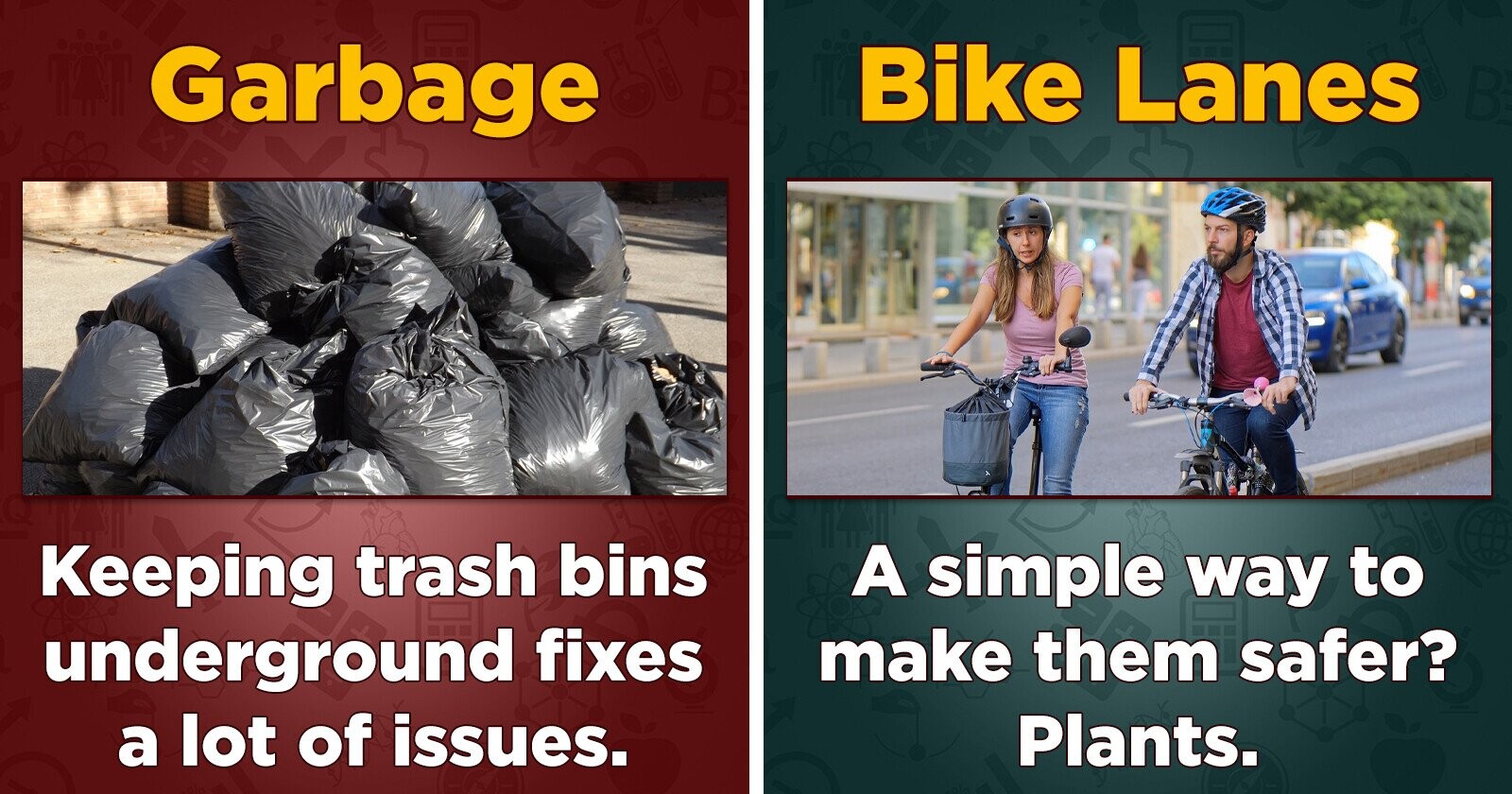
A better approach combines three practical moves: put waste in sealed containers, place public bins where people actually need them, and improve collection schedules based on real use patterns.
Why Containers Matter
Loose bags are easy for animals to tear open, easy for wind to scatter, and easy for pedestrians to resent. Containerized trash keeps waste covered, reduces sidewalk clutter, and makes collection more predictable. Cities with dense sidewalks may need shared curbside containers, standardized residential bins, or special rules for commercial corridors where trash volume is high.
Public litter bins also need strategy. A bin two blocks away from a busy takeout corner is not a bin; it is a decorative rumor. Cities should place bins near transit stops, parks, nightlife areas, food corridors, and pedestrian-heavy intersections. The design should discourage overflow, make recycling and trash choices clear, and be easy for sanitation workers to empty.
Small Behaviors, Big Difference
Residents and businesses have a role too. Breaking down boxes, securing lids, following set-out times, and reporting illegal dumping can prevent small messes from becoming block-wide disasters. Composting programs, where available, can reduce the amount of food waste sitting in regular trash. That matters because food waste is basically a dinner invitation for rats, and rats never RSVP politely.
Clean streets are partly about infrastructure and partly about habits. The winning formula is simple: make the right behavior easy, make the wrong behavior inconvenient, and collect data so sanitation crews know where the mess keeps coming back.
Fix 4: Make Transit Less Annoying With Bus Priority and Better Stops
A late bus can make even the calmest person start checking the horizon like a shipwreck survivor. Public transit becomes frustrating when buses are trapped in the same traffic as everyone else, stops lack shelter, schedules are unreliable, and riders have no idea whether the next bus is two minutes away or spiritually unavailable.
The simple fix is to give buses small but powerful advantages: dedicated bus lanes, transit signal priority, better stop spacing, all-door boarding where appropriate, clear signage, shelters, benches, lighting, and real-time arrival information.
How Bus Priority Helps
Dedicated bus lanes allow buses to move past congestion instead of crawling behind private vehicles. Transit signal priority can extend a green light or shorten a red light when a bus is approaching, reducing delay at intersections. These changes can improve reliability, which is often more important to riders than raw speed. People can plan around a 20-minute trip. They cannot plan around “the bus arrives whenever Mercury stops being in retrograde.”
Better bus stops matter too. A stop with shade, lighting, seating, route maps, and clear information feels safer and more dignified. A stop next to a puddle, a utility pole, and a mysterious smell feels like the city lost a bet.
Don’t Forget Walking and Biking Connections
Transit does not begin when someone boards the bus. It begins when they leave the house. Safe sidewalks, curb ramps, crosswalks, bike parking, and protected bike lanes help people reach transit without stress. A transit system is only as usable as the path to the stop.
Small transit fixes can produce major quality-of-life gains. When buses arrive more reliably, people spend less time waiting, fewer riders give up and drive, and streets move more people without needing to become wider, louder, and more expensive.
Fix 5: Create Quieter, Friendlier Public Spaces With Smart Design
City noise is not just “urban flavor.” A little street music can be lovely. A jackhammer at 7 a.m., a honking festival, and a car stereo that rattles windows three blocks away are less lovely. Noise affects sleep, concentration, stress, and overall quality of life. Cities need energy, not constant sonic warfare.
A simple fix is to manage noise at the source while designing public spaces that invite better behavior. This includes enforcing noise rules, improving construction schedules, using noise cameras or sound monitoring where appropriate, creating loading zones to reduce honking and double parking, planting green buffers, adding street furniture, and designing plazas that encourage people to gather without blocking sidewalks.
Design Shapes Behavior
When a street has no loading zone, delivery trucks double-park. When trucks double-park, drivers honk. When drivers honk, everyone becomes slightly worse as a person. A simple curb management plan can reduce that chain reaction. Designated delivery areas, pickup zones, bike parking, outdoor seating, and clear signage help the curb do more work with less chaos.
Public seating is another underrated fix. Benches, planters, shade structures, small plazas, and parklets give people places to pause. Without them, sidewalks become pure movement corridors, and anyone who wants to sit, chat, eat, or rest is treated like an error in the spreadsheet. Friendly public spaces remind people that cities are not just transportation machines. They are living rooms with crosswalks.
Use Quick-Build Improvements
Many public-space upgrades can start small. A temporary plaza with paint, planters, chairs, and traffic barriers can test whether a confusing intersection would work better as a community space. A weekend open street can show how families, restaurants, artists, and local shops use space when cars are not the only priority. If the test works, the city can invest in permanent materials. If it does not, adjust the plan. Urban design should be allowed to learn from reality.
Better public spaces reduce annoyance because they create order, comfort, and choice. They also give neighborhoods identity. A city block with shade, seating, safe crossings, and clean curbs feels cared for. A cared-for place invites people to care back.
How These Five Fixes Work Together
The magic happens when these solutions overlap. A safer crossing near a shaded bus stop makes transit more useful. A containerized trash area beside a commercial corridor keeps sidewalks clear for pedestrians. A quick-build plaza can add seating, reduce speeding, support local shops, and create a calmer public space. A street tree can cool the sidewalk, absorb stormwater, soften noise, and make the block look less like a parking lot having an identity crisis.
Cities should avoid treating each problem as a separate department-shaped island. Transportation, sanitation, parks, public health, housing, and economic development all meet on the sidewalk. That is where city life happens. The sidewalk is the group chat of urban policy, and everyone is already in it.
Practical Examples of Simple City Improvements
Example 1: The Dangerous Corner
A neighborhood has a wide intersection where drivers turn quickly and pedestrians feel exposed. The city can begin with painted curb extensions, flexible posts, daylighting, and a leading pedestrian interval. If crashes and complaints decrease, the temporary materials can become concrete upgrades.
Example 2: The Boiling Bus Stop
A busy bus stop has no shade, no seating, and a sidewalk that feels like a frying pan. The city can add a shelter, plant street trees, install a bench, improve lighting, and use real-time arrival displays. Riders feel safer and more comfortable, and the stop becomes a place people can actually tolerate in July.
Example 3: The Trashy Commercial Block
A restaurant-heavy street has overflowing bags every night. The city can require sealed containers, adjust pickup times, add public bins, create cardboard rules, and coordinate with businesses on waste storage. Cleaner curbs improve the customer experience and reduce pest problems.
Example 4: The Slow Bus Corridor
A major bus route is always delayed because cars block the curb and signals slow every trip. A dedicated bus lane, transit signal priority, better enforcement, and improved stops can make the line more reliable without rebuilding the whole street.
Example 5: The Underused Side Street
A short side street near shops has little traffic but lots of pedestrian activity. A quick-build plaza with planters, seating, bike parking, and weekend programming can test whether the space works better for people than for a handful of parked cars.
Common Mistakes Cities Should Avoid
The first mistake is chasing flashy projects while ignoring daily annoyances. Residents may appreciate a new convention center, but they will still be angry if the crosswalk near the grocery store feels like a dare.
The second mistake is installing improvements without maintaining them. A bus shelter with broken glass, a rain garden full of weeds, or a bike lane blocked by delivery trucks can make people more cynical than before. Maintenance is not boring. Maintenance is the difference between “great idea” and “who allowed this?”
The third mistake is skipping community feedback. Residents know where the puddles form, where drivers speed, where trash piles up, and where the sidewalk feels unsafe at night. Data matters, but lived experience catches details that spreadsheets miss.
The fourth mistake is treating every neighborhood the same. A downtown entertainment district, a school zone, an industrial corridor, and a residential block need different solutions. The best city fixes are simple, but they are not copy-and-paste.
Experiences Related to “5 Simple Fixes to Annoying City Problems”
The most memorable city improvements are often the ones that seem almost too ordinary to celebrate. A safer crosswalk does not arrive with fireworks. A trash container does not get a ribbon-cutting ceremony, although honestly, some city residents might attend if snacks were provided. But these little changes can completely alter the way a block feels.
Think about walking through a neighborhood where the crossings are short, cars turn slowly, and you can see around the corner before stepping off the curb. The experience is calmer right away. You do not need to perform a dramatic sprint across five lanes while silently negotiating with destiny. You walk like the city expects you to exist. That feeling matters.
Now imagine the same walk on a hot day. On one street, there is no shade, the pavement radiates heat, and the bus stop looks like a punishment designed by a toaster. On the next block, trees cover the sidewalk, a rain garden softens the curb, and a bench sits under a shelter. Suddenly, the city feels less hostile. You might stop for coffee, chat with a neighbor, or walk one more block instead of calling a ride. Comfort changes behavior.
Trash fixes create a different kind of relief. A clean sidewalk sends a quiet message: someone is paying attention. When waste is sealed, collected on time, and placed where it belongs, people are more likely to respect the space. When bags leak into the gutter and bins overflow, the message becomes, “Good luck out there, citizen.” Cleanliness is not just visual; it affects smell, safety, pests, and pride.
Transit improvements are especially noticeable because riders measure them in minutes and mood. A reliable bus lane can turn a stressful commute into a predictable routine. A real-time arrival sign can reduce the strange emotional spiral of wondering whether the bus has disappeared into another dimension. A well-lit stop with seating can make waiting feel normal instead of exhausting.
Public-space upgrades may be the most human of all. A few planters, chairs, shade, and safer edges can transform leftover asphalt into a place where people eat lunch, play music, read, or simply sit without buying anything. That last part is important. A good city offers places to exist without constantly opening your wallet.
These experiences prove that city problems are not always solved by making everything bigger. Sometimes the answer is smaller, closer, and more specific. Fix the corner. Shade the stop. Contain the trash. Prioritize the bus. Add the bench. Reduce the noise. Make the ordinary parts of city life less annoying, and the entire city starts to feel more generous.
Conclusion
Annoying city problems are not just minor inconveniences. They shape how people move, rest, work, shop, socialize, and feel about their neighborhoods. The five simple fixes covered heresafer crossings, green infrastructure, smarter trash systems, better transit priority, and friendlier public spacesshow that cities can make meaningful progress without waiting for a miracle budget or a sci-fi invention.
The best urban solutions are practical and people-centered. They reduce friction in daily life. They make walking less stressful, waiting less miserable, sidewalks less cluttered, streets less dangerous, and public spaces less chaotic. Most importantly, they remind us that a city is not just a collection of buildings and roads. It is a shared home, and shared homes work better when someone takes out the trash, opens a window, fixes the squeaky door, and maybe plants a tree.