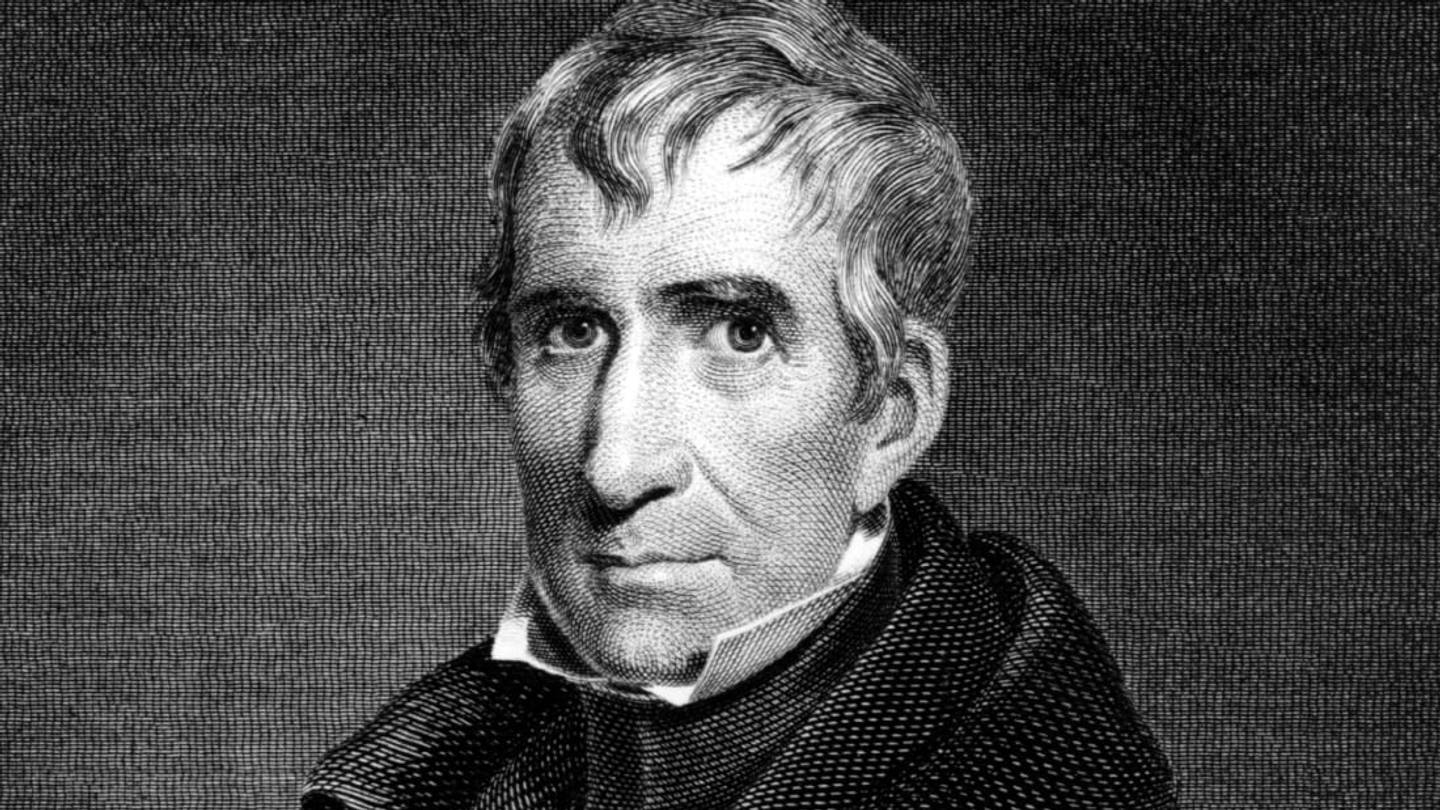
William Henry Harrison may be the easiest U.S. president to summarize in one sentence: he gave the longest inaugural address, then had the shortest presidency. That is technically true, but it is also a bit like describing the Grand Canyon as “a hole with excellent lighting.” Harrison’s life was larger, stranger, and far more influential than his 31 days in the White House suggest.
Before becoming the ninth president of the United States, Harrison was a military officer, territorial governor, senator, diplomat, campaign symbol, and political celebrity. His story includes frontier conflict, one of the most famous slogans in American election history, a family tree that practically needed its own executive branch, and a constitutional crisis that helped shape presidential succession. In other words, William Henry Harrison did not stay president long, but he left a surprisingly long shadow.
Below are seven presidential facts about William Henry Harrison that explain why “Old Tippecanoe” deserves more than a quick footnote and a weather joke.
1. William Henry Harrison Came From One of America’s Most Political Families
William Henry Harrison was born on February 9, 1773, at Berkeley Plantation in Charles City County, Virginia. He arrived before the United States technically existed, which makes him one of the last presidents born as a British subject. His background was not exactly log-cabin humble, despite what later campaign advertising wanted voters to believe.
Harrison’s father, Benjamin Harrison V, was a signer of the Declaration of Independence and served as governor of Virginia during the Revolutionary era. The Harrison family belonged to Virginia’s planter elite, the same social world that produced several early American political leaders. Young William grew up surrounded by stories of revolution, public service, land, power, and the complicated realities of a society built partly on enslaved labor.
This family background mattered. Harrison was not a self-made outsider who wandered into national politics by accident. He inherited name recognition, connections, and a sense that public office was almost a family business. That did not mean his path was easy, but it did mean he began life closer to the halls of power than the average American farmer, shopkeeper, or frontier settler.
2. His Military Career Made Him a National Figure
Before Harrison became famous as a president, he became famous as a soldier. After briefly studying medicine, he joined the army in the 1790s and served in the Northwest Territory, a region that included parts of today’s Ohio, Indiana, Illinois, Michigan, and Wisconsin. This was a tense frontier zone where U.S. expansion collided with Native nations defending their homelands.
Harrison served under General Anthony Wayne and participated in the campaign that ended with the Battle of Fallen Timbers in 1794. The battle helped strengthen U.S. control in the Old Northwest and boosted Harrison’s military reputation. Later, as governor of the Indiana Territory, Harrison negotiated treaties that transferred millions of acres of Native land to the United States. These agreements remain deeply controversial because they were part of a broader pattern of pressure, coercion, and dispossession.
His best-known military moment came in 1811 at the Battle of Tippecanoe. Harrison led U.S. forces against a Native confederacy associated with Shawnee leader Tecumseh and his brother Tenskwatawa, known as the Prophet. Although the battle was costly and its results were debated, Harrison’s supporters turned it into political gold. “Tippecanoe” became shorthand for courage, command, and frontier toughness. Campaign consultants, had they existed then, would have printed it on mugs, hats, and probably novelty cider barrels.
3. He Was a Territorial Governor Before He Was President
Harrison’s years as governor of the Indiana Territory were central to his political rise. He held the office from 1801 to 1812, a long period in which he helped shape the settlement and governance of the region. His responsibilities included organizing local government, dealing with land policy, managing relationships with Native nations, and representing federal interests on the frontier.
As governor, Harrison pushed for rapid western expansion. To many white settlers, he looked like a practical leader who opened land and created order. To many Native communities, he represented a federal system determined to take territory and limit Native sovereignty. A serious look at William Henry Harrison facts must include both views. The same career that made him a hero to expansionists also tied him to policies that caused lasting harm to Native peoples.
His territorial leadership also gave him political experience that went beyond the battlefield. He learned how to negotiate, persuade, administer, and cultivate a public image. By the time he ran for president, Harrison was not simply a retired general. He was a veteran officeholder with experience in Congress, territorial government, diplomacy, and the military.
4. The 1840 Election Turned Him Into a Political Brand
The presidential election of 1840 was one of the loudest and most theatrical campaigns in early American history. Harrison, the Whig Party candidate, ran against Democratic incumbent Martin Van Buren. The country was still suffering from the economic fallout of the Panic of 1837, and Van Buren had become politically vulnerable. The Whigs saw their opening and charged through it with banners flying.
The campaign portrayed Harrison as a rugged man of the people who belonged in a log cabin with a barrel of hard cider nearby. The funny part is that Harrison actually came from a wealthy Virginia family and had lived much of his life as a member of the political elite. The image worked anyway. Voters responded to the simple contrast: Harrison was framed as plain, patriotic, and sturdy; Van Buren was painted as polished, fancy, and out of touch.
The campaign slogan “Tippecanoe and Tyler Too” became one of the most memorable in American politics. It paired Harrison’s military nickname with his running mate, John Tyler. The slogan was catchy, rhythmic, and easy to shout in a crowd, which is exactly what a campaign needs when social media has not yet been invented and your best viral tool is a torchlight parade.
The 1840 campaign helped modernize presidential politics. It used songs, symbols, rallies, emotional branding, and simplified messaging on a national scale. Harrison’s campaign proved that image could be as powerful as policy. That lesson has remained painfully, hilariously, and permanently relevant.
5. He Delivered the Longest Inaugural Address in U.S. History
William Henry Harrison took the oath of office on March 4, 1841. He was 68 years old, making him the oldest person elected president up to that time. Then he delivered an inaugural address that became legendary for its length. Depending on the method of counting, the speech is usually listed at more than 8,400 words, making it the longest inaugural address in U.S. history.
The speech lasted roughly an hour and forty-five minutes. It covered constitutional principles, executive power, Roman history, public virtue, and the responsibilities of office. It was the kind of speech that suggests Harrison had a lot to prove. After being marketed as a log-cabin everyman, he may have wanted to show the nation that he was intellectually serious and politically prepared.
According to the famous story, Harrison spoke outdoors in cold, wet weather without a hat or overcoat, caught pneumonia, and died a month later. The story is dramatic, memorable, and extremely convenient for anyone teaching presidential trivia. It is also probably too simple. Modern scholarship suggests his illness may have developed later and may have involved enteric fever, possibly linked to contaminated water in Washington, D.C. Still, the long-speech legend survives because history loves irony, and this one practically arrives wearing a top hat.
6. His Presidency Was the Shortest in American History
Harrison’s presidency lasted from March 4 to April 4, 1841: only 31 days. That remains the shortest presidential term in United States history. His administration had barely begun before it ended. Cabinet members were still finding their footing, office seekers were crowding Washington, and the Whig Party’s legislative plans had not yet fully taken shape.
Harrison’s death was a major shock. He was the first U.S. president to die in office, so the country had no lived precedent for what should happen next. The Constitution said that presidential powers and duties would devolve upon the vice president, but it was not perfectly clear whether the vice president became the president or merely acted as president.
Because Harrison served so briefly, he did not have time to build a presidential record in the usual sense. He signed no landmark law that defines his administration. He did not lead the nation through a war, purchase a territory, or reshape the Supreme Court. His presidency is remembered less for what he did in office than for what his death forced the country to clarify.
7. His Death Created the Tyler Precedent
After Harrison died, Vice President John Tyler moved quickly. Tyler insisted that he was not merely an acting president; he was the president. Some critics mocked him as “His Accidency,” but Tyler held firm. He took the presidential oath and assumed the full powers of the office.
This became known as the Tyler Precedent. It established the practice that when a president dies, resigns, or is removed, the vice president becomes president in full, not just a temporary substitute. That precedent guided later successions after the deaths of presidents such as Zachary Taylor, Abraham Lincoln, James A. Garfield, William McKinley, Warren G. Harding, Franklin D. Roosevelt, and John F. Kennedy.
The principle was eventually formalized in the Twenty-Fifth Amendment, ratified in 1967. Harrison did not live long enough to shape policy, but his death helped shape constitutional practice. It is a strange legacy: he became historically important partly because he was not around to manage the consequences.
Why William Henry Harrison Still Matters
It is tempting to treat William Henry Harrison as the punchline president. He appears in trivia nights, textbook sidebars, and jokes about wearing a coat. But reducing him to a cold-weather cautionary tale misses the bigger picture.
Harrison’s career reveals major themes in early American history: westward expansion, Native resistance, military fame, elite politics, mass campaigning, party competition, and constitutional uncertainty. His life connects the Revolutionary generation to the age of modern electoral spectacle. He was born into the world of Virginia patriots and died in a Washington, D.C., that was becoming the noisy center of a growing democracy.
His story also shows how presidential images are built. The “log cabin and hard cider” campaign was not a neutral biography; it was branding. It took a wealthy, well-connected candidate and recast him as a frontier common man. That gap between image and reality remains one of the most fascinating parts of American politics. Harrison was not the last candidate to benefit from a carefully polished version of authenticity. He was simply one of the earliest to ride it all the way to the White House.
Experience Section: What Learning About Harrison Teaches Modern Readers
Spending time with the story of William Henry Harrison can feel a little like opening a tiny historical door and discovering a whole warehouse behind it. Many people first meet Harrison through a single fact: shortest presidency. It is simple, easy to remember, and slightly absurd. But the more you read, the more that small fact becomes a doorway into bigger questions about leadership, storytelling, public memory, and how a nation handles uncertainty.
One experience that stands out when studying Harrison is how quickly a reputation can flatten into a slogan. “Tippecanoe and Tyler Too” is fun to say, and that was the point. It turned a complicated man into a chant. In modern life, we see the same pattern everywhere. Leaders, brands, athletes, and public figures are squeezed into catchphrases, headlines, and short clips. Harrison’s campaign reminds us that political marketing did not begin with television or the internet. Americans were already skilled at turning candidates into symbols long before anyone could refresh a news feed.
Another lesson comes from the famous inauguration story. The popular version says Harrison talked too long in bad weather and died because of it. It is memorable, but history is rarely that tidy. The more careful explanation includes illness, medical misunderstanding, sanitation problems, and the limits of nineteenth-century healthcare. That experience teaches readers to enjoy a good anecdote while still asking better questions. A funny story may be useful, but it is not always complete.
Harrison’s life also encourages a more honest way of looking at American expansion. His military fame and territorial career were celebrated by many white Americans, yet those same achievements were connected to Native dispossession. Reading Harrison responsibly means holding both realities at once. History becomes more meaningful when it is not polished until all the sharp edges disappear.
Finally, Harrison’s death shows why institutions matter. The country had never lost a sitting president before April 1841. There was confusion, argument, and political tension. John Tyler’s response created a working rule that helped stabilize future transitions. The experience is a reminder that even brief presidencies can produce lasting consequences. Harrison had only a month in office, but the constitutional questions raised by his death echoed for more than a century.
So yes, William Henry Harrison is still the president who served the shortest time. But he is also a case study in image-making, military celebrity, frontier politics, public memory, and constitutional adaptation. That is a lot of historical weight for a 31-day presidency. Not bad for a man many people remember mainly because he should have brought a coat.
Conclusion
William Henry Harrison’s presidency was brief, but his life was anything but empty. He was born into Revolutionary-era privilege, built a national reputation through military and territorial service, became the face of one of America’s first modern presidential campaigns, and entered office with enormous Whig expectations. His death after only 31 days prevented him from carrying out a full presidential agenda, yet it forced the United States to confront a crucial constitutional question: what happens when a president dies in office?
The answer, shaped by John Tyler’s bold claim to the presidency, became one of Harrison’s most lasting legacies. From “Tippecanoe and Tyler Too” to the longest inaugural address in U.S. history, Harrison’s story is a reminder that presidential importance is not measured only in years served. Sometimes a single month can change the rules.
Editorial note: This article uses historical terms and events in context while recognizing that Harrison’s frontier career involved conflicts with Native nations whose land, sovereignty, and communities were profoundly affected by U.S. expansion.