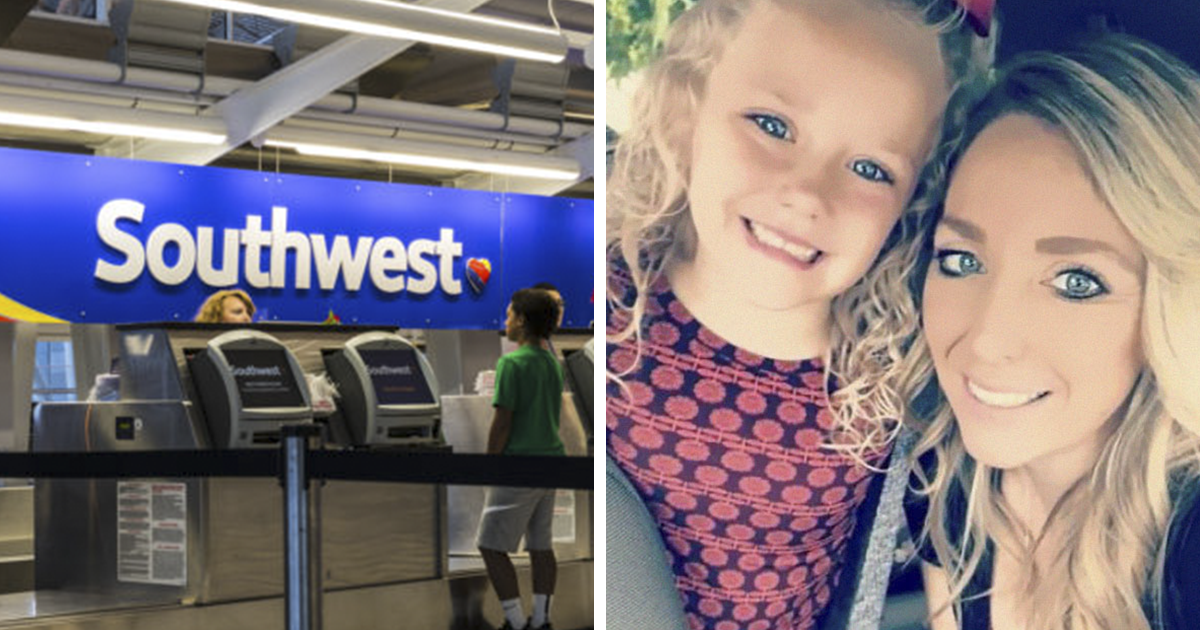
Every so often, the internet discovers a story so perfectly engineered for outrage that it practically boards the plane before the passengers do. The Southwest Airlines “name-shaming” controversy involving a 5-year-old girl named Abcde Redford was one of those stories. It had everything: an unusual baby name, an airport employee accused of bad behavior, a mother demanding respect, a child caught in the middle, and online commenters who arrived with jokes faster than a boarding group A passenger rushing for an exit-row seat.
The incident began when Traci Redford said a Southwest Airlines gate agent at John Wayne Airport in Orange County, California, mocked her daughter’s name while the family was preparing to fly home to El Paso, Texas. The child’s name, Abcde, is pronounced “ab-city” or “ab-si-dee.” According to Redford, the employee laughed, pointed, spoke about the name to other workers, and later posted a photo of the child’s boarding pass on social media.
Southwest Airlines apologized, but by then the story had already taken off online. Many people agreed the employee was wrong to ridicule a child and share a boarding pass. Yet the internet, being the internet, also turned its attention toward the mother, arguing that naming a child Abcde was practically sending her into the world with a lifetime subscription to awkward roll calls. The result was a messy debate about customer service, privacy, parenting, unusual names, and whether social media has forgotten how to behave around children. Spoiler: it often has.
The Southwest Airlines Name-Shaming Incident Explained
In November 2018, Traci Redford publicly accused a Southwest Airlines employee of mocking her 5-year-old daughter Abcde Redford. The family was traveling from John Wayne Airport in Santa Ana, California, to El Paso, Texas. Redford said they were pre-boarding because her daughter has epilepsy, which made the moment even more sensitive. Pre-boarding is supposed to reduce stress, not turn a child’s name into a gate-side comedy routine.
Redford claimed the gate agent saw the boarding pass, noticed the name, began laughing and pointing, and spoke about it loudly enough for both mother and child to hear. Redford said she told the employee that if she could hear the comments, her daughter could too. That was the heart of the complaint: not simply that someone found the name surprising, but that an adult professional allegedly mocked a child in public.
The situation escalated when Redford said the employee took a photo of the boarding pass and posted it online. That changed the story from rude customer service to a larger privacy concern. A boarding pass can include a passenger’s full name, travel route, flight details, confirmation information, and scannable codes that may reveal more than many travelers realize. Even if the name was unusual, sharing a child’s travel document for laughs crossed a line most reasonable people can see from cruising altitude.
Southwest Airlines Apologized, But The Internet Had Already Boarded
Southwest Airlines issued an apology and said the social media post did not reflect the care, respect, and civility expected from employees. The airline also said it followed up with the employee involved, though it did not publicly disclose personnel actions. That response was standard corporate damage control: apologize, reaffirm values, promise internal action, and hope the story stops trending before someone makes a meme with a boarding pass and alphabet soup.
But the apology did not end the conversation. Online reactions quickly split into two camps. One group defended the child and criticized the employee. They argued that adults should not mock children, especially not while working in a customer-facing role. Another group focused on the mother’s naming choice and suggested that choosing the name Abcde made public confusion inevitable.
That second reaction is where the story became darker. The same people condemning “name-shaming” often proceeded to name-shame the family with Olympic-level enthusiasm. Commenters joked about the alphabet, questioned the mother’s judgment, and predicted the child would spend her life explaining the pronunciation. The employee was criticized for mocking the name, but the internet often did the same thing on a much larger stage. In other words, the internet saw a small fire and decided what it really needed was gasoline, confetti, and 2,000 comments.
Why The Employee’s Alleged Behavior Was A Serious Problem
Customer Service Requires Basic Respect
Airline employees deal with stressed passengers, tight schedules, crying babies, weather delays, and people who believe “carry-on” means “portable studio apartment.” It is not an easy job. But professionalism matters most when something unusual happens. A surprising name is not an emergency. It is not a security threat. It is not a reason to laugh at a child.
The simplest rule is also the best one: if the passenger can hear you, the passenger can be hurt by you. Children may not understand every joke, but they understand tone, pointing, laughter, and embarrassment. A five-year-old does not need a full lesson in social cruelty while waiting to board a plane.
Posting A Boarding Pass Online Is Not A Harmless Joke
The alleged social media post was arguably more serious than the laughter. A boarding pass is not just a funny piece of paper. It can contain personal and travel information that should be treated carefully. Travelers are often warned not to post boarding passes online because barcodes and reservation details may expose private data or allow unwanted access to travel accounts.
For an airline employee, the standard should be even higher. Employees have access to passenger information because they need it to do their jobs. They do not have access to it so they can turn a customer’s name into shareable content. That distinction matters. Trust is part of air travel. Passengers hand over names, birth dates, payment details, travel routes, and sometimes medical or accessibility information. They should not have to wonder whether any of it will become someone’s Facebook joke.
Why The Internet Blamed The Mother Anyway
The backlash against Traci Redford centered on one question: why give a child such an unusual name and then be surprised when people react? To many commenters, Abcde seemed less like a name and more like a keyboard warm-up exercise. Critics argued that parents should consider how a child’s name will function in classrooms, job interviews, medical offices, airports, and anywhere someone has to read it aloud without a pronunciation guide.
There is a fair conversation to be had here. Names are gifts, but they are also tools children must use every day. A highly unusual name can be memorable, expressive, and meaningful. It can also invite confusion, mispronunciation, teasing, and administrative headaches. Parents have the right to be creative, but children live with the practical consequences.
Still, that does not justify mocking a child. The internet often struggles with this distinction. It is possible to believe a parent made a questionable naming decision and still believe the child deserves kindness. It is possible to say, “That name may create challenges,” without turning the child into a punchline. Unfortunately, nuance online often gets treated like checked baggage: lost, delayed, and somehow sent to Denver.
Is Abcde Really A Name?
Yes, Abcde is a real given name, though it is rare. It comes from the first five letters of the alphabet and is commonly pronounced “ab-si-dee.” U.S. baby-name data and naming experts have noted that hundreds of girls have been given the name over the years. It is unusual, but not imaginary.
The name fits into a broader American trend toward distinctive baby names. Parents increasingly look for names that stand out, feel personal, or avoid the repetition of traditional favorites. In earlier decades, classrooms might have had several Jennifers, Michaels, Jessicas, or Christophers. Today, parents often want something more individual. Sometimes that leads to beautiful cultural revivals, creative spellings, nature names, surname names, and names inspired by literature, music, or family history. Sometimes it leads to Abcde.
Unusual names can be empowering. They can help a person feel unique and memorable. They can reflect heritage, imagination, or a family story. But unusual names also place a social burden on the child. The child becomes the ambassador, pronunciation coach, spelling assistant, and customer-service representative for the name. That is a lot to ask before kindergarten.
The Child Was Not Responsible For The Name
The most important point in the entire Southwest Airlines name-shaming debate is also the easiest to forget: Abcde Redford was five years old. She did not choose her name. She did not write the boarding pass. She did not ask to become a national conversation about baby naming. She was a child traveling with her mother, reportedly because of a medical condition that required pre-boarding.
Adults can debate naming trends all day. They can discuss whether parents should prioritize uniqueness, tradition, cultural meaning, ease of spelling, or future employability. But children should not be publicly humiliated for decisions adults made. That applies in airports, schools, doctor’s offices, sports teams, and comment sections.
Even when people believed they were criticizing the mother, much of the ridicule still landed on the child’s identity. A child’s name is not separate from the child when people are laughing at it within earshot. Adults should know better. Airline employees should know better. Commenters should know better. Of course, “should” is doing a lot of heavy lifting on the internet.
What The Story Says About Modern Parenting And Public Judgment
Parenting has always attracted criticism, but social media has turned it into a spectator sport. A parent can make one unusual choice, and suddenly millions of strangers feel invited to review it like a product on Amazon. “One star: name difficult to pronounce, packaging confusing, child may require nickname.”
The Abcde story became viral because it touched a nerve. Many people feel strongly about baby names because names sit at the intersection of identity, class, culture, creativity, and social expectation. A name can signal belonging or rebellion. It can honor a grandmother or announce that the parents own at least one decorative letter board. People judge names because names are public, personal, and instantly readable.
But public judgment can become lazy. Instead of asking thoughtful questions about how society treats difference, commenters often reach for the cheapest joke. That is exactly what made the original alleged behavior wrong. The employee saw something unusual and mocked it. Then the internet saw the employee mocking something unusual and responded by mocking it even more. The cycle was not exactly humanity’s finest boarding announcement.
Lessons For Airlines, Parents, And Everyone With A Keyboard
For Airlines: Train Employees For Privacy And Empathy
Airlines should treat passenger information as confidential and passenger dignity as non-negotiable. Employee training should cover not only security procedures and boarding logistics but also social media boundaries. If a customer’s name, appearance, disability, language, family structure, or travel document seems unusual, the correct response is still professionalism. The gate is not a group chat.
For Parents: Creative Names Deserve Practical Testing
Parents considering a unique baby name may want to test it in real-world situations. Say it aloud as a teacher taking attendance. Spell it over the phone. Imagine it on a resume, a prescription label, a passport application, a wedding invitation, and a coffee cup. A name does not need to be common to be good, but it should be livable.
That does not mean every child needs to be named Emma, Liam, Olivia, or Noah. Variety is part of culture. But creativity and practicality can share a seat. If a name is likely to require constant explanation, parents should be prepared to help the child handle that with confidence and humor.
For The Internet: Children Are Not Content
The internet needs a simple rule: do not turn children into targets. Adults can debate policies, corporate behavior, parenting trends, and public controversies. But mocking a child’s name, face, disability, clothes, speech, or family background is not clever. It is just cruelty wearing a meme hat.
Experiences And Real-Life Reflections Related To The Name-Shaming Debate
Anyone who has traveled with a child knows airports can bring out the most fragile version of every human involved. Parents are juggling snacks, boarding passes, bathroom emergencies, stuffed animals, medical needs, and the spiritual crisis of whether the tablet battery will survive the flight. Children are dealing with crowds, noise, long lines, unfamiliar rules, and adults who suddenly become very intense about shoes and liquids. In that environment, one careless comment can feel much bigger than it might on an ordinary day.
Families with children who have unusual names often develop small survival routines. They spell the name before being asked. They offer the pronunciation immediately. They smile through the same joke for the hundredth time. They learn which people are curious in a kind way and which people are preparing a punchline. For a confident adult, that can be mildly annoying. For a child, it can shape how safe they feel introducing themselves.
Teachers, nurses, receptionists, gate agents, coaches, and customer-service workers all encounter names they have never seen before. The best ones handle it gracefully. They ask, “Can you help me pronounce your name correctly?” That sentence is small, but it communicates respect. It says the person matters more than the reader’s first guess. It also avoids the classic public-service disaster of attempting a brave pronunciation and accidentally inventing a new weather system.
Parents with creative naming tastes can also learn from this story. A name may feel charming at home, but the outside world can be blunt. That does not mean parents should surrender all creativity to avoid judgment. It does mean they should think about the child’s daily experience. Will the child enjoy explaining the name? Is there an easy nickname? Does the name carry meaning the child can feel proud of? Can the family teach the child to respond to mistakes without shame?
On the other side, people who encounter unusual names should remember that surprise is not a license to humiliate. You can notice a name without announcing your opinion like a breaking-news alert. You can be curious without being rude. You can privately think, “Wow, that is different,” and still publicly say, “Thank you, Abcde, have a good flight.” Civilization is built on many small acts of not saying the first thing that enters your head.
The Southwest Airlines controversy remains memorable because everyone in it represented a bigger social role. The employee represented customer-service responsibility. The mother represented parental choice. The child represented innocence. The internet represented the loud, chaotic jury that never goes home. The best lesson is not that parents should never choose unusual names or that companies can avoid every employee mistake. The lesson is that dignity matters most when the situation is easy to laugh at.
Names carry stories. Some are traditional, some are cultural, some are invented, and some make substitute teachers pause long enough to reconsider their career choices. But behind every name is a person. In this case, that person was a five-year-old girl. Whatever anyone thinks of the name Abcde, the child deserved what every traveler deserves: privacy, respect, and a peaceful trip home.
Conclusion
The story of the mother who accused Southwest Airlines of name-shaming her 5-year-old daughter became viral because it was easy to react to and hard to discuss calmly. The airline employee’s alleged behavior was wrong, especially if a boarding pass was posted online. The mother’s naming choice sparked understandable debate, because parents should consider how names affect children in everyday life. But the internet’s response often repeated the same cruelty it claimed to criticize.
At its best, the controversy reminds airlines to protect passenger dignity, parents to balance creativity with practicality, and everyone online to stop treating children like public property. A strange name may invite questions, but it should not invite humiliation. The alphabet has 26 letters. Surely we can use a few of them to spell “respect.”