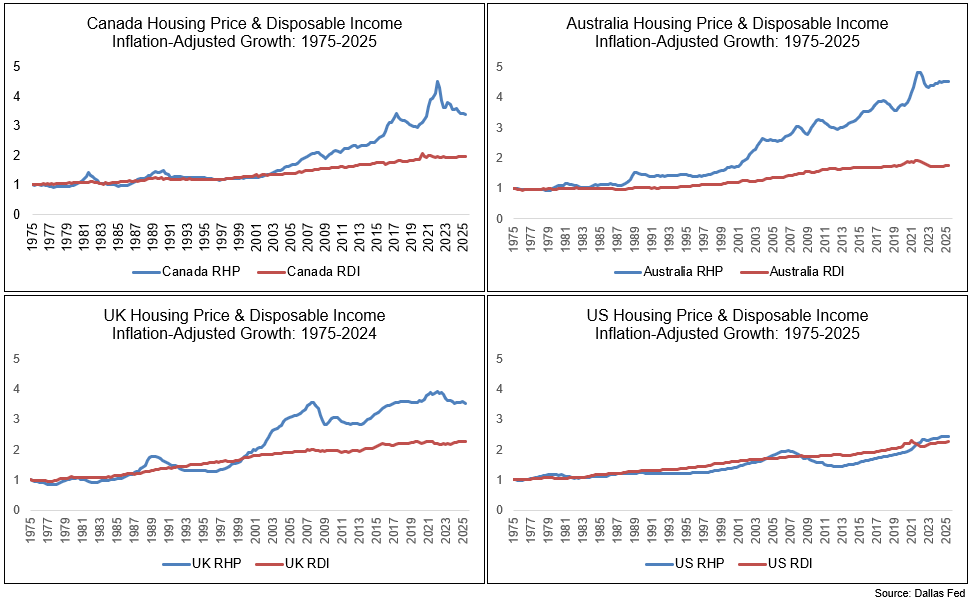
For a lot of Americans, housing no longer feels like a normal monthly expense. It feels like a boss battle. Rent takes a giant bite out of paychecks, starter homes behave like luxury goods, and the phrase “maybe next year” has become a lifestyle. The housing affordability crisis is not just about expensive real estate in a few famous cities. It is a national squeeze affecting renters, first-time buyers, older adults on fixed incomes, working families, and even middle-class households that once assumed homeownership was simply the next step in adulthood.
That is what makes this crisis so frustrating: housing is not optional. You can postpone buying a new phone. You cannot postpone needing a place to sleep. And when housing gets too expensive, everything else gets wobbly too. Families delay having children, workers move farther from jobs, young adults stay with parents longer, savings disappear into security deposits and closing costs, and local economies start acting like they are running in shoes two sizes too small.
To understand the housing affordability crisis, it helps to stop thinking of it as one single problem. It is actually a messy pileup of several problems happening at once: too few homes, expensive financing, restrictive land-use rules, slow construction, rising insurance and maintenance costs, and wages that have not kept pace with what it now costs to rent or buy in many markets. In other words, the problem is not only that housing is expensive. It is that housing has become expensive faster than many households can adapt.
What the Housing Affordability Crisis Really Means
At its core, housing affordability is about the gap between what people earn and what it costs to live somewhere decent, stable, and reasonably located. Traditionally, housing experts have used the 30% rule: if a household spends more than 30% of income on housing, it is considered cost-burdened. Spend more than half, and the burden is severe. That may sound like a dry policy metric, but in real life it means something painfully simple. It means rent competes with groceries. It means a mortgage payment competes with child care. It means a broken transmission can turn into a financial emergency because there is no cushion left after the landlord gets paid.
The crisis also looks different depending on where you stand. For renters, it often means persistent insecurity, higher deposits, more crowded living situations, and fewer affordable listings in neighborhoods with good schools or short commutes. For would-be buyers, it means watching a modest home carry a monthly payment that would have seemed absurd a few years ago. For existing homeowners, it can mean higher taxes, insurance premiums, repairs, and the odd feeling of being “house rich” on paper but still cash-stressed in real life.
This is why the phrase “housing ladder” feels a little outdated. For many households, the bottom rungs are missing. Renting is not reliably affordable. Starter homes are scarce. Trade-up homes are expensive. Downsizing is not always cheaper. Even the people who technically own homes are not automatically insulated from the pressure.
Why Housing Became So Unaffordable
1. The U.S. Has Not Built Enough Housing
The biggest structural problem is supply. For years, housing construction lagged behind household growth and demand in many parts of the country. That shortage has built up like traffic after a highway closure: even when movement resumes, the backlog does not magically disappear. A shortage affects both renters and buyers because they are often competing across the same regional market. If there are too few homes for sale, more households stay in the rental market longer. If there are too few apartments, rents stay elevated and saving for a down payment becomes even harder.
And this is not just a big-city issue. The affordability crunch now stretches across suburbs, smaller metros, and once-affordable Sun Belt markets. In some places, the problem is not just that land is expensive. It is that rules around zoning, lot sizes, parking requirements, permitting, and neighborhood opposition make it hard to build enough of the kinds of homes people actually need, including duplexes, townhomes, accessory dwelling units, and modest multifamily housing.
2. Mortgage Rates Changed the Math Overnight
Even when home prices stop jumping at pandemic-era speed, borrowing costs can still wreck affordability. A house that looked barely manageable with a low mortgage rate can turn into a budget-eating monster once rates rise. That is one reason so many households felt shut out of homeownership even in markets where price growth started cooling. The sticker price was one thing. The monthly payment was the real plot twist.
Higher rates also created a lock-in effect. Homeowners with older, much lower mortgage rates became reluctant to move because doing so would mean swapping an affordable payment for a painful one. That helped keep resale inventory tight. So buyers faced a double headache: high monthly costs and too few listings.
3. Construction Got More Complicated and More Expensive
Builders have not exactly been lounging around ignoring demand. They have faced higher financing costs, expensive materials, labor shortages, regulatory hurdles, and local uncertainty. When the cost of building rises, the resulting homes often need to be priced higher just to make the project pencil out. That makes it hard to deliver the kind of entry-level housing many communities badly need.
This is why the market keeps producing an awkward mismatch. Plenty of Americans need more modest homes, but in many places the economics favor larger or more expensive units. The market is building what is feasible, not always what is most affordable.
4. Wages Have Not Kept Up Cleanly With Housing Costs
Yes, incomes have risen for many workers. No, that has not been enough to erase the pain. Housing costs rose so sharply in recent years that even wage growth and mild affordability improvements have not fully repaired the gap. Many households are earning more than they did a few years ago, but they are also facing higher rent, higher insurance, higher utilities, and higher transportation costs if they had to move farther from work. A pay raise feels less exciting when your lease renews with a smirk.
Why Renting No Longer Feels Like a Safe Alternative
In the classic American housing script, renting was supposed to be the temporary stage before buying. That story is increasingly outdated. Renting has become a long-term reality for millions of households, and in many markets it is not exactly a bargain. Even where rent growth has cooled, affordability remains strained because rents are cooling from very elevated levels. That is like saying a fever is lower after dropping from 104 to 102. Better, sure. Still not great.
Lower-income renters have been hit the hardest. Affordable units are scarce, and the gap is especially brutal for extremely low-income households. When there are too few affordable homes at the bottom of the market, people do what they can: double up with relatives, take on unsafe units, commute longer distances, skip medical care, or fall behind on bills. Housing stress is rarely neat and isolated. It spills into health, education, work stability, and mental well-being.
The rental crisis also has a strange psychological effect. It traps people in “almost” mode. Almost enough for a down payment. Almost enough for a safer neighborhood. Almost enough to stop needing roommates at 37. That chronic near-miss can be exhausting in a way spreadsheets do not capture well.
Who Gets Hit Hardest
The housing affordability crisis is broad, but it is not evenly distributed. Renters with low incomes are often in the most vulnerable position. Young adults face delayed independence and slower wealth-building. First-time buyers face brutal competition for the limited number of homes at the lower end of the market. Single parents, seniors, and people with disabilities often have less flexibility when costs rise. Black and Hispanic households, who already face wealth and homeownership gaps rooted in long-standing structural inequities, are more likely to be squeezed by rent burdens and barriers to buying.
Essential workers feel the contradiction especially sharply. Teachers, nursing assistants, service workers, delivery drivers, and public employees are told they are vital to community life, then discover they cannot comfortably live in the communities they help run. That mismatch weakens neighborhoods over time. A town cannot run smoothly if the people who staff the schools, stores, hospitals, and emergency services are priced farther and farther away.
Older homeowners are not immune either. Some bought decades ago and benefited from home value growth, but rising taxes, insurance, maintenance, and repair costs can still create affordability strain. Aging in place sounds lovely until the roof leaks and the homeowners insurance bill arrives like a jump scare.
Why “Just Move Somewhere Cheaper” Is Not a Real Solution for Everyone
Whenever housing gets discussed, someone eventually offers the national shrug: “People can just move.” In reality, moving is expensive, disruptive, and often impossible. Jobs, family care, school districts, health systems, and social support networks tie people to places. Cheaper housing may exist in another metro or exurban area, but it may come with lower wages, longer commutes, weaker transit, fewer services, or limited job options.
There is also a timing problem. A household that cannot save because rent is too high usually does not have a magic relocation fund sitting around. Security deposits, moving trucks, utility hookups, and time off work all cost money. Telling a cash-strapped household to move can sound a lot like telling a tired swimmer to simply be more buoyant.
What Could Actually Help
Build More Homes, and More Types of Homes
The most durable fix is to increase supply, but not just any supply. Communities need more apartments, townhomes, duplexes, accessory dwelling units, small-lot homes, condos, and starter homes. Missing-middle housing is called “missing” for a reason. Many neighborhoods allow either large single-family homes or large apartment buildings, with too little in between.
Reform Zoning and Speed Up Approval
Restrictive land-use rules can quietly raise costs long before a home is even built. Reform does not mean paving over every neighborhood. It means allowing more flexibility where demand is strong, cutting unnecessary delays, and making room for housing choices that match modern household sizes and budgets.
Preserve Existing Affordable Housing
It is usually cheaper to preserve affordable units than to replace them after they disappear. Older unsubsidized rentals, public housing, and income-restricted developments need maintenance and long-term support. If affordable stock is allowed to age out, deteriorate, or convert upward in price, the crisis deepens.
Expand Direct Help for Renters and Buyers Who Need It Most
Supply matters, but households in immediate distress cannot wait for a ten-year construction wave. Rental assistance, housing vouchers, down payment help, and targeted subsidies all matter, especially for low-income households and first-generation buyers who lack family wealth to bridge the gap. The affordability crisis is too severe to pretend one tool will fix everything.
Connect Housing Policy to Transportation and Jobs
Affordable housing in the wrong place can still be expensive if it adds two hours of commuting and a mountain of car costs. Better transit, mixed-use planning, and housing near jobs can stretch household budgets in ways that do not show up in sale prices alone. A cheaper house is not really cheaper if it quietly bills you in gasoline, time, and stress.
Experiences Behind the Numbers
Statistics explain the housing affordability crisis, but everyday experiences reveal what it actually feels like. Across the country, the crisis often starts with a simple plan that no longer works. A couple in their early thirties decides they are ready to buy. They both have jobs, decent credit, and enough discipline to skip takeout more often than they would like. They start browsing listings for a starter home, expecting something modest but manageable. Instead, they find houses that need repairs, carry steep monthly payments, and attract multiple offers anyway. They do not feel reckless enough to buy, but they do not feel financially safe staying renters forever either. So they wait. Then they wait again. Their life is not on pause exactly, but it is stuck buffering.
For renters, the experience can be even sharper. A single mother may spend weeks searching for an apartment near her child’s school and her workplace, only to discover that “affordable” now means smaller space, fewer amenities, worse maintenance, and a longer commute. She may be forced to choose between location and quality, or between privacy and price. A rent increase of even a few hundred dollars can wipe out room in the budget for after-school care, savings, or routine health expenses. Nothing dramatic has to happen for the strain to become serious. Sometimes the crisis looks less like eviction and more like permanent instability.
Young adults experience the crisis in a different way. Many graduate, find work, and still discover that independence is priced like a luxury package. Living with parents can be financially practical, but it can also delay milestones people once assumed were normal: getting a first apartment alone, building savings, starting a family, or putting down roots in a neighborhood. The emotional effect matters too. A generation that is constantly told to budget better may feel embarrassed by circumstances that are often much larger than personal spending habits.
Older adults can be caught in the same trap from the other direction. A longtime homeowner may have substantial equity but still feel squeezed by repairs, insurance, taxes, and maintenance. Selling is not always a relief, because downsizing may not actually cut monthly costs by much. Renting after ownership can feel unstable. Staying put can feel expensive. Aging in place sounds ideal until the house itself becomes a financial project with a pulse.
Then there are workers who keep communities running but struggle to live anywhere near them. Teachers, first responders, home health aides, restaurant staff, and municipal employees often face long commutes because housing close to work is out of reach. That is not just inconvenient. It reshapes daily life. More time on the road means less time with family, less flexibility for emergencies, and more money burned on transportation. The affordability crisis is not only about where people sleep. It is about how they live, how far they must stretch, and how often they are asked to treat instability as normal.
Conclusion
The housing affordability crisis is not a passing mood swing in the market. It is the result of years of underbuilding, rising costs, restrictive local rules, and an economy in which housing got more expensive faster than many households could keep up. Some indicators have improved slightly, and that matters. But slight relief is not the same thing as a solution. Millions of renters are still strained, many buyers are still sidelined, and the dream of stable, affordable housing keeps moving farther away for people who are doing everything “right.”
If there is a hopeful angle, it is this: the crisis is severe, but its causes are not mysterious. The country needs more homes, more housing types, smarter land-use policy, better preservation of affordable units, and stronger support for households most at risk. Housing affordability will not be fixed by wishful thinking, nostalgia, or one clever app. It will be fixed by building, preserving, and financing housing in a way that treats shelter like the foundation of economic life rather than a luxury good with granite countertops.