Note: This article is based on publicly documented television history, interviews, entertainment archives, and reputable reference sources. No direct source links are included, as requested.
A Sitcom “What If?” That Nearly Changed TV History
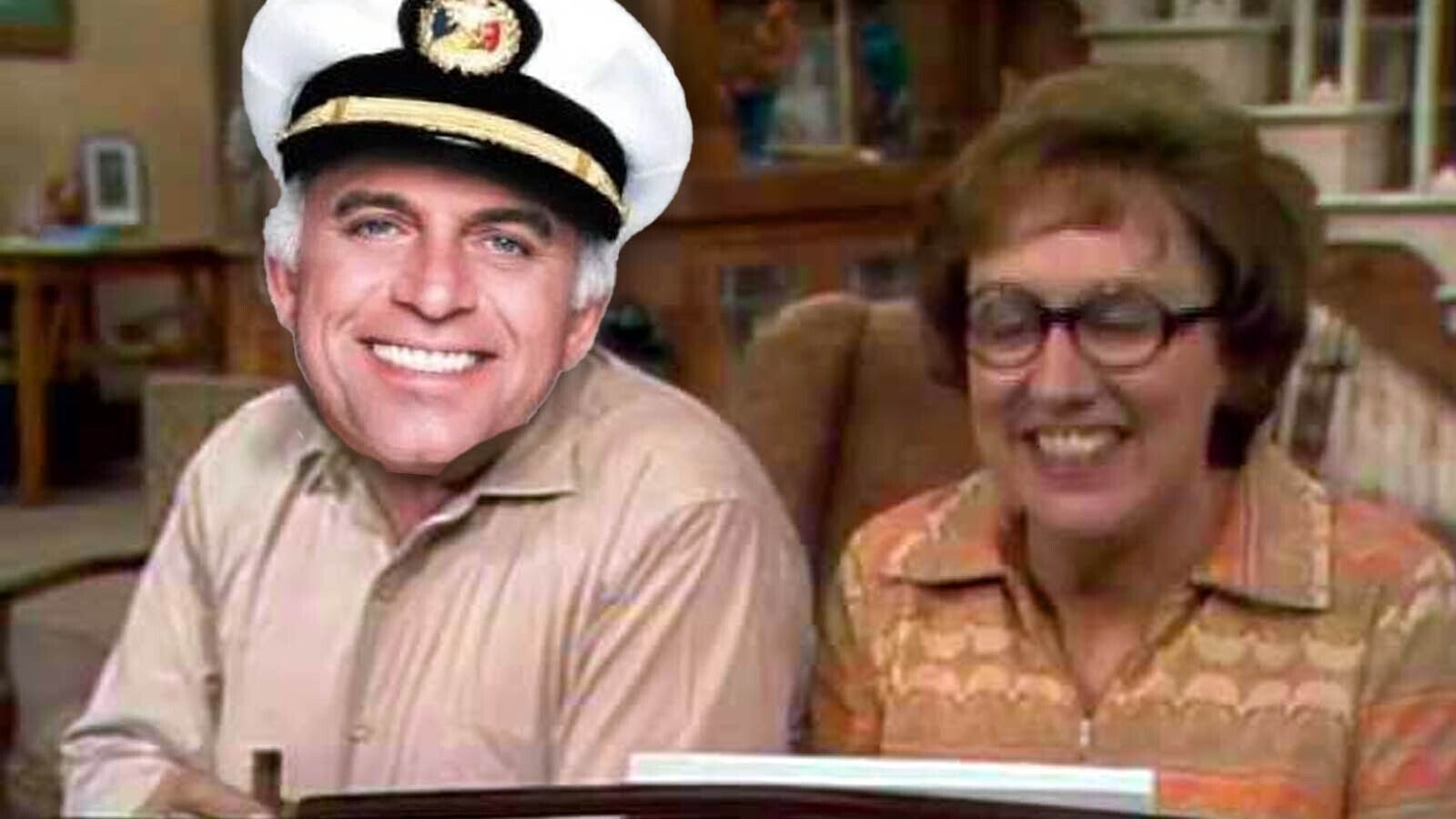
Television history is full of strange crossroads. A pilot gets rewritten. A network executive changes a time slot. An actor passes on a role, then watches someone else turn it into a cultural landmark. One of the most fascinating examples is this: Gavin MacLeod, the warm and steady actor forever remembered as Captain Merrill Stubing on The Love Boat, once auditioned for Archie Bunker on All in the Family.
Yes, the same actor who welcomed passengers aboard the Pacific Princess with fatherly calm could have ended up in a Queens living room, arguing with his son-in-law, mangling words, and becoming one of the most controversial sitcom characters in American television. It sounds like alternate-universe casting dreamed up by a TV fan after too much late-night rerun watching, but it was real.
The role of Archie Bunker ultimately went to Carroll O’Connor, and it is difficult now to imagine anyone else in that chair. O’Connor gave Archie a dangerous mix of ignorance, insecurity, comic timing, stubbornness, and buried humanity. Meanwhile, MacLeod went on to become Murray Slaughter on The Mary Tyler Moore Show and later Captain Stubing on The Love Boat. In other words, TV history did not sink. It simply sailed in two very different directions.
Who Was Gavin MacLeod Before The Love Boat?
Before he became America’s favorite cruise captain, Gavin MacLeod was a hard-working character actor with a long résumé. Born Allan George See in Mount Kisco, New York, he built his career through theater, film, and guest appearances on television. He was not an overnight celebrity. He was the kind of actor who earned recognition the old-fashioned way: one role, one audition, one “Hey, haven’t I seen that guy somewhere?” at a time.
MacLeod appeared in films and television shows before landing the role of Murray Slaughter, the witty news writer on The Mary Tyler Moore Show. Murray was not the loudest person in the newsroom, but he was essential. He brought warmth, sharp humor, and emotional balance to one of the smartest ensembles of the 1970s. That role helped establish MacLeod as a performer who could be funny without needing to dominate every scene.
That quality became even more important on The Love Boat. Captain Stubing was not designed to be a chaotic comic engine. He was the host, the anchor, the authority figure, and occasionally the confused dad figure trying to keep romance, misunderstandings, and guest-star drama from capsizing the ship. If Archie Bunker was a storm system, Captain Stubing was the harbor.
How Gavin MacLeod Almost Became Archie Bunker
According to entertainment-history accounts, MacLeod auditioned for the role of Archie Bunker when All in the Family was being developed for American television. The series, created for U.S. audiences by Norman Lear and Bud Yorkin from the British sitcom Till Death Us Do Part, was not a gentle family comedy. It was built to challenge viewers. It used Archie’s prejudices, fears, and arguments to expose uncomfortable truths about American society.
MacLeod reportedly realized quickly that Archie was not the right fit for him. He objected to the character’s bigotry and felt that the material required a very specific kind of performer. That instinct was important. A role like Archie Bunker could not simply be “played loud.” If performed incorrectly, Archie might become either too hateful to watch or too lovable in a way that erased the satire. The part needed danger, comedy, vulnerability, and contradiction all at once.
Carroll O’Connor turned out to be that actor. He did not soften Archie into a harmless teddy bear, but he also did not make him a cartoon villain. O’Connor understood that Archie’s ignorance came from fear, habit, pride, and a desperate attempt to control a world changing faster than he could understand. The result was one of the most famous performances in sitcom history.
Why Carroll O’Connor Was the Right Archie Bunker
Archie Bunker was not just another sitcom dad. He was not Jim Anderson from Father Knows Best with a louder voice. He was a cultural argument sitting in an armchair. Through Archie, All in the Family tackled racism, sexism, religion, politics, war, class, aging, marriage, and generational conflict. The jokes came fast, but they often had sharp edges.
Carroll O’Connor brought theatrical weight to the character. He could make Archie funny in one breath and painfully small in the next. His pauses mattered. His bluster mattered. Even his mispronunciations became part of the character’s rhythm. Most importantly, O’Connor seemed to understand that Archie was not supposed to be admired without question. He was supposed to be watched, laughed at, challenged, and sometimes pitied.
This is where casting becomes more than a personnel decision. With the wrong actor, All in the Family might have become unbearable or toothless. With O’Connor, it became a landmark. The show was one of the defining examples of “relevance TV,” a style of programming that brought controversial social topics into the sitcom format. Instead of pretending American families never argued about politics, race, or gender roles, All in the Family put those arguments at the dinner table and turned on the lights.
Why Gavin MacLeod Was Perfect for Captain Stubing
If Archie Bunker required a performer who could embody conflict, Captain Stubing required one who could manage comfort. That may sound easier, but it is not. Playing a pleasant authority figure for nine seasons without becoming wallpaper takes skill. Gavin MacLeod gave Stubing dignity, patience, and just enough comic awkwardness to keep him human.
The Love Boat premiered as a weekly series in 1977 and became one of ABC’s most recognizable feel-good hits. Set aboard the Pacific Princess, it followed the ship’s crew and a rotating lineup of guest stars. Each episode offered several stories, usually involving romance, comedy, reconciliation, or the occasional emotional life lesson served with a side of ocean breeze.
Captain Stubing was the face of order in a show built around emotional disorder. Passengers boarded with secrets, crushes, regrets, fake identities, old flames, new hopes, and luggage that probably exceeded cruise weight limits. Stubing’s job was to keep the ship moving and the tone friendly. He was not the source of every plot, but he made the world of the show feel safe.
MacLeod’s warmth mattered. He had a smile that suggested everything would work out by the final commercial break. On a series filled with guest stars, the regular cast had to create continuity. MacLeod, Bernie Kopell, Fred Grandy, Ted Lange, Lauren Tewes, and later Jill Whelan became the familiar crew viewers returned to each week. The passengers changed; the welcome stayed the same.
All in the Family vs. The Love Boat: Two Very Different Americas
The wildest part of the MacLeod-Archie Bunker story is how perfectly it contrasts two major moods in 1970s television. All in the Family brought America’s arguments into the living room. The Love Boat invited America to leave the living room, pack a bright outfit, and solve emotional problems at sea.
All in the Family was confrontational. It was about the friction between old assumptions and new realities. Archie clashed with his liberal son-in-law, Michael “Meathead” Stivic. Edith Bunker responded to Archie’s temper with kindness and moral clarity. Gloria represented a younger generation trying to define itself. The show’s comedy came from conflict that felt recognizable, sometimes too recognizable for comfort.
The Love Boat, by contrast, was escapist television with a soft heart. It offered viewers travel fantasy, celebrity appearances, and tidy emotional arcs. A person could board the ship lonely, confused, or recently dumped, and by the end of the episode, there was a good chance they had found love, closure, or at least a better hairstyle.
Neither approach was “better” in a simple sense. They served different needs. One made viewers argue. The other helped viewers relax. One said, “Let’s talk about what is wrong.” The other said, “Let’s take a cruise and see if Charo is guest-starring.” Television needs both kinds of shows. Even broccoli tastes better when dessert exists somewhere in the universe.
The Casting Lesson: Actors Know Their Own Frequency
MacLeod’s decision to distance himself from Archie Bunker reveals something important about acting. Good casting is not just about talent. It is about frequency. Some actors naturally vibrate with warmth. Others carry tension, danger, sadness, eccentricity, or authority. Great performers can stretch, of course, but the most iconic roles often match an actor’s deepest energy.
Gavin MacLeod had range, but his best-known roles used his humanity. Murray Slaughter was dry and funny, but rarely cruel. Captain Stubing could be stern, but never frightening. MacLeod’s screen presence suggested decency. That quality might have made Archie less explosive. It might also have made the satire less effective.
Carroll O’Connor, meanwhile, could make Archie abrasive without making him one-dimensional. He gave the character a heavy emotional engine. Viewers could laugh at Archie’s foolishness while sensing the fear underneath. That balance was not accidental. It was performance craftsmanship.
So when people ask whether the captain of The Love Boat could have been Archie Bunker, the factual answer is yes, at least in the audition room. The artistic answer is more complicated. MacLeod could read the lines, but O’Connor could inhabit the contradiction. And MacLeod, wisely, seemed to know the difference.
How One Missed Role Created Two TV Icons
Hollywood loves to frame missed roles as tragedies. “This actor almost played that character” usually arrives with a dramatic gasp, as if one audition changed the fate of civilization. In this case, the missed role looks more like a blessing for everyone involved.
If MacLeod had played Archie, perhaps he would not have become Murray Slaughter. If he had not become Murray, perhaps producers would not have seen the full depth of his gentle comic presence. If that had not happened, maybe Captain Stubing would have been played by someone else. Suddenly, television history has a very different boarding pass.
At the same time, if Carroll O’Connor had not played Archie, All in the Family might not have reached the same cultural force. Archie became a character people debated, quoted, criticized, misunderstood, and remembered. He was not merely a sitcom role; he became shorthand for a certain kind of American stubbornness.
The result was strangely perfect. O’Connor got the living room. MacLeod got the ship. One became the captain of conflict; the other became the captain of comfort. Both men ended up exactly where television needed them.
Why This Story Still Fascinates Classic TV Fans
Classic TV fans love casting trivia because it opens tiny windows into alternate worlds. What if Tom Selleck had played Indiana Jones? What if someone else had played Frasier Crane? What if the actor best known for smiling under a captain’s hat had become America’s most argumentative TV father?
The MacLeod-Archie story is especially fun because the contrast is so extreme. Captain Stubing and Archie Bunker feel like they come from different planets. Stubing would probably welcome you aboard, ask about your dinner reservation, and remind you not to miss the shuffleboard tournament. Archie would complain about the price of the cruise, insult the buffet, and somehow get into a debate with the ship’s doctor before dessert.
That contrast also reminds us that actors are not their characters. Gavin MacLeod was not Captain Stubing any more than Carroll O’Connor was truly Archie Bunker. O’Connor’s own views were far from Archie’s narrow worldview, which is part of what made his performance so sharp. Acting is not agreement. Often, it is disciplined opposition.
MacLeod’s discomfort with Archie’s bigotry makes sense in that context. He understood the emotional cost of saying certain lines, even in satire. O’Connor found a way to perform those lines while making the character’s prejudice the target of the humor. That distinction mattered then, and it still matters now.
Experiences Related to “The Captain of the Love Boat Could Have Been Archie Bunker”
For many viewers, discovering that Gavin MacLeod almost played Archie Bunker creates the same reaction as finding out your math teacher used to be in a rock band: surprise, disbelief, and then a sudden desire to tell everyone nearby. It changes how people think about both shows. The next time a viewer sees Captain Stubing calmly managing a romantic misunderstanding on the Lido Deck, it is almost impossible not to imagine him in Archie’s armchair, barking at Meathead. The image is funny precisely because it feels so wrong.
That is one of the joys of revisiting classic television. These shows are not frozen museum pieces. They keep changing as viewers learn more about how they were made. A casting detail can add a new layer to an episode you have seen ten times. Suddenly, The Love Boat is not just a breezy cruise comedy; it is also evidence of an actor finding the role that matched his spirit. All in the Family is not just a groundbreaking sitcom; it is proof that the right performer can turn risky material into television history.
Fans who grew up with these series often remember them as part of a weekly rhythm. All in the Family felt like a show adults watched and argued about afterward. It had the energy of a family debate that got too loud but somehow ended with everyone still in the room. The Love Boat felt different. It was weekend television with a smile. It promised guest stars, romance, and a floating vacation most viewers were not actually taking. The show was basically a travel brochure with jokes, heart, and better theme music than most real vacations provide.
There is also a personal lesson in MacLeod’s path. Sometimes not getting the role is the thing that saves your career. That sounds like motivational poster language, but in this case it happens to be true. MacLeod did not become Archie Bunker, and that rejection, relief, or redirection helped leave room for the parts that suited him better. Many people have their own version of that story: the job they did not get, the school that did not accept them, the plan that fell apart, the door that closed with all the subtlety of a sitcom sound effect. Later, they realize the missed opportunity pointed them toward a better fit.
The story also says something about self-knowledge. MacLeod seemed to understand that Archie’s voice was not his voice. That does not mean he lacked courage as an actor. It means he recognized the difference between a challenge and a mismatch. In creative work, that distinction is priceless. Saying no to the wrong role can be as important as saying yes to the right one.
For modern audiences, the “Captain Stubing could have been Archie Bunker” fact works because it combines humor, history, and imagination. It lets us picture a bizarre TV universe while appreciating the one we actually got. Carroll O’Connor gave American television one of its most unforgettable characters. Gavin MacLeod gave viewers a captain they trusted. One made the living room uncomfortable in the best possible way. The other made a cruise ship feel like home. Not bad for a casting twist that almost went in a completely different direction.
Conclusion: The Right Actor Found the Right Chairand the Right Ship
The idea that Gavin MacLeod could have played Archie Bunker is more than a quirky trivia nugget. It is a reminder that television history depends on delicate creative choices. The wrong casting decision can flatten a great script. The right one can define a generation.
Carroll O’Connor turned Archie Bunker into a complex, controversial, unforgettable sitcom figure. Gavin MacLeod turned Captain Stubing into a symbol of warmth, stability, and lighthearted escape. Both roles required skill. Both actors left lasting marks. And both characters still live in the cultural memory, one in a Queens living room and the other aboard a ship where every week promised romance, misunderstandings, and probably at least one celebrity guest in a fabulous jacket.
So yes, the captain of The Love Boat could have been Archie Bunker. But television, for once, knew exactly where everyone belonged.