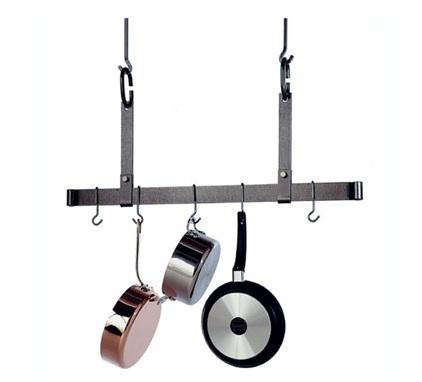
A hammered steel ceiling rack is the kind of kitchen upgrade that quietly walks in wearing work boots and a tailored jacket. It is practical, tough, space-saving, and surprisingly handsome. One minute your pots and pans are clanging around inside a lower cabinet like a marching band falling down the stairs; the next, they are hanging overhead like a chef’s trophy collection.
At its core, a hammered steel ceiling rack is an overhead storage system, most often used as a ceiling-mounted pot rack. It suspends from the ceiling with chains, hooks, or fixed supports and gives cookware, utensils, lids, baskets, and sometimes even herbs a visible, easy-to-reach home. The hammered finish adds texture and character, helping the rack feel warmer and more handcrafted than plain polished metal. For kitchens that need storage without sacrificing style, it is a small architectural feature with a big personality.
What Is a Hammered Steel Ceiling Rack?
A hammered steel ceiling rack is typically made from solid or tubular steel that has been textured to create small surface indentations. This hammered effect can be created by hand, by machine, or through finishing techniques that mimic hand-forged metal. The result is a surface that catches light in a softer, more irregular way than smooth steel. Instead of looking shiny and clinical, hammered steel often feels rustic, industrial, farmhouse-inspired, or old-world.
Most hammered steel ceiling racks are designed for kitchens, especially above islands, prep tables, or open work zones. They usually include a frame, mounting hardware, chains or support rods, and a set of S-hooks or angled hooks. Some rectangular models include a grid shelf for lids, baskets, or less frequently used cookware. Oval models are popular because they soften the look of the kitchen and allow pans to hang around the perimeter. Bar-style racks work well in narrower kitchens where a full oval or rectangle might feel like a metal spaceship has landed above the island.
Why Hammered Steel Works So Well in Kitchen Design
Hammered steel has a visual advantage: it looks substantial without looking flashy. That matters in a kitchen, where metal finishes can quickly go from “elegant” to “restaurant supply warehouse” if they are not balanced carefully. The hammered surface gives steel a more human feel. It suggests blacksmithing, craft, and durability. In other words, it looks like it has a story, even if that story is mostly about your skillet finally having somewhere to live.
Texture Without Clutter
Modern kitchens often lean on smooth surfaces: flat cabinet doors, quartz countertops, polished tile, stainless appliances, and sleek hardware. A hammered steel ceiling rack brings in texture without adding visual mess. The finish has enough movement to be interesting, but because it is usually dark gray, blackened steel, or charcoal-toned, it does not scream for attention.
A Bridge Between Styles
One reason hammered steel ceiling racks remain popular is their flexibility. They can look right at home in a farmhouse kitchen with butcher block counters, a transitional kitchen with shaker cabinets, an industrial loft with brick walls, or a rustic cabin kitchen with open beams. The same rack can feel heritage-inspired, chef-worthy, or modern depending on what surrounds it.
A Display Piece That Actually Works
Some decorative pieces exist only to collect dust and make guests say, “Oh, interesting.” A ceiling rack earns its keep. It stores cookware, frees cabinet space, shortens cooking time, and turns everyday tools into part of the room’s design. Copper pans, cast iron skillets, stainless saucepans, and enamel Dutch ovens all become part of the visual composition. Suddenly your cookware is not clutter. It is decor with handles.
Main Benefits of a Hammered Steel Ceiling Rack
1. It Frees Up Cabinet Space
Pots and pans are notoriously annoying to store. They are bulky, oddly shaped, and usually come with lids that vanish into cabinets like socks in a dryer. A hammered steel ceiling rack moves cookware out of cramped lower cabinets and into vertical space that often goes unused. This is especially helpful in small kitchens, apartments, older homes, and kitchens with limited drawer space.
2. It Keeps Cookware Easy to Reach
When a pan hangs in plain sight, you do not have to kneel, dig, stack, unstack, and apologize to your cabinet door. You simply reach up, grab the right piece, and get cooking. For people who cook often, that convenience becomes a daily luxury. The best storage is not just beautiful; it reduces friction. A ceiling pot rack does exactly that.
3. It Adds Professional Kitchen Energy
There is a reason many restaurant kitchens and chef-inspired homes use open storage. It makes tools accessible and signals that the kitchen is a working space, not just a room where the microwave goes to retire. A hammered steel ceiling rack brings that professional feel into a home kitchen while still looking warm and decorative.
4. It Creates a Strong Focal Point
Installed above a kitchen island, a hammered steel ceiling rack can act almost like a chandelier. It draws the eye upward, defines the island zone, and adds dimension to the room. Some homeowners even style racks with hanging herbs, small baskets, or attractive utensils to soften the metal frame.
5. It Is Durable
Steel is valued for strength, and hammered steel racks are often designed to carry real kitchen weight. Many quality racks use heavy-gauge steel or high-carbon steel with a protective finish. That said, the rack is only as strong as its installation. A beautiful rack mounted incorrectly is not a design feature; it is a future crash scene. Always follow the manufacturer’s instructions and mount into ceiling joists, beams, or properly rated structural support.
Best Places to Install a Hammered Steel Ceiling Rack
Above a Kitchen Island
The island is the classic location. It usually provides open ceiling space, clear walking paths, and a natural cooking or prep zone. A rectangular or oval hammered steel ceiling rack above an island can look balanced and intentional, especially when centered over the countertop.
Above a Prep Table
If your kitchen has a freestanding work table, an overhead rack can make the area feel like a serious cooking station. This works beautifully in farmhouse, cottage, and industrial kitchens. Bonus points if the table has wood grain, because wood and hammered steel are excellent roommates.
Near the Range, But Not Directly in the Way
Placing cookware near the range is convenient, but avoid creating a head-bumping obstacle or a greasy landing zone. If the rack is too close to the cooktop, pans may collect cooking residue faster. A nearby but slightly offset position often works better.
In a Pantry or Butler’s Pantry
A smaller ceiling rack can be useful in a pantry, especially for specialty cookware, baking tools, or serving pieces. This is a clever solution when the main kitchen ceiling is too low or too crowded for a full-size rack.
Choosing the Right Size and Shape
Before buying a hammered steel ceiling rack, measure the room with the seriousness of someone defusing a tiny domestic bomb. Ceiling height, island size, walking paths, cabinet doors, lighting, and sightlines all matter.
Oval Racks
Oval racks are graceful and versatile. They work well above islands and help soften kitchens with many straight lines. Because pots can hang around the outside, oval racks make it easy to access cookware from different angles.
Rectangular Racks
Rectangular racks feel strong and architectural. They are excellent above long islands, commercial-style prep tables, and kitchens with linear layouts. Many rectangular models include a center grid, which adds extra storage for lids or lightweight accessories.
Bar Racks
A bar-style hammered steel ceiling rack is ideal for narrow spaces. It offers the look and utility of hanging storage without dominating the room. Bar racks can also work well over a sink area, small island, or galley kitchen walkway when installed with proper clearance.
Low-Ceiling Racks
Low-ceiling kitchens need special care. Choose compact designs with shorter drops, fewer dangling chains, and hooks that keep cookware close to the frame. If your ceiling is below standard height, test the clearance with a measuring tape before falling in love with a giant rack that belongs in a medieval banquet hall.
Installation Considerations: Do Not Skip This Part
A hammered steel ceiling rack may look decorative, but it is a load-bearing installation. The rack itself may weigh 15 to 40 pounds depending on size and construction, and cookware can add much more. Cast iron pans, Dutch ovens, and stainless stockpots are not featherweights. They are kitchen dumbbells with culinary ambition.
Mount Into Joists or Beams
The safest installation method is to secure the rack directly into ceiling joists or exposed beams using the hardware recommended by the manufacturer. Drywall alone is not designed to support a loaded ceiling rack. Toggle bolts and anchors may be acceptable for certain light-duty applications only when specified, but heavy cookware storage needs structural support.
Check Height and Reach
The rack should hang low enough that cookware is reachable but high enough that people can walk and work safely underneath. In many kitchens, the bottom of the pots should be above head level or outside normal walking paths. Above an island, the rack can hang lower than it would in a walkway, but it should not block conversation, sightlines, or lighting.
Balance the Load
After installation, distribute cookware evenly. Hang heavier pans near the center and lighter items around the edges. Uneven loading can cause the rack to tilt, sway, or place unnecessary stress on the mounting points. It also looks messy, and the whole point is to look like a relaxed home chef, not someone whose cookware is staging a rebellion.
Consider Professional Help
If you are unsure where the joists are, whether the ceiling structure is suitable, or how much weight the rack can support, hire a qualified installer or contractor. This is one of those projects where confidence should come from knowledge, not from watching three videos and saying, “How hard could it be?” Famous last words, usually followed by a trip to the hardware store and a suspicious hole in the ceiling.
How to Style a Hammered Steel Ceiling Rack
Display Your Best-Looking Cookware
A ceiling rack puts cookware on display, so be selective. Hang the pieces you use often and enjoy seeing. Stainless steel pans, black cast iron, copper cookware, and enamel pieces all pair beautifully with hammered steel. If a pan looks like it survived a camping trip, a college dorm, and three questionable roommates, maybe let that one stay in the cabinet.
Mix Function With Warmth
Hammered steel can look bold, so balance it with warm materials. Wood cutting boards, woven baskets, ceramic bowls, linen towels, and natural stone surfaces help soften the look. If your kitchen already has black hardware or dark fixtures, a hammered steel ceiling rack can tie those elements together.
Use Repetition
Repeating metal tones makes the rack feel intentional. For example, pair a hammered steel rack with black cabinet pulls, dark bronze lighting, matte black faucets, or iron bar stools. The finishes do not need to match perfectly, but they should speak the same design language. Think cousins, not identical twins.
Keep It Edited
Overloading a ceiling rack can make the kitchen feel chaotic. Leave a little breathing room between items. A few well-spaced pans look curated. Thirty-seven utensils, six colanders, a whisk army, and a random pizza cutter can make the rack look like a kitchen garage sale in midair.
Care and Maintenance
Hammered steel is relatively easy to maintain, but it deserves regular attention. Dust can settle on overhead racks, and kitchen grease can build up over time. Wipe the frame with a soft cloth and mild cleaner suitable for the finish. Avoid harsh abrasives, which can damage protective coatings or create uneven shine.
If the rack has a clear protective coating, do not scrub it aggressively. For hooks, check occasionally for wear, bending, or looseness. Also inspect mounting points from time to time, especially after adding heavy cookware. A quick maintenance habit can prevent bigger issues later.
Common Mistakes to Avoid
Buying Before Measuring
The most common mistake is choosing a rack based on looks alone. A rack that appears perfect online may be too wide, too low, too heavy, or visually overwhelming in your kitchen. Measure the ceiling height, island dimensions, and distance from nearby fixtures before buying.
Ignoring Lighting
Ceiling racks and pendant lights can compete for the same space. If your island already has large pendants, you may need a smaller rack, a different location, or a layout that combines lighting and storage carefully. Otherwise, the ceiling can start to look like rush hour traffic.
Hanging Rarely Used Cookware
A ceiling rack works best for items you use regularly. If you hang specialty cookware you only touch twice a year, you are giving prime real estate to kitchen celebrities who never show up for work. Store occasional pieces elsewhere and keep daily tools overhead.
Forgetting About Cleaning
Open storage means visible storage. Dust and cooking residue are part of the deal. If you rarely cook, this may not matter much. If you fry, sauté, and simmer often, plan to wipe the rack and cookware regularly.
Who Should Buy a Hammered Steel Ceiling Rack?
A hammered steel ceiling rack is ideal for people who cook often, own attractive cookware, need more cabinet space, or want to give the kitchen a strong design feature. It is especially useful in kitchens with islands, high ceilings, open layouts, or farmhouse and industrial styling.
It may not be the best choice for very low ceilings, renters who cannot drill into structural supports, minimalist kitchens where visible cookware feels too busy, or households with limited upper-body reach. In those cases, wall rails, deep drawers, pull-out organizers, or cabinet dividers may be better storage solutions.
Real-Life Examples
The Small Apartment Kitchen
Imagine a compact apartment kitchen with three lower cabinets, one narrow drawer, and a cabinet so awkward that even the measuring cups avoid it. A small hammered steel bar rack installed above a movable island can free up an entire cabinet. The renter or homeowner can hang a skillet, saucepan, sauté pan, and a few utensils while keeping the counter clear.
The Farmhouse Kitchen
In a farmhouse-style kitchen with white shaker cabinets, butcher block counters, and open shelves, an oval hammered steel ceiling rack adds depth and contrast. Hanging cast iron and stainless cookware makes the kitchen feel lived-in and functional, not staged for a catalog where nobody is allowed to make toast.
The Industrial Loft
In a loft with brick walls, concrete floors, and exposed ductwork, a rectangular hammered steel ceiling rack fits naturally. It echoes the industrial materials while giving the kitchen a practical focal point. Pair it with black stools, wood shelves, and simple cookware for a clean, urban look.
Experiences With a Hammered Steel Ceiling Rack
Living with a hammered steel ceiling rack is different from simply admiring one in a photo. In pictures, it is all mood, texture, and perfectly arranged pans. In real life, it becomes part of your cooking rhythm. The first thing many homeowners notice is how much faster meal prep feels. Instead of opening a cabinet and performing cookware archaeology, you reach up and grab the pan you need. That sounds minor until you do it five nights a week.
One of the most satisfying experiences is reclaiming lower cabinets. Pots and pans tend to dominate cabinet space because they do not stack politely. Once the most-used pieces move overhead, cabinets can hold mixing bowls, small appliances, pantry overflow, or baking dishes. The kitchen starts to feel less cramped without adding a single square foot. It is the storage equivalent of finding money in an old jacket pocket.
Another common experience is that the rack changes how people perceive the kitchen. Guests notice it. A hammered steel ceiling rack has presence, especially when it is centered over an island. It suggests that the kitchen is meant to be used, not just photographed. Even simple cookware looks more intentional when arranged neatly on a textured steel frame. A cast iron skillet suddenly looks like a design decision instead of evidence that you take breakfast seriously.
There is also a learning curve. At first, it is tempting to hang everything. Every pan, every lid, every utensil with a hole in the handle starts auditioning for a spot. After a week or two, most people edit the display. The best setup usually includes daily-use cookware, a few attractive pieces, and enough open space to keep the rack from feeling crowded. A good rule is simple: if you would not want to see it every morning before coffee, do not hang it overhead.
Cleaning becomes part of the routine, too. Because the rack is exposed, it collects dust and, in active kitchens, a little cooking residue. This is not a dealbreaker, but it is real. A quick wipe every couple of weeks keeps the hammered finish looking rich instead of tired. Cookware that hangs near a range may need more frequent washing, especially if frying or high-heat cooking happens often.
Height is another practical lesson. A rack that hangs too low becomes annoying quickly. Tall family members will develop a personal relationship with the bottom of the sauté pan, and it will not be a friendly one. Before final installation, it helps to simulate the hanging height with string, tape, or a cardboard outline. Stand under it, move around the island, pretend to chop vegetables, and check sightlines across the room. It may feel silly, but it is much less silly than reinstalling a loaded steel rack.
The best experience comes when the rack fits the home’s habits. For a frequent cook, it becomes a trusted tool. For a design-focused homeowner, it adds texture and character. For a small-space dweller, it solves storage problems with style. A hammered steel ceiling rack is not just about hanging pans; it is about making the kitchen easier, warmer, and more personal. And if it makes you feel slightly more like a professional chef while reheating soup, that is not a flaw. That is part of the charm.
Conclusion
A hammered steel ceiling rack is one of those rare kitchen upgrades that blends storage, durability, and design drama in a single feature. It turns unused overhead space into practical storage, keeps cookware within easy reach, and adds handcrafted texture to the room. Whether your kitchen leans farmhouse, industrial, transitional, or rustic-modern, hammered steel brings a grounded, timeless quality that feels both hardworking and handsome.
The key is choosing the right size, installing it safely, and styling it with restraint. Mount it into proper structural support, balance the weight, hang only what you use and love, and maintain the finish with simple cleaning. Do that, and your hammered steel ceiling rack will not just hold cookware. It will make the kitchen feel more organized, more personal, and much more ready for whatever dinner tries to become.
Note: This article is written as an original, publication-ready synthesis based on real kitchen storage, ceiling rack, metal finish, installation, and home design best practices. No source links or citation placeholders are included so the HTML can be copied directly for web publishing.