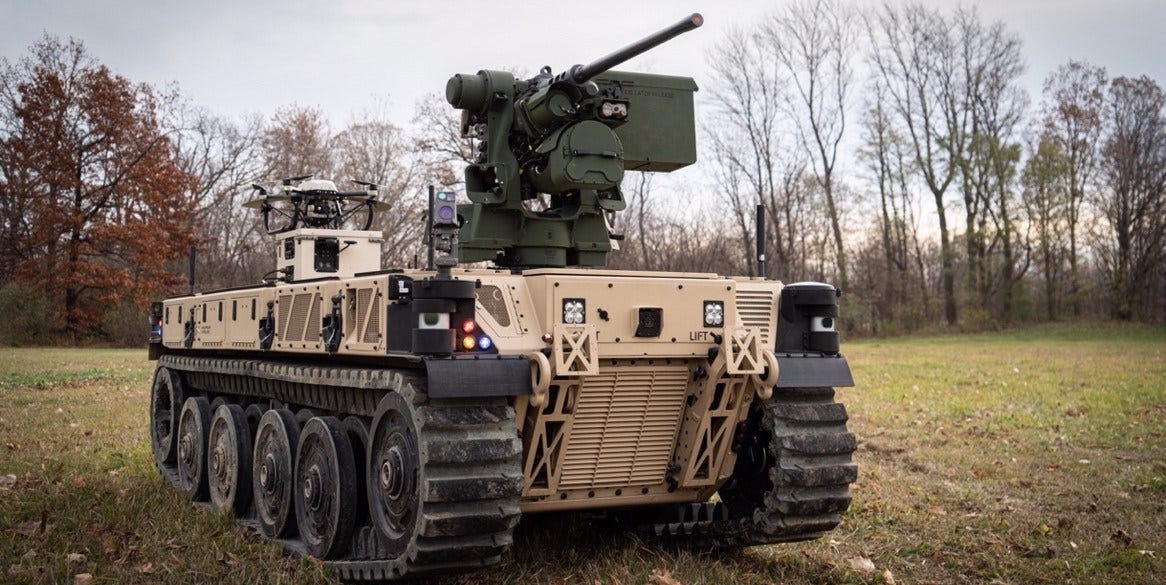
Robot tanks sound like something a bored sci-fi writer would invent after drinking too much coffee near a defense expo. But the U.S. Army’s Robotic Combat Vehicle program is very real, very serious, and occasionally very “wait, did that unmanned mini-tank just carry a cannon?” serious. These machines are not meant to replace soldiers with metal action figures. They are designed to scout ahead, carry sensors, haul payloads, support armored formations, andwhen neededbring firepower into places where sending humans first would be a terrible idea.
The big idea behind Army robotic combat vehicles, often shortened to RCVs, is simple: let humans make the decisions while robots take more of the risk. On tomorrow’s battlefield, where drones, sensors, electronic warfare, mines, anti-tank missiles, and artillery can turn open ground into a very unfriendly parking lot, the Army wants machines that can move with manned vehicles and extend the reach of a unit. Think of them as robotic scouts, escorts, pack mules, decoys, sensor platforms, and armed teammates rolled into one tracked or wheeled package.
At first, the Army imagined a full family of robotic combat vehicles: light, medium, and heavy. The lighter systems would be more expendable and easier to move. The medium vehicles would carry more armor, payload, and weapons. The heavy variant was imagined as the bruiser of the group, capable of adding serious anti-armor punch. Over time, however, battlefield lessons, budget pressure, software complexity, and the rise of cheap attack drones forced the Army to rethink how expensive and elaborate these robotic tanks should be.
What Is a Robotic Combat Vehicle?
A Robotic Combat Vehicle is an unmanned ground vehicle built to support combat formations. Unlike a small bomb-disposal robot or a toy-sized reconnaissance rover, these vehicles are large enough to move with armored units, carry meaningful payloads, and survive rough terrain. Some are tracked like small tanks. Others use wheels for speed and transportability. Many are hybrid-electric, partly because electric drive can support quiet movement, onboard power generation, sensors, and future electronic payloads.
The key phrase is “human-machine teaming.” The Army does not want a rogue robot tank making battlefield decisions like a villain in a summer blockbuster. Instead, soldiers remotely control the vehicle, supervise semi-autonomous movement, assign tasks, and decide how and when weapons are used. The robot may follow waypoints, avoid obstacles, carry mission packages, and share sensor data, but human operators remain central to command and control.
For commanders, the attraction is obvious. A robot can peek around a dangerous corner, cross exposed terrain, probe for ambushes, carry extra ammunition, tow sensors, or sit in a forward position where a manned vehicle would be too valuableor too riskyto park. If it gets hit, the loss is painful, but no family receives a folded flag. That is the grim math behind much of modern military robotics.
The Original Family: RCV-Light, RCV-Medium, and RCV-Heavy
The Army’s early vision divided robotic combat vehicles into three broad categories. Each had a different battlefield personality. If this were a family dinner, RCV-Light would be the fast younger sibling who runs ahead to check things out, RCV-Medium would be the reliable one carrying the heavy cooler, and RCV-Heavy would be the intimidating uncle nobody wants to argue with.
RCV-Light: The Scout and Escort
The Robotic Combat Vehicle-Light, or RCV-L, became the Army’s main focus. It was designed to be smaller, more transportable, and more acceptable to lose in combat than a large armored vehicle. Its missions include reconnaissance, surveillance, target acquisition, route scouting, flank security, and escorting manned vehicles. In plain English: it goes where soldiers would rather not go first.
One of the best-known RCV-L efforts came from QinetiQ and Pratt Miller. Their platform drew on the Expeditionary Modular Autonomous Vehicle, or EMAV, and used a modular open architecture so the Army could swap sensors, controls, payloads, and mission equipment more easily. Publicly described characteristics included a diesel-electric hybrid drive, a weight just over 10 tons, a speed of about 40 mph, and the ability to carry thousands of pounds of payload. That is not a coffee-table robot. That is a battlefield mule with attitude.
RCV-Medium: More Payload, More Punch
The RCV-Medium concept aimed to carry heavier sensors and weapons while still operating without a crew onboard. Early Army experiments used medium robotic prototypes to test manned-unmanned teaming, including how soldiers in armored formations might command, control, and fight alongside unmanned vehicles. The medium class was expected to offer more durability and lethality than the light version, but also raised bigger questions about cost, transportability, and survivability.
Textron’s Ripsaw family became one of the most recognizable names in this space. The Ripsaw M5 drew attention for its aggressive tracked design, while the later Ripsaw M3 emphasized a smaller, more transportable robotic ground vehicle with hybrid-electric mobility and modular payload options. Depending on the configuration, vehicles like these can support reconnaissance, surveillance, target acquisition, direct combat support, and weapons integration. They look like something that rolled out of a video game, except the maintenance manuals are much less fun.
RCV-Heavy: The Big Gun Idea
The heavy robotic combat vehicle was the most ambitious member of the original family. The idea was to create an unmanned platform with enough firepower to threaten enemy armor and support high-risk armored operations. Early evaluations used surrogate platforms, including modified armored vehicles, to explore how a heavy robotic wingman might operate with a manned Bradley or other fighting vehicle.
The challenge is that “heavy,” “robotic,” “survivable,” “armed,” and “affordable” do not always like sitting at the same table. A heavily armed robot tank may protect soldiers, but if it costs nearly as much as a manned combat vehicle and can be destroyed by a cheap drone or anti-tank weapon, the battlefield math gets ugly fast. That is one reason the Army eventually deferred the medium and heavy variants and concentrated on the light robotic combat vehicle first.
The Four Prototype Contenders
In 2023, the Army selected four companies to build RCV platform prototypes: McQ, Textron Systems, General Dynamics Land Systems, and Oshkosh Defense. Each company was expected to deliver two prototypes for mobility testing and soldier feedback. This was not just a beauty pageant for metal caterpillars. The Army wanted to compare real platforms, real layouts, real control approaches, and real maintenance demands.
Textron Ripsaw M3
The Ripsaw M3 is one of the flashiest robotic combat vehicle prototypes, partly because it looks like it was designed by engineers who also enjoy action movies. Built by Textron Systems and Howe & Howe, it belongs to the broader Ripsaw family of robotic ground vehicles. The M3 emphasizes modularity, hybrid-electric drive, off-road mobility, high ground clearance, rubber tracks, and the ability to accept different autonomy suites, controllers, and payloads.
Its role is not limited to one job. Depending on the mission package, it can support reconnaissance, surveillance, target acquisition, combat support, and potentially armed overwatch. The important lesson from Ripsaw is that robotic combat vehicles are becoming platforms, not single-purpose machines. The chassis matters, but the payload is where the personality lives.
General Dynamics Land Systems TRX
The General Dynamics Land Systems TRX, short for Tracked Robot 10-ton, is a modular tracked vehicle built around payload flexibility. GDLS has promoted TRX as a robotic platform with hybrid-electric power, advanced lightweight materials, exportable power, and a flat-deck design that can accept mission modules. The company has shown variants for breaching, perimeter defense, counter-drone missions, loitering munitions, short-range air defense, and reconnaissance.
That versatility is important. Modern ground robots cannot be useful only when conditions are perfect and the mission is politely scheduled. A platform that can carry sensors one day, counter-drone equipment the next, and resupply cargo after that is far more valuable than a one-trick robot pony. TRX represents the Army’s broader interest in modular robotic systems that can be upgraded as threats change.
McQ and HDT WOLF-X
The WOLF-X, developed by Team HDT and led by McQ, took a different route with an 8×8 wheeled design. Wheeled robotic combat vehicles can offer advantages in road mobility, maintenance, transportability, and speed over certain terrain. The WOLF-X was described as compact, stealthy, rugged, and designed to fit inside a CH-47D Chinook helicopter in its base configuration. That matters because a robot that cannot get to the fight is basically an expensive garage decoration.
The WOLF-X was also promoted as having enough growth capacity to carry heavier mission equipment, including a 30mm chain gun and enhanced armor in advanced configurations. Its design highlights one of the central trade-offs in robotic combat vehicles: every pound added for weapons, batteries, armor, or sensors must be balanced against mobility, endurance, and transport.
Oshkosh Defense RCV
Oshkosh Defense entered the competition with a tracked, autonomous robotic combat vehicle developed with input from Pratt Miller Defense and QinetiQ. Oshkosh emphasized modularity, soldier-centered design, maintainability, and the ability to support various payloads and advanced weapon systems. The company also highlighted rapid integration of future technologies, which is not corporate fluff in this fieldit is survival.
A robotic combat vehicle built today must be ready for tomorrow’s sensor, radio, autonomy package, electronic warfare kit, or counter-drone system. If the vehicle cannot accept upgrades quickly, it may become obsolete before soldiers finish learning how to use it. On a battlefield where drones and software change faster than traditional acquisition cycles, adaptability is not a luxury feature. It is the seatbelt.
Why the Army Hit the Brakes
By 2025, the Army’s robotic combat vehicle plan faced a major reset. Reports indicated that the service expected to halt the current RCV development path and rethink the approach. The reason was not that robots suddenly became useless. Quite the opposite. Army leaders continued to describe robotic and autonomous systems as important. The problem was whether the Army was building the right kind of robot at the right price.
The war in Ukraine has changed how military planners think about armored vehicles, drones, electronic warfare, and attrition. Cheap first-person-view drones, loitering munitions, and small unmanned aircraft have shown that expensive vehicles can be detected and attacked with frightening efficiency. If a robotic tank costs several million dollars and can be disabled by a much cheaper drone, the robot may protect soldiers but still fail the affordability test.
That does not mean the future belongs only to tiny disposable drones. Ground robots still offer capabilities flying drones cannot: they can carry heavy loads, push equipment, tow sensors, evacuate casualties, bring ammunition forward, hold positions, and mount larger weapons or electronic systems. But the lesson is clear: the Army wants unmanned ground vehicles that are useful, rugged, upgradeable, and affordable enough to risk in combat.
The New Direction: Cheaper, Modular, and More Attritable
After the reset, the Army began looking toward a cheaper unmanned ground vehicle concept under a new name: Unmanned Ground Commercial Robotic Vehicles, or UGCRV. Public reporting described a target unit cost under $650,000 and a payload capacity of more than 2,200 pounds. That shift says a lot. Instead of buying one exquisite robot and treating it like a crown jewel, the Army appears more interested in a broader pool of affordable robots with flexible software and payloads.
This is a classic military procurement lesson wearing robot shoes: quantity has a quality all its own, but only if the equipment works. A cheap robot that breaks every ten minutes is not a bargain. A premium robot that costs too much to risk is not much better. The sweet spot is a machine soldiers can trust, commanders can afford, maintainers can fix, and industry can improve quickly.
What Missions Will Robot Tanks Actually Do?
The phrase “armed robot tanks” makes people imagine unmanned vehicles charging heroically across a battlefield, lasers blazing, patriotic music swelling. Reality is usually less cinematic and more practical. The first widespread missions for Army robotic combat vehicles are likely to be the dull, dirty, and dangerous jobs that already eat time and endanger soldiers.
Reconnaissance and Security
RCVs can move ahead of manned formations to detect obstacles, enemy positions, suspicious movement, or electronic signals. A robotic scout can draw fire, trigger sensors, or reveal threats without exposing a crew. In armored warfare, finding the enemy first is often the difference between making the first shot and becoming the first smoke plume.
Escort and Flank Protection
Robotic combat vehicles can escort manned tanks, infantry fighting vehicles, and support vehicles. They may guard flanks, overwatch routes, or move into exposed areas before soldiers do. Even if they are not heavily armed, their sensors and presence can complicate an enemy’s ambush plan.
Counter-Drone and Air Defense Support
As drones become a constant threat, robotic ground vehicles can carry radars, cameras, electronic warfare systems, missiles, guns, or directed-energy payloads. A robot that can sit forward and help detect or defeat drones without exposing air defenders is highly attractive. The battlefield is increasingly crowded overhead, and nobody wants their command post turned into a drone snack bar.
Logistics and Casualty Evacuation
Not every valuable robot needs a cannon. Some of the most important unmanned ground vehicles may carry ammunition, water, batteries, medical supplies, stretchers, or communications equipment. In high-risk zones, a robotic mule may save more lives than an armed robot simply by reducing how often soldiers must drive or walk through exposed terrain.
The Hard Problems: Software, Control, Trust, and Jamming
The vehicle is only half the story. In many ways, the harder part is software. A robotic combat vehicle needs navigation, obstacle avoidance, secure communications, cyber resilience, payload control, autonomy management, mapping, sensor fusion, and a human interface that does not make operators want to throw the controller into a ditch.
Remote operation sounds easy until dust, buildings, hills, enemy jamming, poor bandwidth, and battlefield chaos join the party. A robot that works beautifully on a test range may struggle when GPS is degraded, radios are jammed, cameras are obscured, or operators are managing multiple systems under stress. The Army’s focus on common control software reflects this reality. If every robot needs a different controller, a different training pipeline, and a different maintenance ecosystem, the force will drown in complexity before the enemy even shows up.
Trust is another issue. Soldiers need to know what the robot can do, what it cannot do, and when it is about to do something weird. Too little autonomy makes the robot a remote-control car with a defense budget. Too much autonomy can make commanders nervous, especially when weapons are involved. The practical future is likely supervised autonomy: soldiers give tasks, the machine handles limited movement or support functions, and humans retain authority over lethal decisions.
Are Robot Tanks the Future of War?
Yesbut not in the cartoonish way people often imagine. The future is not one giant robot tank replacing a platoon of soldiers while shouting in binary. The future is mixed formations: human crews, unmanned ground vehicles, aerial drones, sensors, electronic warfare systems, loitering munitions, and command networks all working together. The most successful force will not be the one with the coolest robot. It will be the one that connects people and machines faster, cheaper, and more reliably than the opponent.
Army robotic combat vehicles are best understood as part of a larger shift toward distributed, unmanned, and semi-autonomous warfare. They can extend a unit’s eyes, stretch its reach, and reduce exposure. But they must also survive a world filled with cheap drones, smart mines, electronic attack, cyber threats, and artillery. A robot tank that cannot hide, communicate, or be replaced quickly will have a short and smoky career.
Experience-Based Takeaways: What Working Around Robot Tanks Might Feel Like
For soldiers, the first experience with a robotic combat vehicle is probably less like meeting a futuristic warrior and more like meeting a very expensive teammate who does not understand sarcasm. The machine may be impressive, powerful, and useful, but it also needs charging, software updates, transport planning, maintenance checks, operator training, and a lot of patience. A robot does not complain about heat, dust, or danger. It does, however, complain through error codes, sensor faults, track tension problems, and communication dropouts. That is just robot language for “good morning.”
Imagine an armored unit preparing for a reconnaissance mission. Instead of sending a manned vehicle first into a suspicious draw or along a road that might be watched by enemy sensors, the commander pushes an RCV forward. Inside another vehicle or control station, soldiers watch live video feeds, monitor the map, and adjust the robot’s path. The robot creeps ahead, pauses, scans, and keeps moving. Suddenly, the unit has eyes in a dangerous place without putting a crew directly in the kill zone. That changes the emotional rhythm of a mission. The anxiety does not disappear, but it moves from “my buddy is exposed” to “our machine is exposed, and we need to interpret what it is seeing.”
The experience also changes teamwork. Operators must learn how to communicate what the robot is doing in simple, tactical language. Leaders must decide when to trust the robot’s sensors and when to send humans. Maintainers must treat software problems as seriously as mechanical ones. A broken radio link can be as mission-killing as a damaged track. In older armored warfare, the crew lived inside the vehicle and felt every bump, sound, and vibration. With robotic combat vehicles, soldiers may be physically separated from the platform, which means they need new ways to develop instinct and confidence.
There is also a psychological benefit. Soldiers know that dangerous tasks do not disappear just because technology improves. Routes still need to be checked. Supplies still need to move. Wounded troops still need evacuation. Enemy positions still need to be found. When a robot can take the first risk, carry the heavy load, or sit in a dangerous overwatch position, it gives soldiers more options. Options are precious in combat. They create time, and time creates better decisions.
But the experience will not be magic. Robotic combat vehicles may get stuck, jammed, hacked, spoofed, blinded, or destroyed. They may struggle in mud, cities, forests, tunnels, or cluttered terrain. They may create new burdens for batteries, transporters, spare parts, and training schedules. The units that benefit most will be the ones that treat robots not as gadgets, but as real combat systems with doctrine, rehearsals, maintenance discipline, and honest feedback from soldiers. The best robot tank is not the one that looks coolest on a trade-show floor. It is the one that still works after dust, rain, bad roads, confused operators, and a very long Tuesday.
Conclusion
The Army’s robot combat vehicle journey has been ambitious, messy, and revealing. The original dream of a light, medium, and heavy family of armed robotic tanks showed where the Army wanted to go: human-machine teams that could scout, protect, carry, sense, and fight without putting soldiers in the most dangerous spots first. The later shift toward RCV-Light, followed by the reset toward cheaper unmanned ground vehicles, showed what modern warfare is teaching everyone: robots must be useful, survivable, replaceable, and affordable.
The future Army robot tank may not be a giant armored monster. It may be a modular tracked or wheeled platform that carries sensors one day, ammunition the next, and counter-drone equipment the day after that. It may be armed, but its most valuable weapon could be information. It may not replace soldiers, but it can help keep them farther from the first blast, the first ambush, and the first drone strike. In that sense, the family of armed robot tanks is less about replacing courage with code and more about giving courage better tools.
Note: This article is based on publicly available U.S. Army, defense-industry, and defense-news information current through May 2026. It is written as original analysis and commentary for web publication.