Some homes look as if they were designed for a season. This London Victorian looks as if summer got a key, moved in, and started labeling the pantry. “House Call: Endless Summer in a London Victorian” is not just a pretty phrase; it is a design mood, a renovation lesson, and possibly the best argument for putting a sun-loving conservatory on the back of a classic period home.
Set in Beckenham, on the outskirts of London, this remodeled Victorian house takes a familiar challenge and solves it with uncommon charm. How do you preserve the dignity of a historic home while making it feel bright, relaxed, and modern enough for everyday living? The answer is not to bulldoze character in the name of “open concept.” The answer is to let old and new shake hands, preferably over a marble-topped island with herbs growing in it.
Designed with a sunny kitchen, a garden-facing dining area, reclaimed materials, smoky gray accents, vintage lighting, textured walls, and soft whitewashed surfaces, the home feels calm without becoming bland. It has history, but it does not behave like a museum. It has elegance, but it does not require guests to whisper. Best of all, it understands one great truth of domestic life: the kitchen is where everyone ends up, even if you cleaned the living room specifically for company.
Why This London Victorian Feels Like Endless Summer
The magic begins at the rear of the house, where a glass conservatory-style extension connects the kitchen and dining area to the garden. In a climate where outdoor entertaining can quickly turn into “everyone grab a sweater and pretend the drizzle is charming,” architecture becomes more than decoration. It becomes a weather strategy.
The conservatory brings in daylight, softens the boundary between indoors and outdoors, and gives the dining area the feeling of a garden party without requiring anyone to gamble on the forecast. Custom shades help diffuse the sunlight when it is strong and can be pulled back when the sky turns gray. This is the kind of practical beauty that makes a room work in real life, not just in a photo spread.
Instead of forcing a sharp contrast between the Victorian shell and the modern extension, the design uses materials that feel relaxed, tactile, and slightly timeworn. Carrara marble, reclaimed wood, white brick, vintage lights, charcoal cabinetry, and pale floors all work together to create a room that feels fresh but not sterile. It is summer, yes, but not inflatable-pool summer. More like linen-shirt, lemon-water, “I casually grow herbs in my kitchen island” summer.
The Kitchen: A Garden Party with Cabinets
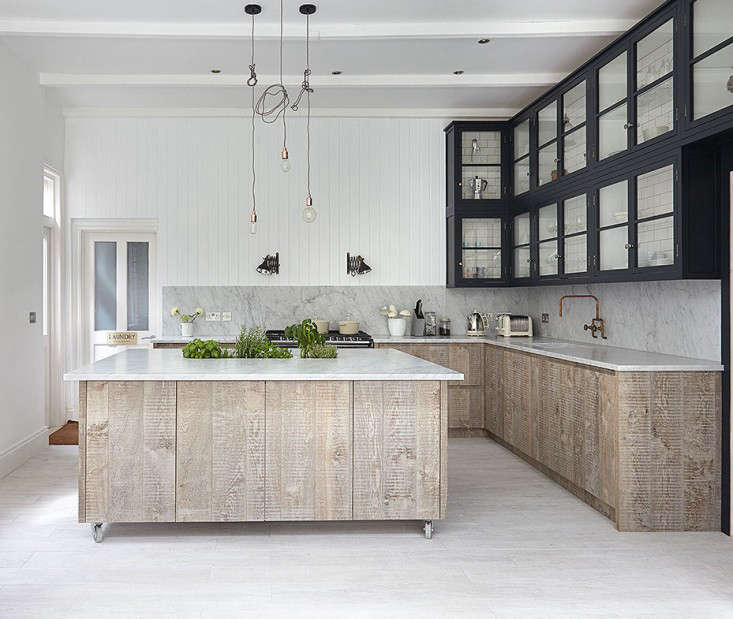
The kitchen is the heart of this home, and it knows it. White brick walls keep the room bright and textural, while reclaimed wood cabinets add warmth and a sense of age. Carrara marble countertops and backsplash introduce polish without making the space feel precious. Charcoal gray upper cabinets create contrast, grounding the room so it does not float away on a cloud of white paint and optimism.
One of the most memorable details is the herb planter inset into the marble-topped island. It is clever, useful, and slightly theatrical in the best way. A built-in herb garden says, “Yes, we cook here,” even if dinner sometimes comes from a delivery app and the basil is mainly there for moral support.
The kitchen opens fully to the dining area, and the two zones are gently linked by a wooden spindle-back bench. This is a smart design move because it creates connection without visual chaos. Instead of treating the kitchen and dining room as separate rooms forced into the same open plan, the design gives them a shared language: pale surfaces, natural wood, dark accents, and vintage details.
Design takeaway: Use contrast to keep light rooms interesting
All-white interiors can look clean, but they can also feel cold if there is no texture or contrast. This London Victorian avoids that problem by layering materials. The white brick is not the same as the whitewashed floor. The marble has veining. The reclaimed wood has grain. The charcoal cabinetry adds depth. The vintage lights introduce patina. Together, these details make the room feel collected rather than copied.
Lighting That Works Hard and Looks Effortless
Vintage industrial lights appear throughout the kitchen and dining area, adding a practical and stylistic edge. Adjustable task lights make sense near work surfaces, while factory-style pendants over the dining table give the room a relaxed, slightly utilitarian charm.
This is important because lighting in a Victorian renovation can easily go wrong. Too modern, and it fights the architecture. Too antique, and the home can start to resemble a period drama where everyone is worried about inheritance law. Industrial lighting lands in the middle. It feels old enough to belong and simple enough to feel current.
Good lighting also supports the larger “endless summer” mood. Daylight does the heavy lifting during the day, but layered lighting keeps the warmth going after sunset. A garden-facing dining room should glow in the evening, not glare like an airport snack bar.
Victorian Character Without the Dusty Drama
Victorian homes are famous for their architectural personality: high ceilings, bay windows, decorative fireplaces, carved wood, ornate trim, stained glass, and layouts originally designed for a more formal way of living. Those features can be magnificent, but they can also make older homes feel dark, divided, and overly serious if not handled carefully.
This renovation respects the Victorian spirit without letting it dominate every decision. The home does not try to recreate the past room by room. Instead, it borrows the best parts of Victorian designtexture, craftsmanship, layered surfaces, visual dramaand balances them with openness, light, and ease.
The result is modern Victorian interior design at its most livable. There is no need to choose between old-house charm and modern comfort. The trick is to decide which details deserve attention and which ones can be simplified. A fireplace can stay. A dark, cramped kitchen can go. A claw-foot tub can have its moment. A hallway maze does not need to be treated like a national treasure.
The Library: Dark, Textured, and Quietly Bold
Not every room in a summer-inspired home needs to be pale and breezy. In fact, contrast makes the brighter spaces feel even more refreshing. The library in this London Victorian uses charcoal-gray walls with square lattice detailing, creating depth and texture. Books bring in color naturally, preventing the dark walls from feeling heavy.
This is a great example of how a neutral palette can still be dramatic. The room does not rely on loud color or trendy accessories. Instead, it uses shadow, pattern, and repetition. The lattice detail gives the walls movement, while the books add personality. It is moody, but not gloomy. Think “intellectual retreat,” not “forgotten corner where umbrellas go to die.”
Dark rooms work especially well in period houses because Victorian architecture can handle visual weight. Tall ceilings, strong moldings, and historic proportions can support deep colors in a way that newer, boxier rooms sometimes cannot. The key is balance. A dark library feels luxurious when the rest of the home offers plenty of light.
The Living Room: Calm Neutrals with Strong Bones
In the living room, light-colored furnishings and walls are grounded by dark wood floors. This combination feels classic, comfortable, and easy to live with. The room uses lattice detailing again, but in a more traditional pattern, tying it to the library while keeping the atmosphere softer.
This kind of repetition is subtle but powerful. When a design element appears in more than one room, the house feels cohesive. It tells the eye, “Yes, this was intentional.” Repeating texture, color, or material is especially useful in a renovation where different eras meet. It helps the home feel like one story rather than a series of unrelated design decisions.
The living room also shows that Victorian home decor does not need to be crowded. While traditional Victorian interiors often leaned maximalist, a modern interpretation can be edited. A few strong textures, a calm palette, and good proportions can communicate character without requiring seventeen fringed lampshades and a fainting couch named Beatrice.
The Bedroom: Whitewashed Wood and Driftwood Calm
The master bedroom shifts into softer territory. Whitewashed reclaimed wood paneling behind the upholstered headboard creates a gentle, coastal feeling, while lightened wood floors continue the airy mood. The palette recalls driftwood, linen, and cloudy summer mornings.
This is where the “endless summer” theme becomes more restful. The kitchen and conservatory are social and sun-filled; the bedroom is quieter, more private, and more subdued. It feels like a retreat within the house, proving that a strong design concept does not require every room to shout the same message.
Whitewashed wood is particularly effective in a Victorian home because it softens the weight of traditional architecture. It adds texture without darkness and warmth without visual clutter. Used carefully, it can make a room feel lighter while still honoring the old-house love of crafted surfaces.
The Bathroom: Vintage Charm Meets Spa-Like Ease
The bathroom continues the layered approach with pale green-gray lattice walls, a claw-foot tub, and a vintage wood basin stand. These details feel romantic but not fussy. The tub brings old-world character, while the pale textured backdrop keeps the room fresh.
A bathroom in a Victorian renovation is a wonderful place to blend eras. Modern plumbing and comfort are nonnegotiable; nobody wants historical accuracy badly enough to suffer through bad water pressure. But the visible detailstub shape, vanity style, wall texture, mirror, lighting, and hardwarecan carry the period mood beautifully.
The best version of this look is not about making everything match. It is about creating a sense of collected charm. A vintage-style basin stand, a freestanding tub, and textured walls can feel personal and timeless when paired with clean finishes and practical function.
How to Bring the Endless Summer Victorian Look Home
You do not need a London postcode, a glass extension, or an island large enough to host a diplomatic summit to borrow ideas from this home. The principles are flexible and can work in many houses, apartments, and renovation budgets.
1. Start with natural light
Maximize daylight wherever possible. Use lighter window treatments, reflective surfaces, pale floors, mirrors, glass doors, or skylights. If you are renovating, consider how the kitchen connects to the garden, patio, or backyard. Even a small visual connection to greenery can make a room feel more alive.
2. Mix old and new materials
Pair reclaimed wood with marble, vintage lights with clean cabinetry, or antique furniture with modern upholstery. The goal is not perfection. The goal is believable layering. A home feels more interesting when it looks as if it has evolved over time.
3. Use dark accents to anchor pale rooms
If your kitchen or living area is mostly white, cream, or pale gray, add a darker note through cabinetry, lighting, flooring, hardware, or furniture. Charcoal, deep green, espresso brown, and blackened bronze can all add depth without stealing the summer mood.
4. Let texture do the talking
Brick, lattice, wood grain, marble veining, linen, tile, woven shades, and books all add visual interest. Texture is especially important in neutral rooms because it keeps the design from feeling flat.
5. Make the kitchen social
The best kitchens support gathering. A bench, island, dining table, window seat, or open shelving moment can make the space more welcoming. People always gather in the kitchen anyway, so you may as well give them somewhere to sit while they offer extremely helpful comments about how you are chopping onions.
Why This Renovation Still Feels Relevant
The lasting appeal of this London Victorian comes from its balance. It is not trapped in a single trend. It uses natural materials, historic references, vintage pieces, garden views, layered lighting, and practical layoutselements that continue to matter because they support real life.
Modern homeowners want beauty, but they also want storage, comfort, flexible entertaining space, and rooms that do not collapse under the pressure of daily use. This home answers that desire by making function look graceful. The kitchen is hardworking but elegant. The dining area is bright but protected. The library is dramatic but cozy. The bedroom is simple but textured. Every room has a job, and every job is done with style.
In an era of fast trends and copy-paste interiors, this Victorian reminds us that the most memorable homes are specific. They respond to their setting, their architecture, their climate, and the people who live there. They are not just designed to be seen. They are designed to be used.
Experience: Living the Endless Summer Mindset in a Period Home
Spending time in a home like thisor even imagining your own version of itchanges the way you think about comfort. Endless summer is not really about temperature. It is about atmosphere. It is the feeling of walking into a kitchen in the morning and seeing light spread across the floor. It is the pleasure of picking herbs from a planter instead of discovering a forgotten plastic bag of cilantro turning philosophical in the refrigerator. It is the ease of eating near the garden even when the weather outside is behaving like it has unresolved issues.
In a Victorian house, that feeling can be especially powerful because the architecture already has soul. Old doors, tall windows, deep skirting boards, fireplaces, worn floors, and odd little corners all bring a sense of memory. The challenge is making those memories compatible with modern life. A beautiful house is not very useful if the kitchen is too cramped to cook in or the dining room is so formal that everyone avoids it unless grandparents are visiting.
The best experience of a renovated Victorian is the moment when the old house stops feeling like a project and starts feeling like a companion. Morning coffee happens in the bright kitchen. Shoes pile up near the garden door. Someone leaves a book in the library. A guest wanders into the dining area and says, “This is lovely,” which is polite code for “I would like to move in, but I will start by asking where you got the lights.”
What makes the endless summer approach so appealing is that it does not demand perfection. In fact, it benefits from a little imperfection. Reclaimed wood looks better with marks. Vintage lights look better with age. Marble looks more relaxed once you accept that life may leave a trace or two. The garden does not need to be manicured like a royal lawn. A few herbs, some greenery, and a view of the outdoors are enough to soften the entire house.
There is also an emotional lesson here: a home can be bright without being shallow. Pale colors, sunny rooms, and garden views can coexist with dark libraries, textured walls, and historic details. That contrast is what makes the house feel human. Nobody lives in one mood all day. Sometimes you want sunlight and open doors. Sometimes you want a dark room, a chair, and the dramatic feeling that you are about to read a very important novel, even if it is actually a takeout menu.
For homeowners, renters, and design lovers, the experience to borrow is simple: create small rituals that make your space feel seasonally alive. Open the blinds every morning. Put herbs near the kitchen window. Use linen napkins even on ordinary Tuesdays. Add one vintage piece that looks as if it has stories. Place a bench where people naturally gather. Choose lighting that makes dinner feel warmer. Paint one small room a deeper color. Let your home have contrast, because contrast is what keeps it interesting.
“Endless summer” in a London Victorian is ultimately not about pretending it is always sunny. It is about designing a home that carries light well, welcomes people easily, and treats history as an asset rather than a burden. It is a reminder that a house does not need to choose between elegance and ease. With the right materials, thoughtful layout, and a little humor, it can have both.
Conclusion
“House Call: Endless Summer in a London Victorian” captures the beauty of a period home reimagined for modern living. Through a garden-facing conservatory, bright kitchen, reclaimed materials, dark accents, vintage lighting, textured walls, and soft private rooms, the renovation shows how old-house character can feel fresh, social, and deeply livable.
The design succeeds because it avoids extremes. It does not erase the Victorian past, and it does not preserve it so rigidly that the home becomes impractical. Instead, it creates a warm conversation between history and everyday life. That is why the house feels timeless. Trends may come and go, but sunlight, texture, comfort, and a kitchen people actually want to gather in will never go out of style.