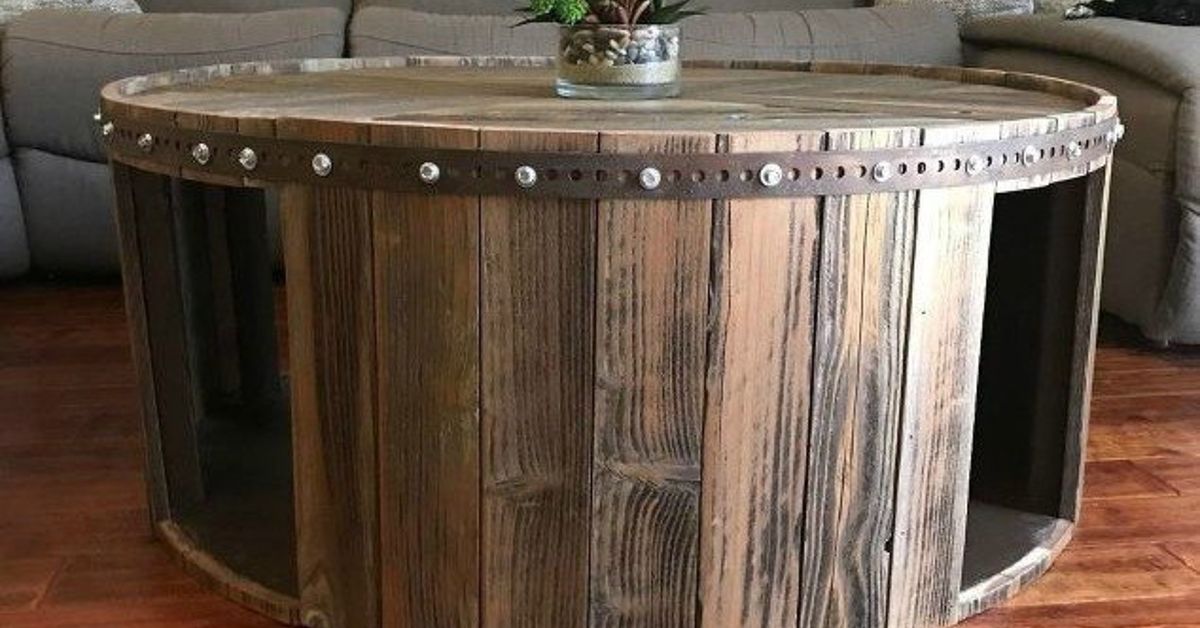
If you have ever looked at an old cable spool and thought, “That could either become a coffee table or the world’s most rustic UFO landing pad,” you are in exactly the right place. A cable spool and reclaimed fence wood coffee table is one of those projects that hits the sweet spot between budget-friendly, eco-conscious, and wildly stylish. It has texture, character, history, and just enough imperfection to make store-bought furniture look a little too polished for its own good.
This kind of DIY coffee table is also perfect for people who love farmhouse, rustic, industrial, or upcycled decor. A weathered spool base gives you instant structure, while reclaimed fence boards add warmth and personality. Together, they create a statement piece that feels collected rather than manufactured. And in a world full of flat-pack furniture and vague instruction manuals translated from three different planets, that is refreshing.
What makes this build especially appealing is that it can be customized in a dozen directions. You can keep it rough and raw for a true salvage look. You can sand and stain it until it feels refined enough for a magazine-worthy living room. You can even add hidden casters, storage, or a lower shelf if you want the table to work harder than your streaming subscription.
Why a Cable Spool Coffee Table Works So Well
A cable spool already looks suspiciously close to a functional coffee table. It is round, sturdy, and visually bold. In other words, half the design work is already done. The large wooden disc creates a tabletop shape that encourages conversation, softens a room full of square furniture, and makes styling easier. A stack of books, a candle, and a small plant suddenly look like a design decision instead of random clutter.
The spool also offers a strong base. Many large spools are built to carry heavy cable, so they are not flimsy decorative props pretending to be useful. That structural heft is a big reason DIYers love them. When paired with reclaimed fence wood, the result feels substantial and authentic. You are not just building a table. You are rescuing materials with a past and giving them a second act in your living room.
Why Reclaimed Fence Wood Adds So Much Character
Fence wood is the overachiever of the reclaimed lumber world. It has already lived outside, survived weather, and developed color variation you cannot fake without spending an embarrassing amount of money on “artisan-distressed” furniture. Those gray, brown, and sun-faded tones can make a coffee table look layered and interesting even before you touch a stain brush.
Another advantage is texture. Reclaimed fence boards often show grain, knots, nail holes, and saw marks that give the piece a lived-in look. Done well, it feels warm and intentional, not sloppy. That is the difference between “rustic chic” and “this table may have been assembled during a windstorm.”
Planning the Design Before You Build
Before you start cutting, sanding, or dramatically announcing to the household that you are “working with reclaimed materials now,” think through the design. A coffee table should look good, but it also needs to fit your room. Round tables are especially useful in smaller spaces because they soften traffic flow and remove sharp corners. In most living rooms, a coffee table height around 16 to 18 inches feels comfortable, ideally a little lower than the sofa seat.
For a cable spool project, measure the spool height first. Some are almost perfect as-is. Others may need trimming or feet added to hit the right proportions. Diameter matters too. A giant spool can look amazing in a spacious room and completely dominate a small apartment like a wooden moon.
Questions to Ask Before the First Cut
- Will the table be mostly decorative, or should it handle daily use, snacks, laptops, and game nights?
- Do you want a smooth finished top or a more rugged, textured surface?
- Will you keep the spool round, or add reclaimed fence boards across the top for a more finished tabletop?
- Do you want built-in storage, casters, or a lower display shelf?
How to Prep Reclaimed Fence Wood the Right Way
This is the part where the romance of reclaimed wood meets the reality of dirt, old fasteners, and mystery splinters. Prep matters. A lot. Good prep is the difference between a beautiful coffee table and a piece of furniture that sheds dusty little fragments every time someone sets down a mug.
Start by inspecting every board. Remove nails, staples, screws, and anything else metallic that might ruin your tools or your mood. Check for rot, insect damage, or deep cracks. Minor imperfections are fine and often desirable, but boards that are soft, crumbling, or structurally weak should be skipped.
Next comes cleaning. Fence boards often carry dirt, mildew, and years of outdoor residue. Use a mild soap-and-water solution and a soft brush. Do not rush this step. Let the wood dry completely before sanding or finishing. Damp reclaimed wood and finish products are not a dream team.
If the fence wood was painted and may be old, be careful. Older painted wood can raise lead concerns, especially if it predates modern standards. In that case, lead-safe testing or professional evaluation is the smart move. No coffee table is worth risky dust in your home.
Sanding Strategy for a Better Finish
There are two good ways to sand reclaimed fence wood, depending on your style. If you want a cleaner, more refined look, work through grits methodically and sand with the grain. If you want to preserve age and saw marks, do just enough sanding to remove rough splinters, dirt, and unstable fibers while keeping the visual history intact.
A common approach is to begin with a medium grit, then move finer only where needed. Clean the surface between grits so dust does not get trapped in the finish later. This is one of those not-glamorous details that makes the final piece look much more professional.
Building the Table: Simple Structure, Strong Impact
There are several ways to build a cable spool and reclaimed fence wood coffee table, but the easiest route is to use the spool as the base and create a reclaimed wood skin or top over the existing surface. If the spool top is in good shape, you can use it as a structural substrate. Attach the fence boards across it, either tightly for a plank-top effect or with slight spacing if you want more visual texture.
For the side of the spool, some builders leave the center section exposed for industrial charm. Others wrap it with vertical or horizontal fence planks to create a cleaner silhouette. Both approaches work. It depends on whether you want the table to feel more workshop-casual or living-room polished.
Best Assembly Tips
- Dry-fit all boards before attaching anything permanently.
- Mix board tones for a more natural reclaimed look.
- Use wood glue plus screws where strength matters.
- Pre-drill near board ends to reduce splitting.
- Trim edges flush after installation for a cleaner final profile.
If you are building a wider solid-wood top from multiple fence boards, remember that wood moves with humidity. That means fasteners and joinery should secure the top without fighting natural expansion and contraction. Ignoring wood movement is how beautiful tabletops eventually become dramatic.
Choosing the Right Finish
The finish is where the project decides what it wants to be when it grows up. Want the table to stay rustic and matte? Use a penetrating oil or a subtle wax finish. Want better resistance to spills, scratches, and the occasional coffee cup ring from someone who “didn’t see the coaster”? A durable polyurethane topcoat is a better choice.
Stain is optional. Some reclaimed wood looks best when left close to its natural tone. Others benefit from a light walnut, honey, or weathered oak finish that evens out color differences while still showing grain. Test your stain on scrap pieces first, because reclaimed wood has a fun habit of reacting differently from one board to the next.
For many homes, the best balance is a lightly sanded surface, a stain or tinted conditioner if needed, and a clear protective topcoat. Satin or matte finishes tend to look more natural on rustic furniture than a super-gloss sheen that makes the table look like it is trying to win a talent show.
Style Ideas for Different Interiors
Farmhouse Living Room
Use whitewashed or lightly stained fence boards, keep visible grain, and style the table with woven baskets, ceramic vases, and old books. This creates a cozy, collected look without making the room feel theme-park rustic.
Industrial Loft
Keep more of the spool visible, use darker stain, and add black metal accents or casters. Pair it with leather seating and iron lighting for a bold, urban feel.
Modern Rustic
Simplify the silhouette. Sand the boards more evenly, soften the edges, and choose a low-sheen finish. The result is cleaner and more contemporary while still showing texture and age.
Common Mistakes to Avoid
One of the biggest mistakes is not cleaning reclaimed wood thoroughly enough. Dirt hidden in grain and cracks can interfere with stain, finish, and glue. Another common issue is over-sanding until the wood loses its reclaimed personality. You want character, not amnesia.
People also underestimate proportion. Just because a cable spool is free does not mean it belongs in your living room. Size matters. A spool that is too tall, too wide, or too chunky can throw off the whole room layout. Also, do not forget practical comfort. You still need enough clearance around the table for movement, and the edge profile should feel pleasant, not sharp enough to make guests suspicious.
How This DIY Coffee Table Saves Money and Adds Value
A high-quality rustic coffee table with reclaimed wood details can cost a surprising amount in retail stores. When you build your own from a cable spool and reclaimed fence wood, you can create a one-of-a-kind piece for a fraction of that price. The exact cost depends on your materials and finish choices, but even after sandpaper, fasteners, stain, and sealer, the project usually lands far below what a comparable handcrafted piece would cost.
More importantly, the value is not just financial. You end up with a conversation piece. Guests ask where you got it. You get to say, with perfectly reasonable pride, “I made it.” That sentence alone adds at least 15 points to any furniture item.
Real-World Examples of Custom Features
Some DIYers add a hinged section on top for hidden blanket storage. Others install small wheels to make the heavy spool easier to move. A lower shelf can display books, trays, or board games. If your spool has an open center, baskets can slide inside for concealed storage. That is the beauty of this project: it can lean decorative, functional, or both.
If you entertain often, a slightly larger round top works well for drinks and shared snacks. If your room is compact, trimming the spool down and using narrower fence planks can create a smaller table that still feels substantial. The materials may be humble, but the finished design can look surprisingly elevated when the proportions are right.
Experience and Lessons From Building a Cable Spool & Reclaimed Fence Wood Coffee Table
The experience of making a cable spool and reclaimed fence wood coffee table is part design project, part cleanup mission, and part personality test. At first, the materials can look rough enough to make you question your vision. The spool may be scratched, stained, and heavy enough to deserve its own zip code. The fence boards may be uneven, dusty, and filled with holes that tell the story of many previous screws, nails, and weather battles. But somewhere in the middle of that mess, the charm starts to show.
One of the first lessons people learn is that reclaimed wood has a mind of its own. Boards that look similar from a distance can sand differently, absorb stain differently, and even smell different once you start working with them. Some pieces reveal beautiful grain after only a little sanding, while others stay stubbornly rough and moody. That unpredictability is frustrating for about ten minutes and then becomes part of the fun. Every board feels like a reveal.
Another common experience is realizing that this project rewards patience more than fancy tools. Careful cleaning, checking for hidden nails, dry-fitting planks, and testing finish samples may not sound exciting, but they are the steps that make the finished table look intentional. Skip them, and the project can feel homemade in the wrong way. Respect them, and suddenly the table looks like something from a boutique furniture shop that uses words like curated and heritage.
There is also a satisfaction that comes from balancing rustic style with practical comfort. You want to preserve the old marks and weathered character, but you also want a tabletop that does not attack sleeves, wobble under a coffee mug, or leave splinters as a souvenir. Finding that middle ground is one of the most rewarding parts of the build. You are not erasing the material’s history. You are editing it.
For many people, the best moment comes late in the process, right after the finish goes on. That is when the reclaimed fence wood deepens in tone, the grain wakes up, and the whole table finally looks like a finished piece rather than a pile of very optimistic lumber. The spool that once looked industrial and clunky suddenly feels sculptural. The boards that looked too far gone start to glow with warmth and texture. It is a dramatic transformation, and honestly, it is hard not to stand there staring at it like you just discovered fire.
Once the table moves into the living room, the project keeps paying off. It becomes the place for coffee cups, books, remote controls, holiday decor, game-night snacks, and the occasional feet-up lazy evening. It does not feel precious, which is one of its greatest strengths. Because the materials already have a history, a little daily life only adds to the story. Tiny dents and wear marks do not ruin it. They belong.
In the end, building a cable spool and reclaimed fence wood coffee table teaches a simple lesson: good design does not always start with perfect materials. Sometimes it starts with seeing possibility in something weathered, awkward, and overlooked. With a bit of sanding, smart planning, and a willingness to embrace imperfection, you can turn discarded wood into a coffee table with more soul than most showroom pieces ever manage to have.
Conclusion
A cable spool and reclaimed fence wood coffee table is more than a budget DIY project. It is a smart blend of sustainability, craftsmanship, and style. It lets you create custom furniture from salvaged materials, tailor the look to your space, and enjoy a piece that feels warm, distinctive, and genuinely personal. Whether your style leans farmhouse, industrial, or modern rustic, this coffee table idea proves that reclaimed wood furniture can be practical, beautiful, and full of story.