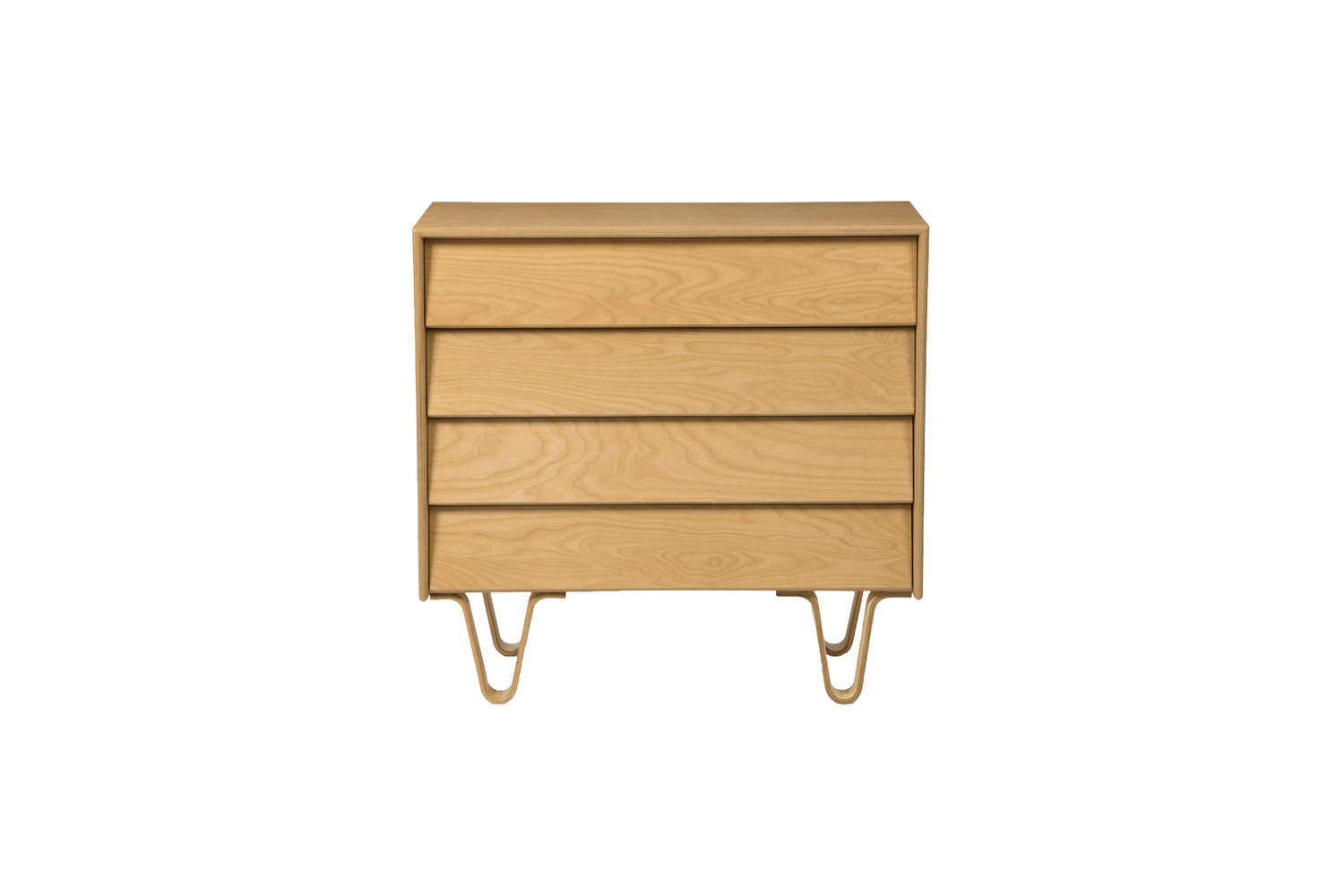
The Case Study Bentwood 4 Drawer Dresser is what happens when a storage workhorse puts on architectural glasses and decides it would rather be a design object. Made by Modernica in Los Angeles, this four-drawer chest combines molded plywood construction, uninterrupted curves, concealed pulls, and a clean midcentury-modern profile.
It is also a substantial purchase. This is not a temporary dresser destined to wobble through two apartment moves before retiring beside a college-town dumpster. It is a made-to-order piece aimed at buyers who value American manufacturing, engineered wood construction, visual simplicity, and furniture that can remain relevant after the next decorating trend has packed its tiny bags and left.
This in-depth case study examines the dresser’s design, materials, storage performance, dimensions, delivery requirements, maintenance, safety, styling potential, and overall value. It also includes a realistic ownership experience for anyone wondering what living with this handsome wooden heavyweight may actually feel like.
Case Study Bentwood 4 Drawer Dresser at a Glance
Modernica describes the dresser as part of its Bentwood system, in which layered wood is shaped under pressure so that the structure and exterior surface appear to flow together. The current design uses birch or walnut veneer over a 26-ply inner core and is handcrafted at the company’s Los Angeles factory. It ships fully assembled, with white-glove delivery or local pickup available.
| Feature | Details |
|---|---|
| Manufacturer | Modernica |
| Collection | Case Study Bentwood |
| Construction | Birch or walnut veneer over a 26-ply inner core |
| Storage | Four full-width drawers |
| Handle design | Integrated cutaway pulls |
| Finish choices | Natural stain, classic stain, and walnut veneer |
| Assembly | Ships fully assembled |
| Manufacturing location | Los Angeles, California |
| Typical lead time | Approximately six to eight weeks when listed |
| Listed shipping size | Approximately 45 inches long, 21 inches wide, and 45 inches high |
| Listed packed weight | Approximately 160 pounds |
Published product information has previously described the finished dresser as approximately 41 inches wide, 21 inches deep, and 41 inches high. Because specifications can be revised, buyers should confirm the current finished dimensions before ordering, particularly when navigating narrow stairs, elevators, or dramatic old doorways that were apparently designed for people but not furniture.
Why the Bentwood Design Matters
A Modern Interpretation of a Historic Technique
Bentwood furniture is not a recent social-media invention. Furniture makers have experimented with curved and molded wood for generations. During the nineteenth century, manufacturers such as Thonet helped industrialize wood-bending processes, making it possible to create graceful forms with fewer visually distracting joints. Museum collections continue to treat bentwood furniture as an important chapter in the development of modern design.
The Case Study dresser does not imitate a classic café chair, nor does it rely on steamed solid-wood rods. Instead, it applies the broader bentwood idea to a contemporary case good. Layers of veneer and an engineered core are pressed into a shell with rounded vertical transitions. The result is less like a conventional box assembled from several flat panels and more like one continuous ribbon wrapping around the drawers.
A Form That Softens a Large Piece of Furniture
A four-drawer dresser with roughly 41-inch proportions can look bulky, especially in a modest bedroom. The rounded corners help reduce that visual weight. Light travels across the curved sides rather than stopping abruptly at sharp edges, giving the cabinet a smoother, calmer appearance.
The design is minimalist without being sterile. Natural grain adds warmth, while the absence of protruding knobs keeps the front visually quiet. In a room already populated by lamps, artwork, bedding, books, and the chair currently holding a small mountain of “not dirty enough to wash” clothing, that restraint is valuable.
Materials and Construction
The Role of the 26-Ply Core
Plywood is made by bonding thin wood veneers in alternating directions under heat and pressure. Cross-laminating the layers improves dimensional stability and provides a useful strength-to-weight ratio. It also allows manufacturers to create curved forms that would be difficult or wasteful to carve from a massive block of solid wood.
Modernica’s 26-ply core gives the dresser a dense, substantial structure. The layered edges are not merely a cost-saving substitute for solid lumber; they are central to the piece’s engineering and appearance. This is the same broad family of material experimentation that helped molded plywood become a defining element of twentieth-century modern furniture.
That does not mean the dresser is indestructible. Veneer can still be scratched, dented, stained, or damaged by standing moisture. The advantage is controlled construction and the ability to achieve a consistent curvenot immunity from keys, belt buckles, leaking planters, or enthusiastic children armed with markers.
Birch Versus Walnut
The natural and classic stain options emphasize birch’s lighter tone and visible grain. A pale finish tends to make the dresser appear less massive and works especially well in rooms with white walls, light oak floors, soft gray textiles, or Scandinavian-inspired decor.
Walnut veneer produces a darker, richer expression. It pairs easily with leather, black metal, cream upholstery, vintage lighting, and earth-toned bedding. The deeper color also gives the curved shell more visual drama, although dust and surface marks may be easier to notice in strong side lighting.
Wood grain and color variation should be expected. Modernica’s warranty information specifically identifies natural color and finish variations as normal characteristics rather than manufacturing defects. In other words, the tree did not consult a color swatch before growing.
Drawer Design and Everyday Storage
Integrated Pulls Keep the Front Clean
Each drawer uses a recessed cutaway area rather than an attached knob or handle. This creates a smooth facade and removes hardware that could catch on clothing in a tight passage. It also means there are no metal pulls to loosen, rotate, or begin a mysterious independent life after several years.
The cutaway handles are intuitive, although they feel different from traditional hardware. People who prefer a large, easy-grip handle should test a similar recessed pull before purchasing. For most adults, the opening is simple to operate and contributes significantly to the dresser’s understated identity.
Four Drawers Encourage Practical Organization
Four full-width drawers provide a straightforward system. One drawer can hold undergarments and socks, another T-shirts, another sleepwear or athletic clothing, and the final drawer heavier folded items. The configuration works best for people who prefer broad categories instead of maintaining twelve tiny drawers with the precision of a museum archivist.
The dresser’s relatively deep cabinet should accommodate substantial loads of folded clothing, but capacity still depends on fabric bulk. Denim, sweaters, and thick winter clothing consume space quickly. A couple sharing the dresser may need additional closet storage, while one person with a disciplined wardrobe could find the four drawers entirely sufficient.
Soft-Closing Movement
Earlier manufacturer descriptions highlighted smoothly gliding drawers and a soft-closing mechanism. That feature suits the dresser’s premium positioning and helps prevent hard slams from disturbing sleepers or rattling objects placed on top. It also makes daily use feel considered rather than merely functional.
Soft-close hardware is not maintenance-free forever. Drawers should be opened from the center, loaded evenly, and kept free of fabric caught behind the box. If movement becomes uneven, owners should inspect for obstructions before assuming the hardware has staged a rebellion.
Size, Weight, and Delivery Planning
This is a large, heavy piece that arrives assembled. That is excellent news for buyers who dislike instruction manuals featuring a smiling cartoon wrench. It is less excellent for anyone living at the top of a narrow spiral staircase.
Before ordering, measure the dresser’s planned location, every doorway along the route, stair width, landing depth, elevator opening, hallway turns, and ceiling clearance. Do not measure only the empty wall and declare victory. The packed dimensions and weight matter because delivery teams need space to rotate and position the cabinet safely.
White-glove delivery is the sensible option for many buyers. Confirm what the service includes, whether packaging removal is provided, whether stairs create an additional charge, and how damage must be reported. Modernica’s published policy asks customers to report shipping damage promptly, historically within five days, so the dresser should be inspected while the delivery experience is still fresh.
How to Style the Case Study Bentwood Dresser
In a Midcentury-Modern Bedroom
Midcentury-modern interiors commonly combine clean lines, organic curves, warm wood, functional layouts, and restrained ornament. The Bentwood dresser fits naturally within that language without looking like a film-set prop from 1962.
Pair it with a low platform bed, a textured wool rug, simple linen bedding, and one sculptural lamp. A round mirror above the dresser echoes the curved shell. For contrast, add a geometric print or a dark metal sconce.
In a Minimalist Room
The handle-free front makes the dresser appropriate for minimalist interiors. Keep the top mostly open, using a shallow tray, one lamp, and a small piece of art. The goal is intentional restraint, not making the dresser look as though nobody has moved in yet.
In an Eclectic Interior
Clean modern furniture can act as a visual pause among patterned textiles, antiques, colorful artwork, and collected objects. The dresser does not need to be surrounded exclusively by matching Modernica pieces. A vintage rug, ceramic lamp, ornate mirror, or traditional upholstered chair can make its simplicity more noticeable.
Beyond the Bedroom
The piece can also work in a large entry, dressing room, home office, or dining space. Used outside the bedroom, the drawers might store table linens, paperwork, serving accessories, electronics, or craft supplies. Because the cabinet reads as architectural furniture rather than an obviously bedroom-specific chest, it has useful long-term flexibility.
Care and Maintenance
Regular dusting with a clean, soft cloth is the safest routine. Wipe spills promptly rather than allowing liquid to sit on the veneer. Avoid abrasive pads, harsh household chemicals, silicone-heavy polishes, and soaking-wet cloths. Furniture-care guidance from established manufacturers also recommends protecting wood from extreme humidity swings, prolonged direct sunlight, and concentrated heat.
Use coasters or a protective tray beneath drinks, cosmetics, plants, diffusers, and anything containing oil or alcohol. Add felt pads under lamps and decorative objects. Rotate objects occasionally so that light exposure remains more even across the top.
Do not place steaming mugs, hot styling tools, or a damp towel directly on the surface. A dresser can survive many things, but it should not be asked to serve simultaneously as furniture, bathroom counter, greenhouse, and emergency ironing board.
Safety Considerations
Any tall or drawer-equipped storage unit can present a tip-over hazard, particularly when children climb on open drawers. The U.S. Consumer Product Safety Commission recommends anchoring dressers and other furniture with drawers, doors, or shelves to the wall. Heavy items should be stored lower, and toys or remote controls that could tempt a child to climb should not be placed on top.
Ask whether an anti-tip device is included and use hardware appropriate for the wall type. A fastener intended for a wooden stud is not automatically suitable for masonry, plaster, or hollow drywall. Renters should discuss anchoring with the property owner rather than deciding that the dresser’s considerable weight makes gravity optional.
Advantages and Possible Drawbacks
Major Advantages
- Distinctive continuous-shell appearance with softly rounded corners
- Durable multilayer plywood construction
- Handcrafted production in Los Angeles
- Four practical full-width drawers
- Integrated pulls that preserve the clean facade
- Multiple wood-finish options
- Fully assembled delivery
- A versatile design that can outlast short-lived trends
Possible Drawbacks
- Premium pricing compared with mass-market dressers
- Longer lead time because the piece is made to order
- Substantial packed weight and challenging delivery requirements
- Only four main storage compartments
- Veneer still requires protection from moisture, scratches, and heat
- Recessed pulls may not suit every user’s grip preference
- Natural grain variation makes every example slightly different
Is the Case Study Bentwood Dresser Worth the Price?
At the time of research, Modernica listed the dresser at approximately $2,650, although prices, finishes, shipping fees, and lead times can change. The company also listed an estimated production period of six to eight weeks.
Whether that represents good value depends on the comparison. Against an inexpensive flat-pack dresser, it is undeniably costly. Against other made-to-order designer case goods produced in the United States, the price is easier to understand. Buyers are paying for the molded shell, multilayer construction, veneer selection, specialized production process, domestic labor, finishing, drawer hardware, and a form that is difficult to reproduce with ordinary rectangular panels.
The dresser makes the most sense for someone who has already identified a long-term need and genuinely likes the design. It is less suitable as an experimental purchase for a temporary apartment, a rapidly changing room, or a household that needs the maximum possible storage per dollar.
There is no guarantee that a designer dresser will appreciate in value, and furniture should not be treated like a retirement account with drawers. Its strongest financial argument is longevity: buying one well-made piece and using it for many years can be more satisfying than replacing several disposable alternatives.
A Realistic Ownership Experience: Living With the Dresser
The experience begins before the dresser enters the room. Because it arrives assembled and carries significant weight, planning the delivery becomes part of ownership. Measuring the wall is easy; measuring the elevator, door trim, hallway turn, and stair landing requires more patience. The smartest approach is to trace the approximate footprint with painter’s tape and walk around it for several days. This reveals whether the dresser will block a closet door, crowd a bedside path, or turn a graceful bedroom into an obstacle course.
On delivery day, the piece is likely to feel larger and more substantial than it looked on a product page. Curved corners soften its outline, but they do not make 160 packed pounds levitate. White-glove placement is valuable because repositioning the dresser after it is loaded with clothing is not a charming weekend activity. Once positioned, checking that it sits level and installing the wall anchor should happen before filling the drawers.
The first impression in daily use is visual calm. There are no knobs interrupting the grain, and the wide drawer faces create four horizontal bands across the front. The integrated pulls take a day or two to become automatic. After that, reaching into the cutaway and opening a drawer feels natural. The soft-closing action is especially satisfying at night because the drawer finishes the movement quietly instead of announcing to the household that someone has located a clean T-shirt.
Organization improves when each drawer receives one clear purpose. The top drawer works well for smaller garments and personal accessories, preferably separated with lightweight organizers. The second can hold everyday shirts, the third sleepwear and athletic clothing, and the lowest drawer heavier jeans or sweaters. Placing weight lower also supports safer use. Overpacking should be avoided; a drawer that requires compression worthy of a hydraulic press is no longer organized.
The dresser’s top becomes an important part of the room. A mirror, low lamp, tray, and one decorative object usually provide enough interest. Too many small accessories compete with the uninterrupted wood grain and create extra dusting assignments. A felt-backed tray is useful for watches, keys, cosmetics, or perfume bottles, while a coaster prevents the legendary water ring that appears precisely three days after purchasing beautiful furniture.
After several months, the most noticeable benefit is adaptability. The dresser does not demand a strictly midcentury room. Bedding can change, artwork can become more colorful, and nearby furniture can lean traditional or contemporary without making the cabinet look misplaced. Its shape has personality, but its ornamentation remains restrained.
Maintenance is uncomplicated when handled consistently. A quick weekly dusting, immediate attention to spills, and protection from direct heat preserve the finish. Natural wood may develop subtle changes in tone as it responds to light and age. These changes generally add character, provided exposure is reasonably even and the dresser is not parked in harsh sunlight like a wooden sunbather.
The main ownership compromise is that four drawers create limits. A minimalist wardrobe fits comfortably, but two people with bulky seasonal clothing may need another storage solution. The premium price can also make the first scratch emotionally dramatic. Eventually, however, a carefully used dresser becomes part of everyday life rather than an untouchable display object.
Overall, living with the Case Study Bentwood 4 Drawer Dresser is less about flashy features and more about repeated small pleasures: the curve at the corner, the continuous grain, the quiet drawer movement, the absence of loose hardware, and the sense that the furniture was designed as a complete object. For buyers who appreciate those details and plan to keep the piece long term, the experience can justify the investment.
Final Verdict
The Case Study Bentwood 4 Drawer Dresser succeeds because its design and construction support the same idea. The layered core makes the curved shell possible, the concealed pulls protect the uninterrupted facade, and the four broad drawers keep storage simple. It is functional without looking utilitarian and expressive without shouting across the bedroom.
Its price, size, weight, and lead time demand commitment. Buyers should measure carefully, confirm current specifications, select the finish with real room samples, plan professional delivery, and anchor the dresser securely. Those steps are worth taking for someone seeking a long-lasting modern chest rather than a quick storage fix.
Note: Product pricing, dimensions, finish availability, shipping weight, warranty terms, and production schedules may change. Confirm current specifications and delivery requirements directly with the manufacturer or authorized retailer before purchasing. This article was researched using information from Modernica, Remodelista, the U.S. Consumer Product Safety Commission, APA–The Engineered Wood Association, Cooper Hewitt Smithsonian Design Museum, the Metropolitan Museum of Art, Architectural Digest, Herman Miller, Room & Board, and Ethan Allen.